
Windows Errors? Fix Them Before They Spread
Repair common Windows errors and clear accumulated junk for a smoother, more stable PC - no reinstall needed.Free scan · no reinstallOutdated Drivers Are Slowing You Down
One free scan finds every outdated or missing driver and matches the right update for your exact hardware.Free scan · exact hardware matchChoose local AI when data must stay in a controlled environment, offline use matters, and your hardware can run the model well enough. Choose a cloud API when you need managed access to more capable or scalable compute without operating inference hardware. If both needs apply, a local-first design with explicit consent for cloud fallback can balance them.
What changes when you run a model locally?
With local inference, the model runs on a device or network you control. A cloud API sends a request to a provider’s service, which runs the model and returns a response. That difference affects more than privacy: it changes who operates the compute, how costs accrue, whether an internet connection is needed, and what performance your workload can achieve.
| Decision factor | Local model | Cloud API |
|---|---|---|
| Data path | Prompts can remain on the device or controlled network if the inference path is genuinely local. | Requests are sent to a provider; handling depends on that provider, endpoint, and applicable controls. |
| Cost pattern | Hardware purchase plus electricity, operation, maintenance, and upgrades; no model API per-token charge for local inference. | Provider supplies the compute; charges can grow with usage and may include other service costs. |
| Performance | Avoids network round trips but is bounded by local hardware, model, and runtime. | Can use powerful managed compute, but network and provider response times add variable latency. |
| Operations | You select, secure, update, and maintain the device, runtime, and model. | The provider operates inference infrastructure; you still need to assess its terms, endpoint behavior, and service availability. |
| Connectivity and scale | Can work offline once the model and dependencies are available; capacity is limited by the machines you operate. | Requires network access and depends on the provider, while managed capacity can be easier to scale. |
These are trade-offs, not a universal ranking. Microsoft’s developer guidance treats sensitivity and residency, total cost, task quality, latency and throughput, operations, and scale as separate comparison axes.
Is local AI more private?
It can be, but only if the complete inference path is local. Keeping prompts off a provider’s servers reduces one exposure, yet local deployment makes the operator responsible for device security, software updates, compatibility, and vulnerability monitoring. A local model hosted by a third party is not automatically local from a data-governance perspective.
Quick wins for a faster PC:
Scan for outdated or missing drivers - takes under a minuteDriver Scan →Repair Windows errors before they cause bigger problemsFix Now →#1 Best Overall

- Professional AI & Creator Workstation: AMD Radeon AI PRO R9700 GPU with 32GB GDDR6 is engineered for AI development, professional content creation, and compute-intensive workloads.
- Massive 32GB Memory Capacity: 32GB of GDDR6 memory on a 256-bit bus provides ample bandwidth for large AI models, 8K video editing, and complex 3D rendering.
- Advanced RDNA 4 with AI Accelerators: 64 Compute Units with 3rd Gen Ray Tracing and dedicated 2nd Gen AI Accelerators for groundbreaking AI performance and visual computing.
- Professional Blower Cooling: Efficient single blower design exhausts heat directly out of the chassis, ideal for multi-GPU workstation and server configurations.
- Enterprise-Grade Thermal Solution: Vapor chamber heatsink with industrial Honeywell PTM7950 thermal interface material ensures reliable cooling under sustained professional loads.
Cloud handling is provider- and endpoint-specific. For OpenAI’s API, the platform data-controls documentation says: “As of March 1, 2023, data sent to the OpenAI API is not used to train or improve OpenAI models (unless you explicitly opt in to share data with us).” That training statement is not a promise that API data is never retained. OpenAI says default abuse-monitoring logs may contain prompts, responses, and derived metadata and may be retained for up to 30 days, subject to exceptions. Eligible customers can seek approved Modified Abuse Monitoring or Zero Data Retention, but eligibility and endpoint coverage are limited, and some application state can persist depending on the endpoint.
OpenAI’s gpt-oss documentation illustrates a separate route: the open-weight models are not served through OpenAI’s API and can be run with stacks such as Ollama, vLLM, and llama.cpp. OpenAI says it does not receive data sent to self-hosted deployments unless the customer shares it or uses a managed hosting partner. Self-hosting still leaves security, operations, and runtime decisions with the operator. Do not generalize these OpenAI-specific statements to other providers; check the current terms and controls for the exact service and endpoint you plan to use.
Which option costs less?
Neither is automatically cheaper. Local deployment moves much of the expense into hardware and operations; an API turns compute into usage-dependent charges. A useful estimate compares the same workload and quality target across both options.
| Cost item | Local deployment | Cloud API |
|---|---|---|
| Compute | Purchase or allocate suitable hardware; account for its useful life and utilization. | Estimate charges using the provider’s current model and usage rates. |
| Running costs | Include electricity, support, maintenance, engineering time, and runtime operations. | Include usage-related charges and any applicable storage or feature costs. |
| Capacity changes | Account for replacement or upgrades if workload or model requirements grow. | Account for changes in request volume, model choice, and provider pricing. |
OpenAI’s API pricing documentation, accessed in 2026, states that eligible models released on or after March 5, 2026 carry a 10% uplift for regional processing. Eligibility and pricing can change, so apply the current pricing terms to the model and processing option you would actually use.
Rank #2

- PLEASE NOTE: Exporting an NVIDIA RTX Pro 6000 GPU outside the US requires strict adherence to the U.S. Export Administration Regulations (EAR) and issuance of an export license from the Bureau of Industry and Security (BIS). Compliance and Know Your Customer (KYC) screening may be required as a condition of order acceptance. [NVIDIA Blackwell Streaming Multiprocessor] The new SM features increased processing throughput, and new neural shaders that integrate neural networks inside of programmable shaders | DLSS 4: Multi Frame Generation ensures ultra-smooth frame pacing for lifelike simulations.
- [Double-Flow-Through Design] The RTX PRO 6000 Blackwell features a double-flow-through cooling design, optimizing efficiency and airflow to sustain peak performance under 600W power loads. | [5th Gen Tensor Cores] Deliver up to 3X the performance of the previous generation and support for FP4 precision for faster AI model processing times with reduced memory usage, enabling local fine-tuning of LLMs and generative AI | [4th Gen Ray Tracing Cores] Double the ray-triangle intersection rate of the previous generation to create photoreal, physically accurate scenes and immersive 3D designs with RTX Mega Geometry, which enables up to 100X more ray-traced triangles.
- [PCIe Gen 5] Support for PCIe Gen 5 provides double the bandwidth of PCIe Gen 4, improving data-transfer speeds from CPU memory and unlocking faster performance for data-intensive tasks like AI, data science, and 3D modeling. | [GDDR7 Memory] With 96 GB of GPU memory and 1.8 TB ps bandwidth, it can tackle massive 3D and AI projects, fine-tune AI models locally, explore large-scale VR environments, and drive larger multi-app workflows.
- [DisplayPort 2.1] Achieve unparalleled visual clarity and performance, driving high resolution displays at up to 8K at 240 Hz and 16K at 60 Hz. Increased bandwidth enables seamless multi-monitor setups while HDR and higher color depth support ensures superior color accuracy for precision work, such as video editing, 3D design, and live broadcasting.
- [Universal MIG] Divide a single RTX PRO 6000 Blackwell into multiple isolated instances, each with dedicated resources, allowing for concurrent execution of multiple workloads, optimized GPU utilization, and secure isolation of different applications or users. [WARRANTY] 3 YR Manufacturer's Warranty. Bulk OEM Packaging. Retail Packaging is NOT included.
The 2025 paper A Cost-Benefit Analysis of On-Premise Large Language Model Deployment: Breaking Even with Commercial LLM Services by Guanzhong Pan and Haibo Wang proposes comparing hardware requirements, operating expense, performance benchmarks, and usage assumptions. It is a framework for analysis, not a universal break-even result or live quote. A realistic comparison therefore needs your request volume, target model quality, hardware amortization, operating costs, and utilization.
Which is faster, and which gives better answers?
There is no general speed winner. Local inference avoids network latency, but generation speed depends on the device, model size and configuration, runtime, and workload. A cloud API adds the network and provider’s response time, while access to managed compute may make a larger model practical. First-token latency and generation throughput are distinct: measure both under the context length and request pattern you expect to use.
Ollama’s Apple Silicon preview reports tests conducted on March 29, 2026, using Qwen3.5-35B-A3B quantized to NVFP4, with a previous implementation using Q4_K_M; its page also gives example prefill and decode figures for a later int4 configuration. These are vendor-reported, configuration-specific results, not a controlled comparison against cloud APIs or proof that one approach is generally faster. No general-purpose local-versus-cloud benchmark establishes a universal performance winner.
Quality is equally workload-dependent. A smaller local model may be adequate for routine classification, drafting, or extraction, while a harder task may call for a more capable model. Compare the actual outputs on representative prompts, including failures and edge cases; a throughput result alone does not establish task quality.
Rank #3
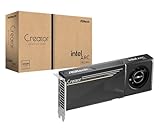
- System Compatibility Note: 2-slot card, 271x112x39mm, single 8-pin power, 200W TDP. Verify chassis clearance and PSU capacity before purchase.
- Dedicated Support: Please contact us directly through Amazon for any product questions or assistance you may require.
- 24GB GDDR6 on 192-Bit Bus: Massive 24GB memory with 456 GB/s bandwidth – ideal for LLMs, AI inference, 3D rendering, and generative design.
- Intel Xe2-HPG Architecture: Built on Intel's next-gen architecture with 20 Xe cores and 160 XMX engines for AI acceleration (197 INT8 TOPS).
- PCIe 5.0 Support: PCI Express 5.0 x16 interface for maximum bandwidth with the latest workstation platforms.
How much hardware does a local model need?
There is no single RAM minimum for “a local LLM.” Requirements vary with the particular model and workload, including context length and model configuration, as well as the CPU, GPU, NPU, memory, and storage available. A device that loads a model may still deliver unacceptable speed or output quality for a production workload.
One bounded example: Ollama’s 2026 Apple Silicon preview recommends a Mac with more than 32 GB of unified memory for its described Qwen3.5-35B-A3B setup. That is a model- and setup-specific recommendation, not a minimum for all local models or all Apple Silicon Macs.
When should you choose local, cloud, or hybrid?
Choose local when
- Prompts must stay within a device or network you control, and you can maintain that environment.
- Offline availability is important.
- Your expected workload justifies the hardware and operating effort.
- The available machine can run the target model at acceptable quality and speed.
Choose a cloud API when
- You need a larger or managed model without purchasing and maintaining inference hardware.
- Workload demand can vary or needs to scale quickly.
- You have reviewed the provider’s current retention, endpoint, residency, and pricing terms and they meet your requirements.
Use a hybrid approach when
A hybrid design can handle routine work locally and reserve cloud calls for tasks that need more capability. Microsoft recommends making fallback conditional on the model being unavailable or unsupported, a user declining a download, or the task requiring a larger model—and calling cloud only when the user and organization allow data to leave the device.
Quick Recap
- Check readiness. Confirm the local model is installed, supported, and capable of the requested task.
- Explain downloads. Tell users when a model download is optional and ask for consent before starting it.
- Make fallback visible. State when a request would be sent to a cloud endpoint and obtain the required user or organizational permission.
- Keep sensitive requests local when required. Do not silently route them to cloud because a local model is missing or the device is unsupported.
Product prices and availability are accurate as of the date/time indicated and are subject to change. Any price and availability information displayed on Amazon at the time of purchase will apply.
What’s actually slowing this PC down?
Pick the symptom - the matching free tool is one click away.

