
Do these 3 things before closing this tab:
1Fix the driver behind crashes, sound loss and screen glitches2Repair Windows errors before they cause bigger problems3Scan for outdated or missing drivers - takes under a minuteTo loop a prerecorded video on YouTube Live from a Google Cloud VM, run an encoder such as FFmpeg on a Linux Compute Engine instance, configure it with the current stream details from YouTube Studio, and send the repeating video to YouTube over RTMPS. The VM keeps the encoder running; YouTube creates and delivers the viewer-facing broadcast. A VM is optional, not a requirement for every YouTube live stream.
How the VM, encoder, and YouTube broadcast fit together
Compute Engine provides the virtual machine you configure and administer. The encoder running on it reads the video, repeats it, and sends audio and video to YouTube’s ingest endpoint. YouTube’s live broadcast is what viewers watch; its stream configuration holds the transmission settings. These are separate parts of the workflow, not one automatic service. Google Cloud’s Compute Engine overview describes VM setup, and Google for Developers explains the distinction between broadcasts and streams.
For a headless Linux VM, FFmpeg can run without a desktop. A graphical encoder may need a display; Google documents virtual displays for applications that need a display device but not GPU performance. A virtual display is not hardware graphics acceleration and is not suitable for graphically intensive workloads that need it. See Google Cloud’s virtual-display guidance.
Choose the encoder and ingest method
Headless FFmpeg
FFmpeg is a command-line option for reading and looping a file on a server. A secondary guide describes the loop option -stream_loop -1, but exact syntax depends on the file, audio, FFmpeg build, and output settings. Treat any sample command as a starting point to adapt and test, not a guaranteed configuration. See the FFmpeg looping reference.
Free tools Windows power users keep installed
One-click scans. No signup required.
#1 Best Overall
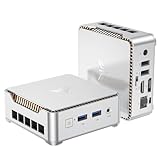
- 【Ryzen 5 3500U Processor】KAMRUI Essenx E2 Mini PC is equipped with AMD Ryzen 5 3500U (4-cores/8-threads, up to 3.7GHz) with integrated Radeon Vega 8 Graphics(1200MHz, 8 Core). The 3500U CPU operates at a base frequency of 2.1 GHz and a Boost frequency of 3.7 GHz. This DDR supports upgradable up to 32GB, SSD supports up to 2TB.(NOT INCLUED), KAMRUI E2 3500U Mini PC is ideal for light office work and home entertainment. KAMRUI E2 3500U is more than 35% more powerful and smoother in operation than the Intel N150, 33% faster than Intel N95, 28% performance boost over Intel i3-10110U, and 42% stronger processing power than AMD Ryzen 3 3200U.
- 【16GB DDR4 & 256GB SSD】The KAMRUI E2 mini computers is equipped with 16GB DDR4(Expandable up to 32GB) for faster multitasking and smooth application switching. 256GB M.2 SSD ensures fast startup times,fast file transfers and plenty of storage space,eliminating slow loading times and ensuring fast responsiveness.Storage space can RAM supports up to 32 GB, SSD supports up to 2TB (Not included)make file storage easier.
- 【4K Dual Display & USB 3.2 Type-A Port】KAMRUI E2 3500U mini desktop pc is equipped with an HDMI 2.0+DP 1.4 interfaces for faster transmission, Support Dual 4K@60Hz Display, E2 mini desktop computers is ideal for visual home entertainment, home office, conference rooms, etc. USB3.2 Gen1 Type-A Port×2 with a transfer speed of up to 5Gbps (10 times faster than USB 2.0) for efficient data transfer. The RJ45 1000M Gigabit Ethernet Port ensures a stable network connection.
- 【WiFi+Bluetooth stable connection】The Kamrui E2 micro pc have reliable and stable wireless connection, open websites in seconds, watch movies without buffering and download files smoothly, connect your monitor from WiFi or Ethernet, use a wireless keyboard and mouse through bluetooth, which will be powerful workstation for you.
- 【Versatile Ports】This KAMRUI E2 Small pc is equipped with HDMI 2.0×1(4K@60Hz)、DP1.4×1(4K@60Hz)、Gigabit Ethernet Port (RJ45, 10/100/1000Mbps) ×1、USB3.2 Gen1 Type-A Port×2(5Gbps)、USB2.0 Type-A Port×2、3.5mm Audio Jack ×1、DC In ×1、Power Button ×1
GUI encoder
A graphical encoder may be easier to configure or monitor if you already use one, but it may require a display on the VM. That adds setup and remote-administration considerations. For Linux access, Google documents connecting through SSH in its standard SSH guide.
RTMPS by default; HLS for a specific need
YouTube recommends RTMPS, the secure extension to RTMP, and says stream data is encrypted through Google’s servers. For a straightforward prerecorded loop, use RTMPS unless an encoder or codec requirement makes HLS useful. YouTube says HLS has higher latency than RTMP and requires additional configuration, including TS segments, a rolling media playlist with no more than five outstanding segments, HTTPS POST/PUT, and no byte ranges. Check YouTube’s current encoder guidance and HLS setup instructions.
Rank #2

- 【Great power in a small computer】Get fast performance from the AMD Ryzen 5 3500U CPU (2.1GHz-3.7GHz, 4 Cores 8 Threads) inside this mini pc, TDP 15W up to 25W. It's perfect for all your home office and business use, like daily computing, web browsing, and smooth media streaming. This small desktop computer handles everyday tasks easily and quietly.
- 【Work on many things at once with lots of storage】This mini PC comes with 16GB of fast DDR4 RAM (expandable up to 32GB), allowing you to smoothly run multiple programs, dozens of browser tabs, and large files all at once. It also features a spacious 512GB NVMe SSD that provides ample storage and delivers dramatically faster boot-ups, app launches, and file transfers compared to a traditional hard drive.
- 【See everything clearly on one or two 4K screens】Connect one or two monitors for more space to work or play. Dual HDMI ports on this mini pc support super sharp 4K Ultra HD video. It's great for doubling your work area for business or watching movies in high definition.
- 【Fast modern connections in a tiny box】Enjoy a better and more stable internet connection with the latest WiFi 6. Use Bluetooth 5.3 to connect wireless headphones, keyboards, and mice without wires. This small pc is very compact to save desk space and has extra USB ports (USB 2.0×2, USB 3.0×2, Type-c 2.0×1, Type-c 3.2 full featured×1, HDMI×2) for your printer, webcam, or other computer accessories.
- 【Reliable Warranty and Support】We provides 1 year warranty for each Mini computers. So you don't need to worry about any product problems. If you have any questions about the product, please contact our customer service, we will provide 24-hour professional technical support and serve you at any time.
Set up the looping live stream
- Confirm your channel is eligible to go live. Check YouTube Studio and current YouTube Help guidance before planning a start time. Eligibility and any first-time activation waiting period can depend on your account; verify them directly rather than assuming a new channel can stream immediately.
- Create a Compute Engine VM. Choose Linux, a region, machine type, and disk based on the encoder and the resolution and frame rate you intend to send. Start with a machine that can sustain the workload, then test the actual file and uplink. No single machine size fits every stream. Review Compute Engine instance options.
- Connect to the VM and install/configure your encoder. Use SSH for Linux administration. A headless FFmpeg workflow does not need a desktop; if your chosen GUI encoder needs a display, follow Google’s virtual-display documentation and account for its limits. Install software from trusted sources and check that the VM has room for the media file.
- Create or prepare the live broadcast in YouTube Studio. Retrieve the current ingest URL and stream key from YouTube Studio’s live control room. The stream settings configure transmission; the broadcast is the event presented to viewers. Keep the key private: do not paste it into a public command, screenshot, repository, or shared terminal history. If exposed, replace it in YouTube Studio.
- Configure the encoder to loop the file and send it over RTMPS. Enter the current YouTube ingest details, set the file to repeat, and configure video and audio output. For FFmpeg,
-stream_loop -1is a commonly documented loop technique, but you must adapt the full command to your input, codec, audio track, and FFmpeg build. Do not assume the file’s existing encoding, audio, or timestamps will work unchanged. - Choose settings from YouTube’s current table. YouTube’s encoder guidance lists H.264, H.265 (HEVC), and AV1 video for RTMP/RTMPS; AAC or MP3 audio; constant bitrate (CBR); and frame rates up to 60 fps. Its recommended keyframe interval is two seconds and should not exceed four seconds. Published H.264 examples include 4 Mbps for 240p–720p at 30 fps, 6 Mbps for 720p at 60 fps, 10 Mbps for 1080p at 30 fps, and 12 Mbps for 1080p at 60 fps. These are YouTube Help’s published recommendations, accessed 2026-10-03—not independent measurements. Choose the matching resolution/frame-rate row and check the live table for other combinations or changes. Keep the VM capable of encoding in real time and its outbound connection able to sustain the bitrate.
- Start a representative test before relying on the loop. Include audio and motion similar to the real program. Confirm that YouTube receives the feed, the preview looks and sounds right, and the loop transition behaves as intended. Check YouTube’s stream-health indicators and messages, along with encoder output and VM status. YouTube automatically transcodes live input for viewer formats.
- Monitor the stream during operation. Watch for encoder exits, VM interruptions, audio problems, and YouTube health warnings. Check the archived result if you rely on one. Do not assume automatic recovery if the encoder or ingest connection fails; recovery behavior depends on your software and configuration.
Settings and security to get right
- Bitrate and resolution: Match the bitrate row to your chosen resolution and frame rate in YouTube’s current table. Higher output settings require more encoding capacity and sustained outbound bandwidth.
- Keyframes and rate control: Use CBR and a two-second keyframe interval where supported; do not exceed YouTube’s recommended four-second maximum.
- Codec and audio: RTMP/RTMPS accepts the codecs listed in YouTube’s current guidance. Ensure the selected audio codec and track are actually present in the output.
- Stream key: Treat it as a password. Store it securely, avoid exposing it in logs or screenshots, and rotate it in YouTube Studio if compromised.
- Rights and channel policies: A file being prerecorded or looping does not establish permission to broadcast it. Use content you own or are authorized to stream, and check YouTube’s current policies for live and repetitive content before going live.
Estimate the cost before leaving the VM running
There is no reliable universal price for a continuous stream: the total depends on your selected region, machine family and size, disk, uptime, and outbound traffic. Use Google Cloud’s current pricing calculator with those assumptions before deployment, and recalculate if the resolution, runtime, or VM configuration changes. The VM is only one cost component; do not treat a generic monthly estimate as applicable to every setup.
Troubleshooting common failures
- YouTube does not receive a signal: Confirm the broadcast is prepared, the current RTMPS ingest URL and key are correct, and the encoder is actually running. Re-copy the details from YouTube Studio if uncertain; do not publish the key while seeking help.
- The preview is unstable or stream health warns of issues: Check the VM’s CPU load and outbound connection, then compare the configured bitrate, resolution, frame rate, and keyframe interval with YouTube’s current table. Test a lower supported output setting if the VM or network cannot sustain the current one.
- Video plays but audio is missing or wrong: Inspect the input’s audio track and the encoder’s selected audio stream and codec. Retest with representative sound and verify the YouTube preview before leaving the stream unattended.
- The loop does not restart cleanly: Check the file and encoder’s loop handling, timestamps, and audio/video compatibility. Loop behavior can vary by file and FFmpeg build; test the transition repeatedly before depending on it.
- A GUI encoder opens to a blank screen or will not start: Determine whether it requires a display device. Configure a virtual display if appropriate, while remembering that it does not provide GPU acceleration for graphics-intensive work.
- The stream stops after a disconnect or process exit: Inspect encoder output, VM status, and YouTube health messages to identify where the failure occurred. A cloud VM does not by itself guarantee encoder restart or stream recovery; configure and verify recovery behavior for the specific software you use.
Or let it run in the cloud
If maintaining a VM and encoder is more work than you want, StreamNeo is a YouTube-only cloud service for keeping uploaded videos live. Upload a recording or build a playlist, add your YouTube stream key once, and go live. Nothing has to stay on at home; it loops the uploaded video, supports any quality up to 4K 60fps at one flat price per slot, and automatically recovers if YouTube drops the stream. The first day is free with no card. Monthly is $9.99 per month. Learn about StreamNeo or start your free day.
Quick Recap
Best Value

- WHY CHOOSE CORE I3-10110U - Better single-core performance: The Core i3-10110U has a higher peak boost clock (4.1 GHz) compared to the Ryzen 3 4300U and the Intel Alder Lake N150 series, making it better for tasks that rely on fast single-core performance (e.g., web browsing, office apps). Better multi-thread performance via Hyper-Threading: the Core i3-10110U offers better performance in multi-threaded workloads compared to the Ryzen 3 4300U, especially for light productivity work and multitasking.
- 16GB RAM MEMORY & 512GB SSD STORAGE - GMKtec Nucbox G3 PRO mini pc is prebuilt with 16GB DDR4 RAM SO-DIMM DUAL CHANNEL, you will enjoy a speedier experience with Built-in 512GB M.2 Hard Drive. Our mini desktop pc boots up in seconds, work on multiple browser tabs, software applications and quickly transfers files. There is a primary slot and secondary expansion storage. Primary slot is M.2 2280 PCIE/SATA and secondary slot is M.2 2242 SATA .
- RICH INTERFACE - Nucbox core i3 mini computer is equipped with USB 3.2*4,up to 5Gbps/S, HDMI(4K@60Hz)×2, 3.5mm Audio Jack. Supports WiFi 6, and Gigabit Ethernet RJ45 2.5GbE network connectivity, Bluetooth 5.2. This Mini PC supports multiple device connection and can be used with servers, monitoring equipment, office equipment, displays, projectors, televisions, etc.
- 4K DUAL SCREEN DISPLAY - Mini desktop computer is equipped with upgraded Intel Graphics(max 1000MHz), supports 4K video playback and AV1 decoding, connect the pc with a projector as a home theatre, enjoy a variety of entertainments. Two HDMI 2.0 ports allows you to multi-task efficiently on two 4K@60Hz displays.
- UPGRADED COOLING FAN - The G3 PLUS has upgraded the cooling fan to reduce fan noise and thermals. We are using an upgraded thermal paste as well to help reduce heat on the CPU.
Rank #4
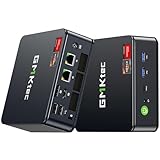
- Office Gaming Mini PC - UPGRADED GMKtec Nucbox M5 Ultra Series is equipped with the powerful AMD Ryzen 7 7730U processor, 8 Cores/16 Threads, Base 2.00GHz (Power Saving Quiet Mode) with Turbo Boost up to 4.50GHz (Performance Mode) in BIOS settings, Based on the ZEN 3+ architecture, this small but powerful mini pc delivers satisfying results in productivity, office work, and gaming. 35% Performance increase over AMD Ryzen 5 7430U/ Ryzen 7 5700U, 5600U, 5560U, 5500U.
- 32GB DDR4 RAM & 512GB PCIe SSD - Installed with DDR4 32GB RAM Dual Channel (2x16GB), the Nucbox M5 Plus mini pc support expansion to 64GB RAM. Featured with 512GB M.2 2280 PCIe 3.0 SSD, support dual slot expansion to 4TB SSD. (Upgrades not included)
- DUAL NIC LAN 2.5G RJ45 - Fast Network Speeds: Enjoy up to 2500Mbps data transmission speed without worrying about lagging. Ideal for working, gaming, and surfing the internet. Great for Untangle, Pfsense or as a server office PC.
- Mini Desktop Computer with 4K Triple Screen Display - Nucbox M5 Ultra integrates AMD Radeon Graphics 8 Cores 2000 MHz GPU to deliver powerful graphics processing power to easily handle the demands of complex design software, 4K@60Hz UHD video editing, and playback. It can connect to 3 display screens simultaneously.
- Fast Internet WiFi 6E + BT5.2 Connection - GMKtec Mini PC with WiFi-6E Wireless, have 2.5G/5G/6G triple band, more faster and lower latency. Bluetooth 5.2 allowing you more quickly to connect other wireless devices (headset, mouse, keyboard, etc.) Interface features 2*USB3.2 ports, 2*USB2.0 ports, 1*HDMI 2.0 port(4K@60Hz), 1*USB-C port(PD/DP/DATA), 1*DP Port, 1*Audio 3.5mm (HP&MIC), 1*DC Power Port.
Rank #3

- 【AMD Ryzen 3 5300U CPU: Outperforms N150 & 3500U】 BOSGAME E5 mini PC is powered by the TSMC 7nm FinFET architecture AMD Ryzen 3 5300U processor (4 Cores, 8 Threads, up to 3.8GHz boost, 6MB total cache). Compared to low-end Intel N150 or 3500U chips which only have 4 single threads and throttle under load, the 5300U delivers over 30% faster multi-core speed. Run 30+ browser tabs, large Excel sheets, and Zoom meetings simultaneously without system lag.
- 【8GB DDR4 RAM & 256GB NVMe SSD Storage】 Installed with high-speed 8GB DDR4 dual-channel memory and a fast 256GB M.2 2280 SSD, eliminating slow boot times and application loading delays. To accommodate growing data requirements, the upgradeable hardware design features dual SODIMM slots that allow you to expand memory up to 64GB RAM, ensuring smooth operation during heavy multitasking.
- 【High-Capacity Dual M.2 SSD Storage Expansion】 Never worry about running out of space for your business files. In addition to the pre-installed 256GB system drive, the motherboard houses an extra empty internal M.2 2280 NVMe PCIe 3.0 slot. This allows you to easily add a second solid-state drive for up to an additional 2TB of storage capacity (upgrades not included) without needing to remove or reinstall the original operating system.
- 【Radeon 6-Core Graphics & Triple 4K Displays】 Integrated with official AMD Radeon Graphics (6 Graphics Cores, 1500 MHz frequency) for casual gaming, photo editing, and crisp 4K media decoding. Featuring 1x HDMI 2.0 port, 1x DisplayPort, and 1x Full-Function Type-C port, the E5 outputs true 4K@60Hz resolution to three monitors at once. This multi-screen setup eliminates constant window-switching for traders, programmers, and office workers.
- 【Dual 2.5GbE LAN Ports for Advanced Networking】 Experience fast wired network transmission speeds up to 2500Mbps without lagging or buffering. The integration of dual 2.5 Gigabit Ethernet ports (powered by Realtek RTL8125 controller) makes this compact computer an exceptional hardware choice for tech enthusiasts. Easily configure it into software routers, hardware firewalls (pfSense, OpnSense), home NAS servers, or local homelabs.
Product prices and availability are accurate as of the date/time indicated and are subject to change. Any price and availability information displayed on Amazon at the time of purchase will apply.

