
NVIDIA Fleet Intelligence is an opt-in, customer-installed managed service that collects GPU infrastructure telemetry and presents it in a fleet-wide dashboard hosted on NVIDIA NGC. It gives data-center operators visibility into temperatures, power, performance, errors, configuration consistency and integrity signals. NVIDIA describes it as a way to spot hotspots, airflow problems and abnormal reliability signals early—not as a guarantee that the service can predict every GPU failure.
What NVIDIA Fleet Intelligence does
Fleet Intelligence is designed to help operators monitor NVIDIA GPU infrastructure across a fleet rather than inspect each node in isolation. A low-footprint host agent sends node-level telemetry to the NGC-hosted service. NVIDIA’s technical description says the agent uses open-source GPUd alongside NVIDIA Data Center GPU Manager (DCGM) and the NVIDIA Attestation SDK.

The dashboard brings several kinds of operational signals together:
- Thermals: GPU temperatures and hotspot or airflow signals that can help operators investigate thermal-throttling risk.
- Power: power use and short-term spikes, useful for understanding utilization, power budgets and performance per watt.
- Performance: utilization, memory bandwidth, interconnect health and reasons for throttling.
- Health and reliability: ECC and XID errors, retired pages, and HBM, NVLink and PCIe anomalies, alongside other reliability, availability and serviceability signals.
- Configuration: checks for consistency in drivers, firmware, BIOS settings and other parameters that can affect reproducibility.
- Integrity: attestation and reference-integrity checks intended to verify GPU authenticity and whether configuration remains untampered.
How thermal and reliability monitoring helps
Finding heat and airflow problems
Dense AI systems can concentrate substantial heat in data-center racks. NVIDIA says Fleet Intelligence can help operators detect hotspots and airflow issues early, before they cause thermal throttling or contribute to premature component aging. That visibility can guide an investigation into cooling or rack conditions; telemetry alone does not establish the cause of a temperature problem.
Recommended Free Tools
#1 Best Overall
Investigating possible hardware problems
Error and hardware-health signals such as ECC or XID errors, retired pages, and HBM or interconnect anomalies can alert operators to investigate a node or component. These are warning and diagnostic signals, not a promise that Fleet Intelligence will identify every failing part in advance or automatically replace it. NVIDIA’s description presents the service as visibility for operations teams, not as a substitute for their diagnosis and maintenance decisions.
Fleet Intelligence versus DCGM
DCGM remains NVIDIA’s foundational node-level toolkit for GPU monitoring and management. Fleet Intelligence adds a managed fleet-level aggregation and visualization layer over node signals. They serve related but different operational roles, and Fleet Intelligence itself uses DCGM as part of its host-agent stack.
Rank #2
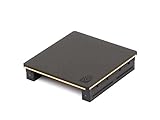
- Part number 900-53651-2500-000 and model: P3651
- This is the 2 slot version for when there is no empty slots between 2 slot cards. If you have one or more empty slots between the cards or the cards are 3 slot this NVLink will not work. See the attached images showing the card layout.
- NVLink 3.0 for any brand of RTX Ampere model graphics cards: 3090, A30, A40, A100 / H100 (Requires three NVLinks), A800, A4500, A5000, A5500, A6000
- This is the same as PNY part number: NVLAMP-2SLOT-BSP and RTXA6000NVLINK-KIT
- This is the same as Dell part number: 0RWJ7Y
| Area | NVIDIA Fleet Intelligence | NVIDIA DCGM |
|---|---|---|
| Deployment model | Opt-in managed service; a customer-installed agent sends telemetry to an NGC-hosted portal. | Monitoring and management toolkit that can run standalone or integrate with cluster managers, schedulers and partner monitoring products. |
| Primary scope | Fleet-wide aggregation and visualization of GPU infrastructure signals. | Node-level monitoring and management foundation. |
| Health and diagnostics | Surfaces fleet telemetry that includes reliability signals and configuration or integrity checks. | Includes active health monitoring, diagnostics, system alerts, and power and clock governance. |
| Kubernetes telemetry | NVIDIA’s cited description does not specify a Kubernetes integration mechanism. | DCGM-Exporter exposes telemetry for Kubernetes environments. |
| Who operates the monitoring layer | NVIDIA hosts the service portal; customers install the agent and use the service. | Operators can run DCGM themselves or integrate it into their monitoring and cluster-management stack. |
NVIDIA’s deployment documentation also covers NVML, nvidia-smi, compatibility, diagnostics and production GPU maintenance workflows. Those tools and workflows remain relevant when teams need node-level inspection or hands-on troubleshooting; Fleet Intelligence is the higher-level view, not a replacement for every operational tool.
Is Fleet Intelligence mandatory, and does it control GPUs remotely?
NVIDIA describes Fleet Intelligence as opt-in and customer-installed, so it is not presented as mandatory GPU functionality. The service reports and visualizes telemetry through its managed portal; NVIDIA’s description does not present it as a remote-disable mechanism.
The Tool Desk
Outbyte PC Repair FREEClear out junk files and repair common Windows errorsFree Scan →Outbyte Driver Updater FREEFix the driver behind crashes, sound loss and screen glitchesFind Drivers →Rank #3
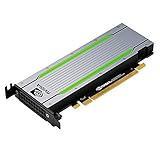
- Video/Sound Cards
- Passive Cooling
In a December 10, 2025 newsroom statement, NVIDIA said: “NVIDIA GPUs do not have hardware tracking technology, kill switches and backdoors.” That statement addresses the hardware concern directly. It should not be confused with a full data-handling policy for the service: the cited product description does not establish details such as telemetry retention, access controls or every data field sent to NGC.
Independent reader supportYour contribution helps us test, update, and keep practical guides available for everyone.Where Fleet Intelligence fits in an AI data center
NVIDIA positions Fleet Intelligence within its broader DSX platform for operating AI factories, alongside fleet visibility, health automation, resiliency, lifecycle management and facility-level thermal and power signals. That context matters for large-scale operations: GPU temperature and error data can inform infrastructure decisions, but evaluating cooling, power capacity and reliability still requires operators to consider the surrounding facility and their own operating practices.
Quick Recap
Rank #4

- CUDA Cores: 4608 / NVIDIA Tensor Cores: 576 / NVIDIA RT Cores: 72
- GPU Memory: 24 GB GDDR6 with ECC / Bandwidth: 624 GB/Sec
- System Interface: PCI Express 3.0 x16
- Four DisplayPort 1.4 Connectors
- 3D Stereo Support with Stereo Connector
Product prices and availability are accurate as of the date/time indicated and are subject to change. Any price and availability information displayed on Amazon at the time of purchase will apply.

