
Recommended Free Tools
Google has sent a prototype satellite carrying four Tensor Processing Units (TPUs) into orbit, but it has not put an AI data center in space. The October 1, 2026, flight is a research test: Google wants to see how its chips handle launch stress, radiation and extreme temperatures. The larger Project Suncatcher concept depends on solving a more terrestrial challenge too—making it affordable to launch and operate enough hardware to matter.
What Google actually launched
Google announced the test on September 24, 2026, and the prototype flew on SpaceX’s Transporter-18 rideshare mission on October 1. Google worked with Planet on the mission. The spacecraft carries four TPUs, not the many-satellite computing cluster shown in Google’s longer-range plans. Google describes the flight as a way to collect real in-orbit data about how the hardware responds to spaceflight, radiation and thermal extremes; the mission is intended to expose possible failure points, not demonstrate a working orbital data center. (Google’s announcement; Space.com’s launch report; Reuters’ report)

As of October 3, Google had not published completed results from the in-orbit test. A launch confirms that the prototype reached space; it does not yet show how well the chips performed there.
How Project Suncatcher is supposed to work
Project Suncatcher is Google’s research concept for solar-powered satellites carrying AI processors and sharing work over free-space optical links. Rather than one enormous spacecraft, Google’s 2025 design paper illustrates a tightly coordinated cluster of 81 satellites within a radius of about one kilometer. That arrangement is an example for analysis, not the configuration Google launched.
#1 Best Overall
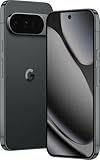
- US model is eSIM Only. Google Pixel 10 Pro is the ultimate Pixel experience, featuring advanced AI - Gemini, unbelievable camera quality, impeccable design in two sizes, and the next-gen Google Tensor G5 chip[1]
- Unlocked Android phone gives you the flexibility to change carriers and choose your own data plan[2]; it works - Google Fi, Verizon, T-Mobile, AT&T, and other major carriers
- Pixel’s pro camera system makes everything look amazing, even in low light; capture more of the scene - advanced Google AI models, and bring out incredible details - 100x Pro Res Zoom, stunning 50 MP images, and super steady videos in 8K[10]
- Pixel 10 Pro is built - durable aluminum and Corning Gorilla Glass Victus 2 for scratch and drop resistance; the 6.3-inch Super Actua display - 3,300-nit peak brightness is easy on the eyes, even in direct sunlight[3,13,18]
- Instead of typing, use Gemini Live to have a natural, free-flowing conversation; point your camera at what you’re curious about – like a sea creature at the aquarium – or chat - Gemini to brainstorm ideas or get things done across apps[4]
Close spacing matters because the proposed system needs high-bandwidth communication between satellites. The design therefore depends on accurate knowledge of each satellite’s position and the ability to control formation. Google says a two-satellite optical-link test is planned for 2027; that is a future milestone, not a capability demonstrated by the four-TPU flight. (Google Research’s 2025 design paper; Google Research’s overview; Reuters)
What makes orbital computing different from a terrestrial data center
| Issue | Orbital concept | Terrestrial data center |
|---|---|---|
| Energy | Google estimates that panels in certain orbits could receive up to eight times more solar energy per year than a panel at Earth’s mid-latitudes. This is a design estimate, not a complete operating-cost comparison. (Google Research, 2025) | Uses power infrastructure on Earth; the cited sources do not provide a comparable energy figure for a specific data center. |
| Cooling | Vacuum has no air to carry heat away. Google identifies heat pipes and radiators as part of its thermal-management work. (Google) | Conventional air-based cooling is available, though the sources do not compare its cost or efficiency with the proposed orbital system. |
| Communication | Google’s concept relies on close formation and high-bandwidth optical links between satellites. The two-satellite test is planned for 2027. (Google Research; Reuters) | Uses terrestrial networking; no like-for-like latency or bandwidth comparison is established in the cited sources. |
| Reliability and service | Radiation, bit flips, launch stress and on-orbit failures are test concerns. How a future fleet would be repaired or serviced is not established in the cited sources. | The cited sources do not quantify a comparable reliability or serviceability advantage. |
| Scale and cost | Requires launching and coordinating specialized hardware. Google’s future launch-cost figure is a model, not a current price quote. (Google Research, 2025) | A terrestrial alternative avoids putting its computing hardware in orbit; the cited sources do not establish which approach would be cheaper overall. |
The engineering tests are not finished
Radiation and launch stress
Space exposes electronics to radiation that can disrupt operation or damage components, as well as the mechanical stress of launch. Google reports that its ground radiation testing of Trillium TPUs found no permanent failure through a total ionizing dose exceeding the expected dose for a shielded five-year mission. That result is encouraging for the design, but it is a ground-test result: the orbital flight is meant to reveal how hardware behaves in actual space conditions. (Google’s mission explanation; Google Research’s paper)
Heat without air
A chip still produces heat in orbit, but vacuum provides no air for ordinary airflow cooling. Google calls cooling orbital data centers a crucial research challenge and describes heat pipes and radiators as elements of its approach. The sources establish that thermal management is a design problem, not that a fleet-scale cooling system has already been proven.
Links and coordinated flight
One satellite carrying processors is not enough to realize the proposed distributed system. Satellites would need to exchange large amounts of data quickly while holding a close formation. Google’s 2025 design work describes the cluster and optical links; the first mission does not test a functioning network of 81 satellites.
Rank #3
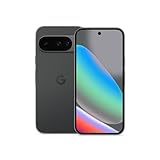
- Google Pixel 10 is the everyday phone unlike anything else; it has Google Tensor G5, Pixel’s most powerful chip, an incredible camera, and advanced AI - Gemini built in[1]
- Unlocked Android phone gives you the flexibility to change carriers and choose your own data plan[2]; it works with Google Fi, Verizon, T-Mobile, AT&T, and other major carriers
- Unlocked Android phone gives you the flexibility to change carriers and choose your own data plan[2]; it works - Google Fi, Verizon, T-Mobile, AT&T, and other major carriers
- The upgraded triple rear camera system has a new 5x telephoto lens - up to 20x Super Res Zoom for stunning detail from far away; Night Sight takes crisp, clear photos in low-light settings; and Camera Coach helps you snap your best pics[3]
- Pixel 10 is designed - scratch-resistant Corning Gorilla Glass Victus 2 and has an IP68 rating for water and dust protection[21]; plus, the Actua display - 3,000-nit peak brightness is easy on the eyes, even in direct sunlight[4]
Why the earthly problem is launch economics
Google’s 2025 paper models launch costs falling to about $200 per kilogram by the mid-2030s, based on a learning-curve analysis. That is a conditional projection, not today’s quoted launch price or a guaranteed future rate. The cost matters because orbital computing requires getting the satellites, processors, solar panels and supporting systems into orbit—and operating a large constellation rather than a single demonstration spacecraft. (Google Research, 2025)
A TechCrunch account of Google’s analysis describes one scale-up scenario involving 370,000 tons of payload and roughly 1,800 Starship launches over ten years, assuming 200 metric tons per launch. It is a model-dependent scenario, not a funded launch plan, confirmed manifest or proof that Starship will reach that payload capacity or flight rate. (TechCrunch, October 1, 2026)
Rank #4

- 6.2" OLED 428PPI, 1080x2400px, 120Hz, HDR10+, Bluetooth 5.3, 4575mAh Battery, Android 14
- 128GB 8GB RAM, Octa-core, Google Tensor G3 (4nm), Nona-core (1x3.0 GHz Cortex-X3 & 4x2.45 GHz Cortex-A715 & 4x2.15 GHz Cortex-A510), Mali-G710 MP7
- Rear Camera: 50MP, f/1.7 (wide) + 12MP, f/2.2 (ultrawide), Front Camera: 10.5MP, f/2.2
- 2G: GSM 850/900/1800/1900, CDMA 800/1700/1900, 3G: HSDPA 800/850/900/1700(AWS)/1900/2100, CDMA2000 1xEV-DO, 4G LTE: 1/2/3/4/5/7/8/12/13/14/17/18/19/20/25/26/28/29/30/38/40/41/46/48/66/71, 5G: 1/2/3/5/7/8/12/20/25/26/28/29/30/38/40/41/48/66/70/71/77/78/258/260/261 SA/NSA/Sub6 - Nano-SIM and eSIM
- Compatible with Most GSM + CDMA Carriers like T-Mobile, AT&T, MetroPCS, etc. Will Also work with CDMA Carriers Such as Verizon, Sprint.
That scale also compounds engineering and production challenges: the satellites must be built, launched, coordinated and kept functional. Reuters reports that experts see commercial viability as years away, citing launch costs, engineering constraints and production bottlenecks. The potential advantage of more reliable sunlight is therefore only one part of the business case; it does not by itself establish that orbital computing will beat ground-based infrastructure on cost.
What the first mission can—and cannot—tell us
The flight is a practical step from laboratory testing to real orbital conditions. As Travis Beals, the Google executive managing Project Suncatcher, told TechCrunch: “We’ve done testing on the ground, but you know, there’s no test that’s completely as good as the real thing.” The useful near-term outcome is data about hardware behavior and failure modes, not proof that Google has solved the technology or economics.
The Tool Desk
Outbyte Driver Updater FREEFix the driver behind crashes, sound loss and screen glitchesFind Drivers →Outbyte PC Repair FREEClear out junk files and repair common Windows errorsFree Scan →- Confirmed: a prototype carrying four TPUs flew on Transporter-18 on October 1, 2026.
- Still to be tested: actual in-orbit hardware behavior and, in a planned 2027 milestone, optical links between two satellites.
- Still uncertain: fleet-scale reliability, servicing, launch economics and whether a commercial system can be built at viable cost.
Google has put an AI chip in space. It has not put a working data center there. Project Suncatcher’s promise depends as much on affordable access to orbit and reliable large-scale operations as it does on the chips themselves.
Quick Recap
Product prices and availability are accurate as of the date/time indicated and are subject to change. Any price and availability information displayed on Amazon at the time of purchase will apply.

