
The Tool Desk
Outbyte PC Repair FREEClear out junk files and repair common Windows errorsFree Scan →Outbyte Driver Updater FREEScan for outdated or missing drivers - takes under a minuteDriver Scan →Windows 10 support ended on October 14, 2025. Your PC does not stop working on that date, but Microsoft no longer provides ordinary free Windows Update software updates, technical assistance, or security fixes. WhyNotWin11 can show which Windows 11 compatibility categories are failing, helping you decide whether a firmware change, a hardware check, Consumer Extended Security Updates (ESU), or a replacement PC makes sense.
WhyNotWin11 is an independent, free and open-source diagnostic project—not a Microsoft product. Download it only from its official GitHub repository or its official releases page.
What Windows 10’s end of support means
Microsoft’s stated end date was October 14, 2025. Windows 10 remains usable, but standard support has ended: ordinary free security fixes, software updates and technical assistance are no longer provided. Microsoft’s current notice is at Windows 10 support has ended.
That does not automatically make every Windows 10 computer unsafe or unusable on the next day. It does mean you should make a deliberate support plan rather than assume normal protection will continue.
Windows Errors? Fix Them Before They Spread
Repair common Windows errors and clear accumulated junk for a smoother, more stable PC - no reinstall needed.Free scan · no reinstallCrashes, No Sound, or Screen Glitches?
Random freezes, missing sound and display glitches usually trace back to one bad driver. Find and replace yours safely.Free scan · under a minute#1 Best Overall

- 1.1 GHz (boost up to 2.4GHz) Intel Celeron N5030 Quad-Core
- 4GB DDR4 System Memory; 128GB Solid State Drive
- 11.6" HD (1366 x 768) Multi-Touch Display
- Combo headphone/microphone jack - Noble Wedge Lock slot - HDMI; 2 USB 3.1 Gen 1
- Windows 11 Pro
What WhyNotWin11 checks
The project describes WhyNotWin11 as a detection script that identifies why a PC is not “Windows 11 Release Ready,” including update checks. Its releases cover categories such as:
- Processor (CPU) compatibility
- Trusted Platform Module (TPM)
- Secure Boot
- Installed memory (RAM)
- Storage capacity
- DirectX and graphics capability
- Disk-partition type
The source code is published under the LGPL-3.0 license. Microsoft’s own requirements and upgrade guidance remain authoritative; use WhyNotWin11 to investigate a result, not to override Microsoft’s decision.
Some releases document command-line switches that skip individual checks. A skipped check is not a pass: rerun the tool with its default checks before drawing a conclusion.
Rank #2

- Everyday Performance for School and Light Work: A Core M3 2-core, 4-thread processor with a 1.1GHz base frequency and up to 3.0GHz turbo supports online classes, homework, documents, spreadsheets, email, web browsing and video calls for everyday study and entry-level office tasks.
- Crisp 15.6-Inch FHD IPS Display: The 1920x1080 Full HD IPS screen provides a clear, spacious view for homework, notes, presentations, online lessons, web research and streaming at home, school or work.
- 128GB SSD with Room to Grow: The M.2 2280 SATA SSD supports fast startup and everyday file access, with storage expansion up to 2TB. The laptop includes 4GB DDR3 1333MHz memory in two SO-DIMM slots with one slot currently in use.
- Versatile Ports and Wireless Connectivity: Connect accessories and displays through two USB 3.0 Type-A ports, USB-C for charging and USB 2.0 data, HDMI 1.4, a 3.5mm audio jack and a MicroSD card slot, plus dual-band Wi-Fi and Bluetooth 5.0.
- Lightweight for Study and Work: At 3.46 lbs and 0.76 inch thin, the DGBook is easy to carry between home, school and work. A 7.7V 5000mAh lithium-ion polymer battery, 2.0MP webcam, dual microphones and dual speakers support everyday portable use and video calls.
How to read a failed category
| Result category | What it can indicate | What to verify next |
|---|---|---|
| CPU | The processor may not be on Microsoft’s supported list or may lack a required capability. | Identify the exact CPU model and compare it with Microsoft’s current Windows 11 requirements and supported-processor information. A newer processor is usually a platform change, not a simple setting. |
| TPM | A compatible TPM may be missing, disabled in firmware, or not being detected correctly. | Check the motherboard’s UEFI/BIOS documentation for a firmware TPM option (the name varies by manufacturer). Do not assume a separate TPM module will work: module compatibility is motherboard-specific. |
| Secure Boot | Secure Boot may be disabled, or the system may be using a boot configuration that prevents it from being enabled safely. | Confirm whether the PC boots in UEFI mode and whether its system disk uses a compatible partition layout. Changing firmware or converting a disk can make a system unbootable if done incorrectly; back up first and follow the manufacturer’s instructions. |
| RAM | Installed memory may be below Microsoft’s minimum. | Check the actual installed amount and the device’s upgrade limits. Soldered memory or an old platform may make an upgrade impractical. |
| Storage | The system may not meet the minimum storage requirement or may have insufficient free space for an upgrade. | Check total drive capacity and available space. Freeing space does not solve a drive whose total capacity is below the requirement. |
| DirectX/graphics | The graphics adapter or driver may not meet the required DirectX and feature-level conditions. | Identify the exact GPU and driver support. A driver update can help only when the hardware already supports the required features. |
| Partition type | The boot disk may use MBR rather than the GPT layout normally associated with UEFI Secure Boot. | Verify the layout before changing it. Conversion tools and firmware changes require a current backup and a recovery plan. |
A failed category narrows the cause; it does not prove that the computer is permanently unusable, that installing one physical part will fix it, or that an unsupported Windows 11 installation is advisable.
Recommended Free Tools
Is the requirement missing or merely disabled?
Firmware-disabled features
TPM and Secure Boot are the two results most likely to be configuration issues rather than absent hardware. Many systems expose TPM as a firmware security feature under a manufacturer-specific name. Secure Boot can also be available but disabled. The exact menu and terminology depend on the motherboard and firmware version.
Before changing settings, create a verified backup and make sure you have your recovery key and installation/recovery media. If the machine uses legacy BIOS mode, enabling UEFI or Secure Boot may require a partition-layout change. A failed boot after an uninformed change is a recovery problem, not evidence that the feature was defective.
Rank #3

- 14" diagonal, 1366x768 resolution, HD BrightView LED, Glossy NON-TOUCH Display
Hardware or platform limits
An unsupported CPU, insufficient RAM, an incompatible graphics adapter, or a motherboard that lacks a usable TPM option may not be repairable with a setting. Check the exact model rather than buying a generic module or assuming that a component advertised for another motherboard will fit.
What Microsoft currently requires
Use Microsoft’s current Windows 11 minimum hardware requirements and the requirements shown for your upgrade path. Requirements, supported processor lists and upgrade behavior can change by Windows edition, device and date, so a WhyNotWin11 result should be checked against Microsoft before you replace hardware or reinstall Windows.
Do these 3 things before closing this tab:
1Fix the driver behind crashes, sound loss and screen glitches2Clear out junk files and repair common Windows errors3Scan for outdated or missing drivers - takes under a minuteDo not treat an installation workaround as equivalent to supported status. If Microsoft says the device does not meet requirements, unsupported-installation risks and future update behavior remain your responsibility.
Rank #4
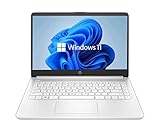
- 14” Diagonal HD BrightView WLED-Backlit (1366 x 768), Intel Graphics
- Intel Celeron Dual-Core Processor Up to 2.60GHz, 4GB RAM, 64GB SSD
- 1x USB Type C, 2x USB Type A, 1x SD Card Reader, 1x Headphone/Microphone
- 802.11a/b/g/n/ac (2x2) Wi-Fi and Bluetooth, HP Webcam with Integrated Digital Microphone
- Windows 11 OS
Your choices after a failed check
| Option | Security coverage and timing | Eligibility/geography | Cost and effort | When it fits |
|---|---|---|---|---|
| Fix a firmware setting | Can restore supported status if the underlying hardware already qualifies. | Depends on the motherboard and current configuration. | Usually no new hardware, but firmware changes carry boot and data risk. | TPM or Secure Boot is present but disabled. |
| Upgrade components | Only helps when the resulting platform meets every requirement. | Motherboard, firmware and processor compatibility determine feasibility. | Parts and labor vary; a single upgrade may not solve multiple failures. | The device has a documented, compatible upgrade path. |
| Consumer ESU for Windows 10 | Provides an extension under Microsoft’s ESU terms, rather than restoring ordinary Windows 10 support. | Eligibility, enrollment rules and availability depend on the consumer, device and region. Check Microsoft’s current ESU information. | Current price and enrollment requirements vary; Microsoft’s page is the source of truth. | You need more time with the existing PC and it qualifies for enrollment. |
| Replace the PC | A device designed for Windows 11 can provide the supported platform Microsoft recommends. | Choose a model that meets the current requirements in your market. | Highest upfront cost, but avoids uncertain motherboard repairs. | Several categories fail, the platform is old, or repair cost approaches replacement cost. |
Microsoft explicitly recommends enrolling in Consumer ESU or replacing the device when it does not meet Windows 11 technical requirements. ESU terms and regional availability can change, so do not rely on an old price, deadline or eligibility claim.
A practical decision process
- Run WhyNotWin11 with its default checks. Record every failed category and the tool version.
- Identify the exact hardware. Write down the CPU, motherboard or system model, RAM, drive capacity, graphics adapter and current boot mode.
- Separate settings from hardware. Consult the manufacturer’s firmware documentation for TPM and Secure Boot. Do not buy a TPM module until the motherboard manufacturer confirms support.
- Back up before firmware or partition work. Keep recovery credentials and a way to restore Windows if the system will not boot.
- Recheck against Microsoft. Compare the machine with the current requirements PDF and Microsoft support guidance.
- Choose a support path. If the device can be brought into compliance safely, make that change. Otherwise check ESU eligibility in your region or budget for a supported replacement.
When replacement is more practical than repair
Replacement is usually the clearer option when the CPU is unsupported, several independent categories fail, the motherboard has no compatible TPM path, or required upgrades would involve a board and processor change. A Windows 11 laptop or desktop is a reasonable replacement target only if its advertised configuration meets Microsoft’s current requirements; no particular model is being endorsed or tested here.
Repair is more defensible when one documented firmware setting is disabled and the existing hardware otherwise passes. Compare the complete cost and risk—including backup, labor and recovery time—with the cost of a supported device.
Free tools Windows power users keep installed
One-click scans. No signup required.
Best Value

- 14” Diagonal HD BrightView WLED-Backlit (1366 x 768), Intel Graphics,
- Intel Celeron Dual-Core Processor Up to 2.60GHz, 4GB RAM, 64GB SSD
- 3x USB Type A,1x SD Card Reader, 1x Headphone/Microphone
- 802.11a/b/g/n/ac (2x2) Wi-Fi and Bluetooth, HP Webcam with Integrated Digital Microphone
- Windows 11 OS, Dale Blue
Common mistakes to avoid
- Reading “failed” as “the PC is dead.” Windows 10 still runs after its support date.
- Reading “skipped” as “passed.” WhyNotWin11 options that bypass checks remove evidence rather than create compatibility.
- Buying a standalone TPM without confirming motherboard support.
- Enabling Secure Boot or changing partition type without a backup and recovery plan.
- Assuming an unsupported Windows 11 installation has the same support or update guarantees as a supported one.
- Using download mirrors instead of the project’s official GitHub repository or release page.
Useful references
- Microsoft: Windows 10 support has ended
- Microsoft Windows lifecycle FAQ
- Microsoft Windows 11 minimum hardware requirements (PDF)
- WhyNotWin11 official repository
- WhyNotWin11 official releases
Frequently Asked Questions
Does Windows 10 stop working after October 14, 2025?
No. Windows 10 continues to run, but ordinary free security fixes, software updates and technical assistance have ended.
Can a failed TPM result be fixed without replacing the PC?
Sometimes. The TPM may be disabled in firmware, but whether it can be enabled—and whether the rest of the hardware qualifies—depends on the specific motherboard.
Should I install Windows 11 on unsupported hardware?
A WhyNotWin11 failure does not establish that an unsupported installation is recommended. Verify Microsoft’s requirements and understand the support and update risks for the exact device.
Quick Recap
Product prices and availability are accurate as of the date/time indicated and are subject to change. Any price and availability information displayed on Amazon at the time of purchase will apply.

