
Do these 3 things before closing this tab:
1Repair Windows errors before they cause bigger problems2Scan for outdated or missing drivers - takes under a minute3Clear out junk files and repair common Windows errorsThe top simulation software for manufacturing depends on the question being answered: Siemens Plant Simulation leads for factory flow and throughput, Siemens Process Simulate for robotics and virtual commissioning, Autodesk FlexSim for accessible 3D discrete-event studies, Dassault DELMIA for connected manufacturing engineering, and Simul8 for rapid process-improvement analysis. No single platform is best for every manufacturing problem.
Manufacturing simulation is not one software category. A production engineer studying buffers and bottlenecks needs a different model from a robotics engineer validating reach and collision clearance, while a product engineer analyzing stress or thermal behavior needs CAE software rather than factory simulation. The shortlist below separates those jobs and explains the trade-offs behind each recommendation.
Key takeaways
- Siemens Tecnomatix Plant Simulation is the strongest fit for detailed factory material flow, throughput, capacity, logistics, buffers, and resource-utilization studies.
- Siemens Tecnomatix Process Simulate is the strongest fit for robotic workcells, human-task simulation, collision detection, offline programming, and PLC-connected virtual commissioning in the Standard tier.
- Autodesk FlexSim offers an accessible 3D discrete-event approach with drag-and-drop modeling, prebuilt logic, scenario analysis, and a free 30-day trial.
- Dassault Systèmes DELMIA is the broadest enterprise option when process planning, robotics, machining, virtual-factory simulation, and 3DEXPERIENCE data continuity matter together.
- Simul8 is a practical choice for fast line-balancing, staffing, capacity, bottleneck, and capital-investment studies without requiring a full digital-thread program.
What does manufacturing simulation mean?
Manufacturing simulation uses a computer model to represent production equipment, people, materials, processes, control logic, and variability so engineers can test changes before disrupting the real operation. The phrase covers several distinct techniques:
| Simulation type | What it answers | Typical model elements |
|---|---|---|
| Discrete-event simulation | How will throughput, queues, WIP, staffing, or utilization change? | Arrivals, processing times, failures, repairs, setups, queues, shifts, and departures |
| Material-flow simulation | Where will parts, pallets, containers, and vehicles become blocked or starved? | Conveyors, buffers, AGVs, transport rules, machines, and routing logic |
| Factory-layout simulation | Will equipment placement, aisles, traffic, and material routes work? | 3D layouts, clearances, travel paths, storage, and handling resources |
| Process simulation | Can a manufacturing sequence be performed safely and feasibly? | Assembly tasks, equipment motion, tools, fixtures, operators, and sequences |
| Robot simulation | Can a robot reach every target without collisions, and what cycle time is possible? | Robot kinematics, tools, fixtures, paths, reach envelopes, and controller programs |
| Virtual commissioning | Will PLC and automation logic control the simulated equipment correctly before installation? | PLC logic, emulated or real controllers, sensors, actuators, machine states, and simulated plant behavior |
| Human simulation and ergonomics | Can operators reach, see, lift, and work within the required clearances and postures? | Human models, reach, visibility, posture, clearance, task sequence, and movement |
| Physics or CAE simulation | Will a product or manufacturing process withstand stress, heat, fluid effects, forming forces, or other physical conditions? | Materials, loads, thermal conditions, fluids, forming, machining, welding, or additive-process physics |
Factory-flow tools should not be ranked against structural, thermal, fluid, forming, or product-performance CAE tools as though they solve the same problem. This article focuses primarily on production systems, manufacturing processes, robotics, logistics, and virtual factories. DELMIA Machining is included because it represents a manufacturing-engineering use case, but buyers seeking specialized NC-code or physics analysis should also evaluate dedicated CAM, NC, or CAE products.
Windows Errors? Fix Them Before They Spread
Repair common Windows errors and clear accumulated junk for a smoother, more stable PC - no reinstall needed.Free scan · no reinstallOutdated Drivers Are Slowing You Down
One free scan finds every outdated or missing driver and matches the right update for your exact hardware.Free scan · exact hardware match#1 Best Overall
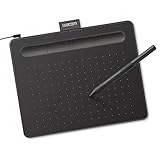
- Wacom Intuos Small Graphics Drawing Tablet: Enjoy industry leading tablet performance in superior control and precision with Wacom's EMR, battery free technology that feels like pen on paper
- Works With All Software: Wacom Intuos tablet can be used in any software program to explore new facets of digital creativity; draw, paint, edit photos/videos, create designs, and mark up documents
- What the Professionals Use: Wacom's industry leading pen technology and pen to paper feeling makes it the preferred drawing tablet of professional graphic designers
- Software and Training Included: Only Wacom gives you software with every purchase. Register your Intuos tablet and gain access to some of the best creative software and Wacom's online training
- Wacom is the Global Leader in Drawing Tablet and Displays: For over 40 years in pen display and tablet market, you can trust that Wacom to help you bring your vision, ideas and creativity to life
Which manufacturing simulation software is best for each use case?
The fastest way to shortlist manufacturing simulation software is to start with the decision you need to make rather than the vendor with the longest feature list.
| If you need to… | Start by evaluating… | Why |
|---|---|---|
| Analyze throughput, bottlenecks, buffers, staffing, or capacity | Siemens Plant Simulation, Autodesk FlexSim, or Simul8 | These products are positioned for discrete-event, production-flow, logistics, and process-improvement studies. |
| Test factory layout, material routes, conveyors, AGVs, or warehouse flow | Plant Simulation, FlexSim, or DELMIA Virtual Factory | These platforms model material movement, resources, transport, and what-if scenarios. |
| Validate robotic workcells, reach, collisions, and cycle time | Siemens Process Simulate or DELMIA Robotics | These products address 3D workcell, robot, process, and offline-programming requirements. |
| Evaluate operator reach, visibility, clearance, or ergonomics | Process Simulate or DELMIA Process Engineering/Robotics | Both product families include human or process-validation capabilities, subject to tier and configuration. |
| Test PLC behavior before equipment installation | Process Simulate X Standard or a comparable virtual-commissioning platform | Siemens explicitly positions the Standard tier for virtual commissioning with real PLC logic. |
| Connect process planning, product data, robotics, machining, and factory simulation | Dassault DELMIA or a Siemens Tecnomatix and Teamcenter workflow | These options are designed for broader manufacturing-engineering and digital-thread programs. |
| Run a focused line-balancing, staffing, or investment study quickly | Simul8 or Autodesk FlexSim | Both are positioned for practical process analysis and scenario experimentation. |
| Validate machining or NC-related manufacturing operations | DELMIA Machining or a specialized CAM/NC simulation product | Plant-flow tools are not substitutes for machine, toolpath, and NC-process validation. |
Quick comparison of the leading manufacturing simulation platforms
| Software | Best for | Factory flow and throughput | Robotics and offline programming | PLC or virtual commissioning | Integration and deployment signal | Pricing signal |
|---|---|---|---|---|---|---|
| Siemens Tecnomatix Plant Simulation | Complex production systems, logistics, buffers, and capacity | Excellent fit | Not its primary focus | Integration options include Siemens automation tools; verify the required configuration | CAD, databases, APIs, OPC UA, MQTT, and Siemens ecosystem integrations | Tiered Plant Simulation X plans; public page emphasizes plans and pricing rather than a universal price |
| Siemens Tecnomatix Process Simulate | Robotic cells, human tasks, process validation, and commissioning | Useful at process or workcell level, not a direct Plant Simulation substitute | Strong fit | Standard tier is positioned for virtual commissioning with real PLC logic | Teamcenter, eMServer, CAD interfaces, controllers, and optional connectors | Essentials, Standard, and Advanced; U.S. comparison page uses request-quote pricing |
| Autodesk FlexSim | Accessible 3D discrete-event manufacturing and logistics simulation | Strong fit | Not a specialized robot-controller simulator | Not its primary documented use case | Autodesk AutoCAD, Inventor, and Revit interoperability; online learning and community support | Free 30-day trial; universal public price not shown on the retrieved overview page |
| Dassault Systèmes DELMIA | Connected manufacturing engineering and virtual-factory programs | Strong in Virtual Factory | Strong in Robotics | Check the exact bundle, controller, and integration requirements | 3DEXPERIENCE continuity across process planning, robotics, machining, and factory simulation | Page-listed annual bundle prices vary by role: $6,098 to $8,675 as seen August 18, 2026 |
| Simul8 | Rapid process improvement, line balancing, staffing, and investment studies | Strong fit for focused discrete-event work | Not a detailed robot-programming platform | Not its primary documented use case | Evaluate actual MES, ERP, historian, database, and API requirements during a proof of concept | Demo, training, and consulting paths are available; no universal public price was visible in the retrieved material |
Feature and suitability judgments in this table reflect the vendors’ documented product positioning, not an independent benchmark. Product tiers, connectors, regional availability, and platform requirements can change, so a final selection should be based on a representative proof of concept.
Why is Siemens Plant Simulation the best choice for factory-flow analysis?
Siemens Tecnomatix Plant Simulation is the strongest choice in this shortlist when the central question concerns production-system behavior: throughput, bottlenecks, buffers, line balance, capacity, logistics, or resource utilization. Siemens describes Plant Simulation as software for modeling, simulating, visualizing, and analyzing production systems and logistics processes across facilities, plants, lines, and material-flow networks. See the Siemens Plant Simulation product documentation for its current positioning and integration details.
What can Plant Simulation model?
- Hierarchical and object-oriented production-system models
- 3D factory layouts and imported CAD data
- Machines, buffers, conveyors, resources, transport, and material flow
- Throughput, utilization, bottlenecks, energy, and cost analysis
- Sankey diagrams, Gantt charts, and scenario comparisons
- Libraries and user-defined objects for reusable model structures
Plant Simulation also lists interfaces including C, CAD, COM, JSON, MQTT, ODBC, OPC UA, Oracle SQL, sockets, and XML. Named Siemens integrations include NX Line Designer, Teamcenter, Simcenter HEEDS, Opcenter APS, TIA Portal, PLCSIM Advanced, and SIMIT. The exact connector, license, and configuration should be confirmed before purchase.
The Tool Desk
Outbyte Driver Updater FREEScan for outdated or missing drivers - takes under a minuteDriver Scan →Outbyte PC Repair FREERepair Windows errors before they cause bigger problemsFix Now →Which Plant Simulation X tier should you investigate?
| Tier or offering | Research-dossier signal | What to confirm |
|---|---|---|
| Plant Simulation X Essentials | Up to 500 objects | Whether the object limit fits the complete model and whether required interfaces are included |
| Plant Simulation X Standard | Up to 4,000 objects | Model size, user rights, integrations, and regional licensing terms |
| Plant Simulation X Advanced | Advanced tier presented by Siemens | Which advanced analyses, integrations, and add-ons are required for the use case |
| Plant Simulation X Runtime | Runtime offering presented by Siemens | Whether the deployment supports the intended users and scenario execution model |
| Plant Simulation X VSM Library | Value-stream-mapping library offering | Whether the library is licensed separately and supports the planned workflow |
| Optimize my plant | Service offering presented by Siemens | Scope, consulting deliverables, data requirements, and recurring cost |
The 500-object and 4,000-object limits are tier-specific signals from Siemens’ current offerings page, not universal limits for every Plant Simulation configuration. Confirm the limits for the buyer’s geography, agreement, and current product version using the Siemens Tecnomatix offerings page.
Who should and should not choose Plant Simulation?
Plant Simulation suits manufacturers with complex production or logistics systems, repeated factory-planning studies, Siemens automation or PLM investments, and a team able to maintain structured simulation models. Plant Simulation may be excessive for a small, isolated question that can be answered with a spreadsheet, a simple capacity model, or a lightweight discrete-event tool.
Verdict: Plant Simulation is the best overall choice for detailed production-system and material-flow simulation, particularly in large or complex manufacturing environments.
Why is Siemens Process Simulate the best choice for robotics and virtual commissioning?
Siemens Tecnomatix Process Simulate is designed for 3D manufacturing-process validation rather than plant-wide flow analysis. Process Simulate is the better starting point when the buyer must validate robot reach, collisions, assembly sequences, operator tasks, workcell layout, offline programs, or automation behavior before installation. Siemens explains the broader manufacturing-process-planning role in its manufacturing process planning and simulation overview.
What does Process Simulate validate?
- 3D workcell layouts and manufacturing sequences
- Robot reach, motion, collision, and interference
- Offline robot programming and program translation
- Assembly, disassembly, pick-and-place, material handling, spot welding, and continuous processes
- Human tasks, reach, posture, visibility, and ergonomics
- Cycle-time estimates and process feasibility
- PLC-connected virtual commissioning in the Standard tier
Process Simulate supports Teamcenter and eMServer integration, CAD interfaces, and optional high-value capabilities such as point-cloud alignment, augmented-reality alignment, and an NVIDIA Omniverse connector. Robot-controller compatibility, postprocessors, firmware, and supported robot languages must be tested with the buyer’s actual equipment.
What is the difference between Process Simulate X Essentials, Standard, and Advanced?
| Tier | Positioning in the current Siemens comparison | Best fit |
|---|---|---|
| Process Simulate X Essentials | 3D process and ergonomics simulation | Early process feasibility, human-task, layout, and basic workcell studies |
| Process Simulate X Standard | Virtual commissioning with real PLC logic | Automation teams that need to test control behavior before physical commissioning |
| Process Simulate X Advanced | Advanced workcell and robotic-manufacturing validation | Demanding robotic, automated, and integrated manufacturing projects |
The Process Simulate X comparison page lists the U.S. offerings as Essentials, Standard, and Advanced and uses a request-quote model. A detailed cell animation is not automatically a statistically reliable plant-throughput model; many projects use Process Simulate for the physical process and Plant Simulation for system flow.
Rank #2

- Word-first 16K Pressure Levels: The upgraded stylus features 16,384 levels of pressure sensitivity and supports up to 60 degrees of tilt, delivering smoother lines and shading for a natural drawing experience. With no battery or charging needed, it operates like a real pen, making it easy for beginners to create effortlessly. This functionality helps novice artists develop their skills and explore their creativity without the intimidation of complex tools
- Designed for Beginners: This drawing pad desinged with 8 customizable shortcuts for both right and left-hand users, express keys create a highly ergonomic and convenient work platform
- Perfectly Adapted for Android: The XPPen Deco 01 V3 art tablet supports connections with Android devices running version 10.0 and above. It is recommended to download the XPPen Tools Android application, which adapts to your smartphone's screen aspect ratio, ensuring accurate mapping. It also supports mapping on Android screens with different aspect ratios in portrait mode
- Large Drawing Space, Bigger Bold Inspiration: This expansive drawing pad has10 x 6.25-inch helps you break through the limit between shortcut keys and drawing area
- Easy Connectivity for Beginners: The Deco 01 V3 offers USB-C to USB-C connectivity, plus adapters for USB C. This ensures easy connection to various devices, allowing beginner artists to set up quickly and focus on their creativity without compatibility concerns. Whether using a laptop, tablet, or desktop, the Deco 01 V3 provides a seamless experience, making it an ideal choice for those just starting their digital art journey
Siemens describes Process Simulate X Essentials as a SaaS-oriented offering in which Siemens manages operations, maintenance, and updates. That managed deployment may reduce IT administration, but organizations requiring fully offline or heavily customized infrastructure should confirm the available deployment architecture.
Verdict: Process Simulate is the best fit for robotic workcells, ergonomics, offline programming, and virtual commissioning, especially for automotive, aerospace, heavy-equipment, and automation-integrator projects.
Quick wins for a faster PC:
Fix the driver behind crashes, sound loss and screen glitchesFind Drivers →Clear out junk files and repair common Windows errorsFree Scan →Scan for outdated or missing drivers - takes under a minuteDriver Scan →Is Autodesk FlexSim the most accessible 3D manufacturing simulator?
Autodesk FlexSim is a strong accessible option for 3D discrete-event simulation in manufacturing, logistics, warehousing, material handling, and supply-chain operations. Autodesk emphasizes drag-and-drop model construction, prebuilt object logic, code-free logic-building options, scenario management, and visual communication in its FlexSim overview.
What are FlexSim’s main strengths?
- Drag-and-drop factory and logistics model construction
- Prebuilt objects and logic for common production systems
- 3D visualization that can make scenarios easier to explain to managers and capital-planning teams
- Scenario Manager for what-if comparisons
- Manufacturing, conveyor, AGV, warehousing, and supply-chain applications
- Interoperability with AutoCAD, Inventor, and Revit
- Online learning resources, documentation, and a community forum
- A free 30-day trial, subject to the provider’s current terms
FlexSim is a good fit for industrial engineers and manufacturing engineers who need to build useful models quickly and communicate results visually. “Easy to use” should be treated as Autodesk’s product positioning, not as an independently measured usability score. Drag-and-drop construction does not eliminate the need to model arrival distributions, downtime, setups, shift calendars, routing, starvation, blocking, and rework correctly.
FlexSim is not a replacement for specialized robot-controller simulation, physics analysis, or PLC virtual commissioning. The public overview page highlights a free 30-day trial but does not show a universal list price in the retrieved material, so regional subscription or quote terms should be confirmed.
Verdict: FlexSim is the best accessible 3D discrete-event option for manufacturing and logistics teams that prioritize rapid modeling and stakeholder communication.
Free tools Windows power users keep installed
One-click scans. No signup required.
When is Dassault DELMIA the right manufacturing simulation platform?
Dassault Systèmes DELMIA is the strongest enterprise choice when simulation must sit inside a broader manufacturing-engineering workflow involving product data, manufacturing bills of material, process plans, resources, work instructions, robotics, machining, and virtual-factory analysis. DELMIA’s Manufacturing Engineering bundles are organized around Machining, Robotics, Process Engineering, and Virtual Factory.
What does each DELMIA bundle cover?
| Bundle | Documented focus | Page-listed annual price seen August 18, 2026 | Best fit |
|---|---|---|---|
| Machining | CAM, machine simulation, toolpaths, machining workflows, and NC-related validation | $6,098/year | Machining and NC-process work rather than plant-wide queue analysis |
| Robotics | Robot simulation, industrial-robot libraries, sensors and I/O, cycle validation, and program translation | $6,943/year | Robot programming and manufacturing-cell validation |
| Process Engineering | MBOM creation and management, process plans, resource assignment, and work instructions | $7,608/year | Manufacturing-process planning and execution preparation |
| Virtual Factory | Material and resource flow, AGV traffic and battery management, multiple scenarios, variable model detail, and what-if analysis | $8,675/year | Connected virtual-factory design and simulation |
The prices above are page-listed annual prices observed in the research dossier on August 18, 2026. Prices are associated with the displayed bundles and should not be treated as a complete enterprise-deployment cost. Taxes, geography, platform services, additional roles, storage, implementation, support, and enterprise agreements may change the final amount.
What are DELMIA’s strengths and limitations?
DELMIA is compelling for organizations pursuing a connected digital thread or virtual-twin program. The platform supports manufacturing-process planning, resources, work instructions, robotics, robot libraries, sensors and I/O, robot-cycle validation, robot-program import and export, AGV traffic, battery management, batch scenario analysis, and 3DEXPERIENCE data continuity.
DELMIA can be excessive for a small manufacturer that only needs to compare two staffing levels or estimate the effect of an additional machine. Buyers outside the Dassault ecosystem should also assess migration, data governance, platform services, user roles, and integration effort before assuming that a bundle price represents the total cost.
Rank #3
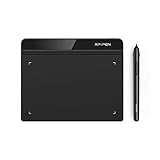
- Battery-Free Pen: StarG640 drawing tablet is the perfect replacement for a traditional mouse! The XPPen advanced Battery-free PN01 stylus does not require charging, allowing for constant uninterrupted Draw and Play, making lines flow quicker and smoother, enhancing overall performance
- Ideal for Online Education: XPPen G640 graphics tablet is designed for digital drawing, painting, sketching, E-signatures, online teaching, remote work, photo editing, it's compatible with Microsoft Office apps like Word, PowerPoint, OneNote, Zoom, Xsplit etc. Works perfect than a mouse, visually present your handwritten notes, signatures precisely
- Compact and Portable: The G640 art tablet is only 2 mm thick, it's as slim as all primary level graphic tablets, allowing you to carry it with you on the go
- Chromebook Supported: XPPen G640 digital drawing tablet is ready to work seamlessly with Chromebook devices now, so you can create information-rich content and collaborate with teachers and classmates on Google Jamboard’s whiteboard; Take notes quickly and conveniently with Google Keep, and effortlessly sketch diagrams with the Google Canvas
- Multipurpose Use: Designed for playing OSU! Game, digital drawing, painting, sketch, sign documents digitally, this writing tablet also compatible with Microsoft Office programs like Word, PowerPoint, OneNote and more. Create mind-maps, draw diagrams or take notes as replacement for mouse
Verdict: DELMIA is the best connected manufacturing-engineering and virtual-factory choice when design-to-production continuity matters as much as simulation.
Is Simul8 a good choice for fast manufacturing process-improvement studies?
Simul8 is a practical discrete-event option for testing process changes, line balancing, staffing, throughput, bottlenecks, facility changes, digital-twin experiments, and capital-investment scenarios. Simul8 presents its manufacturing offering around analyzing, testing, and implementing process changes, as described on the Simul8 manufacturing application page.
Where does Simul8 fit best?
- Focused line-balancing studies
- Capacity and staffing analysis
- Throughput and bottleneck investigation
- Capital-investment comparisons
- Lean and process-improvement experiments
- Facility-design and layout studies that do not require detailed robot kinematics
- Early digital-twin or Industry 4.0 planning
Simul8 offers demo, training, consulting, and deployment resources. The retrieved material did not provide a simple universal public price. Simul8 may be less suitable than Process Simulate or DELMIA Robotics for detailed robot programming, controller emulation, or full 3D workcell validation. Vendor case-study savings and throughput results should be treated as customer- or vendor-reported outcomes, not general performance guarantees.
Verdict: Simul8 is the best fit for fast, focused process-improvement modeling when a team does not need a PLM-centered manufacturing platform or detailed robotics environment.
How do you choose the right manufacturing simulation software?
Choose the platform by matching model fidelity to the decision, then verify integration, deployment, data, and ownership requirements with a representative proof of concept.
1. Define the decision before selecting features
Write the decision as a measurable question: “Can the line produce the required mix on the planned shifts?” “Where should the buffer be expanded?” “Can the robot reach the fixture without collision?” or “Will the PLC logic recover correctly after a downstream fault?” A product with many modules is not automatically the best product if the additional modules do not affect the decision.
2. Decide how much modeling depth is necessary
| Required depth | Typical question | Suitable shortlist |
|---|---|---|
| Simple capacity model | Can available hours meet demand? | Spreadsheet, Python model, or lightweight capacity tool may be sufficient |
| Discrete-event flow | How do variability, queues, failures, and buffers affect output? | Plant Simulation, FlexSim, or Simul8 |
| Detailed 3D process | Can people, tools, equipment, and robots perform the planned sequence? | Process Simulate or DELMIA |
| Virtual commissioning | Will real or emulated PLC logic operate the virtual equipment correctly? | Process Simulate X Standard or a comparable platform verified for the target controls stack |
| Connected digital thread | Can product, process, resource, simulation, and shop-floor data remain connected? | DELMIA or a Siemens Tecnomatix and Teamcenter architecture |
| Product or process physics | Will a component withstand thermal, structural, fluid, forming, machining, or additive conditions? | Specialized CAE, CAM, NC, or process-physics software |
3. Check integration at the exact edition and tier
Ask vendors to demonstrate the actual data path rather than showing a generic logo list. Verify CAD and PLM import, MES and ERP connectivity, SCADA or historian access, OPC UA, SQL, APIs, PLC interfaces, robot-controller support, robot-language translation, cloud collaboration, and model-result export. CAD geometry alone does not provide a manufacturing bill of material, process plan, work instruction, robot program, machine state, PLC behavior, or validated cycle-time data.
4. Evaluate deployment and governance
Compare desktop or on-premises operation, SaaS, cloud-hosted desktop, hybrid deployment, runtime-only execution, central model governance, data residency, security, offline operation, and update responsibility. A managed SaaS option may simplify maintenance, while a regulated or disconnected plant may require a different architecture.
Recommended Free Tools
5. Include implementation effort in the buying decision
Total cost includes licenses, subscriptions, add-ons, training, consulting, model-building labor, data engineering, integrations, IT administration, graphics hardware, model maintenance, runtime licenses, support, and change management. For a company without internal simulation expertise, accurate model construction and maintenance can cost more than the subscription.
How much does manufacturing simulation software cost?
Manufacturing simulation software pricing is difficult to compare because vendors may sell named-user or concurrent licenses, SaaS or desktop deployments, product tiers, runtime rights, add-ons, connectors, training, consulting, and enterprise platform services under different structures.
Rank #4

- Wide Compatibility for Multiple Devices: Works seamlessly with Samsung, iOS, Android, Chromebook, Smartphone, and other touchscreen devices. No drivers are needed- simply open and play, ensuring compatibility with a variety of tablets and smartphones. No Charging Required, Ready Anytime.
- High-Precision Touch for Smooth Writing & Drawing: Featuring advanced capacitive technology, this stylus pen offers high sensitivity and precision, delivering a smooth, real-pen experience perfect for writing, sketching, note-taking, and more.
- Ergonomic Design for Comfortable Grip: Crafted with a lightweight and durable body, the stylus is designed for long periods of comfortable use. Whether you’re creating, studying, or performing everyday tasks, it ensures a pleasant grip.
- Scratch-Resistant & Durable, Protects Your Screen: Equipped with a soft, high-quality Disc tip that ensures smooth touch without scratching the screen, keeping your device’s display in pristine condition while providing a seamless user experience.
- A great gift: Get 3 different colors of styluses at an unbeatable price instead of a high-priced pencil. You can share these stylus pens with your friends or family.
| Product | Public pricing signal in the research dossier | What the buyer must confirm |
|---|---|---|
| Plant Simulation X | Siemens presents tiered offerings and a plans-and-pricing path, but no universal price was provided in the retrieved material. | Tier, object limit, concurrency, runtime, interfaces, add-ons, support, and implementation |
| Process Simulate X | The U.S. comparison page lists Essentials, Standard, and Advanced with request-quote pricing. | Virtual-commissioning rights, robot connectors, postprocessors, controller support, CAD, Teamcenter, and deployment |
| FlexSim | Autodesk advertises a free 30-day trial; the retrieved overview did not show a universal public price. | Subscription terms, trial feature limits, users, modules, support, and data connectivity |
| DELMIA | Annual page-listed bundle prices seen August 18, 2026: $6,098 Machining, $6,943 Robotics, $7,608 Process Engineering, and $8,675 Virtual Factory. | Geography, currency, taxes, platform services, roles, storage, implementation, support, and enterprise terms |
| Simul8 | Demo, training, consulting, and pricing-navigation paths are available; no universal public price was visible in the retrieved material. | License type, users, deployment, integrations, training, consulting, and support |
Do not compare a public annual DELMIA bundle price directly with a Siemens quote-based license as though both represented the same scope. Do not assume a free trial includes enterprise integrations, all modules, or production deployment rights. Ask each vendor for a written total-cost estimate covering at least the first year and the expected three-year operating period.
Independent reader supportYour contribution helps us test, update, and keep practical guides available for everyone.What data is needed for a credible manufacturing simulation?
A credible model needs operational data that represents variability, not just a clean list of average cycle times. The minimum viable dataset usually includes:
What’s actually slowing this PC down?
Pick the symptom - the matching free tool is one click away.
- Routing and process sequence
- Product mix, order mix, demand profile, and batch sizes
- Cycle-time distributions for each operation
- Setup and changeover times
- Breakdown, repair, and planned-maintenance behavior
- Shift calendars, breaks, holidays, and planned downtime
- Scrap, yield, inspection, and rework loops
- Buffer capacities and queue disciplines
- Operator skills, staffing, availability, training, absences, and ergonomic constraints
- Material-handling times, transport rules, vehicle capacity, and route restrictions
- Machine, robot, tooling, fixture, and controller constraints
- Material shortages, supplier variability, and replenishment rules
Using average cycle time alone can hide downtime, setup effects, product-mix differences, starvation, blocking, and queue growth. When empirical data is limited, document the assumptions and test their sensitivity instead of presenting assumed values as measured facts.
How should a manufacturing simulation model be validated?
Validation means demonstrating that the model is a sufficiently accurate representation for its stated purpose; validation does not mean proving that the model is a perfect copy of the plant.
- State the purpose and boundary. Define the decision, time horizon, included processes, excluded processes, and performance measures.
- Verify the logic. Review routing, state changes, failure behavior, calendars, resource rules, transport, queue disciplines, and rework loops with process owners.
- Build a baseline. Use a known historical period and compare simulated and actual throughput, WIP, utilization, downtime, cycle time, and bottleneck behavior.
- Handle stochastic behavior correctly. Use multiple replications for random models, address warm-up periods where appropriate, and report uncertainty ranges or confidence intervals.
- Test sensitivity. Vary uncertain cycle times, downtime, staffing, demand, yield, and transport assumptions to identify conclusions that are robust.
- Review with operators and maintenance personnel. Front-line experts often identify omitted breaks, tool changes, quality checks, recovery procedures, and practical constraints.
- Document exclusions and version the model. Record data sources, assumptions, software edition, model changes, and the date of validation.
A model that produces one precise throughput number without a baseline comparison, uncertainty analysis, or documented assumptions should be treated cautiously. A visually realistic 3D animation is evidence of visualization, not proof that the production logic is correct.
How do you run a useful software proof of concept?
A proof of concept should test whether a platform can answer a real manufacturing question with real data, not merely whether the vendor can create an attractive demo.
- Select one representative line or workcell. Include enough variability, routing, equipment, operators, buffers, and material handling to expose the software’s limitations.
- Use actual production data. Include product mix, routing, cycle-time distributions, setup, downtime, shifts, quality losses, and transport rules.
- Reproduce a baseline period. Compare the model with actual production before evaluating improvement scenarios.
- Test two or three decisions. Examples include adding a machine, changing buffer size, altering staffing, changing a robot path, or modifying a PLC recovery sequence.
- Measure model error and usability. Record baseline error, run time, data-import effort, training time, scenario-build time, and the effort needed to explain results.
- Test required integrations. Use the actual CAD files, database connection, PLC environment, robot brand, controller, postprocessor, MES export, or PLM workflow where possible.
- Review ownership and deployment. Confirm who owns models, how models are updated, how results are exported, whether runtime licenses are needed, and how access works after the trial.
What are the main failure modes when buying simulation software?
Choosing the wrong simulation layer
A plant-throughput model cannot answer every robot-motion, ergonomic, or structural-physics question. A detailed robot-cell model may also be the wrong tool for plant-wide WIP, queue, demand-variability, and capacity analysis. Some larger projects legitimately need more than one simulation layer.
Using averages instead of variability
Average cycle times can conceal the failures, setups, changeovers, product mix, and staffing constraints that determine real throughput. Use distributions or empirically derived data where possible.
Confusing 3D realism with analytical validity
A realistic layout or animation can still contain incorrect routing, calendars, failure behavior, demand assumptions, or resource logic. Validate the model against actual production.
Leaving out people, maintenance, and quality
Breaks, absences, training levels, ergonomic limitations, maintenance windows, tool changes, quality inspections, rework, and material shortages can materially change results. Excluding those factors should be a conscious, documented decision.
Best Value

- Wireless Connection: ACK05 wireless shortcut keyboard supports bluetooth 5.0 connection directly, which is Good Design Award 2023 Winners, providing you a more flexible and clean workspace. You can also connect it via a Bluetooth dongle or USB cable. Total three ways connection bring you stable and fast transmission, also can meet your different work scenarios
- Please Note: If you do not download the driver, it can only be used as a regular shortcut keyboard. However, if you wish to customize the keys or program it, you must download the driver and configure it accordingly. If your device is an iPad or runs on iOS, after receiving the product, you need to download the "Shortcut Remote" app on your device in order to properly set up and use this product properly
- Compact Size with Large 1000 mAh Battery: The Wireless Shortcut Remote features a thin profile and weighs only 75 g, easy for one hand to hold. With built-in 1000 mAh battery ensures the continuous working for about 300 hours. Ready to speed up your creation whenever you grab it
- Customize up to forty Shortcuts: The Wireless Shortcut Remote has ten keys. You are allowed to customize four sets through the driver -- up to forty shortcuts. To switch between the sets, you only need to press a single key. Its capability to work with different applications makes itself a powerful productivity tool not only for creation, but also for study, work, and gaming
- Anti-Ghosting Performance: The Mini Keydial features a new technology of Anti-ghosting for all ten keys, you can control with multi-keys at the same time, which will give you more customizable possibilities
Assuming CAD integration equals process integration
Imported geometry does not automatically include manufacturing features, process plans, work instructions, robot programs, machine states, PLC behavior, or validated cycle-time data.
Overstating digital-twin claims
A static 3D factory model used in a presentation is not automatically a digital twin. Distinguish between offline simulation, a periodically refreshed model, a real-time connected model, and a closed-loop control or optimization system. Use “digital twin” only when the model’s connection to operational data and refresh behavior are clearly defined.
Accepting vendor-reported ROI as a guarantee
Vendor case studies may report savings, throughput improvements, or revenue gains for a particular customer and project. Those results are not general performance guarantees and should be independently evaluated against the buyer’s baseline.
Ignoring product and tier naming
Plant Simulation, Process Simulate, DELMIA, and FlexSim are not single uniform feature sets. Editions, tiers, add-ons, platform requirements, regional licensing, robot connectors, and deployment models can change the comparison. Name the exact product and tier in procurement documents.
Do these 3 things before closing this tab:
1Clear out junk files and repair common Windows errors2Fix the driver behind crashes, sound loss and screen glitches3Repair Windows errors before they cause bigger problemsFinal manufacturing simulation software buying checklist
- Have we defined whether the need is factory flow, discrete-event analysis, robotics, ergonomics, virtual commissioning, process planning, machining, or product physics?
- What decisions must the model support, and what accuracy is required?
- What is the maximum expected model size, and do tier-specific object limits apply?
- How many users need authoring, reviewing, scenario-running, or runtime access?
- Is licensing named-user, concurrent, subscription, SaaS, desktop, on-premises, or hybrid?
- Which CAD, PLM, MES, ERP, SCADA, historian, database, API, and OPC UA connections are required?
- Which robot brands, controllers, firmware versions, languages, postprocessors, and PLC environments must be supported?
- Does the deployment need to operate offline, meet data-residency requirements, or use vendor-managed updates?
- Are training, consulting, data cleaning, model maintenance, and change management included in the budget?
- Can the vendor reproduce one representative line or workcell using the buyer’s data?
- Can the buyer validate the baseline against historical throughput, WIP, utilization, downtime, and quality data?
- Who owns the model, assumptions, scripts, integrations, and exported results?
- Are runtime licenses, add-ons, annual renewals, storage, support, and integration fees documented?
Frequently Asked Questions
What is the best manufacturing simulation software overall?
There is no single best manufacturing simulation software for every use case. Siemens Plant Simulation is the strongest overall choice for factory material flow, throughput, bottlenecks, buffers, and capacity, while Process Simulate, FlexSim, DELMIA, and Simul8 are better fits for robotics, accessible 3D studies, connected manufacturing engineering, and rapid process improvement respectively.
What is the best manufacturing simulation software for small manufacturers?
Autodesk FlexSim and Simul8 may be practical starting points for small manufacturers conducting focused process-improvement or capacity studies because their documented positioning emphasizes accessible modeling, rapid analysis, trials or demos, and practical deployment. Plant Simulation or DELMIA may be justified when a model must scale into a broader factory-planning or digital-thread program.
Which manufacturing simulation software supports virtual commissioning?
Siemens Process Simulate X Standard is explicitly positioned for virtual commissioning with real PLC logic. Buyers should still verify support for the exact PLC, robot controller, firmware, communication architecture, and required connectors before purchasing.
How much does DELMIA manufacturing simulation software cost?
The Dassault Systèmes page listed annual prices seen August 18, 2026 of $6,098 for Machining, $6,943 for Robotics, $7,608 for Process Engineering, and $8,675 for Virtual Factory. The displayed bundle prices are not necessarily the complete cost of ownership; geography, taxes, platform services, roles, storage, implementation, support, and enterprise terms may change the final price.
Is a 3D factory model automatically a digital twin?
No. A static 3D factory model is not automatically a digital twin. A digital-twin claim should specify the operational data connection, refresh frequency, deployment architecture, and whether the model supports offline analysis, real-time monitoring, or closed-loop control.
The Bottom Line
Bottom line: Start with Siemens Plant Simulation for plant-wide material flow and throughput, Siemens Process Simulate for robotic workcells and virtual commissioning, Autodesk FlexSim for accessible 3D discrete-event modeling, Dassault DELMIA for connected manufacturing engineering, and Simul8 for fast focused process-improvement studies. Choose only after a proof of concept reproduces a real baseline using representative production data.
Quick Recap
Product prices and availability are accurate as of the date/time indicated and are subject to change. Any price and availability information displayed on Amazon at the time of purchase will apply.

