
The best cameras for recording yoga videos are the Canon EOS R50 V for most tripod-mounted classes, the Sony ZV-E10 II for advanced creators, the DJI Osmo Pocket 3 for simple moving shots, the Canon EOS R50 for lower-cost 4K recording, and the Panasonic GH7 for professional multi-camera studios.
The right choice depends less on megapixels than on whether the camera can show the entire mat, record for the full class, capture clear speech, accept continuous power, and work with suitable lighting and audio. For most instructors, a stable tripod, wide lens, external microphone, and soft light will improve the finished class more than an expensive camera body.
Key takeaways
- The Canon EOS R50 V is the best overall video-first camera for most instructors recording full-body classes from a tripod, with 4K recording, 4K/60p crop recording, 10-bit options, Canon Log 3, and vertical-video support.
- The Sony ZV-E10 II is the stronger choice for creators who want internal 10-bit 4:2:2 recording, 4K/60p, advanced human-recognition autofocus, headphone and microphone ports, and the Sony E-mount lens system.
- The DJI Osmo Pocket 3 is the easiest all-in-one option because its 1-inch sensor, three-axis mechanical gimbal, rotating screen, ActiveTrack 6.0, and 4K/120p recording reduce setup difficulty.
- The Canon EOS R50 is a practical budget mirrorless camera for normal-speed 4K/30p classes, while its lack of 4K/60p makes it less suitable for slow-motion demonstrations.
- A yoga setup must budget for a wide lens, sturdy tripod, external microphone, lighting, memory card, and continuous power rather than treating the camera body price as the total cost.
Which camera is best for recording yoga videos?
The Canon EOS R50 V is the best default recommendation for a yoga instructor who records mostly from a tripod and wants a camera that can handle full classes, tutorials, vertical clips, and future livestreaming. Canon lists 4K recording, 4K/60p crop recording, 10-bit recording options, Canon Log 3, vertical-video support, and compatibility with RF and RF-S lenses on the EOS R50 V specifications page.
The R50 V does not have sensor-based in-body image stabilization. That is normally acceptable for a locked-off yoga class, because the tripod—not the camera sensor—should keep the main shot steady. Use a stabilized lens, gimbal, or the DJI Pocket 3 instead when the camera must move.
The Tool Desk
Outbyte Driver Updater FREEScan for outdated or missing drivers - takes under a minuteDriver Scan →Outbyte PC Repair FREERepair Windows errors before they cause bigger problemsFix Now →#1 Best Overall

- 【Video Camera as Webcam】: The video camera is useful to take the beautiful photos and share it in your Youtube. It can be used as webcam when the camera connect the computer. Please operate the camera button to choose the “PC CAM” mode.When the “AMCAP ” window is opened,from which shooting object through the camera will be showed on this window. You can have a video call with your families or friends. Please download the software “AMCAP ” before use the webcam function.
- 【Multifunction Camcorder】: 1080P(15fps) Video Resolution, 24M(6000x4500) Image Resolution, image format (JPEG), video format(AVI), 16X digital zoom, camcorder with fill light, 3.0 inch LCD and supports 270°rotation, Anti-shake, Face Capture, Beauty Function, Self-timer and Webcam function, Pause function, USB 2.0, TV Output, Setting Date and Time.
- 【Pause Function】: This video camera supports Pause function,so you can pause the recording when you need,then continue recording again without starting a new one, which makes it easier for you to edit and upload the videos. This video camera included a USB cable,you can connect it directly to the computer to upload videos. This video camera included a AV cable,you can connect it directly to the TV to playback the videos.
- 【Recording While Charging】: The camcorder come with two NP-FV5 batteries. It allows you to keep recording around 60 to 90 minutes when it's fully charged. For the first time use need to charge more than 8 hours. The camcorder support the recording while charging,good to record long videos anytime.
- 【Small and Compact Camcorder】: The camcorder supports SD/SDHC card up to 128GB (not included), just remember to format the SD card before use the camcorder first time. The camcorder support the tripod(not included) connection and the hole is standard size.
| Camera | Best for | Useful video strengths | Stabilization | Lens flexibility | Main drawback |
|---|---|---|---|---|---|
| Canon EOS R50 V | Most tripod-mounted yoga classes | 4K, 4K/60p crop, 10-bit options, Canon Log 3, vertical video | No IBIS; use a tripod or stabilized lens | Interchangeable RF/RF-S lenses | 4K/60p crop can make a small room harder to frame |
| Sony ZV-E10 II | Serious YouTube and course production | 4K/60p, internal 10-bit 4:2:2, human subject recognition, USB/network streaming | No IBIS; use a tripod or stabilized lens | Large Sony E-mount ecosystem | Higher cost and more demanding editing workflow |
| DJI Osmo Pocket 3 | Fast setup, moving demonstrations, and travel | 1-inch sensor, 4K/120p, ActiveTrack 6.0, rotating screen, 10-bit D-Log M/HLG | Three-axis mechanical gimbal | Fixed lens | Less control over perspective and lens choice |
| Canon EOS R50 | Budget tripod-mounted 4K classes | 24.2MP APS-C sensor, uncropped 4K/30p, Dual Pixel CMOS AF II, USB streaming | No IBIS; use a tripod or stabilized lens | Interchangeable RF/RF-S lenses | No 4K/60p and fewer video-specific controls than the R50 V |
| Panasonic Lumix GH7 | Professional studio and multi-camera production | 5.7K recording, high-bitrate formats, high frame rates, stabilization, advanced audio options | Strong in-body stabilization | Micro Four Thirds lenses | Complex and excessive for a beginner’s single-camera class |
What makes a camera good for yoga videos?
A good yoga camera must keep the entire body visible while the instructor lies down, stands, reaches, twists, and moves toward the corners of the mat. The camera also needs to record reliably for the full class and capture speech clearly from several feet away.
For a typical fixed class, prioritize the following in this order:
- Full-mat framing: The lens must show hands, feet, and the space around the mat in the exact recording mode you plan to use.
- Audio: A lavalier or wireless microphone close to the instructor is usually more important than a higher-resolution camera body.
- Long-session reliability: Test heat, battery, memory-card capacity, file behavior, and continuous power for longer than the planned class.
- Lighting: A soft key light or controlled window light can improve a modest camera more than a premium body can improve a poorly lit room.
- Lens flexibility: An interchangeable-lens camera can adapt to a small room, talking-head lesson, or second camera angle.
- Autofocus: Autofocus matters when the instructor walks toward the camera or changes distance; manual focus can be safer for a locked shot.
- Stabilization: Stabilization is valuable for moving footage but usually unnecessary for the main tripod-mounted class.
Which camera fits your type of yoga video?
Locked-off full yoga classes
A locked-off class is the default use case: the camera stays on a tripod while the instructor teaches for 30, 45, 60, 75, or 90 minutes. A wide lens, external power, clear audio, stable focus, adequate card capacity, and heat testing matter more than gimbal stabilization.
The Canon EOS R50 V, Canon EOS R50, and Sony ZV-E10 II are well suited to this format. The camera can be placed at the front or corner of the room, focused manually after a framing test, and left untouched during the class. If the instructor regularly walks toward the camera, continuous human autofocus becomes more useful.
Talking-head instruction and seated meditation
Talking-head instruction and seated meditation benefit from a moderately wide lens rather than the most extreme ultra-wide lens. A less exaggerated perspective produces more natural facial proportions and allows the instructor to separate from the background.
The Sony ZV-E10 II is a strong fit when the creator wants to color-grade footage, use a microphone and headphones, or change lenses for different segments. The Canon R50 V also suits creators who want video-oriented controls without moving into a cinema-camera workflow.
Demonstration clips and vertical social content
Demonstration clips need quick setup, tracking, vertical-video support, and sometimes high frame rates for slow motion. Canon specifically lists vertical-video recording for the R50 V, while the DJI Pocket 3 uses its rotating screen and gimbal design for horizontal or vertical shooting. See the DJI Osmo Pocket 3 product information for its rotating screen, ActiveTrack 6.0, and listed recording capabilities.
The R50 V is the better long-term choice if you want interchangeable lenses. The Pocket 3 is easier when a solo instructor needs to put the camera down, move around, and start recording with minimal setup.
Do these 3 things before closing this tab:
1Fix the driver behind crashes, sound loss and screen glitches2Clear out junk files and repair common Windows errors3Scan for outdated or missing drivers - takes under a minuteMoving camera and cinematic B-roll
Moving B-roll requires mechanical or sensor stabilization, tracking autofocus, a stabilized lens or gimbal, compact equipment, and a way to record clean speech separately. The DJI Pocket 3 is the easiest solution because its three-axis gimbal is built into the camera. The Panasonic GH7 is the more advanced option for a production team that needs professional recording formats, stabilization, and multiple angles.
Livestreamed yoga classes
A livestream setup must be evaluated separately from internal recording. Check USB webcam mode or clean HDMI, continuous power, heat behavior, microphone routing, computer compatibility, and the platform’s resolution limits.
Canon lists UVC/UAC webcam and streaming functions for the EOS R50, and Sony lists USB webcam and live-streaming support through USB-C and Wi-Fi for the ZV-E10 II. The Canon EOS R50 product page describes the camera’s webcam and streaming compatibility. USB streaming is not automatically identical to the quality of the camera’s internal 4K files, so test the complete computer and platform workflow before teaching a paid live class.
How do the five recommended cameras compare?
Canon EOS R50 V: best video-first tripod camera
The Canon EOS R50 V is the strongest all-around choice for an instructor who wants a dedicated video workflow. Its 4K modes, 4K/60p crop mode, 10-bit options, Canon Log 3, vertical-video features, front-facing recording indicator, and RF/RF-S lens compatibility cover both full classes and short-form content.
What’s actually slowing this PC down?
Pick the symptom - the matching free tool is one click away.
The main yoga-specific limitation is the 4K/60p crop. A composition that fits the complete mat in 4K/30p may crop hands or feet when switched to 4K/60p. Frame the camera in the exact final mode, leave extra space around extended limbs, and move the camera farther away or use a wider lens if necessary.
The R50 V is best on a tripod. Its lack of IBIS is a meaningful limitation for handheld walking footage, but not for a stationary master shot. Canon also identifies the RF-S 14–30mm F4–6.3 IS STM PZ as a video-oriented power-zoom option in its EOS R50 V announcement.
Sony ZV-E10 II: best for advanced image quality and editing flexibility
The Sony ZV-E10 II is the better choice for a creator who plans to color-grade, produce a polished YouTube channel, or build a paid course library. Sony lists a 26MP APS-C sensor, 4K/60p, internal 10-bit 4:2:2 recording options, human subject recognition, phase-detection autofocus, microphone and headphone connections, and USB/network streaming in the ZV-E10 II specifications.
Sony lists up to 495 phase-detection focus points for movie recording. That capability is useful when the instructor changes distance, but it is not foolproof in low light, in front of mirrors, with patterned clothing, or when the instructor moves outside the focus area.
Quick wins for a faster PC:
Scan for outdated or missing drivers - takes under a minuteDriver Scan →Clear out junk files and repair common Windows errorsFree Scan →Fix the driver behind crashes, sound loss and screen glitchesFind Drivers →The ZV-E10 II has no IBIS, so use a tripod for the main class or pair the body with a stabilized lens. Its 10-bit formats provide more grading flexibility, but they also require more storage and a computer capable of editing the selected codec. A beginner who wants ready-to-publish files may gain little from paying for that extra complexity.
DJI Osmo Pocket 3: best easiest all-in-one option
The DJI Osmo Pocket 3 is the simplest camera for instructors who value portability and fast setup. The camera combines a 1-inch sensor, three-axis mechanical gimbal, 2-inch rotating touchscreen, ActiveTrack 6.0, 4K/120p recording, and 10-bit D-Log M/HLG support in a compact fixed-lens body.
The Pocket 3 is especially practical for demonstration clips, retreats, travel, instructor introductions, and small rooms. ActiveTrack can help a solo creator remain in the frame while moving, and DJI lists compatibility with its wireless microphone systems.
The fixed lens is also the Pocket 3’s central limitation. The camera offers less control over perspective, background separation, and focal length than a mirrorless camera. Its wide view may make hands or feet near the edges look disproportionately large, and a camera positioned far from the mat may not produce the tighter, more natural composition an instructor wants.
DJI’s U.S. store showed Pocket 3 configurations marked out of stock when the research was checked; stock can change quickly, so verify availability on the official DJI store page before purchase. The listed price signals at that time were $499 for the standard camera, $629 for the Creator Combo, and $532 to $698 for other microphone bundles. Those figures were observed on August 16, 2026, and should not be treated as permanent prices.
Canon EOS R50: best lower-cost interchangeable-lens starting point
The Canon EOS R50 is a sensible budget mirrorless camera for instructors who mainly need normal-speed 4K classes, a vari-angle screen, dependable autofocus, and USB webcam compatibility. Canon lists a 24.2MP APS-C sensor, 6K-oversampled uncropped 4K up to 30p, and Dual Pixel CMOS AF II on the EOS R50 product page.
The R50’s main limitation for yoga is the absence of 4K/60p. Yoga generally looks natural at 24p, 25p, or 30p, so the limitation matters mainly for slow-motion demonstrations, faster transitions, or footage that will be slowed during editing.
Canon’s U.S. page displayed a regular price of $779.99 and an as-low-as price of $729.99 when checked on August 16, 2026. The lower figure was promotion-sensitive. The camera body or kit price is not the price of a complete yoga setup; reserve money for a wide lens, tripod, microphone, light, memory card, and power.
Rank #2

- 4K & 64MP Video Camera Camcorder: Capture life in breathtaking detail with 4K Ultra HD recording and vibrant 64MP photos, powered by an advanced high-sensitivity CMOS sensor. Equipped for exploring the beautiful world, this video camera is your perfect companion! Ideal for video recording, travel vlogs, family activities, interviews, studying, and cherishing precious moments
- 18X Digital Zoom & Infrared Night Vision: This 4K camcorder powerful 18x digital zoom brings distant action right to you. Capture clear details of people and landscapes. With the push of “OK” button, activate the IR cut filter. This night vision camcorder delivers high-contrast black & white video in total darkness, providing a clearer image than standard low-light color mode
- 3.0 Inches Touchscreen with 270° Rotation: This camcorder features a brilliant 3-inch touchscreen that puts complete control in your hands. The screen rotates a full 270 degrees, making it a game-changer for vloggers. Easily frame yourself for solo shots, capture high-angle overhead videos, or get creative low-angle perspectives
- Webcam & Remote Control: Instantly transform your camcorder into webcam with a single USB cable. No complex drivers needed. Just connect and ready to go. Elevate your live streams and professional presentations with stunning 4K clarity. This video camera comes with a handy wireless remote to start/stop recording, and take photos without ever touching the device—ideal for solo creators, vloggers, and group shots
- Multifunctional Camcorder: This 4K camcorder is loaded with pro features. Like face detection, video pause, slow motion, continuous shooting, time-lapse, self-timer, recording while charging, date stamp. Resulting in consistently smooth, sharp, and stunning footage in every scene. The two high-capacity batteries and 32GB micro SD card ensure that you won't miss a single beautiful moment in life
Panasonic Lumix GH7: best advanced production option
The Panasonic Lumix GH7 is appropriate for a professional instructor, studio, or production company building a multi-camera workflow. TechRadar’s video-camera comparison and Panasonic catalog material identify its advanced video feature set, including 5.7K recording, high-frame-rate options, strong stabilization, and professional audio possibilities.
The GH7 makes more sense when a production needs long-form recording, several camera angles, high-bitrate files, substantial color grading, slow motion, high-resolution reframing, robust monitoring, or a more advanced audio workflow. The GH7 is overkill for a beginner recording one weekly class from a tripod. Autofocus behavior should also be tested against the instructor’s actual movement rather than inferred from the specification sheet.
How wide should a yoga camera lens be?
The best lens for a yoga room is wide enough to show the entire mat and extended limbs without forcing the camera so close that hands, feet, or faces look distorted. Focal length alone does not determine whether a lens is wide enough; camera distance, sensor size, orientation, crop mode, and room dimensions all matter.
| APS-C focal-length range | Typical use | Yoga trade-off |
|---|---|---|
| Approximately 10–18mm | Small rooms and very wide full-body compositions | Can exaggerate body proportions near the edges |
| Approximately 16–24mm | Starting range for many full-mat shots | Still requires a framing test in the actual room |
| Approximately 24–35mm | Closer instruction, seated meditation, and talking heads | May be too narrow for a full class in a small room |
| Longer focal lengths | Detail shots and a second camera angle | Usually unsuitable for a single full-mat master shot |
On a Micro Four Thirds camera such as the GH7, a shorter focal length is required to produce a similar field of view to APS-C. Do not buy a lens based only on its millimeter number without checking the camera’s sensor format.
PC Slower Than It Used to Be?
A free scan shows the junk files, broken settings and background clutter dragging Windows down - then fixes them in one click.Free scan · Windows 10 & 11Outdated Drivers Are Slowing You Down
One free scan finds every outdated or missing driver and matches the right update for your exact hardware.Free scan · exact hardware matchTest the composition with a person lying down, standing with arms extended, and reaching toward the corners of the mat. A framing that works for a standing pose can crop hands or feet during downward dog, extended side angle, or a floor sequence.
An ultra-wide lens can fit an entire room but make limbs near the frame edges appear unusually large. Move the camera farther away and use a less extreme wide-angle lens when the room permits. Keep the instructor away from the extreme edges whenever possible.
Is autofocus important for yoga videos?
Autofocus is important when the instructor walks toward the camera, changes between standing and floor positions, records alone, or moves close to the lens for demonstrations. Autofocus is less important—and can be less reliable—when the instructor stays within a known area during a locked-off class.
Canon lists Dual Pixel CMOS AF II on both the R50 and R50 V. Sony lists human subject recognition and phase-detection autofocus for movie recording on the ZV-E10 II. These features can reduce refocusing work, but mirrors, patterned clothing, low contrast, dim light, and competing objects can still cause focus hunting.
Free tools Windows power users keep installed
One-click scans. No signup required.
For a locked shot, place a person or stand-in at the instructor’s farthest position, focus on the face or upper body, stop down slightly to increase depth of field, and test the complete movement range. Manual focus is often safer when the camera will remain fixed and the instructor’s position is predictable.
Does yoga require image stabilization?
Most yoga classes do not require image stabilization because the main shot should be mounted on a stable tripod. Stabilization matters for walking into the studio, handheld demonstrations, retreat footage, travel content, moving B-roll, and self-recording with a small grip.
The DJI Pocket 3 has three-axis mechanical gimbal stabilization. The Canon R50 V and Sony ZV-E10 II do not provide sensor-based stabilization, so they should be used on a tripod or with a stabilized lens for moving footage. The Panasonic GH7’s stabilization is more valuable in a professional moving or multi-camera production than in a fixed master shot.
For a static class, money spent on a wider lens, microphone, soft light, tripod, and continuous power generally produces a more useful improvement than money spent solely on handheld stabilization.
What resolution and frame rate should you use?
Use 4K at 24p, 25p, or 30p as the starting point for most recorded yoga classes. This provides detail for cropping and reframing while keeping file sizes, lighting demands, and editing requirements manageable.
| Format | Best use | Important limitation |
|---|---|---|
| 1080p | Basic course platforms, low-bandwidth streaming, and older computers | Less detail for cropping or reframing |
| 4K/24p, 25p, or 30p | Normal-speed full classes and tutorials | Requires more storage than 1080p |
| 4K/60p | Slow-motion segments, fast transitions, and some post-production reframing | May crop the image, require more light, and create larger files |
| 4K/120p or HD/120p | Short slow-motion demonstrations | Higher lighting, storage, and editing demands; unnecessary for a whole class |
The R50 V supports 4K/60p crop recording, the ZV-E10 II supports 4K/60p and HD/120p, and DJI lists 4K/120p for the Pocket 3. Canon’s R50 V specifications, Sony’s ZV-E10 II specifications, and DJI’s Pocket 3 product page document these modes.
Higher frame rates do not automatically create better normal-speed yoga footage. A 4K/60p mode may introduce a crop, need more light, increase storage demands, or complicate editing. Record the full class at a normal frame rate and reserve 60p or 120p for demonstrations that genuinely benefit from slow motion.
How long can a camera record a yoga class?
No camera should be assumed to record indefinitely. Continuous recording depends on resolution, frame rate, codec, ambient temperature, battery, memory-card capacity and speed, file segmentation, automatic shutdown settings, and whether the camera is powered externally.
Recommended Free Tools
Canon specifically advertises recording longer than 30 minutes and USB webcam/streaming compatibility for the EOS R50. That claim does not guarantee that every R50 configuration will record a 90-minute class without interruption. Test the exact settings and room conditions first.
Pre-class reliability test
- Insert the exact memory card intended for the class.
- Connect the exact USB or AC power source and cable.
- Set the planned resolution, frame rate, codec, white balance, and autofocus mode.
- Record for longer than the planned class duration.
- Confirm that the recorded file opens, transfers, and edits correctly.
- Check that audio remains synchronized and intelligible throughout the recording.
- Check the camera body, battery, and power adapter for excessive heat.
- Repeat the test in the room at its warmest expected temperature.
What audio setup do yoga videos need?
The camera’s internal microphone should be treated as a backup rather than the main audio source. An instructor several feet from a camera will often sound distant or echoey, especially in a room with hard floors, bare walls, mirrors, and glossy surfaces.
| Audio option | Best use | Common weakness |
|---|---|---|
| Wired lavalier | Lowest-cost clear speech for a stationary setup | Cable rubbing, snagging, or restricting movement |
| Wireless microphone | Instructors moving freely around the mat | Wireless dropouts, battery management, and clothing noise |
| Camera-mounted shotgun microphone | Short-distance instruction and backup audio | Speech becomes distant in a large room |
| Separate recorder | Professional or multi-camera production | Requires syncing and an additional reliability workflow |
| Second ambient microphone | Room tone, music, or atmosphere | Can capture too much echo or overpower speech |
Sony provides microphone and headphone connections on the ZV-E10 II and supports digital audio through its accessory shoe. DJI lists stereo recording and compatibility with DJI wireless microphones for the Pocket 3. These details are documented in the Sony specifications and DJI product information.
Monitor a test recording with headphones from the instructor’s farthest position. Check for clothing rub, wireless interruptions, automatic-gain pumping, music masking speech, and room echo. Record a short sample of room tone for editing, and use a backup audio track when the class is commercially important.
Recommended Free Tools
What lighting is best for recording yoga?
Soft, controlled lighting is more useful than simply buying a camera with a larger sensor. Face the instructor toward a large window where possible, avoid uncontrolled backlighting, use diffused lights instead of bare bulbs, keep color temperatures consistent, and check mirrors and glossy floors for reflections.
Changing daylight can alter exposure and color during a long class. A soft LED key light with optional fill gives more consistent results, while curtains or blinds can reduce shifts from passing clouds. Use video-rated lights and test for flicker at the chosen shutter speed, particularly when mixing inexpensive LEDs with daylight.
An APS-C or 1-inch sensor can help in a dim room, but the practical gain may be smaller than adding a soft key light, reducing echo, and placing a microphone close to the instructor.
Camera versus phone for yoga videos
A modern phone on a tripod with a wireless microphone and good light may be sufficient for many instructors. A dedicated camera becomes worthwhile when the instructor needs interchangeable lenses, more natural perspective, cleaner low-light footage, dependable external audio connections, repeatable long-form production, or multiple camera angles.
Free tools Windows power users keep installed
One-click scans. No signup required.
Rank #3
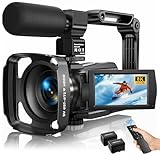
- Latest 8K Video Camera with Remote Control : This Video camera features 8K video resolution at 15FPS, with additional options for 6K at 30FPS, 5K at 30FPS, 4K at 30FPS, 1080P at 60FPS/30FPS, 720P at 60FPS/30FPS. With an impressive 88MP image resolution and 18X digital zoom, this camcorder delivers exceptional visuals. The included remote control allows for effortless self-recording and photography from any angle, making it an ideal 8K vlogging camera for bloggers and content creators.
- Experience Smooth and Stable Footage with Our 8K Camcorder : Featuring advanced 6-Axis anti-shake technology for high-precision stabilization. The 3-inch, 270-degree rotatable touch screen allows for effortless self-recording and framing, making it perfect for vlogging and self-blogging. Additionally, the digital video camera's intuitive interface and user-friendly navigation ensure easy operation, so you can focus on capturing stunning 8K video and photos.
- Infrared Night Vision Video Camera with WiFi : Stay connected and share your moments instantly with our 8K Camera's built-in Wi-Fi and companion app "iSmart DV2". Download the app on your Android/iOS device to easily transfer photos/videos, and share them directly to social media platforms like Facebook and YouTube. Additionally, this camera features infrared night vision, allowing you to capture footage in low-light environments, producing clear black and white images even in complete darkness.
- Dual-Functionality and Enhanced Audio : This 8K video camera for YouTube doubles as a high-quality webcam, simply connect via USB and switch to "Webcam" mode for seamless video calling, live streaming, vlogging, and online teaching. The included external X-Y stereo microphone reduces ambient noise and captures clear, stable audio, ensuring professional-grade sound quality for your recordings.
- Versatile camcorders video camera 8k for Every Adventure: This multifunctional camera features a range of creative modes, including continuous shooting, time-lapse, slow motion, and recording while charging. Perfect for capturing life's adventures, whether you're traveling, camping, hiking, or enjoying your favorite sports. Plus, our dedicated team is available to provide technical support, troubleshooting, and answers to any questions you may have after your purchase.
| Stay with a phone when… | Buy a dedicated camera when… |
|---|---|
| You record occasional short classes or social clips | You publish regular long-form classes or paid courses |
| The phone already covers the whole mat | The phone lens is too wide, too distorted, or too narrow for the room |
| Fast transfer and simple editing matter most | You need interchangeable lenses and repeatable settings |
| You can use a wireless microphone and tripod | You need dedicated headphone, microphone, power, or capture workflows |
| You mostly record in good light | You regularly work in dim studios or need a second camera angle |
A phone is not automatically inferior. A carefully positioned phone with clear audio and soft lighting will usually outperform a dedicated camera used with a poor lens, echoey room, unstable tripod, or weak exposure.
Independent reader supportYour contribution helps us test, update, and keep practical guides available for everyone.What accessories should you buy with the camera?
- Sturdy full-height tripod: The main camera should be stable and high enough to show the whole mat. A tabletop tripod is mainly suitable for close demonstrations.
- Wide-angle lens: Interchangeable-lens cameras often need a wider lens than the included kit lens, especially in a small room.
- Wireless or wired lavalier: Speech should be recorded close to the instructor rather than across the room.
- Soft LED light: A diffused key light or controlled window light improves faces and reduces exposure problems.
- Continuous power: Use a compatible USB or AC solution for 45- to 90-minute classes, then test it under the planned settings.
- Memory card: Choose capacity and speed for the selected codec and bitrate, not capacity alone. High-bitrate 10-bit formats need more storage and faster cards.
- Backup recording device: A phone or second camera can protect a paid class from a primary-camera failure.
- HDMI capture device: A capture device may be needed for clean-HDMI livestreaming, depending on the camera, computer, and streaming platform.
Canon identifies the RF-S 14–30mm F4–6.3 IS STM PZ as a video-oriented power-zoom lens for the R50 V. Power zoom can help when making smooth framing changes, but a fixed composition is usually simpler for a complete yoga class.
What settings should you use for a yoga class?
Use these settings as starting points, then adjust them for room lighting, movement, camera distance, and the intended platform.
Normal class recording
- Resolution: 4K when storage and editing support it; 1080p remains adequate for basic low-bandwidth classes.
- Frame rate: 24p, 25p, or 30p for normal-speed instruction.
- Shutter: Approximately double the frame rate where lighting permits.
- Aperture: Moderate rather than fully open, preserving depth of field as the instructor moves.
- ISO: As low as practical without underexposing.
- White balance: Fixed or manually set so color does not change during the class.
- Focus: Manual for a locked shot; continuous human autofocus for substantial movement toward and away from the camera.
- Audio: External microphone, with a safety track when available.
Slow-motion demonstration
Use 4K/60p or HD/120p where supported, provide more light, and use a shutter speed that preserves motion detail. Do not record an entire class at 120p unless there is a specific production reason.
What’s actually slowing this PC down?
Pick the symptom - the matching free tool is one click away.
Which camera setup should you choose by budget?
| Approximate budget | Suitable direction | How to allocate the money |
|---|---|---|
| Under roughly $500 | Existing smartphone, used Canon EOS R50, or older Sony ZV-E10; Pocket 3 only if a sale or used price fits | Prioritize tripod, microphone, and light over a camera-body upgrade |
| About $500–$900 | Canon EOS R50, DJI Osmo Pocket 3, or R50 V if the body and lens fit | Reserve enough for a wide lens, audio, power, and support |
| About $900–$1,400 | Sony ZV-E10 II or Canon R50 V with a better wide lens and audio | Budget for lighting and editing storage, not just the body |
| Professional budget | Panasonic GH7, two matching cameras, external audio, and dedicated lighting | Spend on reliable multi-camera and backup workflows |
Sony’s U.S. product page listed a $1,199.99 body-only MSRP for the ZV-E10 II when checked on August 16, 2026. Canon’s U.S. page displayed $779.99 regular pricing and $729.99 as-low-as pricing for the EOS R50 at that check. DJI displayed Pocket 3 price signals from $499 to $698 depending on configuration, while stock was marked unavailable. Prices, promotions, bundles, and availability change by country and date.
Recommended complete yoga-video setups
Simple home-class setup
Use a Canon EOS R50 or R50 V, a wide kit or power-zoom lens, a sturdy tripod, a wired or wireless lavalier, one large soft light or controlled window, external power, and a sufficiently fast SD card. This setup suits locked-off classes and tutorials.
Solo creator setup
Use a DJI Osmo Pocket 3, compact tripod or extension handle, compatible wireless microphone, small LED light, and a phone for monitoring or backup. This setup favors speed, moving demonstrations, travel, and short-form content.
Advanced YouTube setup
Use a Sony ZV-E10 II, a wide zoom for full-body classes, a faster normal zoom or prime for talking-head segments, a wireless microphone with camera backup audio, soft key and fill lights, external power, and a computer capable of editing 10-bit footage.
The Tool Desk
Outbyte Driver Updater FREEFix the driver behind crashes, sound loss and screen glitchesFind Drivers →Outbyte PC Repair FREERepair Windows errors before they cause bigger problemsFix Now →Studio or course-production setup
Use two matched cameras, a GH7 or comparable video body, one wide master angle, one medium or detail angle, external audio, continuous lighting, a slate or sync method, and backup storage. A second angle and better audio can improve a paid course more than upgrading a single camera body.
How should you test a camera before recording a paid class?
Test the entire production system, not just the camera’s image quality. Record longer than the planned class with the exact lens, frame rate, codec, card, power adapter, microphone, lights, and room conditions.
- Frame the instructor lying down, standing with arms extended, and reaching toward each corner of the mat.
- Repeat the framing test in the exact final mode; 4K/60p crop modes can change the field of view.
- Test manual focus and continuous human autofocus across the full movement range.
- Listen with headphones for echo, clothing noise, wireless dropouts, music masking, and automatic-gain pumping.
- Run the camera beyond the planned class duration and monitor heat, battery level, power stability, card capacity, and file behavior.
- Transfer and edit the file on the intended computer before relying on a high-bitrate or 10-bit format.
- Check white balance, exposure, reflections, LED flicker, and changing daylight.
- Keep a backup phone or camera recording when the class cannot be repeated.
Common yoga-recording problems and fixes
Hands or feet are cropped
The lens may be too narrow, the camera may be too close, or 4K/60p crop mode may have narrowed the view. Move the camera farther away, use a wider lens, leave more space around the limbs, and check the final recording mode rather than relying on the standing pose.
Autofocus hunts during poses
Mirrors, patterned clothing, low contrast, competing objects, and low light can confuse autofocus. Increase the light, use a smaller aperture, reduce background motion, test subject-recognition modes, or switch to manual focus after establishing the farthest position.
The recording stops early
Heat, battery depletion, card capacity, file limits, or a power interruption may be responsible. Run a full-duration test, use compatible external power, select a card with suitable capacity and speed, improve ventilation, and reduce unnecessary high-bitrate or high-frame-rate settings.
The room sounds echoey
Hard surfaces and a distant internal microphone usually cause echo. Put a lavalier or wireless microphone close to the instructor, add rugs or curtains where possible, reduce music volume, and test from the farthest speaking position.
The image looks distorted
An ultra-wide lens or digital correction may be responsible. Use a less extreme wide lens, move the camera farther away, keep the instructor away from the edges, and test lens correction in the actual editing software.
The image flickers
LED frequency can interact with shutter speed and regional mains frequency. Use video-rated lights, match shutter settings to local power frequency, and test the exact lighting combination before recording.
The camera overheats
Long 4K takes, high frame rates, warm rooms, direct sunlight, and poor airflow increase heat. Test in the real room, lower resolution or frame rate when acceptable, improve ventilation, open the screen if the manufacturer recommends it, and choose a camera with a more robust thermal design for professional long takes.
Final buying advice
Choose the Canon EOS R50 V if you want the best balance of video controls, interchangeable lenses, full-class tripod recording, and vertical content. Choose the Sony ZV-E10 II if internal 10-bit recording, advanced autofocus, audio monitoring, and long-term production flexibility justify the extra cost. Choose the DJI Pocket 3 if setup speed, stabilization, and moving shots matter most. Choose the Canon EOS R50 for a lower-cost 4K/30p mirrorless workflow, and choose the Panasonic GH7 only when your studio genuinely needs advanced production features.
Before buying, measure the room, test the lens at the camera’s actual distance, and reserve money for audio, lighting, tripod support, storage, and continuous power. The dependable yoga-video setup—not the most expensive camera body—is what produces a class viewers can see, hear, and follow.
Frequently Asked Questions
Is 4K necessary for yoga videos?
4K is useful for recorded yoga classes because it provides detail for cropping and reframing, but 1080p is adequate for basic low-bandwidth classes and older editing systems. 4K/24p, 25p, or 30p is usually a better default than recording an entire class at 4K/60p or 120p.
Is autofocus important for recording yoga?
Autofocus is useful when an instructor walks toward the camera or changes between standing, seated, and floor positions. Manual focus can be more dependable for a locked-off class when the instructor remains within a tested area.
Do I need image stabilization for yoga videos?
You usually do not need image stabilization for the main yoga shot because the camera should be on a stable tripod. Stabilization is valuable for walking footage, handheld demonstrations, retreat content, and moving B-roll.
What lens is best for a yoga room?
An APS-C lens around 16–24mm is a useful starting range for many full-mat shots, but the correct lens depends on camera distance, room size, orientation, and crop mode. Test the frame with the instructor lying down, standing with arms extended, and reaching toward the mat corners.
Can these cameras livestream yoga classes?
The Canon EOS R50 supports UVC/UAC webcam and streaming functions, and the Sony ZV-E10 II supports USB webcam and live streaming through USB-C and Wi-Fi. Test continuous power, heat, microphone routing, computer compatibility, and the streaming platform separately from internal recording.
The Bottom Line
Bottom line: The Canon EOS R50 V is the best overall camera for most instructors recording yoga from a tripod. The Sony ZV-E10 II is better for advanced grading and production, the DJI Osmo Pocket 3 is easiest for moving and solo content, the Canon EOS R50 is the budget mirrorless choice, and the Panasonic GH7 belongs in professional studio workflows. In every case, prioritize full-mat framing, clear external audio, soft lighting, a stable tripod, and tested continuous power.
Quick Recap
Product prices and availability are accurate as of the date/time indicated and are subject to change. Any price and availability information displayed on Amazon at the time of purchase will apply.

