
The Tool Desk
Outbyte Driver Updater FREEFix the driver behind crashes, sound loss and screen glitchesFind Drivers →Outbyte PC Repair FREERepair Windows errors before they cause bigger problemsFix Now →Best reconciliation software in 2024 depends on the work you need to automate. FloQast suits accounting-led close teams, BlackLine and Trintech Cadency suit larger controlled enterprises, Trintech Adra fits many mid-market teams, and ReconArt is strongest for high-volume, multi-source transaction matching. Most vendors require a custom quote rather than publishing a standard price.
That distinction matters because “reconciliation software” can mean balance-sheet certification, bank reconciliation, payment settlement matching, intercompany accounting, close management, or a combination of those workloads. The right shortlist depends on transaction volume, entities, ERP systems, control requirements, implementation capacity, and total cost of ownership.
This is a 2024 market snapshot: product capabilities and customer-review ratings can change, while public pricing remains difficult to compare. Treat vendor-reported outcomes and review-site ratings as evaluation evidence—not as controlled benchmarks.
Key takeaways
- FloQast is the strongest starting point for accounting-led teams that want close coordination, reconciliation automation, checklists, review notes, and approachable adoption.
- BlackLine and Trintech Cadency are better suited to larger organizations with extensive controls, multiple entities, audit requirements, and broader financial-close needs.
- Trintech Adra targets mid-market reconciliation, transaction matching, task management, and close automation, while ReconArt focuses more heavily on high-volume, multi-source, payment, banking, and settlement reconciliation.
- FloQast, BlackLine, Trintech Adra, Trintech Cadency, and ReconArt do not provide a simple universal public price; buyers should request a three-year total-cost quote.
- A successful demo must use representative source files and show matching rules, exceptions, approvals, audit evidence, ERP drill-down, and recovery from an incorrect match.
What is the best reconciliation software in 2024?
The best reconciliation software in 2024 is the platform that matches your reconciliation type and control environment, not a universal winner. FloQast is the best fit for many accounting-led close teams; BlackLine is a strong enterprise-control choice; Trintech Adra is a practical mid-market contender; Trintech Cadency fits complex global enterprises; and ReconArt deserves attention for high-volume transaction and settlement data.
#1 Best Overall
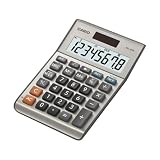
- LARGE EIGHT-DIGIT DISPLAY – Clear and easy-to-read 8-digit display, perfect for everyday calculations and ensuring accurate results in home or office settings.
- TAX & CURRENCY EXCHANGE FUNCTIONS – Effortlessly handle tax calculations and convert home currency to other currencies for easy financial management.
- GENERAL PURPOSE CALCULATOR – Ideal for a wide range of applications, from basic math to business and personal use, with memory keys for quick storage and recall.
- USER-FRIENDLY KEYBOARD – Easy-to-use layout, featuring square root, percent calculation, and simple functions that make it perfect for everyday tasks.
- COMPACT & PORTABLE DESIGN – Space-saving design that fits easily on any desk or in a briefcase, making it ideal for both home and office use.
| Product | Best for | Strongest reconciliation use cases | Close management | Public pricing | Main drawback |
|---|---|---|---|---|---|
| FloQast | Accounting-led close teams | Balance-sheet accounts, bank data, rollforwards | Strong | No standard list price | May be less suitable for extremely deep payment matching |
| BlackLine | Large, controlled organizations | Account reconciliation, certification, close controls | Broad enterprise platform | Custom subscription | Implementation and administration can be substantial |
| Trintech Adra | Mid-market finance teams | Account, bank, and multi-way transaction matching | Strong | Custom quote | Large-reconciliation performance and reporting need testing |
| Trintech Cadency | Complex multinational enterprises | Reconciliation, intercompany, journal entries, certification | Full enterprise close | Enterprise quote | May exceed the needs of a smaller team |
| ReconArt | High-volume, multi-source operations | Payments, settlements, banking, retail, insurance | Available, but data reconciliation is central | Module-based quote | Can be excessive for simple monthly GL substantiation |
| Native ERP or controlled spreadsheets | Low-volume, low-risk processes | Basic bank or account reconciliation | Limited | Often already owned or low cost | Weaker cross-system matching, evidence, and exception workflow |
Which type of reconciliation do you need?
The reconciliation type determines which product category deserves a demo. A tool designed for monthly account certification may not be the best engine for millions of payment-settlement records, and a high-volume matching platform may be unnecessarily complex for a small controller’s close checklist.
| Workload | What is compared | Important capabilities | Likely product emphasis |
|---|---|---|---|
| Balance-sheet account reconciliation | GL balances, subledgers, schedules, and supporting evidence | Certification, preparer/reviewer workflow, rollforwards, variance explanations | Close-management or financial-close platform |
| Bank and cash reconciliation | Bank statements against the GL or cash subledger | Statement imports, matching rules, timing differences, daily processing | ERP module, close platform, or matching tool |
| Transaction matching | Two or more transaction populations | One-to-one, one-to-many, many-to-one, many-to-many, and multi-way rules | Matching-focused platform |
| Payment and settlement reconciliation | Processors, card networks, marketplaces, remittances, and ERP records | Data transformation, partial settlements, fees, chargebacks, exceptions | Data-reconciliation or specialized payment platform |
| Intercompany reconciliation | Balances and transactions between entities | Dispute workflow, currency differences, eliminations, approvals | Enterprise close platform |
| Financial-close management | Close tasks, certifications, journals, and variance explanations | Checklists, ownership, deadlines, journal approvals, audit evidence | Close-management or full-suite platform |
Trintech’s account-reconciliation description covers GL accounts, subledgers, bank data, multiple ERPs, and entities. ReconArt’s platform description emphasizes high-volume transaction matching, payments, retail, e-commerce, insurance, banking, and multi-source data transformation. Those positions illustrate why vendor comparisons should begin with the source-to-source comparison you actually need.
How do reconciliation tools differ from close-management platforms?
A reconciliation tool proves that balances or transactions agree, while a close-management platform coordinates the people, deadlines, approvals, journals, and evidence around the close. Some products combine both functions, but feature breadth does not automatically make a product better for a particular process.
| Product category | Main value | Typical buyer | Potential limitation |
|---|---|---|---|
| Reconciliation-focused | Matching, exceptions, evidence, certification | Treasury, accounting operations, shared services | May not manage the entire close |
| Close-management-focused | Tasks, checklists, deadlines, sign-offs | Controllers and accounting managers | May not handle complex transaction matching |
| Full financial-close platform | Reconciliation plus journals, intercompany, governance, and analytics | Enterprise controllership and transformation teams | Higher implementation and administration burden |
| Data-reconciliation platform | Ingestion, transformation, matching, and settlement | Banks, fintechs, payments, marketplaces | May be too technical for simple account certification |
| Native ERP module | Basic reconciliation within an existing accounting system | Smaller teams with straightforward processes | Limited cross-system workflow and centralized evidence |
FloQast describes its platform as an end-to-end workflow solution that includes reconciliation automation. Trintech positions Adra around reconciliation, transaction matching, task management, and related close functions, while Cadency is aimed at broader enterprise financial-close processes.
Which reconciliation software is best for each buyer?
FloQast: best for accounting-led close coordination
FloQast is a strong fit when the controller’s priority is a more organized close with reconciliation automation, ownership, review notes, and rollforward schedules. The product is aimed at accounting teams that want accountants to adopt the workflow without treating reconciliation as a standalone data-engineering project.
The FloQast reconciliation-automation material describes reconciliation automation alongside close workflows, rollforwards, journal-entry preparation and posting, and integrations. Buyers should still test the exact ERP objects, source-data drill-down, and integration work required in their edition and environment.
Strengths: close checklists, reconciliation automation, review workflows, rollforwards, journal-entry processes, ERP and third-party integrations, and support or training resources.
Trade-offs: a team that needs only simple bank reconciliation may not justify a broader close platform. FloQast may also be less compelling than a data-intensive matching engine for complex payment settlements, many-to-many matching, or very large multi-source transaction populations.
What’s actually slowing this PC down?
Pick the symptom - the matching free tool is one click away.
Demo test: import a reconciliation, show an unmatched transaction, route the exception to a reviewer, drill back to the ERP source, roll the reconciliation into the next period, and identify which steps require professional services.
BlackLine: best for enterprise controls and financial-close governance
BlackLine is best suited to larger organizations that need standardized account reconciliation, role-based review, auditability, and broad financial-close automation. BlackLine’s published account-reconciliation material describes rules-based automation, role-based approvals, dashboards, standard reports, ERP or subledger imports, and multi-currency and multi-language support; the document is older, so current-edition capabilities must be confirmed during procurement.
BlackLine’s 2024 regulatory filing says subscription pricing depends primarily on users with access and the products purchased. That statement supports “custom subscription pricing,” not a standard per-user rate.
Strengths: rules-based reconciliation, approvals, dashboards, reporting, ERP and subledger imports, enterprise controls, and broad close capability.
Crashes, No Sound, or Screen Glitches?
Random freezes, missing sound and display glitches usually trace back to one bad driver. Find and replace yours safely.Free scan · under a minuteWindows Errors? Fix Them Before They Spread
Repair common Windows errors and clear accumulated junk for a smoother, more stable PC - no reinstall needed.Free scan · no reinstallTrade-offs: BlackLine may be excessive for a small accounting department with a few dozen low-risk monthly reconciliations. Implementation, configuration, integration, consulting, training, and module selection deserve separate scrutiny.
Rank #2

- Check your calculations thanks to the calculator's inbuilt serial impact roller printer that enables you to monitor your inputs and retains ongoing records. This two-color printer with a four-key memory prints red and black ink at up to 2.3 lines per second onto the included roll of paper.
- Printing calculator offers 12-digit LCD display for convenient viewing. 4-key memory keeps often-used figures accessible for faster calculations. Clock and calendar functions help maintain schedules.
- Easy-to-use solution for all of your basic math needs. Streamline financial calculations with currency conversion, tax calculation, and item counter functions. 1-year manufacturer limited warranty.
- Dimensions: 2.2"H x 6.4"W x 9.1"D. Package content: AC adapter, paper roll, user manual.
- Powered by any standard AC outlet, eliminating the need for expensive batteries. Decimal switch, rounding switch, percent, sign change, backspace, double zero, and grand total functions help you solve a variety of mathematical problems.
Demo test: use realistic account data and ask how auto-certification works, how reviewers inspect source transactions, how segregation-of-duties controls are configured, and which modules are required for matching, intercompany, journals, and variance analysis.
Trintech Adra: best mid-market reconciliation and matching suite
Trintech Adra is a strong mid-market shortlist candidate when the buyer wants account reconciliation, bank reconciliation, transaction matching, task management, and close automation without automatically adopting the broadest enterprise suite.
Trintech describes Adra as supporting one-to-one, one-to-many, many-to-one, many-to-many, and multi-way matching, as well as related close workflows. Adra Balancer focuses on account-reconciliation workflows and threshold-based automation.
Do these 3 things before closing this tab:
1Repair Windows errors before they cause bigger problems2Scan for outdated or missing drivers - takes under a minute3Clear out junk files and repair common Windows errorsStrengths: account and bank reconciliation, transaction matching, multi-way scenarios, task management, journal-entry workflows, ERP connectivity, and AI-assisted workflow claims that should be tested against the buyer’s process.
Trade-offs: review feedback praises ease of use and time savings but also mentions reporting limitations, setup effort, and occasional performance concerns with large reconciliations. These are review themes, not universal product defects.
Demo test: compare Balancer and Matcher using the same files, show daily and monthly processing, configure an auto-reconciliation threshold, test multiple entities and currencies, and confirm whether journal-entry automation is included or separately licensed.
Trintech Cadency: best for complex global enterprises
Trintech Cadency is designed for large enterprises that need standardized close, reconciliation, certification, journal-entry, intercompany, governance, risk, and compliance processes across entities and countries. Cadency is a full-suite contender rather than merely a bank-reconciliation utility.
Free tools Windows power users keep installed
One-click scans. No signup required.
Trintech’s Cadency materials describe balance-sheet reconciliation, transaction matching, close management, journal entries, intercompany accounting, governance, and audit trails. Published efficiency results on vendor pages are vendor-reported or case-study outcomes; they are not guaranteed benchmarks for every implementation.
Strengths: enterprise standardization, multi-entity governance, approvals, audit evidence, intercompany workflows, journal processes, and broad record-to-report coverage.
Trade-offs: Cadency may require substantial process redesign and implementation support. Buyers should compare Cadency with BlackLine and other full-suite platforms based on module scope and total ownership cost, not on a basic bank-reconciliation feature checklist.
Demo test: demonstrate an intercompany exception between two entities, global approval routing, audit evidence, legacy-data migration, and a phased implementation plan with a module-by-module quote.
Recommended Free Tools
ReconArt: best for high-volume, multi-source transaction reconciliation
ReconArt deserves the closest look when reconciliation involves payment processors, banks, marketplaces, e-commerce, remittances, insurance, retail, or other high-volume data sources. ReconArt emphasizes data import and transformation, complex matching, exception management, multi-currency processing, ERP and core-banking connectivity, and financial-close modules.
ReconArt’s platform materials make scalability and industry breadth central to the product position. Those are vendor assertions, so a buyer should validate throughput, transformation, and exception behavior with representative files in a proof of concept.
Rank #3

- 8-digit LCD provides sharp, brightly lit output for effortless viewing
- 6 functions including addition, subtraction, multiplication, division, percentage, square root, and more
- User-friendly buttons that are comfortable, durable, and well marked for easy use by all ages, including kids
- Designed to sit flat on a desk, countertop, or table for convenient access
Strengths: high-volume matching, multi-source ingestion, payment and settlement workflows, partial or complex matches, data transformation, multi-currency processing, and exception management.
Trade-offs: ReconArt can be unnecessarily sophisticated for straightforward monthly GL substantiation. Data modeling, source-system connectivity, rule design, and implementation quality may matter as much as the product’s feature list.
Quick wins for a faster PC:
Fix the driver behind crashes, sound loss and screen glitchesFind Drivers →Repair Windows errors before they cause bigger problemsFix Now →Scan for outdated or missing drivers - takes under a minuteDriver Scan →Demo test: load bank, processor, ERP, and spreadsheet data; transform inconsistent identifiers; match partial settlements; test fees, chargebacks, foreign-exchange differences, timing differences, and many-to-many matches; then ask for contractual throughput and service-level commitments.
What automation should a buyer expect?
Useful automation includes data import, normalization, matching, exception routing, certification, variance detection, and evidence generation—but “AI” does not necessarily mean autonomous reconciliation. The buyer should identify exactly which decisions the software makes automatically and which decisions remain subject to human review.
- Import automation: scheduled files, APIs, SFTP, bank feeds, or ERP connections.
- Data normalization: consistent account identifiers, dates, currencies, descriptions, and source formats.
- Rule-based matching: configurable one-to-one and more complex matching logic.
- AI-assisted matching: suggested matches or rules that still require validation.
- Auto-certification: automatic clearance of qualifying accounts or transactions subject to thresholds and controls.
- Exception management: prioritization, assignment, aging, escalation, and resolution history.
- Journal support: suggested or prepared entries, approval routing, and posting controls.
- Audit evidence: source records, rule history, approvals, timestamps, and exports.
Trintech describes automated formatting, balance population, auto-reconciliation, risk-based workflows, and multi-ERP support. Those capabilities should be demonstrated with the buyer’s files. Ask how rules are created and reused, how false positives are prevented, how rule changes are logged, and how a bad match is reversed.
Which integrations should be compared?
Integration quality means more than seeing an ERP logo on a vendor website. A connector may be native, partner-maintained, file-based, API-based, or custom. Connector availability, supported data objects, implementation effort, and geographic or edition limitations can vary.
| Integration area | Questions to ask |
|---|---|
| ERP | Does the product support SAP, Oracle, NetSuite, Workday, Microsoft Dynamics, Sage, or Unit4 in the proposed edition? |
| Banks and processors | Are feeds native, file-based, API-based, or dependent on a third party? |
| Data movement | Are CSV, Excel, SFTP, APIs, and scheduled imports included? |
| Transformation | Can the buyer map inconsistent fields without custom code? |
| Identity and controls | Is single sign-on supported, and how are roles and segregation of duties managed? |
| Analytics and storage | Can evidence and exception data be exported to a warehouse or reporting system? |
Trintech states that its products support multiple ERP environments including SAP, Workday, Oracle, and NetSuite. FloQast says its platform connects with ERP systems, banks, and third-party applications. Treat both statements as starting points: confirm the exact connector, data objects, refresh schedule, and implementation responsibility in writing.
How much does reconciliation software cost?
Most enterprise reconciliation platforms use custom pricing, so a precise 2024 price cannot be stated responsibly without a dated vendor quote, edition, geography, user assumptions, and scope. Comparison-site figures should not be presented as official rate cards.
| Vendor | Public pricing status | Safe comparison language |
|---|---|---|
| FloQast | No standard public price | Custom quote based on organizational needs, scope, and scale |
| BlackLine | No standard public rate established | Custom subscription; the 2024 filing identifies users and products as major pricing factors |
| Trintech Adra | No simple public list price | Quote varies by scope, organization, and user count |
| Trintech Cadency | No simple public list price | Custom enterprise quote |
| ReconArt | Module-based plans page without a universal amount | Quote depends on selected modules and requirements |
FloQast’s official pricing page says pricing is customized according to organizational needs, scope, and scale. ReconArt’s plans page describes a configurable module-based model rather than a universal public price. Gartner’s cited Adra information likewise describes subscription pricing as varying by features, organization size, and user count.
What should a reconciliation-software quote include?
- Preparers, reviewers, approvers, and read-only users
- Legal entities, countries, currencies, and accounts
- Monthly or daily transaction volume
- Data sources, ERP connectors, APIs, and SFTP access
- Matching, account certification, close, journal, and intercompany modules
- Implementation, configuration, migration, training, and premium support
- Sandbox environments, storage, historical retention, and data export
- Renewal increases, minimum terms, termination provisions, and professional-services assumptions
Request a three-year total-cost-of-ownership quote with every assumption written down. A low subscription figure can become expensive after connectors, data migration, implementation, additional modules, and internal administration are included.
What do customer reviews say?
Customer reviews are most useful for spotting recurring themes in usability, implementation, automation, reporting, and support; review ratings are not controlled product tests. Ratings also change as new reviews arrive, so record the product edition, review count, site methodology, and access date when building an internal business case.
| Product or source | Rating information in the cited research | Review themes to investigate |
|---|---|---|
| FloQast on G2 | 4.6/5 in the cited comparison information | Ease of use, workflow organization, adoption, automation, implementation |
| BlackLine Financial Close Management on G2 | 4.5/5 in the cited comparison information | Controls, reporting, integrations, scale, administration |
| Trintech on G2 | 4.5/5 on the cited product page | Automation, workflow, support, reporting, value |
| Adra by Trintech on G2 | Listed with a 4.5/5 rating in cited comparison material | Ease of use, setup, matching, reporting, large-reconciliation performance |
| Adra on Gartner Peer Insights | 4.2 rating on the cited page | Implementation, subscription scope, usability, support, enterprise fit |
The ratings above come from the cited G2 Trintech material, G2 Adra comparison material, and Gartner Peer Insights Adra page. The ratings are a review-site snapshot, not a head-to-head benchmark. Read reviews from organizations with similar entity counts, ERP systems, transaction volumes, and compliance needs.
Independent reader supportYour contribution helps us test, update, and keep practical guides available for everyone.How should you run a reconciliation-software demo?
Require every shortlisted vendor to demonstrate the entire process using representative historical data, from import through approval and audit export. A polished slide presentation cannot reveal whether source-data quality, matching rules, permissions, or exception handling will work in production.
Rank #4

- 【12 Digit Display】Features easy-to-read 12 digits LCD display, the big screen clearly shows the numbers, suitable for all kinds of calculations and office scenes.
- 【Double Power Supply】Support both solar energy and batteries. Our calculator comes with an AAA battery; In a well-lit environment, you can also use solar energy to charge.
- 【Embedded Big Button】Big buttons make your input flow and comfortable; Raised button design makes your input accurate and fast; Sturdy plastic keys for long-lasting use.
- 【Automatic Shut-down】Intelligent power saving design-Our calculator can stand by for 8 minutes without operation, then it will automatically shut down.
- 【Function introduction】Contains basic functions of add, subtract, multiply, divide,CE, %; Upgrade function of M+/M-/MRC; Covers the needs of daily computing.
- Import the source data. Use a bank file, ERP extract, subledger, processor file, and spreadsheet if those sources exist in the real process.
- Normalize the data. Ask the vendor to handle inconsistent identifiers, dates, currencies, descriptions, and file layouts.
- Create matching rules. Require the vendor to explain rule creation, reuse across entities, thresholds, effective dates, and change logging.
- Run automatic matching. Inspect both successful matches and low-confidence suggestions.
- Test false-positive controls. Include duplicate transactions, reversals, timing differences, foreign-exchange differences, partial settlements, and missing descriptions.
- Work an exception. Assign an unmatched item, add evidence, route it for review, escalate it, and show exception aging.
- Approve and certify. Demonstrate preparer/reviewer segregation, approval history, timestamps, and certification controls.
- Drill into the source. Confirm that a reviewer can inspect the underlying transaction without losing context.
- Correct a bad match. Show reversal, reprocessing, rule correction, and the resulting audit trail.
- Export evidence. Produce a report or audit package containing source records, rules, exceptions, approvals, and final status.
Ask vendors to identify what is native, what requires configuration, what requires professional services, and what is separately licensed. Ask for a proof of concept using the buyer’s own volume, entity structure, currencies, and ERP data before accepting scalability or automation claims.
How should buyers score the finalists?
Score each product against the actual process rather than awarding points for generic feature breadth. A useful evaluation should include the following dimensions:
| Criterion | Evidence to collect |
|---|---|
| Reconciliation scope | GL substantiation, bank and cash, matching, settlements, intercompany, or full close |
| Automation depth | Imports, normalization, rules, suggestions, auto-certification, exceptions, journals |
| Scale | Accounts, monthly transactions, entities, countries, currencies, concurrent users, daily versus monthly processing |
| Control environment | SOX support, segregation of duties, approval evidence, audit trail, retention, auditor access |
| Implementation | Connector type, data mapping, migration, go-live plan, consulting, customer responsibilities |
| Usability | Accountant and reviewer workflows, search, drill-down, dashboards, browser access, spreadsheet coexistence |
| Total cost | Subscription, implementation, integrations, training, administration, redesign, renewals |
| Evidence quality | Similar customer references, independent reviews, case studies, proof-of-concept results, contractual commitments |
What are the common failure modes?
Automation does not fix poor source data
Inconsistent account identifiers, missing descriptions, duplicate transactions, reversals, timing differences, foreign-exchange differences, and incomplete files can defeat a powerful matching engine. Require representative historical files in the demo or proof of concept.
A high auto-match rate can conceal false positives
A high match rate has little value if incorrect transactions are cleared automatically. Ask for confidence thresholds, human-review queues, rule audit logs, reversal procedures, and exception-aging reports.
The product may not support the required reconciliation
A platform may excel at balance-sheet certification while offering limited payment settlement matching, or it may excel at high-volume matching while offering less useful close coordination. Define the exact source-to-source comparison before requesting quotes.
Do these 3 things before closing this tab:
1Clear out junk files and repair common Windows errors2Fix the driver behind crashes, sound loss and screen glitches3Repair Windows errors before they cause bigger problemsImplementation can matter more than the demo
Data mapping, ERP limitations, historical migration, control redesign, integration maintenance, and user adoption can determine the outcome. Request a sample implementation plan, named deliverables, customer responsibilities, and references from a similar ERP environment.
Small teams may not need a full platform
A team with a small number of low-risk monthly reconciliations may get better value from a controlled spreadsheet template, an ERP’s native bank-reconciliation module, or a lighter tool. Compare software cost with the labor spent on preparation, review, follow-up, audit support, and error correction.
What are the alternatives to dedicated reconciliation software?
Native ERP reconciliation, controlled spreadsheets, business-process outsourcing, and specialized payment tools can be better choices when the workload or operating model does not justify a full close platform.
- Native ERP reconciliation: sensible for simple, manageable processes inside an existing ERP; usually weaker for cross-system matching, centralized evidence, and complex exceptions.
- Controlled spreadsheets: inexpensive but dependent on disciplined templates, access controls, version management, file handling, and manual review.
- OneStream: worth comparing when reconciliation belongs inside a broader consolidation, close, and corporate-performance-management program.
- HighRadius: more relevant when reconciliation connects to treasury, cash application, collections, order-to-cash, or wider finance automation.
- Numeric: relevant to buyers prioritizing newer accounting-team-oriented close and reconciliation workflows; confirm current scope and pricing directly.
- Specialized payment-reconciliation products: often better for card, marketplace, payment-service-provider, and settlement complexity than a general close-management platform.
Which reconciliation software should you shortlist?
| Buyer situation | Shortlist first | Why | Validate before purchase |
|---|---|---|---|
| Accounting-led team improving the monthly close | FloQast | Close workflow and reconciliation automation are central | Matching depth, ERP drill-down, implementation scope |
| Large organization with strong audit and control requirements | BlackLine or Cadency | Broad governance, approval, certification, and close capabilities | Module scope, implementation effort, three-year TCO |
| Mid-market team needing matching and close automation | Trintech Adra | Balances account reconciliation, matching, tasks, and close functions | Reporting, scale, journal functionality, entity and currency limits |
| Payments, banking, marketplace, or settlement operation | ReconArt | Multi-source transformation and high-volume transaction matching | Proof-of-concept throughput, partial settlements, data modeling |
| Small team with few low-risk monthly accounts | Native ERP or controlled spreadsheet | May avoid unnecessary enterprise licensing and implementation | Audit evidence, access control, versioning, error-correction process |
| Global, multi-entity, multi-country record-to-report program | Trintech Cadency or BlackLine | Broader enterprise close and governance fit | Intercompany, journals, migration, global approvals, local requirements |
Use official vendor pages to request a scoped evaluation: FloQast pricing, BlackLine, Trintech Adra, Trintech Cadency, Trintech demo, and ReconArt plans. Ask each vendor to respond to the same process script and quote assumptions so that the comparison is meaningful.
Frequently Asked Questions
Is reconciliation software worth it for a small accounting team?
Reconciliation software can be worthwhile for a small team when manual preparation, review, audit support, and error correction consume significant time or create control risk. A native ERP module or controlled spreadsheet may be more economical when the team has only a few low-risk monthly reconciliations.
Do reconciliation-software vendors publish 2024 prices?
Most vendors in this comparison do not publish a simple universal 2024 list price. FloQast uses customized pricing, BlackLine identifies users and purchased products as major pricing factors, Trintech Adra uses quote-led pricing, Cadency is enterprise-quoted, and ReconArt describes a module-based model.
What should a reconciliation-software proof of concept include?
A proof of concept should include source-data import, normalization, matching rules, automatic and low-confidence matches, duplicate and reversal testing, exception routing, approval, audit evidence, ERP drill-down, correction of a bad match, and export of the final evidence package.
What is the difference between account reconciliation and transaction matching?
Account reconciliation substantiates a GL or balance-sheet account with supporting evidence, while transaction matching compares individual records across two or more sources. A product can be strong at one workload and weaker at the other, so buyers should specify the required source-to-source comparison.
PC Slower Than It Used to Be?
A free scan shows the junk files, broken settings and background clutter dragging Windows down - then fixes them in one click.Free scan · Windows 10 & 11Outdated Drivers Are Slowing You Down
One free scan finds every outdated or missing driver and matches the right update for your exact hardware.Free scan · exact hardware matchThe Bottom Line
Bottom line: Start with FloQast for an accounting-led close, BlackLine or Cadency for enterprise controls and complex global close, Adra for a mid-market combination of matching and close automation, and ReconArt for high-volume, multi-source transaction or settlement reconciliation. Do not choose from a feature list or an unsupported price table. Give finalists the same representative data, test false-positive controls and recovery, and compare three-year total cost alongside auditability, integration effort, and implementation responsibility.
Quick Recap
Product prices and availability are accurate as of the date/time indicated and are subject to change. Any price and availability information displayed on Amazon at the time of purchase will apply.

