
The best accounts payable software for small businesses depends on bill volume, accounting system, approval complexity, payment methods, and geography. Melio is the strongest general starting point for straightforward bill payment; Ramp suits businesses wanting spend management; BILL fits formal AP workflows; QuickBooks, Xero, and Zoho Books may be enough when native accounting features cover the workload.
Some products below are complete accounting suites, some are bill-payment platforms, some automate invoice processing, and ApprovalMax is primarily an approval layer. That distinction matters: the tool with the longest feature list is not necessarily the best fit for a small company.
Key takeaways
- Melio is the best general starting point for many small US businesses that need flexible bill payment, invoice capture, and accounting synchronization.
- Ramp Bill Pay is most compelling when AP belongs alongside corporate cards, budgets, expense management, and broader spend controls.
- BILL is better suited to formal approval workflows, but its listed pricing starts at $49 per user per month and payment fees are additional.
- QuickBooks Bill Pay, Xero Bills, and Zoho Books can reduce integration risk when the business already uses those accounting platforms.
- Tipalti and Airwallex are more appropriate for international payees and multi-currency operations than for a few domestic monthly bills.
- Free or low starting prices can exclude users, ACH payments, checks, cards, international transfers, accounting synchronization, or invoice volume.
What is accounts payable software?
Accounts payable software manages some or all of the invoice-to-payment process: receiving invoices, extracting data, coding bills, routing approvals, scheduling payments, synchronizing accounting records, and preserving an audit trail. A bill-pay application may handle only the payment step, while an AP automation platform may also provide OCR, duplicate detection, purchase-order matching, vendor onboarding, and segregation-of-duties controls.
A typical AP workflow includes:
- Invoice receipt through email, upload, supplier portal, or another intake method.
- OCR or AI extraction of the vendor, invoice number, date, amount, tax, line items, and purchase-order reference.
- Duplicate detection and general-ledger coding.
- Approval routing by amount, department, location, project, entity, vendor, or other rules.
- Payment scheduling and release.
- Vendor delivery by ACH, check, card, wire, or local payment rail.
- Synchronization with QuickBooks, Xero, Zoho Books, NetSuite, or another accounting system.
- Searchable invoice records, payment status, reconciliation data, and an audit history.
Invoice capture alone does not prove that a product supports three-way matching, payment controls, or vendor verification. For example, BILL’s plan comparison separates invoice intake, approval workflows, accounting synchronization, purchase-order matching, payment methods, user roles, and transaction fees.
Quick wins for a faster PC:
Repair Windows errors before they cause bigger problemsFix Now →Fix the driver behind crashes, sound loss and screen glitchesFind Drivers →Clear out junk files and repair common Windows errorsFree Scan →#1 Best Overall
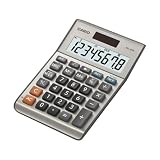
- LARGE EIGHT-DIGIT DISPLAY – Clear and easy-to-read 8-digit display, perfect for everyday calculations and ensuring accurate results in home or office settings.
- TAX & CURRENCY EXCHANGE FUNCTIONS – Effortlessly handle tax calculations and convert home currency to other currencies for easy financial management.
- GENERAL PURPOSE CALCULATOR – Ideal for a wide range of applications, from basic math to business and personal use, with memory keys for quick storage and recall.
- USER-FRIENDLY KEYBOARD – Easy-to-use layout, featuring square root, percent calculation, and simple functions that make it perfect for everyday tasks.
- COMPACT & PORTABLE DESIGN – Space-saving design that fits easily on any desk or in a briefcase, making it ideal for both home and office use.
Which accounts payable software is best for small businesses?
There is no universal winner. The shortlist below is organized around the business problem each product solves rather than pretending that a global payout platform and a simple ACH bill-pay tool are equivalent.
| Product | Best for | Product type | Pricing or entry signal | Important limitation |
|---|---|---|---|---|
| Melio | Flexible, straightforward bill payment | Bill-pay/AP platform | Go $0; paid tiers listed at $25, $55, and $80 monthly | Free plan has one user and five free ACH payments monthly |
| Ramp Bill Pay | AP combined with spend management | Spend-management/AP platform | Public page presents free or bundled, plan-dependent functionality | Best value may depend on using Ramp’s broader ecosystem |
| BILL AP & AR | Formal approvals and growing finance teams | Dedicated AP/AR platform | $49, $65, and $89 per user monthly tiers listed | Per-user pricing and payment fees can be expensive |
| QuickBooks Bill Pay | QuickBooks-first businesses | Accounting-suite bill pay | Depends on QuickBooks plan and configuration | Plan features and payment pricing change |
| Xero Bills | Xero-based businesses | Accounting-suite AP | US Early promotional price $2.50 monthly for six months, then $25 | Early plan includes only five bills |
| Zoho Books | Budget accounting plus AP | Accounting suite | Free plan listed at $0 for eligible solopreneurs and micro-businesses | May not fit complex ERP or multi-entity workflows |
| ApprovalMax | Approval governance | Workflow layer | Plan-dependent pricing | Not a complete ledger or universal payment replacement |
| Plooto | Payment-centric small-business workflows | Payment/AP platform | Verify current US plans and limits | Confirm availability, pricing, and payment allowances |
| Tipalti | Global supplier and contractor payments | Global AP/mass-payments platform | AP starts at $99 monthly; Mass Payments starts at $249 | Often excessive for domestic SMBs |
| Stampli | Collaborative invoice approvals | AP automation platform | Quote-based | May be overbuilt for low volume |
| Yooz | Higher-volume invoice automation | AP automation platform | Generally document-volume-based or quote-based | Harder to compare with flat-rate tools |
| Airwallex | International finance operations | Global payments/finance platform | Plan and geography dependent | Not a like-for-like domestic AP replacement |
How we evaluated the 12 best accounts payable software options
The comparison prioritizes total cost at realistic usage, accounting integration, invoice intake, approval controls, payment flexibility, automation depth, fraud safeguards, scalability, and setup complexity. The product order is an editorial recommendation based on the supplied product and pricing evidence, not an independent hands-on benchmark.
Vendor-authored comparison pages are useful for finding products and identifying vendor-stated capabilities, but they are not neutral tests. BILL’s comparison coverage, for example, is a source for product positioning and competitor discovery rather than independent proof that BILL is best. Features marked as quote-based, plan-dependent, or requiring verification should be confirmed in writing before purchase.
1. Is Melio the best overall AP software for a small business?
Melio is the best general starting point for a small US business that mainly needs to collect bills, schedule vendor payments, synchronize accounting, and choose among ACH, card-funded payments, checks, wires, and other payment methods.
Why Melio stands out
- Invoice capture and bill-payment workflows are accessible to small companies.
- Paid tiers list QuickBooks Online and Xero synchronization, while Boost adds QuickBooks Desktop synchronization.
- Core and Boost list approval workflows; higher tiers add more advanced routing and roles.
- Paid tiers list W-9 collection, TIN validation, and 1099 automation through Tax1099.
- Payment options include ACH, wire, check, card-funded payments, instant payments, and international payments, with method-specific fees and limits.
Melio’s pricing page lists Go at $0 per month for one user and five free ACH payments per month, Core at $25, Boost at $55, and Unlimited at $80. Additional users and payment methods can add cost, and some plans offer lower pricing with annual billing.
Melio’s free tier is not free unlimited AP. The free tier limits the account to one user and five free ACH payments each month; payments above the included allowance and faster, card, check, wire, or international methods may incur fees.
Best fit: US contractors, professional-service firms, and owner-operated businesses with straightforward approvals. Skip Melio if: the company needs complex procurement, multi-entity controls, deep ERP functionality, or three-way matching that the selected plan does not explicitly provide.
2. Is Ramp Bill Pay best when AP and spend management belong together?
Ramp Bill Pay is most compelling for a startup or growing team that wants invoice processing and vendor payments alongside corporate cards, budgets, expense management, and broader spend controls.
Recommended Free Tools
Ramp’s public pricing page lists automated invoice extraction, configurable approval workflows, automated fraud checks, and bill payment by ACH, card, check, wire, and other methods. The page also advertises free wires and same-day ACH through Bill Pay, but eligibility, account requirements, plan restrictions, and payment conditions must be checked for the specific business.
Ramp can be a strong bundled-value choice when the company already wants Ramp’s wider finance platform. A business wanting only a small, standalone bill-payment tool may find the broader ecosystem unnecessary. Ramp’s fraud-related claims should be treated as vendor-reported marketing claims, not independently validated performance evidence.
Best fit: businesses combining AP with cards, budgets, and expense controls. Skip Ramp if: the company wants only basic bill payment, needs a specialized ERP workflow, or does not want to adopt a broader spend-management platform.
3. Is BILL the best choice for formal AP workflows?
BILL AP & AR is a strong fit for growing small businesses that need a centralized bill inbox, multiple approvers, formal roles, accounting synchronization, vendor connectivity, and more structured controls than native accounting software provides.
Free tools Windows power users keep installed
One-click scans. No signup required.
BILL lists AI multi-line bill coding, approval policies, W-9 collection and verification, vendor-network connectivity, ACH, virtual-card, credit-card, and check payments. Higher tiers add more user roles, procurement features, integrations, and purchase-order matching.
BILL’s listed pricing as of August 18, 2026, is $49 per user per month for Essentials, $65 for Team, $89 for Corporate, and custom pricing for Enterprise. Payment fees are additional. Essentials uses manual CSV import and export for accounting integrations, while Team and higher tiers include automatic two-way synchronization with QuickBooks Online and Xero.
BILL’s listed transaction schedule includes $0.59 ACH/ePayment, $1.99 mailed checks, 2.9% card payments, and $19.99 international USD wires, alongside separate faster-payment fees. Fees, plan packaging, and availability are volatile, so confirm the pricing page before signing.
Best fit: a five-person or larger finance workflow with several approvers and growing control requirements. Skip BILL if: one person handles a handful of monthly bills or the business assumes that the $49 Essentials tier includes automatic two-way accounting synchronization.
4. Should QuickBooks users start with QuickBooks Bill Pay?
QuickBooks Bill Pay is the most logical first option for a QuickBooks Online business that wants bills, payments, and accounting records to remain in one environment and does not need specialized AP automation.
Rank #2

- 8-digit LCD provides sharp, brightly lit output for effortless viewing
- 6 functions including addition, subtraction, multiplication, division, percentage, square root, and more
- User-friendly buttons that are comfortable, durable, and well marked for easy use by all ages, including kids
- Designed to sit flat on a desk, countertop, or table for convenient access
Native bill payment can reduce integration risk because the business does not have to synchronize a separate AP database. QuickBooks-first companies with low-to-moderate bill volume, one or two approvers, and domestic payments should compare native functionality before adding another platform.
QuickBooks plan names, promotions, payment availability, and fees change frequently. Check the current QuickBooks Online comparison page and the applicable Bill Pay terms for the US plan being purchased. QuickBooks Bill Pay is less suitable when the company needs complex approval matrices, global supplier compliance, extensive invoice collaboration, or specialized procurement.
5. Is Xero Bills best for businesses already using Xero?
Xero Bills and Bill Payments are sensible for a Xero-based small business that wants accounting, bill tracking, reconciliation, document capture, and domestic payment capabilities without a separate AP platform.
What’s actually slowing this PC down?
Pick the symptom - the matching free tool is one click away.
Xero’s US pricing page shows the Early plan at a promotional $2.50 per month for six months, then $25 per month, with five bills, smart document capture, and domestic free-ACH bill payments. The promotion is temporary and the five-bill allowance makes the plan unsuitable for a company processing dozens or hundreds of bills.
Xero is less suitable when the team needs sophisticated approval routing, procurement, multi-entity controls, or higher-volume invoice automation. Regional availability and plan limits also matter; the US plan should not be assumed to match Xero plans in other countries.
6. Is Zoho Books the best budget accounting suite with AP?
Zoho Books is a budget-conscious choice for a solopreneur or small company that wants accounting, vendor management, bills, payments, and reporting in one system.
Zoho Books’ pricing page lists a free plan at $0 per organization per month for eligible solopreneurs and micro-businesses. Verify current US paid-tier prices, bill limits, payment features, and regional availability before relying on the free plan for a larger operation.
The Tool Desk
Outbyte PC Repair FREERepair Windows errors before they cause bigger problemsFix Now →Outbyte Driver Updater FREEScan for outdated or missing drivers - takes under a minuteDriver Scan →Zoho Books is less suitable for organizations needing a mature standalone AP network, extensive ERP integrations, complex multi-entity workflows, or global supplier compliance. Existing Zoho users may benefit from keeping AP inside the same suite, while a company with advanced approval or matching needs should compare a dedicated AP product.
7. Does ApprovalMax replace AP software?
ApprovalMax is best understood as an approval and workflow layer for QuickBooks Online, Xero, or NetSuite, not as a complete standalone accounting and payment platform.
ApprovalMax lists integrations for Xero, QuickBooks Online, and NetSuite. The product can add purchase, bill, or payment approval structure when the existing accounting system is adequate but the internal control process is weak.
ApprovalMax is useful when the business needs approval governance, outsourced accounting controls, or more formal routing without replacing the accounting ledger. Confirm which system performs invoice capture, bank reconciliation, payment execution, vendor management, and reporting. Skip ApprovalMax if: the company expects one product to handle the complete invoice-to-payment process independently.
Do these 3 things before closing this tab:
1Repair Windows errors before they cause bigger problems2Fix the driver behind crashes, sound loss and screen glitches3Clear out junk files and repair common Windows errors8. Is Plooto suitable for a small payment-centric workflow?
Plooto is a payment-focused alternative for small businesses that want more structure than manual online banking and need accounting or banking integrations.
Plooto may suit a service business with modest payment automation requirements, but the accessible pricing evidence requires verification of current US plan names, prices, limits, and availability. Review the official Plooto pricing page before publication or purchase rather than inferring a price from a partially rendered table.
Plooto is less suitable for deep invoice OCR, purchase-order matching, multi-entity controls, or international tax and supplier compliance. Treat Plooto as a payment/AP workflow candidate, not automatically as a full AP automation system.
9. Is Tipalti worth it for a small business with global payees?
Tipalti is appropriate when a business pays many international suppliers, contractors, creators, or marketplace participants and needs supplier onboarding, tax compliance, payment status, reconciliation, and global payout workflows.
Crashes, No Sound, or Screen Glitches?
Random freezes, missing sound and display glitches usually trace back to one bad driver. Find and replace yours safely.Free scan · under a minuteWindows Errors? Fix Them Before They Spread
Repair common Windows errors and clear accumulated junk for a smoother, more stable PC - no reinstall needed.Free scan · no reinstallTipalti emphasizes supplier onboarding, invoice processing, purchase-order matching, reconciliation, supplier portals, global payments, and tax-compliance workflows. Tipalti’s pricing page lists AP plans starting at $99 per month and Mass Payments plans starting at $249 per month, with additional fees.
Tipalti is usually excessive for a domestic business with a few monthly bills. The relevant comparison is not just the subscription price: assess supported countries and currencies, local payment rails, tax forms, sanctions screening, foreign-exchange treatment, recipient fees, and implementation requirements.
Rank #3

- Dual power ways: Solar power or 1 AA battery (Battery Included) , energy saving and convenient.
- Adopt Japanese LCD screen, 12 digits, display data clearly.
- Support +/-(negative),%,√ calculation; Rounding off & decimal place setting; CE/C (part/all clear), MC/MR/M+/M- (memory) key.
- Auto shut-down in 8min if no further operation.
- Big ABS plastic button, offer accurate positioning and comfortable texture, support >1 million times press.
Best fit: software companies, marketplaces, agencies, creator businesses, and other distributed-payee operations. Skip Tipalti if: the business only needs low-cost domestic ACH payments.
10. Is Stampli best for collaborative invoice approval?
Stampli is designed for invoice-centered collaboration, coding, communication, and approval workflows when a business has enough invoice volume or process complexity to justify a dedicated platform.
Stampli is a better fit for teams where invoice questions, coding decisions, and approvals require collaboration while the company retains an existing accounting or ERP system. Current comparison coverage places Stampli more often in the mid-market and enterprise segment than in the smallest-business segment.
Stampli pricing is generally quote-based; the official pricing page should be used to request a current quote rather than estimating a monthly fee. Skip Stampli if: the company has low invoice volume, wants transparent self-service pricing, or needs only basic bill payment.
11. Is Yooz suitable for higher-volume invoice automation?
Yooz is most relevant when invoice capture and processing volume has become a manual bottleneck and document-based automation justifies a more specialized AP platform.
Yooz is associated with OCR and invoice capture, processing automation, integrations, and fraud controls. Current comparison coverage describes Yooz as suitable from SMB through enterprise and commonly uses document-volume pricing rather than a simple public monthly fee.
Do not compare Yooz with a free bill-pay plan using subscription price alone. Request a quote that states included documents, overages, users, integrations, implementation, support, and payment costs. BILL’s comparison coverage can help identify the category, but it is vendor-authored rather than an independent pricing test.
Best fit: a business processing enough invoices to benefit from specialized capture and automation. Skip Yooz if: the company has only a few bills or wants a simple flat monthly price.
12. Is Airwallex best for international finance operations?
Airwallex is a strong candidate for an e-commerce company, international agency, importer, exporter, or startup that needs cross-border payments, multi-currency accounts, cards, and broader finance operations.
Airwallex is better viewed as a global payments and finance platform with AP capabilities than as a direct replacement for every dedicated invoice-automation product. The product is relevant when currency coverage, overseas supplier payments, and international operating accounts matter more than domestic invoice collaboration.
PC Slower Than It Used to Be?
A free scan shows the junk files, broken settings and background clutter dragging Windows down - then fixes them in one click.Free scan · Windows 10 & 11Crashes, No Sound, or Screen Glitches?
Random freezes, missing sound and display glitches usually trace back to one bad driver. Find and replace yours safely.Free scan · under a minuteReview Airwallex’s product comparison material and verify country, currency, payment-rail, foreign-exchange, recipient-fee, approval, and accounting-integration details for the intended markets. Skip Airwallex if: the business operates only in the US and needs basic domestic bill payment with traditional purchase-order controls.
Which type of AP software does your business need?
| Business situation | Most relevant category | Good starting options | What to verify |
|---|---|---|---|
| Owner pays a small number of domestic bills | Native accounting AP or bill pay | QuickBooks Bill Pay, Xero Bills, Zoho Books, Melio | Bill or payment limits, accounting subscription, transaction fees |
| Several approvers need an audit trail | Dedicated AP or approval layer | BILL, ApprovalMax, Ramp, Melio Boost | Paid seats, dual approval, requester self-approval, audit logs |
| Cards and expense controls are also needed | Spend-management/AP platform | Ramp Bill Pay | Plan eligibility, card requirements, payment conditions, ERP support |
| Inventory, construction, or purchase-order buying | AP automation with matching | BILL, Tipalti, Yooz, Stampli | Explicit two-way or three-way matching, tolerance rules, receiving workflow |
| Many overseas suppliers or contractors | Global payout platform | Tipalti, Airwallex | Currencies, countries, tax forms, FX, recipient fees, sanctions screening |
| High invoice volume and complex collaboration | Specialized AP automation | Yooz, Stampli, BILL | Document pricing, implementation, integrations, exception handling |
When is native accounting software enough?
QuickBooks, Xero, or Zoho Books may be enough when a business has fewer than a few dozen monthly bills, one or two approvers, no purchase-order requirement, no international payment complexity, and basic fraud controls.
A separate AP platform becomes easier to justify when the business needs a dedicated invoice inbox, automated extraction, approval rules by amount or department, duplicate detection, payment status, vendor onboarding, stronger segregation of duties, purchase-order matching, or global payee compliance.
Keeping AP native can reduce integration failure points. Adding a separate platform can improve automation and control but introduces synchronization, configuration, user-management, and reconciliation risks. The simplest system that satisfies the company’s control requirements is usually the better small-business choice.
How much does AP software really cost?
Calculate total cost as:
monthly subscription + user or approver seats + payment fees + card fees + check fees + wire and FX costs + integration upgrades + document overages + tax services + implementation
Example: an owner-only business
Assume one user, 15 monthly vendor payments, mostly ACH, no purchase orders, and an existing QuickBooks Online or Xero subscription. Compare Melio Go or Core, native QuickBooks Bill Pay, Xero Bills, Zoho Books, and Ramp if cards and expense management are also wanted. Add the existing accounting subscription if a new accounting suite is required.
Example: a five-person service business
Assume five users, 50 monthly bills, two approvers, QuickBooks Online, some card-funded payments, and W-9 or 1099 requirements. BILL Team’s software component would be approximately $325 per month for five users before payment fees, based on the listed $65-per-user monthly price. Melio may have a lower base subscription, but extra-user charges and transaction fees must be added.
Rank #4

- Keys That Feel Right: Smooth, well-spaced keys with natural resistance allow you to move quickly and confidently—no re-learning or finger fatigue.
- Sharp, Color-Coded Printing: Prints 2.5 lines per second in black for positive and red for negative values—quiet, crisp, and easy to read at a glance.
- Big, Bright Display You Can Trust: The 12-digit fluorescent screen is clear from any angle, so totals are easy to catch without squinting or second-guessing.
- Designed for Speed and Comfort: Ergonomic key shapes follow your fingers’ natural motion—helping you type faster and make fewer mistakes.
- Built to Last, Easy to Maintain: Our heavy-duty design withstands daily use, featuring standard ribbons and paper rolls that are simple to replace.
A payment fee can outweigh a low subscription. Melio and BILL list 2.9% card-payment fees. A $10,000 vendor payment at 2.9% costs $290; at 2% rewards, the reward value is $200, producing a $90 shortfall before considering cash-flow value or other restrictions.
Recommended Free Tools
Example: an international contractor or marketplace business
Assume more than 100 monthly payees, multiple currencies, tax-form collection, supplier onboarding, payment status, and auditability. Tipalti or Airwallex deserves priority over a low-cost domestic bill-pay tool because global payment rails, compliance, currency handling, and supplier operations are gating requirements.
Independent reader supportYour contribution helps us test, update, and keep practical guides available for everyone.What should a small business automate first?
Start with repetitive controls that reduce manual work without creating unnecessary implementation complexity:
- Create a dedicated invoice inbox so bills do not remain in individual email accounts.
- Extract invoice data automatically, but require human review for low-confidence fields.
- Apply approval rules by amount, department, location, project, entity, or vendor.
- Check for duplicates using vendor, invoice number, amount, date, and purchase-order references.
- Schedule ACH or check payments before due dates.
- Synchronize bills, payments, vendors, classes, locations, tax codes, and attachments with accounting.
- Track payment states from scheduled to approved, initiated, sent, delivered, settled, failed, or returned.
- Preserve searchable invoices and an audit history.
- Use role-based access so invoice entry and payment release are not controlled by one unrestricted login.
- Add purchase orders and three-way matching only when the business actually receives inventory, materials, or contracted services against purchase orders.
Which accounting integrations should you verify?
“Integrates with QuickBooks” is not precise enough. Confirm whether the product supports QuickBooks Online or Desktop, whether synchronization is one-way or two-way, whether the integration is included in the chosen plan, and whether bills, vendors, payments, classes, locations, tax codes, and attachments transfer.
For BILL, Essentials currently relies on manual CSV import and export, while Team and higher tiers list automatic two-way QuickBooks Online and Xero synchronization. Melio’s paid tiers list QuickBooks Online and Xero synchronization, with Boost adding QuickBooks Desktop synchronization. ApprovalMax lists Xero, QuickBooks Online, and NetSuite integrations.
The Tool Desk
Outbyte Driver Updater FREEScan for outdated or missing drivers - takes under a minuteDriver Scan →Outbyte PC Repair FREEClear out junk files and repair common Windows errorsFree Scan →Before migration, test the complete cycle with sample data:
- Upload an invoice.
- Code the invoice and route it for approval.
- Approve and schedule a payment.
- Release the payment.
- Confirm the accounting entry and bank reconciliation.
- Void or modify the test bill.
- Confirm that the correction, attachment, and payment status synchronize correctly.
Common synchronization failures include duplicate vendors, incorrect classes or locations, missing attachments, tax-code mapping errors, payment statuses that do not update, and CSV imports that create duplicate entries.
Are AP payment methods interchangeable?
ACH, same-day ACH, domestic wire, international wire, check, virtual card, credit-card-funded payment, and local-currency payment are different products with different costs, cutoffs, settlement times, limits, and recipient experiences.
Ask whether the vendor must enroll, whether the payment is scheduled or released immediately, whether weekends and bank holidays affect delivery, and whether the status means initiated or actually settled. A payment marked sent does not necessarily mean that the vendor has received cleared funds.
Quick wins for a faster PC:
Scan for outdated or missing drivers - takes under a minuteDriver Scan →Repair Windows errors before they cause bigger problemsFix Now →International payments require additional questions: which countries and currencies are supported, whether payment is local-currency or USD, what foreign-exchange markup applies, whether the recipient’s bank charges a fee, how tax forms are collected, and which party bears payment costs.
Are approval and fraud controls adequate?
AP software can reduce risk only when the workflow is configured correctly. Review multi-factor authentication, role-based permissions, dual approval, vendor bank-account verification, duplicate detection, suspicious-payment alerts, audit logs, SSO, security documentation, and separation between invoice entry and payment release.
Ask these questions before buying:
- Can rules depend on amount, department, project, location, entity, or vendor?
- Can a requester approve their own invoice?
- Can the system require two approvals above a threshold?
- Are approver-only or requester-only roles available?
- Can vendor bank-account changes require independent verification?
- Does the system retain the original invoice and log every correction?
- Can administrators be restricted from releasing payments?
- Can the business export invoices, approvals, payment records, and audit data if it leaves?
No software replaces process discipline. Use an independent callback to verify vendor bank changes, require dual approval for large payments, restrict administrator access, review the vendor master regularly, and compare payment reports with the accounting ledger and bank statement.
What should you ask during an AP software demo?
- What is the total monthly cost for our users, approvers, invoice volume, and payment mix?
- Which accounting integrations are included in our exact plan?
- Is synchronization one-way, two-way, or CSV-based?
- Do bills, payments, vendors, classes, locations, tax codes, and attachments sync?
- What are the ACH, same-day, card, check, wire, FX, and international fees?
- What limits apply to users, payments, invoices, documents, and approvals?
- How does the system handle incorrect OCR?
- How are duplicate invoices detected?
- Can the requester approve their own bill?
- Can the company require two approvals over a threshold?
- Are W-9, TIN, 1099, and international tax features included or separately priced?
- What are the implementation, support, minimum-term, cancellation, and data-export terms?
Which AP software should you choose?
| If your priority is… | Start with… | Why | Confirm before purchase |
|---|---|---|---|
| Fewer than 10–20 bills monthly | Native accounting AP or Melio Go | Lower complexity and fewer integration points | Bill, payment, and user limits |
| Simple payment automation | Melio Core or Boost | Flexible payment methods and stronger workflow options | Extra users and transaction fees |
| Cards, budgets, and AP together | Ramp Bill Pay | Combines bill payment with spend management | Eligibility, plan restrictions, and payment terms |
| Formal approvals and accounting sync | BILL or ApprovalMax | More structured routing and controls | Automatic sync tier, paid seats, and payment fees |
| One accounting environment | QuickBooks Bill Pay, Xero Bills, or Zoho Books | Native accounting and reconciliation reduce sync risk | Bill limits and available payment features |
| Global contractors or suppliers | Tipalti or Airwallex | Designed around international payouts and finance operations | Country, currency, FX, tax, and recipient-fee coverage |
| High invoice volume | Yooz or Stampli | Specialized invoice capture and collaboration | Document pricing, implementation, and ERP integration |
| Purchase orders and three-way matching | BILL, Tipalti, Yooz, or Stampli | More likely to support procurement-linked AP | Confirm explicit three-way matching in the quoted plan |
Frequently Asked Questions
What is the cheapest accounts payable software for a small business?
The cheapest option depends on payment volume, users, and existing accounting software. Melio lists a $0 Go tier with one user and five free ACH payments monthly, Xero’s US Early plan lists a temporary $2.50 monthly promotion before returning to $25, and Zoho Books lists a free plan for eligible solopreneurs and micro-businesses. Payment fees and accounting subscriptions can make a low starting price more expensive in practice.
Is free AP software really free?
Free AP software usually has limits on users, ACH payments, bills, invoice volume, approvals, accounting synchronization, payment speed, or payment methods. Melio’s Go tier, for example, includes one user and five free ACH payments monthly, while additional payments and other methods may incur fees.
Should a small business use QuickBooks or separate AP software?
QuickBooks may be enough when the business has a modest bill volume, simple approvals, domestic payments, and no purchase-order or global compliance requirements. Separate AP software becomes more useful when the business needs dedicated invoice intake, automated extraction, complex approval routing, duplicate detection, stronger segregation of duties, procurement matching, or international supplier workflows.
What is the difference between bill-pay software and AP automation software?
Bill-pay software primarily helps a business send or schedule vendor payments. AP automation software typically adds invoice capture, data extraction, coding, duplicate detection, approval routing, purchase-order matching, vendor controls, accounting synchronization, and audit reporting; a product should not be treated as full AP automation unless those capabilities are explicitly included.
The Bottom Line
Bottom line: Choose Melio first for straightforward small-business bill payment, Ramp when AP should sit alongside spend management, and BILL when formal approvals and a growing finance team justify per-user pricing. Start with QuickBooks Bill Pay, Xero Bills, or Zoho Books when native accounting AP meets the need. Choose Tipalti or Airwallex for international operations, and Yooz or Stampli when invoice volume and collaboration justify specialized automation. Compare the complete cost—not just the advertised subscription—including users, payment methods, accounting synchronization, document limits, and implementation.
What’s actually slowing this PC down?
Pick the symptom - the matching free tool is one click away.
Quick Recap
Product prices and availability are accurate as of the date/time indicated and are subject to change. Any price and availability information displayed on Amazon at the time of purchase will apply.

