
The best no-code app builder for beginners in 2026 depends on the app you need: choose Adalo for a straightforward native iOS, Android, and web app; Glide or AppSheet for spreadsheet-based tools; Softr for portals; Bubble for complex web SaaS; and FlutterFlow when future code export matters.
No-code means building primarily with visual editors, configuration, and workflows instead of hand-written code. Low-code platforms still use visual development but expect APIs, external databases, custom code, or developer involvement. Prompt-led builders such as Lovable and Base44 generate application code or project scaffolds from natural-language instructions, so they are fast for prototypes but are not equivalent to a conventional no-code editor.
The most important choice is not the platform’s marketing label. Decide first whether you need a native mobile app, a browser-based web app, a progressive web app (PWA), an internal business tool, a portal, or a complex SaaS product.
Key takeaways
- Adalo is the strongest general recommendation for a beginner who wants one project to publish a straightforward iOS, Android, and web app; its Starter plan is listed at $36 per month when billed annually.
- Glide and AppSheet are usually better than native-focused builders when an internal app starts with Google Sheets, Google Workspace, or other structured business data.
- Bubble is the most capable choice on this list for complex web applications and SaaS, but Bubble’s Starter plan uses Workload Units, so the subscription price is not the complete cost of a busy app.
- FlutterFlow and Draftbit are better choices when developer handoff or source-code portability matters, but both are more technical than Glide, Softr, Adalo, or Thunkable.
- A PWA or responsive web app is not automatically equivalent to a native iOS or Android app; app-store distribution, push notifications, device features, offline behavior, and performance must be checked separately.
Which no-code app builder should a beginner choose?
Choose the platform according to the app’s output, data source, and long-term complexity rather than choosing a universal winner.
PC Slower Than It Used to Be?
A free scan shows the junk files, broken settings and background clutter dragging Windows down - then fixes them in one click.Free scan · Windows 10 & 11Crashes, No Sound, or Screen Glitches?
Random freezes, missing sound and display glitches usually trace back to one bad driver. Find and replace yours safely.Free scan · under a minute#1 Best Overall

- PLEASE NOTE:XPPen Artist13.3 Pro drawing tablet Need to connect with computer,you need to use it with your computer or laptop, the 3 in 1 cable is included
- Drawing Tablet with Screen: Tilt Function- XPPen Artist 13.3 Pro supports up to 60 degrees of tilt function, so now you don't need to adjust the brush direction in the software again and again. Simply tilt to add shading to your creation and enjoy smoother and more natural transitions between lines and strokes
- Graphics Tablets: High Color Gamut- The 13.3 inch fully-laminated FHD Display pairs a superb color accuracy of 88% NTSC (Adobe RGB≧91%,sRGB≧123%) with a 178-degree viewing angle and delivers rich colors, vivid images, and dazzling details in a wider view. Your creative world is now as powerful as it is colorful
- Drawing Pad: One is enough- The sleek Red Dial on the display is expertly designed with creators in mind, its strategic placement allows for natural drawing postures. With just one wheel, you can effortlessly zoom in and out, adjust brush sizes, and flip the canvas—all tailored to suit the habits of everyday artists. The 8 customizable shortcut keys allow you to personalize your setup, streamlining your workflow and enhancing creative efficiency
- Universal Compatibility & Software Support:supports Windows 7 (or later), Mac OS X 10.10 (or later), Chrome OS 88 (or later), and Linux systems. Fully compatible with major creative software including Photoshop, Illustrator, SAI, and Blender 3D. Register your device to access additional programs like ArtRage 5 and openCanvas for expanded creative possibilities.
| Platform | Best for | Native iOS/Android | Web or PWA | Database approach | Code export | Beginner verdict |
|---|---|---|---|---|---|---|
| Adalo | Native mobile plus web apps | Yes | Yes | Built-in hosted database | Not the main selling point | Best general starting point |
| Glide | Spreadsheet-driven internal tools | No conventional app-store publishing | Yes | Spreadsheet and connected data sources | Platform-managed | Fastest for simple data apps |
| Softr | Portals, directories, and client areas | Not its primary output | Yes | Connected business data | Platform-managed | Very approachable for web apps |
| Bubble | Complex web apps and SaaS | Mobile capability is evolving; verify the current workflow | Yes | Built-in backend and database | Limited compared with export-oriented tools | Most powerful, steeper learning curve |
| FlutterFlow | Mobile apps with developer handoff | Yes | Yes | External services such as Firebase or Supabase | Yes, on qualifying plans | Best for technical beginners |
| Thunkable | Simple cross-platform mobile apps and education | Yes | Depending on plan | Visual and connected-data options | Not its primary advantage | Strong beginner and education option |
| AppSheet | Google Workspace business apps | Business mobile output | Yes | Sheets and business data sources | Platform-managed | Best when data already lives in Google tools |
| Bravo Studio | Figma-designed mobile apps | Yes | Not the main focus | API-connected data | Verify current export and deployment terms | Strong design-to-app workflow |
| Backendless | Backend-heavy and API-driven projects | Depends on the frontend | Yes | Visual backend services | Depends on implementation | Better for semi-technical users |
| Draftbit | React Native apps and developer handoff | Yes | Yes | Connected backend services | React Native-oriented | Portable, but not beginner-first |
| WeWeb | Responsive web front ends | No turnkey native output | Yes | External backends and APIs | Depends on architecture | Powerful but more technical |
| Appy Pie | Template-led small-business apps | Depending on product and plan | Depending on product | Template and service dependent | Verify current terms | Easy, but constrained |
| Lovable or Base44 | AI-generated web prototypes | Generally not their core strength | Yes | Generated or connected backend | Technical review may be required | Fastest prototype path, not a conventional no-code choice |
The shortlist is use-case ranked. The 13 platforms do not produce identical outputs, and a spreadsheet-to-PWA tool should not be judged by the same criteria as a native mobile builder or an AI code generator.
What kind of app are you building?
The app category determines which platforms deserve your attention before pricing or templates become relevant.
Do you need a native consumer mobile app?
Prioritize iOS and Android builds, app-store submission support, push notifications, device features, deep links, authentication, payments, offline behavior, performance, and a practical update process. Start with Adalo, FlutterFlow, Thunkable, or Bravo Studio.
Are you building a web SaaS product or marketplace?
Prioritize relational data, roles and permissions, search, filtering, workflows, payments, APIs, background jobs, SEO, custom domains, and predictable handling of usage growth. Start with Bubble, WeWeb, Backendless, or FlutterFlow paired with an external backend.
What’s actually slowing this PC down?
Pick the symptom - the matching free tool is one click away.
Is the app an internal business tool?
Existing spreadsheet or database connections, employee authentication, permissions, forms, dashboards, and automation matter more than app-store packaging. Start with Glide, AppSheet, Softr, or Bubble.
Do you need a directory, membership site, or client portal?
Look for user accounts, role-based visibility, search, file uploads, billing, CRM integrations, and responsive browser access. Softr, Glide, Bubble, and WeWeb are natural candidates.
Does the app depend on visual design?
Prioritize Figma import, layout fidelity, typography, animation, and native output. Bravo Studio, FlutterFlow, and Adalo are the strongest candidates in this list.
Do you want an AI-generated prototype?
Prioritize generation speed, inspectable and editable results, data ownership, exportability, authentication, security, and a production deployment path. Lovable, Base44, and Bubble’s AI tools can accelerate validation, but generated screens do not prove that permissions, data models, edge cases, and maintenance are production-ready.
What is the difference between a native app, a PWA, and a web app?
A native app is built for iOS or Android and distributed through the relevant app store. A web app runs in a browser, while a PWA is a website that can provide an installable, app-like experience through supported browsers.
| Output | Where users access it | Typical strengths | Important limitations |
|---|---|---|---|
| Native iOS/Android app | App Store or Google Play, plus installed devices | Device features, app-store presence, push notifications, and mobile-specific behavior | Build configuration, store review, device testing, privacy disclosures, and ongoing updates |
| Web app | Browser URL | Easy sharing, fast updates, searchable pages, and no store installation | Browser and device limitations; native distribution is absent |
| PWA | Browser and, where supported, an installable shortcut | App-like access without a conventional store build | Support for notifications, offline behavior, installation, and device APIs varies |
| Wrapped website | App store container around web content | May provide a route to store distribution | Performance, navigation, notifications, and app-review implications differ from a genuinely native build |
Adalo, FlutterFlow, Thunkable, and Bravo Studio are the strongest native-oriented candidates in this shortlist. Glide and Softr are excellent web/PWA-first choices, but they should not be presented as equivalent to native iOS and Android publishing. Bubble is often the better choice when the browser is the primary product surface.
Which no-code app builder is best for beginners?
1. Adalo: best overall for beginner-friendly native apps
Adalo is the best general starting point for a beginner who wants a straightforward iOS, Android, and web app from one visual project. Adalo combines a multi-screen drag-and-drop canvas, a built-in hosted Postgres database, native mobile publishing, web publishing, and a relatively predictable flat-rate structure. The current Adalo pricing page lists Free, Starter at $36 per month billed annually, Professional at $52 per month billed annually, and Team at $160 per month billed annually.
Adalo fits marketplaces, directories, membership apps, booking tools, simple social products, community apps, and small-business mobile MVPs. The Starter plan includes app-store publishing and a custom domain according to the pricing page, while separate Apple and Google developer accounts are still required.
Quick wins for a faster PC:
Fix the driver behind crashes, sound loss and screen glitchesFind Drivers →Repair Windows errors before they cause bigger problemsFix Now →Adalo’s paid plans are described as having no usage- or token-based charges, although the Free plan lists a 500-record-per-app limit. Flat-rate pricing improves predictability, but it does not remove the need to test performance, data modeling, integrations, and unusual native behavior with the actual application.
Choose Adalo if: you need a beginner-friendly native mobile MVP, a built-in database, and web publishing without assembling a separate backend on day one.
Avoid Adalo if: the application depends on extensive custom code, unusual device APIs, highly specialized backend behavior, or a developer-led architecture from the start.
2. Glide: best for spreadsheet-first internal tools
Glide is usually the easiest starting point when the app begins with structured spreadsheet or business data. Glide is well suited to internal tools, directories, dashboards, simple workflows, field tools, and lightweight databases that users access through the web.
Free tools Windows power users keep installed
One-click scans. No signup required.
Rank #2

- Please note: Kamvas 13 (Gen 3) Pen Display is not a standalone product, this device must be connected to a computer/laptop to work.
- All-new Canvas Glass 2.0: HUION Kamvas 13 (Gen 3) drawing tablet for pc features a fully laminated 13.3-inch screen and brand new anti-sparkle canvas glass 2.0 for reduced glare and improved accuracy. It is perfect for designers, artists, and illustrators to unleash their creativity.
- Advanced PenTech 4.0 Technology: The 16384 levels of pressure sensitivity and 2g IAF ensure a fluid and natural drawing experience, while the 3 customized pen side buttons improve your workflow.
- Improved Color Accuracy: With enhanced color accuracy to Avg. ΔE<1.5, 16.7 million display colors, 99% sRGB coverage, and Rec.709 standard color gamuts, HUION Kamvas 13 (Gen 3) digital art tablet delivers stunning visuals.
- Rigorous Color Calibration: HUION Kamvas 13 (Gen 3) drawing monitor includes a factory calibration report for added assurance of color consistency.
The main qualification is distribution: Glide is a web/PWA-first platform and does not provide conventional native iOS and Android app-store publishing in the same way as Adalo, FlutterFlow, or Thunkable. Spreadsheet, row, user, and usage limits can also become architectural constraints as the product grows.
Check the official Glide pricing page immediately before purchase because plan names, limits, and allowances can change. Choose Glide if: the users are employees or members, the data already exists in a spreadsheet or connected source, and a browser-based experience is acceptable.
Avoid Glide if: the product depends on a polished native consumer app, unusual mobile hardware features, or complex transactional logic.
3. Softr: best for portals, directories, and business-facing web apps
Softr is a strong beginner choice for a client portal, membership area, directory, or internal web application connected to existing data. Softr’s accessible interface and data-source connections can shorten the path from records to a usable browser product.
Do these 3 things before closing this tab:
1Scan for outdated or missing drivers - takes under a minute2Clear out junk files and repair common Windows errors3Fix the driver behind crashes, sound loss and screen glitchesSoftr is primarily web/PWA-oriented rather than a conventional native iOS/Android builder. User, record, automation, and data-source limits require close inspection, and advanced product behavior may require external services.
Verify current pricing on the official Softr pricing page. Vendor comparison pages have shown different prices depending on product type, publishing mode, and plan generation. Choose Softr if: the main experience is a responsive portal or directory and the team values quick configuration over deep native customization.
Avoid Softr if: app-store distribution, extensive device features, or highly custom consumer-app interactions are central requirements.
4. Bubble: best for complex web applications and SaaS
Bubble is the most capable choice on this list for complex web applications, marketplaces, workflows, and database-heavy SaaS, but Bubble has a steeper learning curve. Bubble provides visual logic, a built-in backend and database, plugins, integrations, and extensive control over browser application behavior.
Bubble’s pricing model makes growth planning important. The Bubble pricing comparison lists Web & Mobile Starter at $59 per month billed annually, Growth at $209 per month billed annually, and Team at $549 per month billed annually. The comparison lists 175,000 Workload Units per month for Starter. Workload Units mean the subscription price alone does not describe the full cost of a busy production app.
Bubble can be excessive for a simple directory or internal form, and performance optimization can become demanding as workflows and data volume grow. Verify the current division between web and mobile capabilities before committing to a mobile-first project.
Choose Bubble if: the browser is the primary platform and the application needs complex workflows, relational data, marketplace behavior, or a large integration ecosystem.
Avoid Bubble if: you need the shortest possible path to a basic native mobile app or you require highly predictable costs at uncertain usage levels.
The Tool Desk
Outbyte Driver Updater FREEScan for outdated or missing drivers - takes under a minuteDriver Scan →Outbyte PC Repair FREERepair Windows errors before they cause bigger problemsFix Now →5. FlutterFlow: best for technical beginners and future code export
FlutterFlow is the strongest long-term technical option for a beginner who expects custom integrations, developer involvement, or source-code handoff. FlutterFlow supports mobile, web, and desktop application development, external services such as Firebase and Supabase, APIs, GitHub-oriented workflows, custom code, and code download.
FlutterFlow should be described as low-code or developer-adjacent rather than equally beginner-friendly with Glide or Adalo. The user may need to understand database configuration, API responses, authentication, Flutter concepts, deployment, and custom code.
The current FlutterFlow pricing page lists Basic at $39 per month, Growth at $80 per month for the first seat, and Business at $150 per month for the first seat. The page lists code download, APK download, custom-domain web publishing, and one-click app-store deployment beginning on Basic.
Choose FlutterFlow if: code export, external databases, custom integrations, or eventual developer ownership matter more than having the simplest possible first build.
Rank #3

- [Outstanding Visuals] You can enjoy immersive viewing in great clarity and fine detail with the help of 15.6-inch full-laminated screen and anti-glare glass of the Huion Kamvas Pro 16 drawing tablet with screen. For a good feel while drawing, the graphics drawing monitor contains smooth but slight texture.
- [Brilliant Color] See your creations in vibrant and true-to-life colors on this pen display with 120% sRGB (92% AdobeRGB) color gamut volume(16.7 million 8-bit). 1000:1 contrast ratio shows shadow details clearer and sharper.
- [Optimized Workflow] Kamvas pro 16 drawing monitors comprise with 6 customized express keys and a touch bar which is helpful to get access to favorite shortcuts of keywords or mouse to achieve different operations like zooming in and out, adjusting brush size, saving time and keystrokes.
- [Adjustable Stand ST200] The adjustable stand can be moved between 20 and 60 degrees to suit your working way, which helps reduce tension for your neck, shoulder, and back, and offers you the best viewing angle for drawing and typing.
- [Advanced Pen Performance]The art tablet includes a pen without battery which provides accurate and responsive performance, 60° tilt recognition, and virtually lag-free tracking. Moreover, the pen contains 2 side buttons that can be programmable to the software’s shortcuts.
Avoid FlutterFlow if: the application is a basic spreadsheet tool or the builder must shield the team from all backend and deployment concepts.
6. Thunkable: best for simple cross-platform mobile projects and education
Thunkable is a credible beginner option for simple native mobile projects, classroom work, utilities, and device-feature experiments. Its block-based visual logic and live testing experience make it approachable for people learning app concepts for the first time.
Thunkable’s limits vary significantly by plan. The current Thunkable pricing page displays Free with 2,000 AI tokens, three public projects, and five screens per project. The page lists Accelerator at $18 per month billed annually or $19 monthly as displayed, Builder at $37 per month billed annually or $59 monthly, and Advanced at $99 per month billed annually or $189 monthly.
AI-token allowances, project limits, screen limits, and published-app limits should be separated from the cost of running the finished app. Choose Thunkable if: the project is simple, mobile-first, educational, or experimental.
Recommended Free Tools
Avoid Thunkable if: the application needs elaborate backend behavior, highly customized interfaces, or a large-scale product architecture.
7. AppSheet: best for Google Workspace organizations
AppSheet is the natural starting point when application data already lives in Google Sheets, Forms, Drive, or other business systems. AppSheet is better understood as a business-application platform than as a consumer mobile design tool.
AppSheet’s strengths are structured data, business workflows, employee access, forms, automation, and deployment with low friction inside an organization. Licensing and user-based pricing can be difficult for public-facing products, and visual customization is less open-ended than in mobile-first builders.
Review the official AppSheet pricing page for current edition names, user definitions, deployment restrictions, and automation allowances. Choose AppSheet if: the organization already uses Google Workspace and needs a practical operational app.
Avoid AppSheet if: the product is a design-led public consumer app with sophisticated visual interactions and an uncertain public user count.
8. Bravo Studio: best for Figma-to-native-app workflows
Bravo Studio is most useful when a team already has a Figma design and wants to connect the screens to APIs for a mobile app. Bravo Studio’s Figma-first approach can preserve design intent better than a generic template editor.
The workflow is less suitable for a beginner starting from a blank canvas without knowledge of Figma layers, API data, and backend responses. Review the Bravo Studio pricing page for current plan and deployment terms.
Choose Bravo Studio if: design fidelity and an existing Figma file are central requirements.
Free tools Windows power users keep installed
One-click scans. No signup required.
Avoid Bravo Studio if: the project begins with a spreadsheet, requires a rapidly changing data model, or the team cannot configure API-connected data.
9. Backendless: best for backend-heavy applications
Backendless is a better fit for a backend-heavy or API-driven application than for a beginner who only wants to assemble a few screens. Backendless provides visual backend capabilities involving data, authentication, APIs, real-time behavior, and server-side services.
Backend concepts remain unavoidable, and the frontend choice and architecture require more planning than a simple all-in-one builder. Review the official Backendless pricing page for current service limits and enterprise terms.
Choose Backendless if: the backend, APIs, authentication, and real-time services are the difficult part of the product.
Do these 3 things before closing this tab:
1Scan for outdated or missing drivers - takes under a minute2Clear out junk files and repair common Windows errors3Fix the driver behind crashes, sound loss and screen glitchesRank #4
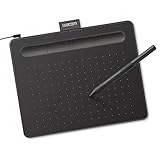
- Wacom Intuos Small Graphics Drawing Tablet: Enjoy industry leading tablet performance in superior control and precision with Wacom's EMR, battery free technology that feels like pen on paper
- Works With All Software: Wacom Intuos tablet can be used in any software program to explore new facets of digital creativity; draw, paint, edit photos/videos, create designs, and mark up documents
- What the Professionals Use: Wacom's industry leading pen technology and pen to paper feeling makes it the preferred drawing tablet of professional graphic designers
- Software and Training Included: Only Wacom gives you software with every purchase. Register your Intuos tablet and gain access to some of the best creative software and Wacom's online training
- Wacom is the Global Leader in Drawing Tablet and Displays: For over 40 years in pen display and tablet market, you can trust that Wacom to help you bring your vision, ideas and creativity to life
Avoid Backendless if: the goal is a basic internal form or a first mobile prototype with no unusual backend requirements.
10. Draftbit: best for React Native portability
Draftbit is worth considering when visual development and future React Native developer handoff matter more than pure no-code simplicity. Draftbit is a portability-oriented option for teams that want greater control than a closed visual platform provides.
Draftbit is more technical than Glide, Softr, Adalo, or Thunkable. React Native knowledge may eventually be necessary, so “visual development” should not be confused with “no technical maintenance.” Check the current Draftbit pricing page before selecting a plan.
Choose Draftbit if: a developer may take over the project and React Native portability is valuable.
Avoid Draftbit if: a nontechnical team needs to own every future change without developer support.
11. WeWeb: best for custom web front ends
WeWeb is a strong choice for a responsive web front end connected to an external backend such as Xano, Supabase, or REST APIs. WeWeb provides more architectural flexibility than an all-in-one spreadsheet tool, but that flexibility creates additional decisions about hosting, authentication, data, permissions, and integrations.
WeWeb is not a turnkey native mobile builder. Check the official WeWeb pricing page and include the external backend in the total launch budget.
Choose WeWeb if: the team is comfortable designing an application architecture and wants a custom browser experience.
The Tool Desk
Outbyte PC Repair FREEClear out junk files and repair common Windows errorsFree Scan →Outbyte Driver Updater FREEScan for outdated or missing drivers - takes under a minuteDriver Scan →Avoid WeWeb if: the project requires native app-store distribution from one beginner-oriented platform.
12. Appy Pie: best for template-led small-business apps
Appy Pie can work for a basic small-business app when a guided template route is more important than unlimited customization. Templates can reduce the time needed to create a simple business presence, but the reader should test the available data models, integrations, and publishing features before treating Appy Pie as a general-purpose builder.
Pricing can vary by platform, app type, and publishing requirements. Check the current Appy Pie pricing page and distinguish the price of experimentation from the price of a live app.
Choose Appy Pie if: a template closely matches the business requirement.
Quick wins for a faster PC:
Repair Windows errors before they cause bigger problemsFix Now →Scan for outdated or missing drivers - takes under a minuteDriver Scan →Avoid Appy Pie if: the product needs bespoke workflows, complex permissions, or a data model that does not fit the template.
13. Lovable or Base44: best for rapid AI-generated web prototypes
Lovable and Base44 are category-adjacent AI-first tools for generating web-app starting points quickly, not conventional beginner no-code platforms for every production requirement. Prompt-led generation can produce screens, workflows, and project scaffolding rapidly, but production readiness still depends on authentication, database design, testing, deployment, observability, security, and maintenance.
AI-generated applications can contain incorrect permissions, unvalidated inputs, duplicate-record workflows, exposed API keys, brittle edge cases, or a polished interface connected to an incomplete backend. Token- or message-based pricing can also make iteration costs difficult to forecast.
Review the Lovable pricing page and Base44 pricing page before purchase. Choose Lovable or Base44 if: the immediate goal is rapid web validation and someone can inspect and maintain the generated result.
Best Value

- Customize Your Workflow: The 6 customizable press keys on Huion H640P drawing tablet for pc let you assign your most-used commands—like undo, zoom, brush switch, or save—so you can keep your hands on the tablet and your mind on the art. Whether you're a digital painter switching brushes, or a comic artist zooming in and out, these keys keep your workflow smooth and uninterrupted. Plus, the Huion driver lets you save different shortcut profiles for different apps, so you never have to reconfigure when switching software.
- Professional Pen Performance: Huion H640P drawing pad for computer comes with the battery-free PW100 stylus that's always ready when inspiration strikes. With 8192 levels of pressure sensitivity, every light sketch, or bold stroke responds naturally to your hand—just like a real pen. The 5080 LPI resolution and 233 PPS report rate deliver lag-free, precise strokes, so you can draw confidently without second-guessing your cursor. The pen side buttons help you switch between pen and eraser instantly.
- Compact and Portable: Huion H640P computer graphics tablet features a compact, ultra-portable design at just 0.3 inches thin and 0.61 lbs light, so it slides easily into your backpack—perfect for sketching in coffee shops, taking notes in class, or editing on the go between home and studio. The 6x4 inch active area offers enough room for natural pen movements while fitting comfortably on crowded desks, or lecture hall seats.
- Stable Compatibility: Huion H640P graphic drawing tablet works seamlessly with Mac, Windows, Linux PCs, and Android smartphones/tablets (OS version 6.0 or later). Left-handed friendly, and you just need to flip the tablet and adjust the settings in the driver. Please note: H640P does NOT support iPhone/iPad.
- Move Beyond the Mouse: Huion Inspiroy H640P is a pen tablet that replaces your mouse for more natural, precise control. Freehand draw, take notes, or even play OSU—everything you do with a mouse, you can do better with a pen. The precise tip makes it ideal for detailed photo editing, graphic design, or signing PDF. Meanwhile, the ergonomic pen grip helps you avoid the strain that comes from hours of using a mouse.
Avoid them if: the project needs a traditional nontechnical editing workflow, reliable native app-store distribution, or guaranteed production architecture without technical review.
Independent reader supportYour contribution helps us test, update, and keep practical guides available for everyone.How should you compare no-code databases and backends?
Compare the data layer before building the interface because a beautiful front end cannot compensate for an unsuitable backend.
| Question | Why the answer matters |
|---|---|
| Does the platform include a database? | A built-in database can reduce setup time, but it may increase platform dependence. |
| Is the data model relational or spreadsheet-like? | Relational data is generally more suitable for linked users, orders, inventory, permissions, and marketplace records. |
| Are records, rows, files, or images capped? | Limits can force a redesign or a higher plan as the product grows. |
| Does the platform support APIs? | APIs determine whether payments, CRM systems, email, maps, and custom services can connect cleanly. |
| Can users export the data? | Usable export reduces the risk of losing business records if the platform is abandoned. |
| Are permissions enforced server-side? | Hiding a record in the interface is not the same as preventing unauthorized access at the backend. |
| Can the backend move later? | Migration options matter when the product becomes too large, regulated, or customized for the original platform. |
Adalo advertises a hosted Postgres database and includes database functionality in its plans. FlutterFlow supports integrations including Firebase and Supabase but requires the user to configure the external backend. Bubble provides its own backend and database environment. The relevant Adalo pricing, FlutterFlow pricing, and Bubble pricing comparison pages should be checked for current limits and plan conditions.
How much does it really cost to launch a no-code app?
The real launch cost includes more than the builder subscription. Budget for the platform, database or backend, email and SMS, maps, payments, analytics, app-store developer accounts, AI usage, API usage, collaboration seats, professional help, and possible migration work.
Windows Errors? Fix Them Before They Spread
Repair common Windows errors and clear accumulated junk for a smoother, more stable PC - no reinstall needed.Free scan · no reinstallOutdated Drivers Are Slowing You Down
One free scan finds every outdated or missing driver and matches the right update for your exact hardware.Free scan · exact hardware match| Platform | Verified price signal | Cost model to investigate | What the price does not automatically solve |
|---|---|---|---|
| Adalo | Starter $36/month billed annually; Professional $52/month; Team $160/month | Plan limits, integrations, external services, store accounts | Apple and Google developer accounts, store approval, privacy compliance |
| Bubble | Web & Mobile Starter $59/month billed annually; 175,000 Workload Units/month listed | Workload consumption, plugins, higher tiers, backend load | Predictable cost at uncertain traffic or complex workflows |
| FlutterFlow | Basic $39/month; Growth $80/month first seat; Business $150/month first seat | Seats, external backend, hosting, APIs, custom code | Backend configuration and technical maintenance |
| Thunkable | Builder $37/month annually or $59/month monthly; Advanced $99/month annually or $189/month monthly | AI tokens, project and screen limits, published-app limits | Product architecture and advanced backend behavior |
| Glide, Softr, AppSheet, and other platforms | Verify the live official pricing page on the publication date | Users, rows, records, automations, seats, branding, data sources, AI credits | External services and long-term portability |
Do not compare an annual price with a monthly price without labeling the billing interval. Vendor pricing pages can change, and conflicting figures may reflect legacy plans, regional pricing, separate web and mobile products, or different billing periods. The article’s price checks should carry the actual verification date.
What do you need for App Store and Google Play publishing?
App-store publishing requires a complete release process even when a no-code platform automates build generation.
- Create the project and configure its app name, icon, bundle identifier or package identifier, and version.
- Test the application on physical iOS and Android devices, not only inside a browser preview.
- Create Apple Developer and Google Play Developer accounts.
- Prepare screenshots, privacy disclosures, age ratings, app descriptions, and a support URL.
- Generate the iOS and Android builds through the platform’s supported workflow.
- Upload builds to App Store Connect and Google Play Console.
- Complete store metadata, data-safety disclosures, and review questionnaires.
- Submit the builds, respond to rejection issues if required, and publish staged updates.
- Monitor crashes, reviews, analytics, permissions, and future operating-system changes.
Automated publishing simplifies compilation and upload, but it does not guarantee store approval. Apple and Google still require developer accounts, privacy and data-collection disclosures, account-deletion handling where applicable, subscription compliance, appropriate age ratings, and an application that works as described. Adalo’s current pricing page specifically states that separate Apple and Google developer accounts are still required.
What should beginners check for security and privacy?
No-code does not mean automatically secure, compliant, or appropriate for sensitive information. Before entering healthcare data, financial information, education records, or other personal data, verify the platform’s current contractual and compliance documentation.
- Test server-side authorization for ordinary users, managers, and administrators.
- Confirm whether row-level security prevents unauthorized records from being retrieved.
- Check password, session, reset, and account-deletion behavior.
- Review encryption, backups, audit logs, data export, and data-residency options.
- Read the subprocessor list and current terms for the relevant geography.
- Verify claims concerning GDPR, HIPAA, SOC 2, PCI, or other requirements instead of inferring compliance from the presence of login forms.
- Check whether confidential data or prompts are sent to an AI model.
- Do not use a free experimentation plan for confidential production data without confirming its terms and controls.
How should you test a no-code app before choosing a platform?
Build one complete user journey rather than judging platforms by templates or the first attractive screen.
- Define the smallest useful version of the product.
- Choose web, PWA, or native output before designing every screen.
- Model users, roles, records, relationships, files, and status changes.
- Build one complete journey, such as sign-up, search, purchase, booking, or submission.
- Test that journey on real devices and realistic data.
- Add authentication, permissions, and account recovery.
- Connect one important external service, such as payments, email, maps, CRM, or a REST API.
- Test empty states, invalid inputs, duplicate submissions, network loss, deleted records, and permission failures.
- Export or back up the data and document how another person would take over.
- Estimate the cost at the expected user, record, API, automation, and storage levels.
- Only then decide whether to pay for app-store publishing, collaboration, branding removal, or a higher usage tier.
How do you avoid no-code platform lock-in?
Ask whether you can export application code, export data in a usable format, move the backend, transfer ownership, and continue operating if the subscription ends.
FlutterFlow and Draftbit are attractive when source-code portability or developer handoff matters. Adalo, Glide, Softr, and Bubble provide more managed experiences, so examine their data-export options, platform-specific workflows, integrations, and migration implications before committing. Code export is not the same as a complete export of hosted databases, authentication, files, automations, secrets, and deployment configuration.
Which platform is the lowest-risk starting point?
Start with the simplest platform that satisfies the distribution requirement and one complete production workflow. For a native mobile MVP, test Adalo first. For a spreadsheet-driven internal tool, test Glide or AppSheet. For a portal, test Softr. For a complex browser product, test Bubble. For a project that may need developers or source-code ownership, test FlutterFlow or Draftbit.
A two- or three-day proof of concept should answer more than a feature checklist: can the platform represent the data correctly, enforce permissions, handle failure states, connect the required service, publish to the required destination, and remain affordable at realistic usage?
Frequently Asked Questions
Can a beginner build a real app without writing code?
Yes. A beginner can build and publish many real business, directory, portal, internal-tool, and simple mobile applications with a visual no-code platform. The beginner still needs to define data models, user roles, business rules, privacy requirements, testing cases, and ongoing maintenance.
Is Glide a native mobile app builder?
Glide is primarily a web/PWA-first platform and does not provide conventional native iOS and Android app-store publishing in the same way as Adalo, FlutterFlow, or Thunkable. Glide is generally better for browser-based internal tools, directories, and spreadsheet-driven applications.
Which no-code builder is best for a complex SaaS app?
Bubble is the strongest general candidate on this list for a complex browser-based SaaS app because it combines visual logic, a backend, a database, plugins, and integrations. Bubble has a steeper learning curve and Workload Unit pricing, so the buyer should test performance and usage costs before launch.
What’s actually slowing this PC down?
Pick the symptom - the matching free tool is one click away.
Do no-code builders handle Apple and Google app-store approval?
No-code builders can simplify build generation and submission, but they do not guarantee Apple or Google approval. The publisher still needs developer accounts, store metadata, privacy and data-safety disclosures, device testing, support information, and compliance with each store’s rules.
What is the difference between no-code and low-code?
No-code platforms primarily use visual editors, configuration, and workflows. Low-code platforms also provide visual development but expect technical concepts such as APIs, external databases, deployment settings, or custom code; FlutterFlow, Draftbit, and WeWeb are better described as low-code or developer-adjacent options.
The Bottom Line
Bottom line: There is no universal best no-code app builder for beginners in 2026. Choose Adalo for the simplest general route to a native mobile and web MVP, Glide or AppSheet for spreadsheet-centered business tools, Softr for portals, Bubble for complex web SaaS, and FlutterFlow or Draftbit when future developer control matters. Test one complete workflow, verify the output type, calculate external costs, and confirm data portability before building the entire product.
Quick Recap
Product prices and availability are accurate as of the date/time indicated and are subject to change. Any price and availability information displayed on Amazon at the time of purchase will apply.
Recommended Free Tools

