
Do these 3 things before closing this tab:
1Scan for outdated or missing drivers - takes under a minute2Clear out junk files and repair common Windows errors3Fix the driver behind crashes, sound loss and screen glitchesThe best Django hosting providers in 2026 are Render for most new production apps, Railway for usage-based deployments, PythonAnywhere for beginners, DigitalOcean App Platform for predictable managed pricing, and Fly.io for advanced container deployments. The right choice depends on your database, workers, static files, scaling needs, technical skill, and total monthly stack cost.
Django hosting is not a single product category. A production Django application normally needs a web service or server, PostgreSQL, static-file storage, secrets, HTTPS, backups, logging, and sometimes separate workers, scheduled jobs, Redis, object storage, or a CDN. The prices below are dated provider price signals checked on August 18, 2026, not guaranteed total bills.
Key takeaways
- Render is the best overall choice for most new Django projects because its official deployment guide covers Git deployment, PostgreSQL, environment variables, Gunicorn, ASGI/Uvicorn, workers, and cron jobs.
- Railway starts at $5 per month for Hobby, but the $5 figure is a minimum usage commitment with included credits rather than unlimited production hosting.
- PythonAnywhere’s Developer plan costs $10 per month and is especially approachable for learners, small sites, and Python-first workflows.
- DigitalOcean App Platform paid containers start at $5 per month, while a listed shared 1 vCPU/1 GiB container costs $10 per month; databases, transfer, and other components cost extra.
- Fly.io is best suited to Docker-comfortable developers who need regional deployment and infrastructure control, not readers seeking the simplest first deployment.
- A real Django production bill is higher than a web-container headline price when the application also needs PostgreSQL, a worker, Redis, storage, backups, or substantial outbound transfer.
How were the best Django hosting providers selected?
The ranking is an editorial fit-based judgment, not the result of independent uptime, speed, support, or deployment-time testing. The comparison considers whether each platform offers a practical production path for Django rather than merely advertising Python support.
- Django-specific deployment documentation and configurable build and start commands
- Production PostgreSQL availability, backups, connection options, and scaling
- Static-file and user-upload handling
- Background workers, scheduled tasks, and queue support
- Automatic deployments, HTTPS, environment variables, logging, and rollback options
- Vertical and horizontal scaling
- Operational burden and price predictability
Django’s official deployment documentation makes an important distinction: Django’s development server is not suitable for production, and production deployments use a web server through either WSGI or ASGI. A host is therefore suitable only when the host can run a real production process and support the surrounding application services.
Quick wins for a faster PC:
Scan for outdated or missing drivers - takes under a minuteDriver Scan →Clear out junk files and repair common Windows errorsFree Scan →Fix the driver behind crashes, sound loss and screen glitchesFind Drivers →#1 Best Overall

- 【Ergonomic design with rhombic massage holes】Innovate ergonomic wrist-shape groove design on the mice wrist support cushion, perfectly fits to wrist and palm, numerous massage holes plus two wave-shaped grooves on the keyboard wrist pad, feel extremely comfortable to rub your wrist and palm against to them.
- 【 High-Quality Material and Carefully Printed Patterns】Made of Premium Memory Foam and Soft Breathable Material, not easy to deformation, ideal for long-time typing and reduce the press of your wrist.
- 【Stable Non-Slip Bottom】 Anti-Skid silicone on the bottom of the mouse pad base holds support firmly in place to avoid slipping in everyday use. The wrist rest for keyboard is just the right amount of firmness and built to last.
- 【Dimensions】14.17*3.15*0.85 inches keyboard wrist rest fits any keyboard pad, improve hand and wrist posture, release your elbows and shoulder stress. No irritation or discomfort.
- 【Comfortable & Soft】Help you feel relaxed when you studying, working, playing games etc. It is a essential accessory for people who use computer very frequently. The keyboard wrist rest is soft to offer your wrist enough support and the variegated surface for the wrist to rest upon also adds to the comfort and usefulness.
How do Django hosting models differ?
The hosting model determines how much infrastructure the provider manages and how much work remains yours.
| Hosting model | Examples | What the provider usually manages | What you still manage | Best fit |
|---|---|---|---|---|
| Managed PaaS | Render, Railway, DigitalOcean App Platform | Deployment platform, runtime, TLS, much of the server layer, and selected managed services | Application code, Django settings, database design, migrations, storage choices, and service configuration | Beginners, freelancers, startups, and teams that want low operational overhead |
| Python-focused hosting | PythonAnywhere | Python runtime, web-app configuration, browser tools, and much of the server environment | Application code, Django configuration, data, and plan-specific limits | Learning, small websites, education, and simple internal tools |
| Container-oriented infrastructure | Fly.io | Container scheduling and infrastructure primitives | Container image, processes, regions, volumes, networking, and more operational decisions | Experienced developers needing regional or architectural control |
| VPS or IaaS | DigitalOcean Droplet, AWS EC2, Hetzner cloud server | Virtual machine hardware and base infrastructure | Linux updates, firewall, Nginx, Gunicorn/Uvicorn, systemd, TLS, monitoring, backups, and database operations | Developers who want full operating-system control |
A low VPS price is not equivalent to managed Django hosting. A VPS can reduce infrastructure spend at a steady workload, but the application owner absorbs security maintenance, incident response, backup administration, and deployment engineering.
What are the five best Django hosting providers?
| Rank | Provider | Hosting model | Best for | Price signal checked August 18, 2026 | Database and workers | Main limitation |
|---|---|---|---|---|---|---|
| 1 | Render | Managed PaaS | Most new Django production applications | Render’s comparison material gives a $25/month example for a 2 GB web service; verify the current pricing page | Managed PostgreSQL, background workers, and cron-style jobs are available as separate application components | Total cost rises as web, database, worker, cache, storage, and bandwidth components are added |
| 2 | Railway | Usage-based managed PaaS | Fast deployment and multi-service projects | Hobby: $5 minimum usage with $5 included credits; Pro: $20 minimum usage with $20 included credits | PostgreSQL, Redis-compatible services, workers, and scheduled processes can be added as separate resources | Usage-based billing makes the final bill less predictable |
| 3 | PythonAnywhere | Python-focused managed hosting | Beginners, teaching, portfolios, and small sites | Developer plan: $10/month; custom plans: $10–$500/month | Simple Python web-app workflow; check current plan limits for advanced workers, networking, and architecture | Less flexibility than a general cloud platform |
| 4 | DigitalOcean App Platform | Managed app platform | Predictable component pricing and a route into DigitalOcean services | Paid containers start at $5/month; listed shared 1 vCPU/1 GiB option: $10/month | Managed databases and application components are separate cost items | Database, egress, workers, and scaling can materially increase the bill |
| 5 | Fly.io | Container-oriented infrastructure | Regional, Docker-based deployments | Usage-based; cost depends on machine size, region, storage, and network usage | Container processes, volumes, private networking, and regional architecture require more configuration | More operational complexity than the other four choices |
1. Why is Render the best overall Django host?
Render is the best overall Django host for most new production applications because Render provides a relatively direct Git-based deployment workflow and documents the Django-specific details that commonly cause deployment failures.
Render’s official Django deployment guide covers PostgreSQL, build scripts, environment variables, Gunicorn, ASGI/Uvicorn, and deployment from a Git repository. Render also supports the service types commonly needed by a growing Django application, including web services, background workers, and scheduled jobs.
The Tool Desk
Outbyte Driver Updater FREEScan for outdated or missing drivers - takes under a minuteDriver Scan →Outbyte PC Repair FREEClear out junk files and repair common Windows errorsFree Scan →Typical Render deployment configuration
Render documents this representative ASGI start command:
python -m gunicorn mysite.asgi:application -k uvicorn.workers.UvicornWorkerReplace mysite with the actual Django project package. An application intended to use WSGI may use a WSGI entry point and a normal Gunicorn command instead. Confirm the correct process model for the project before deploying.
A representative build.sh can contain:
#!/usr/bin/env bash
set -o errexit

pip install -r requirements.txt
python manage.py collectstatic --no-input
python manage.py migrate
The script is an example, not a universal Render requirement. Running migrations during deployment needs extra care for larger applications: a long migration can cause downtime, and multiple instances should not attempt incompatible schema changes at the same time. Test migrations against staging and use backwards-compatible schema changes for zero-downtime releases.
Render advantages
- Clear Django deployment documentation
- Git-based automatic deployments
- Managed PostgreSQL as a natural companion service
- Configurable environment variables and build commands
- Automatic TLS for deployed web services
- Separate workers and scheduled jobs for background processing
- A relatively gentle path from prototype to a larger application
Render disadvantages
- The lowest web-service price is not the total cost of a production Django stack.
- A web service, PostgreSQL, worker, Redis-compatible cache, persistent disk, and bandwidth can each affect the monthly bill.
- Specialized networking or unusual persistent-state architectures may fit infrastructure-oriented providers better.
Render’s comparison material uses a $25/month 2 GB web-service example; that figure is a provider example rather than a universal Render price or a complete Django bill. Check Render’s current pricing page before purchase.
What’s actually slowing this PC down?
Pick the symptom - the matching free tool is one click away.
Choose Render if: you want a Heroku-style Git workflow, managed PostgreSQL, HTTPS, workers, and minimal server administration for a conventional Django application.
2. Is Railway the best usage-based Django PaaS?
Railway is the best usage-based Django PaaS in this shortlist for developers who want to create a project quickly and add web, database, worker, cache, and scheduled services from one interface.
Rank #2

- ✔High Quality --- Made of memory foam, superfine fiber, smooth & breathable, The soft gel-filled cushion conforms to your wrist for maximum support, Keeps your wrist in a neutral position for ergonomic comfort.
- ✔Anti-Slip Rubber Base --- The back of this wrist support kit is thickened with textured rubber, provides heavy grip preventing slipping, Double Sticking and Press handing for edge to supply flat and smooth edge and will not roll up nor split open.
- ✔Wide Application --- Wrist support tool combo fit most computers, notebooks, mouse, improve hand and wrist posture, Perfect wrist & hand fatigue reliever for workers, gamers, writers, editors who are engaged at long typing work
- ✔Optimal Size --- Keyboard wrist support size(17x3.34 in), Perfect dimensions to comfortably support both wrists when typing the keys, using the mouse, or gaming.
- ✔What You Get --- Black Keyboard Wrist Rest ,Comfortably support your hands and wrists while using your desktop computer, PC, laptop notebook or Mac.
Railway supports GitHub and Docker deployments. A Railway project might contain a Django web service, PostgreSQL, a Celery worker, Celery Beat or another scheduled process, Redis-compatible storage, and optional volumes or object storage.
How much does Railway Django hosting cost?
According to Railway’s pricing page (accessed for the August 18, 2026 snapshot), the Hobby plan has a $5 monthly minimum with $5 of included usage credits, while the Pro plan has a $20 monthly minimum with $20 of included usage credits. Railway also lists resource-based rates including $0.00000386 per GB-second for memory, $0.00000772 per vCPU-second for CPU, $0.05 per GB for service egress, and $0.015 per GB-month for object storage.
The minimum plan price is not an unlimited hosting price. A continuously running web service, database, worker, volume, and network traffic can consume more than the included credits. Monitor resource use if the application has a strict monthly budget.
Railway advantages
- Very fast project creation and deployment
- GitHub and Docker workflows
- Flexible resource sizing
- Convenient addition of PostgreSQL, Redis-compatible services, workers, and scheduled jobs
- A unified view of a multi-service application
Railway disadvantages
- Usage-based billing is harder to forecast than fixed-resource pricing.
- Database and worker consumption are separate resource costs.
- Higher traffic, egress, memory use, storage, or replicas can raise the final bill.
Choose Railway if: deployment speed and flexible multi-service projects matter more than a tightly fixed monthly budget.
3. Is PythonAnywhere the easiest Django host for beginners?
PythonAnywhere is the easiest Django host for many beginners because the platform is built around Python applications, provides a control panel, and includes browser-based development tools instead of requiring users to assemble a Linux server.
According to PythonAnywhere’s pricing page (August 18, 2026 snapshot), the Developer plan costs $10 per month, includes one web app, supports a custom domain, provides 5 GB of disk space, and includes browser-based Python and Bash consoles. PythonAnywhere lists custom plans from $10 to $500 per month. The pricing page also lists a 30-day money-back guarantee and says annual subscriptions provide two months free per year.
Windows Errors? Fix Them Before They Spread
Repair common Windows errors and clear accumulated junk for a smoother, more stable PC - no reinstall needed.Free scan · no reinstallCrashes, No Sound, or Screen Glitches?
Random freezes, missing sound and display glitches usually trace back to one bad driver. Find and replace yours safely.Free scan · under a minutePythonAnywhere’s limited Beginner account costs $0, but the limited account is not equivalent to production hosting. The pricing page describes restrictions including limited outbound Internet access, limited consoles, and no SSH on the limited account. Treat the provider’s “typical 150,000 hits/day” statement as PythonAnywhere’s own estimate, not an independently verified capacity benchmark.
PythonAnywhere advantages
- Python-first interface and documentation
- Browser-based consoles and development environment
- Simple web-app configuration
- Low operational burden for straightforward applications
- A useful fit for teaching, portfolios, small business sites, and internal tools
PythonAnywhere disadvantages
- Less infrastructure flexibility than a general-purpose cloud platform
- Plan-specific restrictions matter more as the architecture becomes complex
- Applications requiring containers, unusual networking, many independently scaled services, or advanced regional deployment may outgrow the platform
- Current support for WebSockets, custom networking, system packages, and advanced worker designs should be checked against the relevant plan documentation
Choose PythonAnywhere if: you want to learn or operate Django without managing Linux servers and your application has a simple Python-first architecture.
4. Is DigitalOcean App Platform good for Django?
DigitalOcean App Platform is a good Django host for readers who want managed deployment with relatively predictable component pricing and a clear route into DigitalOcean databases, Droplets, storage, and networking.
DigitalOcean App Platform handles application infrastructure, runtimes, and dependencies, and supports deployment from GitHub, GitLab, or containers. Paid tiers include scaling options; DigitalOcean lists horizontal and vertical scaling and CPU-based autoscaling among paid-tier capabilities.
Free tools Windows power users keep installed
One-click scans. No signup required.
Rank #3

- 【Softer and More Comfortable】Vaydeer wrist rest has unique diamond pattern, which is the combination of softness and aesthetics. The materials of wrist rest are improved into higher quality memory foam and covered with silky smooth lycra. The computer wrist rest makes you as comfortable and cushiony as like rest your wrists on clouds.
- 【Ergonomic Wrist Saver】The wrist rests for keyboard and mouse comes with a 17.32×3.15×0.83 inch keyboard wrist pad and a 5.94×3.15×0.83 inch mouse wrist support. Based on ergonomic design, the unique concave shape is the perfect fit for your wrist joints. The wrist rest pad fits most computer keyboards and laptops, improve hand and wrist posture, release your wrist and arm stress.
- 【Non-Slip Rubber Bottom】Featuring an anti-skid silicone base on the bottom, this wrist keyboard support stays firmly in place on your desk, preventing the padding from sliding around, ensuring stable and consistent wrist support during extended computer sessions.
- 【Better Experience & Pain Relief】Our keyboard arm rest is beneficial to alleviate the soreness caused by direct contact and friction between your arm and a hard desk surface, reducing the risk of wrist fatigue or carpal tunnel. The soft texture of memory foam can evenly distribute the pressure around your wrists and provide good support with just enough give.
- 【Helpful in Multiple Scenarios】Whether you're working, studying, writing, typing, gaming, this keyboard and mouse rest combo is an essential accessory to add comfort and support to your hands and wrists. It’s also a great gift for men, women, family, friend, coworker, gamer, teacher, etc.
How much does DigitalOcean App Platform cost?
According to DigitalOcean’s App Platform pricing page (August 18, 2026 snapshot), the free tier is for static sites, not a general free tier for always-on Django web containers. Paid application containers start at $5 per month. Listed shared options include 1 vCPU/512 MiB for $5 per month, 1 vCPU/1 GiB for $10 per month, and 1 vCPU/2 GiB for $25 per month.
The same pricing page lists a development database at $7 per month, additional outbound transfer at $0.02 per GiB, and a dedicated egress IP at $25 per month per app. These are component prices, not a complete Django production bill. A web container plus PostgreSQL, workers, transfer, backups, and storage can cost considerably more than the $5 headline.
DigitalOcean App Platform advantages
- Managed deployment without Droplet-level server administration
- Fixed component prices that are easier to budget than purely usage-based billing
- Automatic HTTPS
- Vertical and horizontal scaling options
- A broad DigitalOcean ecosystem for databases, storage, networking, and Droplets
DigitalOcean App Platform disadvantages
- The free App Platform tier should not be described as free always-on Django hosting.
- Databases, egress, workers, and scaling are additional cost dimensions.
- Developers needing full operating-system control may prefer a DigitalOcean Droplet, but a Droplet transfers server maintenance to the developer.
Choose DigitalOcean App Platform if: you prefer fixed component pricing and want an easy managed starting point that can connect to a wider cloud ecosystem.
5. Is Fly.io suitable for Django?
Fly.io is suitable for Django when the developer is comfortable with Docker, regional placement, machines, persistent volumes, private networking, and infrastructure-level trade-offs.
Fly.io is closer to container infrastructure than to a click-first Python hosting panel. The model can be valuable for applications needing regional deployment, multiple application processes, or more control over runtime architecture, but the extra control creates more configuration and operational responsibility.
How much does Fly.io Django hosting cost?
Fly.io uses resource-based pricing. According to the official Fly.io pricing documentation, the final cost depends on machine resources, region, persistent volumes, managed database choices, and network usage. Calculate the current machine, storage, database, and egress requirements immediately before deployment because a single generic monthly figure would be misleading.
Fly.io advantages
- Docker-oriented deployment
- Regional placement and multi-region possibilities
- More control over machines, processes, volumes, and private networking
- A good fit for developers who understand container and infrastructure trade-offs
Fly.io disadvantages
- More operational complexity than Render, Railway, or PythonAnywhere
- Usage-based cost depends on architecture and traffic
- Persistent volumes require a deliberate durability and backup strategy
- WebSockets, databases, worker processes, and regional failover need explicit design rather than assumption
Choose Fly.io if: regional deployment or container-level control is important and you are prepared to manage more infrastructure decisions.
Which Django hosting provider should you choose?
| Your situation | Recommended provider or model | Why | Check before committing |
|---|---|---|---|
| Absolute beginner or student | PythonAnywhere | Python-specific tools and browser-based consoles reduce server administration | Account limits, custom-domain support, outbound access, and future architecture needs |
| Most new production Django applications | Render | Clear Django deployment path, managed PostgreSQL, workers, and Git-based deployment | Total cost of web, database, worker, cache, storage, and transfer |
| Fastest developer workflow | Railway | Quick GitHub or Docker deployment and convenient multi-service projects | Usage consumption and monthly bill alerts |
| Predictable managed pricing | DigitalOcean App Platform | Fixed container tiers and a broader DigitalOcean ecosystem | Database, egress, worker, storage, and scaling charges |
| Regional or container deployment | Fly.io | Machines, regions, volumes, and networking provide more infrastructure control | Docker, backups, volumes, private networking, and operational expertise |
| Full server control | VPS such as a DigitalOcean Droplet | Operating-system and process-level flexibility, potentially lower steady-state infrastructure cost | Security updates, Nginx, Gunicorn/Uvicorn, systemd, TLS, monitoring, backups, and database operations |
| Enterprise, compliance, or unusual cloud requirements | AWS, Google Cloud, Microsoft Azure, or a specialist managed provider | Broader infrastructure, compliance, and scaling options | Architecture complexity, IAM, networking, observability, support, and billing |
How much does Django hosting really cost?
Django hosting costs depend on the complete application stack, not only the web process. Compare application compute, PostgreSQL, workers, Redis or another queue, persistent storage, object storage, bandwidth, backups, domains, HTTPS, monitoring, and team or support features.
Recommended Free Tools
| Scenario | Typical components | What to verify | Common pricing mistake |
|---|---|---|---|
| Small brochure or portfolio site | One Django web service, PostgreSQL, low traffic, static files, no worker or queue | Whether PostgreSQL is separate, whether the service sleeps, domain and HTTPS availability, and static-file behavior | Calling a static-site free tier free Django hosting |
| Small production application | One web service, managed PostgreSQL, backups, custom domain, HTTPS, one scheduled task, and possibly one worker | Database backups, worker and cron pricing, connection limits, logs, and egress | Pricing only the web container |
| Growing application | Multiple web instances, larger PostgreSQL, worker, Redis, monitoring, log retention, CDN or object storage, and horizontal scaling | Replica costs, database scaling, network transfer, storage durability, rollback, and autoscaling | Assuming a starter plan scales without adding services or operational work |
Railway is generally less predictable because billing follows resource consumption. DigitalOcean App Platform presents flatter component pricing, although additional services and transfer still affect the bill. Render’s modular services make the total stack flexible but mean that a low web-service figure should not be treated as an all-in price.
What should a production Django deployment include?
A production Django deployment should use a production WSGI or ASGI server, a production database, secure settings, durable static and media storage, HTTPS, backups, logging, and a tested deployment and rollback process.
Rank #4
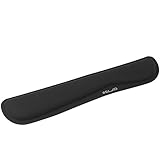
- Soft & Comfortable Material: ELZO keyboard palm rest is made of memory foam, slow bounces back and soft texture but it not easy to deform, ideal for longer hours of use.
- Anti-Skid Bottom: Non-slip rubber base provides a heavy grip to avoid sliding or unnecessary movement for the wrist pad for keyboard on the table.
- Ergonomic Design: Special wave design perfectly supports your wrist to mitigate wrist fatigue and alleviate pains due to continuous typing.
- Widely Usage: ELZO keyboard rest is perfect for gamers, office workers, writers, editors designers, students and those who are working long hours on a PC, laptop, notebook and computer.
- Lifetime Support: Full 12 months worry-Free warranty and 24-hour customer service support, just purchase and enjoy ELZO wrist support for keyboard with confidence and risk-free!
1. Run Django’s deployment checks
Before release, run the commands documented in Django’s deployment guidance:
python manage.py check --deploy
python manage.py migrate
python manage.py collectstatic
Run migrate and collectstatic in the deployment process appropriate for the chosen provider. Migration ordering and downtime require additional planning for applications with multiple instances or large tables.
2. Protect secrets and production settings
Django’s official deployment checklist emphasizes keeping SECRET_KEY secret, disabling DEBUG in production, and configuring ALLOWED_HOSTS when DEBUG = False. A minimal environment-driven example is:
import os

SECRET_KEY = os.environ["SECRET_KEY"]

DEBUG = False

ALLOWED_HOSTS = [
    "example.com",
    "www.example.com",
]
The exact settings depend on the provider, domain, reverse proxy, Django version, cookies, trusted origins, and deployment architecture. Never commit database credentials or production secrets to source control.
3. Use PostgreSQL for serious production workloads
SQLite is convenient for local development and may suit a limited read-heavy deployment, but PostgreSQL is the safer default for a multi-user application with concurrent writes, multiple instances, background jobs, or meaningful business data. Confirm database backups, connection limits, private networking, scaling, point-in-time recovery, and restore procedures rather than assuming a managed database includes every protection.
4. Separate static files from media files
Django’s collectstatic command gathers application assets such as CSS, JavaScript, and bundled images. Django’s static-file deployment documentation describes using a custom STORAGES["staticfiles"] backend for services such as S3-compatible object storage.
Static files are application assets. Media files are user uploads. User uploads, generated reports, and other durable data should not live only on an ephemeral application filesystem. Use object storage or an explicitly durable volume with backups. A persistent volume is not itself a backup.
5. Add workers and scheduled jobs deliberately
A Django web service does not reliably run Celery workers, Celery Beat, email processing, image processing, webhook handling, or scheduled management commands simply because HTTP requests work. Add a separate worker, scheduler, cron job, or equivalent service where the platform supports it, and check whether each component is billed separately.
6. Verify health checks, logging, backups, and rollback
A usable production host should provide a way to inspect application logs, detect failed releases, restore data, and return to a known-good version. Test a backup restoration and a rollback before a serious incident. A deployment that succeeds but cannot recover from a bad migration or lost media is incomplete.
Independent reader supportYour contribution helps us test, update, and keep practical guides available for everyone.What Django hosting problems occur most often?
| Symptom | Likely cause | Practical check |
|---|---|---|
| Static files return 404 | collectstatic was not run, STATIC_ROOT is missing, or WhiteNoise/external storage is misconfigured |
Inspect build logs, verify the static backend, and confirm that the platform serves the collected directory or storage bucket |
| User uploads disappear after redeploy | Uploads were written to an ephemeral application filesystem | Move media to object storage or a backed-up persistent volume |
| Deployment fails during migration | New code and old schema are incompatible, migration is long, or multiple instances race | Use staging, backwards-compatible schema changes, and a controlled migration process |
| Celery tasks never run | Only the web service was deployed | Deploy a separate worker and configure the broker and result backend |
| WebSockets disconnect | ASGI, proxy timeouts, Redis channel layer, or provider connection limits are unsuitable | Verify ASGI and WebSocket support, timeout settings, connection limits, and channel-layer availability |
| Application returns invalid-host errors | ALLOWED_HOSTS does not include the deployed hostname |
Set the exact production domain names through the platform’s secure environment configuration |
| Unexpected monthly bill | Separate database, worker, egress, storage, replica, or usage charges were omitted | Review every running service and compare actual resource consumption with the provider’s pricing page |
Should you still choose Heroku for Django?
Heroku remains a recognizable and viable Django platform for teams that value its mature conventions, but Heroku is not the default recommendation in this comparison because newer managed platforms may offer more attractive pricing or a better fit for a new project.
Best Value

- 【1.2"ULTRA THICK MEMORY FOAM】 Upgraded memory foam is softer, more comfortable, and supportive, with a slow rebound. The 1.2'' memory foam keyboard wrist rest is the optimal ergonomic height, alleviating wrist pain caused by weight-bearing, allowing you to work longer hours with less strain
- 【ERGONOMIC DESIGN】 Our wrist rest is ergonomically designed to elevate your wrists, and with grooves that fit perfectly to your wrists, say goodbye to wrist pain and relieve pressure when typing and using a mouse. Suitable for home, office, or school
- 【BUILT TO LAST】 The wrist rests features a 3-layer design for durability. The rubber base stays firmly in place on most surfaces; the inner layer is made of thick memory foam for extra support; and the top layer is made of soft, breathable spandex fabric for a skin-friendly feel
- 【NON-SLIP BACKING & STICKERS】 The wrist pad's bottom is made of a super non-slip natural rubber, which adheres securely to most desks, allowing you to focus on work without the hassle of adjusting. Included stickers provide added protection against slipping. The keyboard wrist pad (17 x 3.5 x 1.2") and mouse wrist (6.3 x 3.3 x 1.2") are perfect for most keyboards and mice
- 【WATERPROOF & STAIN-RESISTANT】 The top spandex fabric is water-resistant and stain-resistant, making it easy to clean; simply wipe with a damp cloth and let dry. We care about your well-being and shopping experience. This is a must-have accessory and a great choice for frequent computer users. Our support team offers 24-hour assistance
According to Heroku’s pricing page, the August 18, 2026 price signals included Eco at $5/month, Basic at $7/month, and Standard-1X at $25/month. Those are plan signals rather than complete application costs because databases, add-ons, transfer, and other services may be separate.
Claims that Salesforce moved Heroku into “sustaining engineering” or maintenance-focused operation in February 2026 come from Render, a competitor, and should not be treated as settled independent fact without additional verification. Readers already invested in Heroku may reasonably weigh migration cost, team familiarity, and existing add-ons differently from a new project.
Final recommendation
Choose Render for the default new Django production deployment, Railway for a fast usage-based multi-service workflow, PythonAnywhere for beginners and simple Python applications, DigitalOcean App Platform for predictable managed component pricing, and Fly.io for experienced developers who need container and regional control.
Before choosing, write down the complete workload: web processes, PostgreSQL, migrations, static files, media uploads, workers, schedules, Redis, backups, monitoring, traffic, and scaling. The best Django host is the provider that handles those requirements at an acceptable operational cost—not the provider with the lowest isolated web-service price.
Crashes, No Sound, or Screen Glitches?
Random freezes, missing sound and display glitches usually trace back to one bad driver. Find and replace yours safely.Free scan · under a minutePC Slower Than It Used to Be?
A free scan shows the junk files, broken settings and background clutter dragging Windows down - then fixes them in one click.Free scan · Windows 10 & 11Frequently Asked Questions
Can Django run on free hosting?
Django can run on limited free hosting, but free plans commonly restrict sleep behavior, CPU, memory, outbound access, storage, custom domains, backups, or support. DigitalOcean’s listed free App Platform tier is for static sites, while Railway’s free offering is a limited trial or restricted plan rather than unlimited production hosting.
Is PythonAnywhere good enough for a production Django website?
PythonAnywhere can be suitable for a small production Django website, portfolio, internal tool, or low-to-moderate traffic application. PythonAnywhere becomes a less suitable choice when the application requires containers, complex networking, many independently scaled services, or advanced regional architecture.
Do I need PostgreSQL to host Django?
You do not need PostgreSQL for local Django development, but PostgreSQL is normally the safer production default for applications with concurrent writes, multiple instances, background jobs, or important business data. SQLite’s limitations should be understood before using SQLite in a serious multi-user deployment.
Does a Django web service also run Celery?
A Django web service does not reliably run Celery workers or periodic tasks by itself. A Celery deployment normally needs a separate worker and a broker such as Redis, plus a scheduler such as Celery Beat or a platform cron service when periodic jobs are required.
The Bottom Line
Bottom line: Render is the strongest general recommendation for most new Django applications, but PythonAnywhere may be better for a beginner and Fly.io may be better for an experienced container developer. Compare the complete stack—including PostgreSQL, workers, storage, backups, and egress—before treating any advertised starting price as your real monthly cost.
Quick Recap
Product prices and availability are accurate as of the date/time indicated and are subject to change. Any price and availability information displayed on Amazon at the time of purchase will apply.

