
Quick wins for a faster PC:
Repair Windows errors before they cause bigger problemsFix Now →Scan for outdated or missing drivers - takes under a minuteDriver Scan →Microsoft advises against installing Windows 11 on a PC that does not meet its minimum system requirements. On such a device, Microsoft says support is unavailable, compatibility problems may occur, and updates—including security updates—are not guaranteed. That does not mean every update will automatically be withheld.
What Microsoft’s warning means
Microsoft’s support page, updated December 12, 2024, states: “Installing Windows 11 on a device that doesn’t meet Windows 11 minimum system requirements isn’t recommended.” It also warns that an unsupported device may experience compatibility issues, will not receive Microsoft support, and is not guaranteed to receive updates. The warning includes security updates. Microsoft further says damage caused by incompatibility is not covered by the device manufacturer’s warranty. Read Microsoft’s guidance on devices that don’t meet minimum requirements.
“Not guaranteed” is important: Microsoft does not say that every update is categorically blocked. It also does not promise that an unsupported PC will continue receiving a particular update. The practical point is that installing this way gives you no assurance of updates or support.
Check which requirement your PC fails
Use Microsoft’s PC Health Check app or check the device’s eligibility in Windows Update. These tools can help identify whether the machine qualifies; a warning such as “This PC doesn’t meet the minimum system requirements for running Windows 11” does not by itself tell you which component needs attention.
What’s actually slowing this PC down?
Pick the symptom - the matching free tool is one click away.
#1 Best Overall

- 1.1 GHz (boost up to 2.4GHz) Intel Celeron N5030 Quad-Core
- 4GB DDR4 System Memory; 128GB Solid State Drive
- 11.6" HD (1366 x 768) Multi-Touch Display
- Combo headphone/microphone jack - Noble Wedge Lock slot - HDMI; 2 USB 3.1 Gen 1
- Windows 11 Pro
Windows 11’s published minimum requirements include:
- A compatible 64-bit processor running at 1 GHz or faster, with at least two cores.
- At least 4 GB of RAM.
- A storage device with at least 64 GB capacity.
- UEFI firmware capable of Secure Boot.
- TPM version 2.0.
- DirectX 12-compatible graphics with a WDDM 2.0 driver.
- A display larger than 9 inches diagonally, with HD (720p) resolution.
Windows 11 Home and Windows 11 Pro for personal use also require internet connectivity and a Microsoft account during initial setup. These are Microsoft’s stated system and setup requirements, not a guarantee that a PC meeting them will have no other compatibility issues. See the full Windows 11 system requirements.
Rank #2

- Everyday Performance for School and Light Work: A Core M3 2-core, 4-thread processor with a 1.1GHz base frequency and up to 3.0GHz turbo supports online classes, homework, documents, spreadsheets, email, web browsing and video calls for everyday study and entry-level office tasks.
- Crisp 15.6-Inch FHD IPS Display: The 1920x1080 Full HD IPS screen provides a clear, spacious view for homework, notes, presentations, online lessons, web research and streaming at home, school or work.
- 128GB SSD with Room to Grow: The M.2 2280 SATA SSD supports fast startup and everyday file access, with storage expansion up to 2TB. The laptop includes 4GB DDR3 1333MHz memory in two SO-DIMM slots with one slot currently in use.
- Versatile Ports and Wireless Connectivity: Connect accessories and displays through two USB 3.0 Type-A ports, USB-C for charging and USB 2.0 data, HDMI 1.4, a 3.5mm audio jack and a MicroSD card slot, plus dual-band Wi-Fi and Bluetooth 5.0.
- Lightweight for Study and Work: At 3.46 lbs and 0.76 inch thin, the DGBook is easy to carry between home, school and work. A 7.7V 5000mAh lithium-ion polymer battery, 2.0MP webcam, dual microphones and dual speakers support everyday portable use and video calls.
If the device belongs to your employer or school, ask its IT administrator before changing its operating system. Managed devices may have organization-specific policies or support arrangements.
Can you fix the failed requirement?
That depends on the exact component and the specific PC. Microsoft notes that RAM and storage can sometimes be upgraded. Processor speed and core count are inherent to the processor, so a settings change cannot add cores or make an unsupported processor compatible.
Rank #3

- 14" diagonal, 1366x768 resolution, HD BrightView LED, Glossy NON-TOUCH Display
Some systems may have a supported firmware security feature that is disabled, but availability and instructions vary by manufacturer and model. Check the device maker’s documentation before changing firmware settings. After any hardware or firmware change, check eligibility again; Microsoft provides guidance for checking requirements after changing device hardware.
Do not assume that a general “Windows 11 ready” label or an optimization utility makes an ineligible PC eligible. Confirm the exact model and its specifications against Microsoft’s requirements.
Rank #4
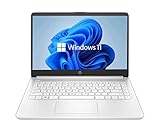
- 14” Diagonal HD BrightView WLED-Backlit (1366 x 768), Intel Graphics
- Intel Celeron Dual-Core Processor Up to 2.60GHz, 4GB RAM, 64GB SSD
- 1x USB Type C, 2x USB Type A, 1x SD Card Reader, 1x Headphone/Microphone
- 802.11a/b/g/n/ac (2x2) Wi-Fi and Bluetooth, HP Webcam with Integrated Digital Microphone
- Windows 11 OS
Use the supported upgrade route
- Run Microsoft’s PC Health Check app, or open Windows Update and check whether the device is eligible.
- If the tool reports a failure, identify the specific requirement and consult the PC manufacturer about whether a supported upgrade or setting change is possible.
- Recheck eligibility after any change. If Windows Update does not offer Windows 11, Microsoft’s supported approach is to wait until it does rather than installing without confirming eligibility. See Microsoft’s ways to install Windows 11.
- Back up important files before installing a new Windows version. Microsoft’s Windows 11 FAQ recommends backing up files and gives an external device as one example. A backup protects data; it does not change hardware eligibility.
Weigh the decision against Windows 10 support
Microsoft says Windows 10 support ended on October 14, 2025. Since then, Microsoft no longer provides free Windows Update software updates, technical assistance, or security fixes for Windows 10. That support status is separate from the warning about installing Windows 11 on an incompatible PC: neither statement guarantees a particular update outcome for an individual machine.
Consider what requirement fails, whether it can be changed on your device, how long you expect to keep the PC, and the cost and feasibility of a supported hardware upgrade versus replacement. If you choose a different PC, verify the specifications of the exact model before buying rather than relying only on a broad compatibility claim.
Quick Recap
Best Value

- 14” Diagonal HD BrightView WLED-Backlit (1366 x 768), Intel Graphics,
- Intel Celeron Dual-Core Processor Up to 2.60GHz, 4GB RAM, 64GB SSD
- 3x USB Type A,1x SD Card Reader, 1x Headphone/Microphone
- 802.11a/b/g/n/ac (2x2) Wi-Fi and Bluetooth, HP Webcam with Integrated Digital Microphone
- Windows 11 OS, Dale Blue
Product prices and availability are accurate as of the date/time indicated and are subject to change. Any price and availability information displayed on Amazon at the time of purchase will apply.

