
Microsoft announced plans to acquire FrontBridge Technologies on July 20, 2005, then confirmed the deal’s completion on August 31. FrontBridge provided managed email services for security, compliance, and continuity—not a consumer security product. Microsoft later rebranded the offering Exchange Hosted Services, or EHS.
When did Microsoft buy FrontBridge?
Microsoft announced the proposed acquisition on July 20, 2005. At that point, the company said the terms had not been announced. Microsoft reported that the acquisition was complete on August 31, 2005, and that FrontBridge had become a wholly owned subsidiary. Microsoft’s investor-relations history also lists the announcement under July 20, 2005.


Microsoft’s July 20 announcement and August 31 closing announcement distinguish the planned deal from its completion.
What did FrontBridge do?
FrontBridge sold managed messaging services to organizations. Rather than requiring customers to rely only on security and continuity systems installed at their own sites, its hosted services handled several email and messaging needs over a service network.
#1 Best Overall
| Service area | What it was designed to do |
|---|---|
| Security | Filter messages for spam and viruses, and provide encryption. |
| Compliance | Archive email and instant messages, then support retrieval and reporting. |
| Continuity | Help maintain messaging availability and support recovery during emergencies or outages. |
Microsoft described FrontBridge as supporting Exchange as well as other SMTP-compliant email systems. After the acquisition closed, Microsoft specifically named Microsoft Exchange and IBM Lotus Domino among the supported platforms, along with other SMTP-compliant servers the company already supported. This was Microsoft’s description of the service at the time, not a statement about current compatibility.
Why did Microsoft acquire FrontBridge?
Microsoft presented FrontBridge as a complement to Exchange. Its stated rationale was that hosted filtering could reduce exposure to spam and viruses, archiving and reporting could help organizations address retention and compliance needs, and continuity services could help preserve access during an outage. Microsoft also cited lower upfront capital investment and less IT-management overhead as potential benefits of the managed-service model. These were the company’s claims about the services, not independent findings or a guarantee of compliance.
Rank #2
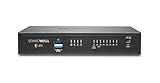
- The latest SonicWall TZ370 series, are the first desktop form factor nextgeneration firewalls (NGFW) with 10 or 5 Gigabit Ethernet interfaces. The series consist of a wide range of products to suit a variety of use cases.
- Reduce complexity and get the business running without relying on IT personnel with easy onboarding using SonicExpress App and Zero-Touch Deployment, and easy management through a single pane of glass
- Drive business growth by investing in next-gen appliances with multi-gigabit and advanced security features, to future-proof against the changing network and security landscape.
- SonicWall 24x7 support provides chat, email, web, and telephone support for technical assistance | Dynamic Support is designed for customers who need continued protection through ongoing firmware updates and advanced technical support
- Hardware: Operating system: SonicOS 7.0 | Interfaces: 8x1GbE, 2 USB 3.0, 1 Console | Management: Network Security Manager, CLI, SSH, Web UI, GMS, REST APIs | VLAN Interfaces: 128 | Access points supported (maximum): 16
The 2005 announcement cited Sarbanes-Oxley, HIPAA, and securities-industry rules as examples of the regulatory context for archiving and reporting. Buying a service did not, by itself, guarantee that an organization met any legal or regulatory obligation. Dave Thompson, Microsoft’s corporate vice president of the Exchange Server Group, said, “We see FrontBridge’s services as a perfect complement to Exchange.”
What figures did Microsoft and FrontBridge report?
The acquisition announcement included operational and customer figures attributed to FrontBridge or Microsoft. They describe claims made at the time, not current service levels or independently verified measurements.
Rank #3
- The TZ570 is designed for mid-sized organizations and distributed enterprise with SD-Branch locations, the TZ570 delivers industry-validated security effectiveness with best-in-class price performance. TZ570 NGFWs address the growing trends in web encryption, connected devices and high-speed mobility by delivering a solution that meets the need for automated, realtime breach detection and prevention.
- Deployment of TZ570 is further simplified by Zero-Touch Deployment, with the ability to simultaneously roll out these devices across multiple locations with minimal IT support.
- The SonicOS architecture is at the core of TZ NGFWs. TZ570 is powered by the feature rich SonicOS 7.0 operating system with new modern looking UX/UI, advanced security, networking and management capabilities. TZ570 features integrated SD-WAN, TLS 1.3 support, realtime visualization, high-speed virtual private networking (VPN) and other robust security features.
- SonicWall 24x7 support provides chat, email, web, and telephone support for technical assistance | Dynamic Support is designed for customers who need continued protection through ongoing firmware updates and advanced technical support
- Hardware: Interfaces: 8x1GbE, 2x5GbE, 2 USB 3.0, 1 Console | VLAN interfaces: 256 | Firewall Inspection Throughput: 4.00 Gbps | Threat Prevention Throughput: 4.00 Gbps | IPS Throughput: 2.5 Gbps | IPSec VPN Throughput: 1.80 Gbps
| Figure | Attribution and meaning |
|---|---|
| Eight datacenters | Microsoft’s 2005 announcement described FrontBridge’s global redundant network as having eight datacenters. |
| More than 3,100 businesses | FrontBridge’s 2005 announcement said its managed services were used by more than 3,100 businesses globally. |
| 99.999% service-level guarantee | FrontBridge’s 2005 announcement said it offered this guarantee. |
| “100 percent historical uptime” | FrontBridge’s promotional claim in its 2005 announcement; it was not presented as an independent uptime audit. |
| 25% customer-base growth; 20% partner-reseller growth | Microsoft reported these increases since the August 2005 acquisition in its March 2006 EHS announcement. |
What happened to FrontBridge’s email service?
In March 2006, Microsoft introduced Exchange Hosted Services (EHS) as the new branding and licensing model for the former FrontBridge business. Microsoft described four hosted service lines:
- Hosted Filtering: message filtering for security threats and unwanted email.
- Hosted Archive: message archiving and retrieval.
- Hosted Continuity: services intended to support messaging availability during disruptions.
- Hosted Encryption: message encryption.
Microsoft said EHS operated over the Internet without hardware or software to install on a customer’s premises. In its March 2006 announcement, Microsoft also reported the customer-base and partner-reseller growth figures listed above. Those figures reflect Microsoft’s reporting at that time.
Microsoft’s March 2006 Exchange Hosted Services announcement describes the rebranding and service lines. The 2005–2006 announcements establish that history, but do not establish the present availability, branding, or ownership status of legacy FrontBridge services.
Independent reader supportYour contribution helps us test, update, and keep practical guides available for everyone.Was $178 million the purchase price?
No definitive purchase price is established by the cited figure. Microsoft’s 2005 SEC filing associated $178 million of goodwill with the acquisition, while noting that purchase-price allocations were preliminary and subject to revision. Goodwill is an accounting figure; it should not be described as the final purchase price. See Microsoft’s 2005 Form 10-Q.
Quick wins for a faster PC:
Repair Windows errors before they cause bigger problemsFix Now →Scan for outdated or missing drivers - takes under a minuteDriver Scan →Quick Recap
Best Value
- The latest SonicWall TZ370 series, are the first desktop form factor nextgeneration firewalls (NGFW) with 10 or 5 Gigabit Ethernet interfaces. The series consist of a wide range of products to suit a variety of use cases.
- Reduce complexity and get the business running without relying on IT personnel with easy onboarding using SonicExpress App and Zero-Touch Deployment, and easy management through a single pane of glass
- Drive business growth by investing in next-gen appliances with multi-gigabit and advanced security features, to future-proof against the changing network and security landscape.
- SonicWall 8x5 Support provides chat, email, web, and telephone support for technical assistance | Dynamic Support is designed for customers who need continued protection through ongoing firmware updates and advanced technical support
- Hardware: Operating system: SonicOS 7.0 | Interfaces: 8x1GbE, 2 USB 3.0, 1 Console | Management: Network Security Manager, CLI, SSH, Web UI, GMS, REST APIs | VLAN Interfaces: 128 | Access points supported (maximum): 20
Product prices and availability are accurate as of the date/time indicated and are subject to change. Any price and availability information displayed on Amazon at the time of purchase will apply.

