
Do these 3 things before closing this tab:
1Fix the driver behind crashes, sound loss and screen glitches2Clear out junk files and repair common Windows errors3Scan for outdated or missing drivers - takes under a minuteiTechGuides is reader-supported. When you buy through links on our site, we may earn an affiliate commission. As an Amazon Associate I earn from qualifying purchases. Learn more
The best free and open source host-based intrusion detection system for most multi-host environments is Wazuh, while OSSEC is the better traditional lightweight HIDS. AIDE and Open Source Tripwire focus on file integrity, Falco targets Linux and Kubernetes runtime events, and osquery and Velociraptor provide endpoint visibility rather than complete HIDS coverage.
“Free” means no software license fee, not zero operating cost. Hardware or cloud hosting, storage, backups, administration, alert tuning, upgrades, incident response, and commercial support can all add cost. This list therefore separates full HIDS platforms from file-integrity monitors, runtime detectors, endpoint investigation tools, and broader SOC platforms.
Key takeaways
- Wazuh is the strongest overall choice for centralized monitoring across Linux, Windows, macOS, and other supported systems, but its server, indexer, dashboard, storage, and agent stack require administration.
- OSSEC is the best conventional lightweight HIDS when log analysis, file-integrity monitoring, rootkit checks, Windows Registry monitoring, and active response matter more than a modern SIEM experience.
- AIDE, Samhain, and Open Source Tripwire are primarily file-integrity tools; they should not be treated as complete behavioral-detection or endpoint-response platforms.
- Falco is the best fit for real-time Linux, container, and Kubernetes runtime detection because it evaluates kernel and other runtime events.
- osquery is strongest for SQL-based endpoint visibility, while Velociraptor is strongest for threat hunting and digital forensics; neither is an out-of-the-box conventional HIDS.
- Security Onion is a broader SOC distribution combining network and host visibility, not a lightweight standalone HIDS.
What are the best free and open source host-based intrusion detection systems?
The best free and open source host-based intrusion detection systems depend on the activity you need to detect. Wazuh is the best overall platform, OSSEC is the best traditional HIDS, Samhain is the strongest hardened file-integrity choice, AIDE is the simplest Linux-focused checker, Falco is the leading runtime option for containers and Kubernetes, and Security Onion is better viewed as a broader SOC platform with host visibility.
A host-based intrusion detection system observes activity inside a computer or server. Depending on the product, that activity can include system and application logs, file and directory changes, hashes, permissions, ownership, authentication events, privilege use, processes, kernel modules, listening ports, Windows Registry changes, syscalls, container events, Kubernetes activity, configuration drift, vulnerabilities, and compliance state.
Popular on Amazon

- Compact and Efficient Design: The FortiGate 40F is designed for small to mid-sized businesses and enterprise branch offices, featuring a compact, fanless desktop form factor that ensures quiet operation and minimizes space usage.
- Robust Connectivity Options: Equipped with 5 GE RJ45 ports, including 1 WAN port and 4 internal ports, this model provides essential connectivity and flexibility for various network configurations in a small-scale environment.
- High-Performance Security: Offers up to 1 Gbps IPS throughput and 600 Mbps threat protection throughput, using Fortinet’s purpose-built security processor technology to deliver industry-leading performance and protection for SSL encrypted traffic.
- Advanced Threat Protection: Integrated with Fortinet’s AI-powered FortiGuard Labs, the FortiGate 40F offers comprehensive cybersecurity, identifying and mitigating both known and unknown threats to maintain robust security across your network.
- Simplified Management and Deployment: Features a user-friendly management console that provides comprehensive network automation and visibility, coupled with Zero Touch Integration with Fortinet’s Security Fabric for easy deployment.
The nine entries below use a broad but explicit definition. Wazuh and OSSEC are full HIDS or host-security platforms. Samhain, AIDE, and Open Source Tripwire are integrity-focused. Falco is runtime-focused. osquery and Velociraptor are endpoint-visibility and investigation tools. Security Onion is a network-and-host SOC platform.
How do the nine tools compare?
| Rank | Tool | Best for | Primary detection model | Platform scope | Central management | Main limitation |
|---|---|---|---|---|---|---|
| 1 | Wazuh | Overall host security monitoring | Logs, FIM, rules, compliance, vulnerability visibility, response | Linux, Windows, macOS, and other supported platforms | Yes | Heavier central stack |
| 2 | OSSEC | Traditional HIDS | Logs, FIM, rootkit checks, Registry monitoring, active response | Linux, OpenBSD, FreeBSD, macOS, Solaris, Windows | Yes | Less modern platform experience |
| 3 | Samhain | Hardened integrity monitoring | Baselines, logs, rootkits, ports, hidden processes | Primarily Unix/POSIX; project describes Cygwin support | Client/server | Specialized and configuration-heavy |
| 4 | AIDE | Simple Linux/Unix FIM | Periodic baseline comparison | Primarily Linux and Unix | Usually no | No broad event analysis or response |
| 5 | Open Source Tripwire | Policy-driven FIM | Signed baseline and policy checks | POSIX-like systems; Windows through Cygwin with limitations | Usually no | Primarily periodic FIM |
| 6 | Falco | Runtime security | Syscalls and runtime events | Linux, containers, Kubernetes | Through integrations | Not a general Windows/macOS HIDS |
| 7 | osquery | Endpoint visibility and hunting | SQL queries over host state | Linux, macOS, Windows | Requires surrounding fleet tooling | Needs detection and alerting workflow |
| 8 | Velociraptor | DFIR and endpoint investigation | Remote artifacts, collection, and hunting | Verify current project support | Yes | Not a conventional always-on HIDS |
| 9 | Security Onion | SOC monitoring | Network plus host telemetry | Broader lab and SOC deployments | Yes | Too broad for simple HIDS needs |
How were these free and open source HIDS tools selected?
The comparison considers detection coverage, operating-system support, architecture, alerting, response, integrity protection, deployment complexity, and operational cost. “Best” is an editorial recommendation for a particular use case, not an independently measured performance result.
Open-source status and product boundaries also matter. A community project, a self-hosted commercial distribution, a cloud service, and a commercial enhancement may share a name without sharing the same license or capabilities. Readers should check the project license and current documentation before deployment.
Quick wins for a faster PC:
Scan for outdated or missing drivers - takes under a minuteDriver Scan →Repair Windows errors before they cause bigger problemsFix Now →1. Is Wazuh the best overall HIDS?
Wazuh is the best overall choice when an organization needs centralized, multi-platform host monitoring with a dashboard, file-integrity monitoring, log analysis, security configuration assessment, vulnerability visibility, compliance features, and active response. Wazuh’s official architecture uses an agent, Wazuh server, Wazuh indexer, and Wazuh dashboard; the Wazuh quickstart architecture and deployment documentation describes these components.
Wazuh is broader than a lightweight HIDS. Wazuh’s documentation describes the platform as combining XDR and SIEM capabilities, which explains both its usefulness and its operational footprint. A small single-server environment that only needs periodic file checks may find Wazuh excessive.
What does Wazuh detect?
Depending on agent configuration and platform, Wazuh can collect logs, monitor file integrity, assess security configuration, identify vulnerabilities, apply detection rules, and perform active response. Feature parity is not automatic: support for Linux, Windows, macOS, and other operating systems does not mean every collection, response, or compliance feature behaves identically on every system.
Who should choose Wazuh?
Choose Wazuh for a mixed operating-system fleet, compliance monitoring, or a small or midsize security team that wants one self-hosted platform. Avoid Wazuh when the only requirement is a low-overhead local integrity check or when no one can operate the central indexer, dashboard, certificates, storage, access controls, backups, and upgrades.
The official Wazuh installation guide also documents installation alternatives and the separate Wazuh Cloud service. The quickstart describes deploying the server, indexer, and dashboard on one host before enrolling agents, but exact commands and supported systems can change, so use the current installation assistant rather than copying an old command blindly.
2. Is OSSEC the best traditional lightweight HIDS?
OSSEC is the best traditional HIDS for administrators who want log analysis, file-integrity monitoring, rootkit detection, Windows Registry monitoring, real-time alerts, and active response without adopting the larger Wazuh platform. The official OSSEC documentation lists these capabilities and identifies Linux, OpenBSD, FreeBSD, macOS, Solaris, and Windows among supported operating systems.
OSSEC is a mature, configuration-driven HIDS with a smaller conceptual footprint than a full SIEM/XDR platform. OSSEC suits administrators who prefer direct configuration and central management, particularly in smaller fleets.
OSSEC should not be presented as an entirely unrelated alternative to Wazuh. Wazuh originated from the OSSEC codebase and developed into a broader platform. The free OSSEC project also must be distinguished from commercial Atomic OSSEC enhancements; the OSSEC project site describes that distinction.
Project status and release information should be checked immediately before publication. The supplied research records OSSEC 4.1.0 as released May 27, 2026, but software versions can change and should not be treated as permanent facts.
3. Is Samhain the best hardened file-integrity HIDS?
Samhain is the best choice when protecting trusted file-integrity baselines against local tampering is more important than having a polished SIEM interface. Samhain provides file-integrity checking, log monitoring and analysis, rootkit detection, port monitoring, rogue SUID executable detection, and hidden-process detection.
Samhain’s client/server architecture is designed to scale from one machine to hundreds or thousands of monitored hosts. Clients perform local integrity checks and report violations, while baseline databases and runtime configuration can remain on a server. The project describes signed baseline databases and configuration files, encrypted and authenticated client/server communications, and a design intended to reduce the risk of an attacker rewriting local monitoring data; see the Samhain feature and architecture documentation.
Samhain is primarily suited to POSIX and Unix-oriented environments. The project describes Cygwin/Windows support, but administrators should verify the precise feature set for their Windows deployment. Samhain is a strong high-assurance choice for Unix/Linux server farms, but it is less approachable and less ecosystem-rich than Wazuh.
What’s actually slowing this PC down?
Pick the symptom - the matching free tool is one click away.
4. Is AIDE the best simple Linux integrity checker?
AIDE is the best lightweight option when the main question is whether important Linux or Unix files changed from a trusted cryptographic baseline. AIDE can compare monitored file attributes such as hashes, permissions, ownership, and related metadata, making it useful for single servers, minimal deployments, and compliance controls focused on file changes.
AIDE is not a complete HIDS. AIDE does not by itself provide comprehensive log analysis, behavioral detection, centralized alert triage, or active response. Administrators generally schedule scans with cron or systemd timers and forward reports through a separate logging or monitoring system.
AIDE’s baseline must be created after the host is installed, updated, and validated. Package upgrades and legitimate configuration changes create expected differences; those changes should be reviewed and incorporated deliberately rather than accepted automatically. If an attacker can rewrite the AIDE database, the control is weakened, so the database and reports should be stored or replicated securely.
5. Is Open Source Tripwire the best policy-driven FIM?
Open Source Tripwire is the best fit for administrators who want an explicit policy language controlling which files, directories, and attributes are monitored. Tripwire compares the current filesystem state with a known baseline and can monitor hashes, permissions, ownership, and other selected attributes.
Free tools Windows power users keep installed
One-click scans. No signup required.
The Open Source Tripwire project documentation describes cryptographic keys, signed configuration and database artifacts, and a command-line baseline-and-policy workflow. The project is GPL-licensed and targets POSIX-like systems. Windows builds through Cygwin do not provide Windows-specific Registry or file attributes.
What is the Open Source Tripwire workflow?
The general workflow is to create the signed configuration and policy files, initialize a baseline, run a check, and print the resulting report:
./twadmin --create-cfgfile -S /path/to/site.key /path/to/twcfg.txt
./twadmin --create-polfile -S /path/to/site.key /path/to/twpol.txt
./tripwire --init
./tripwire --check
./twprint -m r -t 4 -r /path/to/reportfile.twr
These are illustrative source-build commands, not guaranteed copy-and-paste commands for every distribution package. Package names, key locations, policy names, and default paths vary. Open Source Tripwire is primarily FIM, not a full behavioral-detection, centralized-case-management, or active-response platform.
6. Is Falco the best runtime and syscall detector?
Falco is the best choice for real-time runtime detection on Linux hosts, containers, and Kubernetes when suspicious execution and syscall behavior matter more than periodic file checks. Falco observes Linux kernel events and other plugin-provided data, applies rules, and generates alerts; the Falco documentation describes its architecture, event sources, rules, and integrations.
Falco can add container-runtime and Kubernetes metadata to events and forward alerts to a SIEM or data lake. Typical detections can include unexpected shell execution, suspicious process behavior, privilege changes, and abnormal activity inside containers, provided suitable rules and context are configured.
Falco is not a general Windows/macOS HIDS and does not replace file-integrity monitoring, log management, vulnerability management, or endpoint investigation. The Falco rules repository notes that the main rules focus on syscalls and container events, while plugin-specific rules may be maintained separately.
The supplied research records Falco 0.44.0 as released May 26, 2026 and identifies the project as Apache 2.0 open source under the CNCF. Verify the current release before publication because version information changes.
Also popular on Amazon
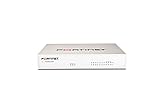
- Extensive Connectivity Options: The FortiGate 60F is designed with 10 GE RJ45 ports, including 2 WAN ports, 1 DMZ port, and 7 internal ports, offering broad flexibility and high-density connections for diverse enterprise networking needs.
- Superior Performance for Secure Networks: Features powerful system-on-a-chip acceleration to deliver top-tier security with 1.4 Gbps IPS throughput and 700 Mbps threat protection throughput, ensuring effective defense against advanced threats.
- Enhanced SSL Inspection and SD-WAN Capabilities: Utilizes purpose-built security processor technology to provide the industry's highest SSL inspection performance and robust SD-WAN functionality for secure, high-speed network operations.
- Simple and Effective Management: Comes equipped with a user-friendly management console that supports comprehensive network automation and visibility, alongside Zero Touch Integration with Fortinet's Security Fabric for streamlined deployment.
- Advanced Security Features: Leverages continuous threat intelligence from AI-powered FortiGuard Labs, identifying and mitigating both known and unknown threats, enhancing security across all network traffic, whether encrypted or not.
7. Is osquery a HIDS or an endpoint visibility tool?
osquery is best understood as an endpoint visibility and investigation framework rather than a complete out-of-the-box HIDS. osquery exposes operating-system state as SQL tables, including processes, loaded kernel modules, open network connections, browser plugins, hardware events, and file hashes, across Linux, macOS, and Windows; see the osquery project documentation.
The Tool Desk
Outbyte Driver Updater FREEScan for outdated or missing drivers - takes under a minuteDriver Scan →Outbyte PC Repair FREEClear out junk files and repair common Windows errorsFree Scan →Scheduled queries can provide fleet-wide inventory, compliance checks, and threat-hunting data. Detection still requires query design, scheduling, result storage, rules, alert routing, and an investigation workflow. Large deployments commonly need fleet-management software or a surrounding SIEM. The osquery project identifies fleet-manager options but does not endorse or test them as a group.
osquery is a strong choice when analysts prefer SQL-based visibility or when an organization already has endpoint management and alerting infrastructure. osquery is a poor choice as the only control when the requirement is turnkey centralized alert triage and active response.
The supplied research records osquery 5.23.0 as released April 25, 2026. Verify the current repository release before publishing.
8. Is Velociraptor a conventional HIDS?
Velociraptor is better classified as an open-source endpoint visibility, digital-forensics, and threat-hunting platform than as a conventional baseline-based HIDS. Velociraptor is valuable when responders need remote artifact collection, endpoint investigation, forensic triage, and centralized hunting across many systems.
Windows Errors? Fix Them Before They Spread
Repair common Windows errors and clear accumulated junk for a smoother, more stable PC - no reinstall needed.Free scan · no reinstallCrashes, No Sound, or Screen Glitches?
Random freezes, missing sound and display glitches usually trace back to one bad driver. Find and replace yours safely.Free scan · under a minuteVelociraptor’s strength is investigation depth rather than simple always-on integrity alerts. Experienced responders can collect and query endpoint evidence during an incident, but the platform can generate substantial data and operational complexity. Teams seeking a small periodic file checker should choose AIDE or Open Source Tripwire instead.
Current Velociraptor licensing, supported operating systems, documentation, and release status should be verified from the official project before publication. The supplied research did not provide a verified official Velociraptor URL or current version, so no version claim is made here.
9. Is Security Onion a standalone HIDS?
Security Onion is best for a broader security operations deployment that combines network visibility with host telemetry, alerting, hunting, dashboards, and case management. Security Onion’s current introduction describes network visibility, host visibility, intrusion-detection honeypots, log management, and case management.
Security Onion is not a lightweight standalone HIDS. Its value is highest for a security team that needs network and host context in one environment and can support a larger deployment. Current documentation identifies Elastic Agent, osquery live queries, and centralized Elastic Fleet management for host visibility. Do not describe current Security Onion as simply “Wazuh bundled in”; components and architecture can change between major versions.
The older Security Onion 2.4 feature description can help explain the broader platform concept, but administrators must follow documentation for the exact major version they deploy.
What is the difference between a full HIDS and a file-integrity monitor?
A full HIDS combines several host data sources and commonly adds centralized rules, alerting, and response, while a file-integrity monitor primarily detects changes from a trusted baseline. Wazuh and OSSEC can analyze logs and host events; AIDE and Open Source Tripwire mainly answer whether selected filesystem state changed.
| Category | Examples | Primary value | What it usually does not provide alone |
|---|---|---|---|
| Full HIDS or host-security platform | Wazuh, OSSEC | Logs, FIM, detection rules, response, compliance | Complete commercial EDR operations |
| File-integrity monitoring | AIDE, Samhain, Open Source Tripwire | Baseline comparison for files and attributes | Broad behavioral detection and case management |
| Runtime detection | Falco | Syscalls, processes, containers, Kubernetes events | General cross-platform FIM and vulnerability management |
| Host telemetry and investigation | osquery, Velociraptor | Queries, inventory, hunting, artifact collection | Turnkey alerting without surrounding infrastructure |
| SOC platform with host visibility | Security Onion | Network, host, hunting, alert, and case context | Simple single-host deployment |
Which tool supports real-time detection?
Real-time capability depends on the event source, collection method, rule, and configuration. Falco is designed for real-time runtime-event detection. Wazuh and OSSEC can analyze logs and events continuously when their agents and collection rules are configured. Samhain can perform active integrity and monitoring functions. AIDE and Open Source Tripwire are naturally suited to periodic checks, while osquery is generally query- or schedule-based.
Periodic FIM remains useful because an attacker may alter a system file without producing a useful runtime alert. Runtime detection fills a different gap: a short-lived process, unexpected shell, privilege change, or suspicious container action may be more visible through kernel and runtime events than through a later filesystem comparison.
Recommended Free Tools
How should you protect a HIDS baseline and monitoring system?
- Install from a trusted source. Verify packages, keys, repositories, and configuration before placing the host under monitoring.
- Harden and update the host first. Establish a baseline only after the operating system and applications are in the intended state.
- Protect baseline data. Keep databases, signing keys, configuration, and reports away from easy local modification. Samhain’s signed and client/server design is particularly relevant when baseline tampering is a concern.
- Forward important events remotely. A compromised host can stop its agent, erase local logs, or rewrite local reports. Centralized storage provides an independent copy.
- Monitor the monitor. Alert on agent stoppage, service changes, configuration edits, key changes, and unexplained gaps in telemetry.
- Document legitimate changes. Package upgrades, deployments, kernel updates, and administrative work should have an attributable change record.
- Re-baseline only after investigation. Never accept unexplained changes merely to clear an alert.
- Use independent telemetry for high-value systems. Network monitoring, cloud control-plane logs, and out-of-band administration can reveal tampering that a local agent cannot.
How do you reduce HIDS alert noise?
Effective detection depends on useful alerts, not the largest alert count. Exclude known volatile paths where appropriate, separate package-managed changes from unexpected modifications, attribute administrative activity to named accounts, assign severity levels, and route high-confidence alerts differently from informational changes.
Test rules against known benign and malicious activity, review false negatives as well as false positives, and record why each suppression exists. A suppression that hides all activity from a frequently changed directory may reduce noise while also removing the evidence an investigator needs.
What does free and open source really mean?
Free of license fees means the software can be used without paying a subscription for the software license. Open source means the relevant license permits source inspection and, depending on its terms, modification and redistribution. Neither phrase means that operating the system is free.
Costs can include servers, cloud hosting, indexer storage, retention, backups, certificates, bandwidth, engineering time, rule tuning, upgrades, support, and incident response. Wazuh provides self-hosted software and separately offers Wazuh Cloud; the Wazuh installation documentation describes those deployment paths. A hosted service can remove infrastructure work without making the underlying security operation costless.
What’s actually slowing this PC down?
Pick the symptom - the matching free tool is one click away.
Open source projects and commercial editions are not interchangeable
Open Source Tripwire is distinct from Tripwire Enterprise. The free OSSEC project is distinct from Atomic OSSEC commercial enhancements. Self-hosted Wazuh is distinct from Wazuh Cloud. Open-source Falco is distinct from commercial services built around Falco. Compare licenses, feature boundaries, data handling, support, and deployment requirements before making a procurement decision.
Which HIDS should you choose?
| Requirement | Recommended choice | Why |
|---|---|---|
| Centralized monitoring across mixed operating systems | Wazuh | Broad host monitoring, dashboard, compliance, vulnerability visibility, FIM, and response |
| Traditional lightweight HIDS | OSSEC | Logs, FIM, rootkit checks, Registry monitoring, and active response |
| Signed, centralized Unix integrity monitoring | Samhain | Client/server architecture and protected baseline mechanisms |
| Basic low-overhead Linux FIM | AIDE | Simple periodic baseline checks |
| Explicit policy-based FIM | Open Source Tripwire | Detailed policy and signed baseline workflow |
| Container or Kubernetes runtime detection | Falco | Real-time syscall and runtime-event rules |
| SQL-based endpoint inventory and hunting | osquery | Structured cross-platform host state |
| Remote investigation and DFIR | Velociraptor | Artifact collection and threat hunting |
| Network-plus-host SOC monitoring | Security Onion | Broader telemetry, alerting, hunting, and case workflows |
For most organizations, start with Wazuh if you can operate a central security stack. Choose AIDE or Open Source Tripwire when a narrow, transparent integrity control is all you need. Choose Falco for cloud-native runtime behavior, and add osquery or Velociraptor when investigation and endpoint visibility are more important than conventional HIDS alerts. No single choice removes the need for secure baselines, remote telemetry, careful tuning, and a response plan.
What commercial alternatives are worth considering?
Commercial alternatives can make sense when a team needs hosted infrastructure, vendor support, managed detection, enterprise reporting, or response expertise rather than only no-cost software.
- Wazuh Cloud: A hosted Wazuh option for teams that do not want to operate the server, indexer, dashboard, and related infrastructure. The supplied research identifies a 14-day cloud trial but does not verify public pricing; check the official Wazuh Cloud page for current availability and terms.
- Atomic OSSEC: A commercial enhancement for OSSEC users who want expanded capabilities and support. The free OSSEC project and commercial Atomic OSSEC should not be treated as the same product.
- Tripwire Enterprise: A commercial FIM and configuration-monitoring product for organizations that need vendor support, compliance workflows, and enterprise reporting.
- Sysdig Secure: A commercial cloud, container, Kubernetes, and runtime-security platform built around use cases related to Falco.
- Elastic Security: A broader SIEM, endpoint, analytics, and detection platform for teams already operating Elastic or needing a larger analytics environment. Licensing and feature availability vary by deployment and plan.
- Managed EDR, SIEM, or MDR: A better fit for organizations that lack staff to investigate alerts and contain incidents. These services sell operational outcomes and response expertise, not simply an agent.
Frequently Asked Questions
Can a free and open source HIDS replace commercial EDR?
A free and open source HIDS should not automatically be treated as a commercial EDR replacement. Commercial EDR commonly adds rich process telemetry, behavioral analytics, threat intelligence, isolation, automated remediation, vendor-maintained content, and managed response; Wazuh may provide some EDR-adjacent functions but does not eliminate those distinctions.
The Tool Desk
Outbyte Driver Updater FREEFix the driver behind crashes, sound loss and screen glitchesFind Drivers →Outbyte PC Repair FREERepair Windows errors before they cause bigger problemsFix Now →Is AIDE a complete host-based intrusion detection system?
AIDE is primarily a file-integrity monitoring tool, not a complete HIDS. AIDE compares monitored filesystem attributes with a trusted baseline, but it does not by itself provide broad log analysis, behavioral detection, centralized alert triage, or active response.
Which open source HIDS is best for Kubernetes?
Falco is the best fit among these tools for Kubernetes runtime detection because Falco evaluates Linux kernel and other runtime events and can add container and Kubernetes metadata. Falco does not replace vulnerability management, general FIM, or broader incident investigation.
Are free HIDS tools really free to operate?
Free HIDS tools usually have no software license fee, but operation still requires infrastructure, storage, backups, administration, tuning, upgrades, and incident response. Hosted services such as Wazuh Cloud can reduce infrastructure work but introduce a separate service and pricing decision.
What should I do if an attacker disables the HIDS agent?
Treat agent stoppage or missing telemetry as a security event, rely on remotely forwarded logs and independent network or cloud telemetry, protect keys and configuration, and investigate the host through out-of-band administration or a separate response tool. A local HIDS cannot be the only source of evidence on a high-value system.
The Bottom Line
Bottom line: Wazuh is the best overall free and open source host-based intrusion detection system for teams that need centralized, multi-platform monitoring and can operate its central stack. OSSEC is the better traditional lightweight HIDS; AIDE and Open Source Tripwire are simpler FIM controls; Samhain emphasizes hardened baselines; Falco covers cloud-native runtime behavior; osquery and Velociraptor improve visibility and investigation; and Security Onion belongs in the broader SOC-platform category.

