
What’s actually slowing this PC down?
Pick the symptom - the matching free tool is one click away.
iTechGuides is reader-supported. When you buy through links on our site, we may earn an affiliate commission. As an Amazon Associate I earn from qualifying purchases. Learn more
The best LPR camera depends on vehicle speed, capture distance, lane count, camera angle, lighting, and software—not simply megapixels. For slow gates, choose the AXIS P3285-LVE Kit; for fast two-lane traffic, the AXIS P1486-LE Kit; for integrated 4K analytics, Hanwha’s PNV-A9081RLP; and for roadway-scale coverage, Rekor Edge Pro or Edge Max.
An LPR camera is a purpose-built license-plate-recognition device or system. Unlike an ordinary security camera, an LPR solution combines suitable optics, exposure and shutter controls, infrared illumination, image processing, and recognition software to produce both a plate image and searchable vehicle metadata.
The five recommendations below are use-case awards based on published specifications and deployment fit, not independent head-to-head laboratory testing. Manufacturer speed, distance, and lane figures are maximums or stated capabilities; actual results depend on installation, calibration, plate jurisdiction, weather, lighting, angle, and vehicle behavior.
Recommended Free Tools
Key takeaways
- The AXIS P3285-LVE Kit is the strongest fit for gates, entrances, and slow-moving vehicles because it combines a 2 MP camera, built-in IR, edge recognition, allow/block lists, and access-control integration.
- The AXIS P1486-LE Kit is designed for free-flow traffic across two lanes and uses global-shutter technology to reduce distortion from fast-moving vehicles.
- Hanwha’s PNV-A9081RLP combines 4K video with preinstalled Wisenet Road AI for plate, make, model, and color recognition, but buyers must verify Road AI version and licensing requirements.
- Rekor lists Edge Pro for 1–2 lanes, up to 75 feet, and up to 70 mph, while Edge Max is intended for 3–6 lanes, up to 300 feet, and up to 120 mph; these are manufacturer-listed maximums, not guarantees.
- Total cost includes more than the camera: software, cloud subscriptions, storage, PoE or cellular connectivity, installation, mounts, solar equipment, and gate or VMS integration can materially change the budget.
Quick comparison of the 5 best LPR cameras
An LPR camera comparison is most useful when it separates a close-range access-control camera from a complete roadway ALPR system. The table uses manufacturer-published capabilities where available and marks undisclosed prices as quote-required rather than guessing.
Popular on Amazon

- LICENSE PLATE RECOGNITION CAMERA - Features 8mm - 32mm lens for an 15° - 40° Viewing Angle. F1.6 Max Aperture, 1/1.8" 4-Megapixel CMOS Image Sensor and License Plate Recognition Distance 26.25ft - 98.43ft. Supports recognizing vehicle type, vehicle color, and license plate details. Supports IVS, Tripwire & Intrusion as well as displaying vehicle plate, vehicle path & loitering detection.
- SMARTER SECURITY – Query and review license plate details professionally on a PC using a web browser. Works with most standard web browsers however for an optimal experience it is recommended to use Microsoft Edge in IE mode as the camera may require the use of a .exe plugin. Supports storage to a MicroSD Card (up to 256GB), PC/Windows only supports SFTP, IE mode in Microsoft Edge, Firefox, Chrome (limited query options).
- ACTIVE DETERRENTS – This outdoor POE IP LPR camera features a heavy-duty metal weatherproof IP67 housing as well as 4 IR LEDs for night vision up to 98 feet, includes red/blue warning LEDs which can be used as an active deterrent. Dual H.265/H.264 compression allows for maximum encryption with the latest technology as well as backwards compatibility with legacy platforms.
- SIMPLE, RELIABLE, SECURE – This Amcrest POE camera features a secure connection. At Amcrest, we want to ensure the safety of our customers, their loved ones, homes and businesses. Compatible with the following Amcrest AI NVR's for live view purposes only: B0C381YK91, B0CDHDHPR8, B0CBL8W9NY, B0D464HMBB, B0D47X8WJJ
| Product | Best for | Resolution | Manufacturer-listed distance | Manufacturer-listed speed | Lane coverage | Processing model | Price signal |
|---|---|---|---|---|---|---|---|
| AXIS P3285-LVE Kit | Gates, entrances, and slow traffic | 2 MP; up to 1920×1080 at 50/60 fps | Close-up capture; Axis positions it for slow-speed use rather than highway distances | Slow-moving or stopping vehicles | Confirm for the site design; not a highway multi-lane model | License Plate Verifier preinstalled; edge processing | Professional-channel quote; no public U.S. list price identified |
| AXIS P1486-LE Kit | Fast free-flow traffic | 3 MP | Depends on lens, geometry, and calibration | Designed for moving vehicles; no universal speed guarantee stated here | Two lanes according to Axis | License Plate Verifier preinstalled; edge processing | Professional-channel quote; no public U.S. list price identified |
| Hanwha PNV-A9081RLP | Commercial sites needing 4K and vehicle attributes | 4K | IR viewing distance listed as 30 m/98.42 ft; not a guaranteed plate-reading distance | Depends on installation and analytics configuration | Verify for the selected lens and roadway | Wisenet Road AI preinstalled | Channel pricing; no public price identified in reviewed official material |
| Rekor Edge Pro | Small-site turnkey ALPR | 1080p | Up to 75 feet, according to Rekor | Up to 70 mph, according to Rekor | 1–2 lanes, according to Rekor | On-device processing with Scout software service | $1,250 hardware listed in August 2026; Scout subscription separate |
| Rekor Edge Max | Highways and primary roads | Multiple high-resolution video streams processed by an embedded Edge Processing Unit | Up to 300 feet, according to Rekor | Up to 120 mph, according to Rekor | 3–6 lanes, according to Rekor | Local edge processing with metadata sent to the cloud over cellular | Request a quote; cellular, solar, installation, and software may be additional |
The comparison is editorial rather than a controlled performance test. A camera’s advertised maximum lane count or distance assumes suitable roadway geometry, lens selection, lighting, plate size, and calibration.
How were these LPR cameras selected?
These products were selected for purpose-built plate capture, motion handling, night performance, optics, recognition software, environmental protection, integration potential, published deployment information, and fit for common U.S. use cases. The comparison also distinguishes a camera with integrated analytics from a complete ALPR system that includes a roadside processing appliance or cloud service.
Resolution was not treated as the primary ranking factor. A purpose-tuned 2 MP camera can capture a plate more reliably than a wide-angle 4K surveillance camera when the 2 MP camera has better plate pixel density, shutter behavior, infrared control, exposure, and viewing geometry.
What is an LPR or ANPR camera?
An LPR or ANPR camera captures a vehicle’s plate and uses recognition software to convert the plate image into searchable data. LPR means License Plate Recognition and is common in North America; ALPR means Automatic License Plate Recognition; ANPR means Automatic Number Plate Recognition and is common internationally.
A typical event can contain a plate image or video frame plus machine-readable metadata such as plate number, time, direction of travel, vehicle type, color, make, or model. The exact metadata depends on the camera, application, jurisdiction, configuration, and software plan.
A normal 4K security camera is not automatically an LPR camera. General surveillance cameras are usually designed to show a broad scene, while LPR cameras are configured to resolve a relatively small plate under difficult conditions such as motion, headlights, reflective surfaces, and darkness.
Which LPR camera is best for gates and slow traffic?
Best choice: AXIS P3285-LVE Kit. The AXIS P3285-LVE Kit is a 2 MP dome camera with AXIS License Plate Verifier preinstalled, making it a natural fit for residential gates, parking entrances, business access points, and other locations where vehicles slow down or stop.
The Tool Desk
Outbyte PC Repair FREEClear out junk files and repair common Windows errorsFree Scan →Outbyte Driver Updater FREEScan for outdated or missing drivers - takes under a minuteDriver Scan →The camera supports allow and block lists directly on the camera and can trigger access-control actions through built-in I/O. The camera can also integrate with Axis and third-party VMS platforms. Axis lists remote focus and zoom, built-in IR, local memory-card storage, IK10 vandal resistance, and IP66/IP67 protection on the product page.
The AXIS P3285-LVE Kit provides 1920×1080 video at up to 50/60 frames per second, and its listed operating temperature is –40 to 50°C (–40 to 122°F). These specifications describe the device’s capability, not guaranteed recognition accuracy in every environment. See the official AXIS P3285-LVE Kit specifications before selecting the lens and mounting arrangement.
For access control, the basic workflow is straightforward: the camera reads the plate, checks an allow list, applies access rules such as time windows, triggers the barrier or controller, and logs the event. The complete gate system still needs correctly wired control hardware, safe fail behavior, configuration, and testing. Axis documents the application and licensing model in its AXIS License Plate Verifier overview.
Why choose the AXIS P3285-LVE Kit?
- It is purpose-tuned for close-up, slow-speed plate capture.
- Recognition happens at the edge, reducing the need for a separate recognition server.
- Allow/block lists and access-control integration simplify gate automation.
- The dome design is discreet and vandal resistant.
- Vehicle type, color, make, and model recognition are supported under optimal conditions.
Skip it when: the site requires long-distance, high-speed, or broad multi-lane roadway coverage. The 2 MP sensor is not inherently a weakness for a correctly designed LPR scene, but the P3285-LVE Kit should not be treated as a general-purpose 4K replacement or a highway camera.
Do these 3 things before closing this tab:
1Fix the driver behind crashes, sound loss and screen glitches2Repair Windows errors before they cause bigger problems3Scan for outdated or missing drivers - takes under a minuteWhich LPR camera is best for fast two-lane traffic?
Best choice: AXIS P1486-LE Kit. The AXIS P1486-LE Kit is a 3 MP bullet camera intended for free-flow traffic across two lanes. Axis says the kit uses global-shutter technology, which can reduce distortion and improve the capture of fast-moving objects compared with a camera whose sensor reads the scene progressively.
The kit includes AXIS License Plate Verifier and is designed to work without an external recognition server. Integrated software and open APIs can simplify VMS, alert, and access-control integrations. Axis positions the P1486-LE Kit for locations where vehicles continue moving instead of stopping at a barrier.
“Two lanes” is not a universal promise for every installation. Lane spacing, camera distance, lens choice, camera height, horizontal angle, vehicle speed, and required plate size all affect whether both lanes produce usable reads. Review the AXIS P1486-LE Kit product information and have the installer validate the intended roadway geometry.
Also popular on Amazon

- 𝐄𝐧𝐡𝐚𝐧𝐜𝐞𝐝 𝐃𝐮𝐚𝐥-𝐂𝐚𝐦𝐞𝐫𝐚 𝐂𝐥𝐚𝐫𝐢𝐭𝐲 𝐚𝐭 𝐔𝐩 𝐭𝐨 𝟒𝟎 𝐟𝐭 (𝟏𝟐 𝐦): Capture every event around your home in ultra-clear 3K resolution. Enjoy sharp, detailed visuals with 8× zoom to see what matters most.
- 𝐒𝐨𝐥𝐚𝐫-𝐏𝐨𝐰𝐞𝐫𝐞𝐝, 𝐈𝐧𝐬𝐭𝐚𝐥𝐥 𝐎𝐧𝐜𝐞 𝐚𝐧𝐝 𝐢𝐭 𝐑𝐮𝐧𝐬 𝐅𝐨𝐫𝐞𝐯𝐞𝐫: Experience constant peace of mind with this solar-powered security camera that's easy to set up and always on, thanks to its removable solar panel.
- 𝟑𝟔𝟎° 𝐆𝐮𝐚𝐫𝐝𝐢𝐚𝐧, 𝐍𝐨 𝐁𝐥𝐢𝐧𝐝 𝐒𝐩𝐨𝐭𝐬: Say goodbye to blind spots with full home coverage by installing the product vertically. Enjoy 360° Pan & Tilt Surveillance , check your front porch, monitor your backyard, and keep an eye on the driveway with ease.
- 𝐕𝐞𝐫𝐬𝐚𝐭𝐢𝐥𝐞 𝐈𝐧𝐬𝐭𝐚𝐥𝐥𝐚𝐭𝐢𝐨𝐧, 𝐄𝐟𝐟𝐨𝐫𝐭𝐥𝐞𝐬𝐬 𝐒𝐞𝐭𝐮𝐩: Experience the convenience of a 7-minute installation with its compact size and wire-free design.
- 𝐑𝐞𝐬𝐭 𝐚𝐬𝐬𝐮𝐫𝐞𝐝 𝐬𝐞𝐫𝐯𝐢𝐜𝐞: you can enjoy a worry-free experience, all backed by our professional customer service team.
Why global shutter matters for LPR
Fast vehicles can produce motion blur or geometric distortion when exposure is too long or when different parts of a sensor are captured at different moments. A short exposure helps freeze the plate, while global-shutter technology captures the image with less rolling distortion. Global shutter does not remove the need for correct lighting, shutter settings, lens selection, and calibration.
Skip it when: vehicles routinely stop at a close gate and the primary task is access control. The P3285-LVE Kit is more directly positioned for that scenario.
Which 4K LPR camera is best for vehicle attributes?
Best choice: Hanwha Vision PNV-A9081RLP. The Hanwha PNV-A9081RLP is a 4K vandal-resistant IR dome with preinstalled Wisenet Road AI. The camera is aimed at buyers who want license-plate recognition alongside contextual vehicle analytics such as make, model, and color.
Hanwha lists 0.05 lux color sensitivity, 0 lux black-and-white sensitivity with IR enabled, 120 dB WDR, and a 30 m/98.42 ft IR viewing distance. The IR figure is not a guaranteed plate-reading distance; plate pixel density, angle, exposure, weather, and vehicle speed remain decisive.
Supported functions include plate recognition, make/model/color recognition, black/white notifications, and SmartSearch by plate, country, brand, model, color, and date. The product page specifies that Wisenet Road AI application version 7.3532 or higher is required. Verify the exact camera firmware, Road AI application release, supported plate formats, licensing terms, and VMS compatibility before purchase using the Hanwha PNV-A9081RLP support page.
Windows Errors? Fix Them Before They Spread
Repair common Windows errors and clear accumulated junk for a smoother, more stable PC - no reinstall needed.Free scan · no reinstallOutdated Drivers Are Slowing You Down
One free scan finds every outdated or missing driver and matches the right update for your exact hardware.Free scan · exact hardware matchChoose it when: a commercial site, campus, parking facility, or integrator needs a high-resolution camera that can provide both plate data and broader vehicle evidence.
Skip it when: the buyer wants a consumer-style plug-and-play system, does not want to manage application and firmware compatibility, or assumes 4K alone guarantees better plate reads.
Which turnkey ALPR system is best for a small site?
Best choice: Rekor Edge Pro. Rekor Edge Pro is a mountable ALPR and vehicle-recognition system for businesses, neighborhoods, parking management, access control, and other smaller deployments where buying a camera, illuminator, local server, and software separately would add complexity.
Rekor lists maximum capabilities of 1–2 lanes, 75 feet, and 70 mph. Edge Pro uses a 1080p camera and on-device processing. The published comparison also lists optional cellular service, GPS, Ethernet, optional solar power, an IP67 enclosure, and an operating temperature of –4°F to 122°F. These are manufacturer-published capabilities, not independent test results or guaranteed accuracy.
Quick wins for a faster PC:
Clear out junk files and repair common Windows errorsFree Scan →Fix the driver behind crashes, sound loss and screen glitchesFind Drivers →The commercial model is important. Rekor’s official product page listed Edge Pro hardware at $1,250 when viewed in August 2026, excluding the Rekor Scout subscription. Rekor’s published Scout pricing showed Basic at $12 per month per camera, Pro at $72 per month per camera, and Enterprise at custom pricing; the page also advertised a 14-day free trial. Confirm current pricing, included retention, user limits, alerts, search features, integrations, taxes, and billing terms on the Rekor Scout software and pricing page.
| Rekor Scout tier | Published price signal | What to verify before buying |
|---|---|---|
| Basic | $12 per month per camera | Search, retention, alerts, users, exports, and integrations included in the current plan |
| Pro | $72 per month per camera | Exact feature limits, retention, support, and any hardware or cellular charges |
| Enterprise | Custom pricing | Deployment scale, data retention, API access, support, security terms, and contract length |
Choose it when: the site needs a packaged small-site ALPR solution, on-device processing, and optional cellular or solar deployment.
Skip it when: the buyer wants a one-time purchase with no recurring service, needs highway-scale coverage, or already owns a fully capable local LPR platform.
Which LPR system is best for highways and multiple lanes?
Best choice: Rekor Edge Max. Rekor Edge Max is the strongest fit in this shortlist for primary roads, highways, and roadside deployments requiring broad, long-range coverage.
Free tools Windows power users keep installed
One-click scans. No signup required.
Rekor lists maximum capabilities of 3–6 lanes, 300 feet, and 120 mph. Edge Max uses an embedded Edge Processing Unit to process multiple high-resolution video streams locally, while searchable metadata is sent to the cloud over a low-bandwidth cellular connection.
Also popular on Amazon
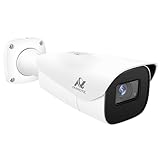
- Compatibility-- Only Work With ONWOTE TD Series NVR (PNT-808, PNA-8016-T, PNT-1232).
- LPR-- License Plate Recognition IP Network PoE Camera.
- 4MP Resolution-- 2592×1520 @30fps for sharp and fluid video.
- 1/1.8" Low-Light Image Sensor-- Ensuring clear images even in dim conditions.
- 8-32mm Motorized Varifocal Lens @F1.6 for adjustable field of view.
The system supports recognition of plates, make, type, color, and direction of travel. Rekor also says Edge Max can read paper, temporary, and vanity plates. Buyers should verify the exact jurisdictions and plate types expected at the site rather than assuming uniform performance across every state or country.
The published specifications list IP65 protection, optional solar power, GPS, Ethernet, cellular connectivity, and NDAA/TAA compliance. Rekor states that actual performance varies with calibration and site selection. Treat 300 feet, 120 mph, and 3–6 lanes as manufacturer-stated maximums, not guaranteed operating results. Review the official Rekor Edge Max specifications and deployment information before requesting a system design.
Choose it when: the roadway requires multi-lane, high-speed coverage and a roadside system with local processing, cellular connectivity, and optional solar power.
Skip it when: the deployment is a driveway, small parking lot, or single slow-speed gate. Edge Max is likely excessive for those environments.
What matters more than resolution when choosing an LPR camera?
Traffic speed, capture distance, lane geometry, camera angle, exposure, infrared behavior, and recognition software usually matter more than the headline megapixel count.
1. Vehicle speed
A gate camera can be optimized for vehicles that stop or move slowly. A highway system must freeze a plate at much higher speed, which increases the importance of short exposure times, sufficient light, appropriate IR, and motion-handling technology such as global shutter.
2. Capture distance
A camera designed for a 50–75-foot capture zone is not interchangeable with a system intended for 300 feet. Longer distances require an appropriate focal length, plate pixel density, mounting height, and a controlled field of view.
3. Lane coverage
Wide coverage can reduce plate detail. Verify whether the published lane count assumes one camera per lane, a dual-camera design, particular lane spacing, or a specific roadway geometry. A camera that sees four lanes may not resolve plates reliably across all four lanes.
4. Camera angle
The plate should occupy a sufficiently large portion of the image and should be viewed as close to straight-on as site constraints allow. Extreme horizontal or vertical angles can deform characters and reduce recognition reliability.
5. Shutter speed and motion blur
A general surveillance camera can show a recognizable vehicle while leaving the plate blurred. Exposure must be short enough for the expected vehicle speed, and the scene must provide enough light for that exposure.
6. Infrared illumination
IR helps maintain plate contrast at night, but reflective plates can bloom or wash out under excessive IR. Aim and configure illumination for the plate-read zone, distance, plate material, and surrounding lighting rather than simply turning IR to maximum.
7. WDR and headlights
Headlights, backlighting, rain, and reflective plates are common failure conditions. Purpose-built exposure controls, WDR, and headlight compensation are more relevant than resolution alone.
8. Edge versus cloud processing
Edge processing recognizes plates on the camera or a local appliance, which can reduce bandwidth and latency and may allow local operation during an internet interruption. Cloud processing can simplify remote search, fleet management, and updates but generally introduces connectivity dependence and recurring service costs.
Neither edge processing nor cloud processing is automatically private or secure. Review data retention, encryption, user access, audit logs, remote support, evidence export, and applicable law for the actual deployment.
Also popular on Amazon

- Feature-Rich, Wire-Free Security - The C425 camera addresses common security camera challenges with its easy installation and maintenance. It offers a range of features designed to simplify monitoring and enhance security
- Wire-Free & Versatile Installation - This IP66 weatherproof camera offers hassle-free, wire-free mounting. Its magnetic base enables easy attachment to metal surfaces, providing flexible indoor and outdoor placement
- Extended Battery Life - The 10000mAh battery offers up to 300 days of use. For continuous power, use the optional Tapo A200 Solar Panel (sold separately), which eliminates the need for recharging
- 2K QHD with 142° FOV - The 2K QHD resolution provides clear details like license plates, offering 1.7x the pixels of 1080p. The 142° field of view covers a larger area for broader monitoring
- Full-Color Night Vision - Capture vibrant, full-color images at night with the integrated Starlight sensor and built-in spotlights
Should you buy a dedicated LPR camera or add software to an existing camera?
A dedicated LPR camera is usually the safer choice when reliable plate text, nighttime performance, vehicle-speed tolerance, gate automation, or evidence-quality capture is central to the project. A general camera plus software can work when the existing camera has suitable optics, plate pixel density, exposure control, night performance, and confirmed software compatibility.
Quick wins for a faster PC:
Clear out junk files and repair common Windows errorsFree Scan →Scan for outdated or missing drivers - takes under a minuteDriver Scan →Repair Windows errors before they cause bigger problemsFix Now →| Approach | Best fit | Advantages | Risks and costs |
|---|---|---|---|
| Dedicated LPR camera | New installations and critical plate capture | Purpose-built optics, illumination, exposure, and analytics | Higher hardware cost; may still require software, VMS, storage, or subscriptions |
| Existing IP camera plus LPR software | Sites with compatible cameras and suitable geometry | Can reuse hardware and centralize analytics | Motion blur, poor lens geometry, low plate pixel density, chipset limits, and compatibility problems can undermine results |
| Complete ALPR system | Small sites or roadside deployments needing packaged hardware and software | Simpler system design; edge appliance, connectivity, and analytics may be integrated | Recurring subscription, vendor dependence, cellular costs, and less component flexibility |
Rekor Scout is marketed as enabling vehicle recognition on nearly any IP, traffic, or security camera, but the buyer should verify the specific camera’s compatibility, image quality, network architecture, night performance, and subscription requirements using the official Rekor Scout information.
Axis also offers AXIS License Plate Verifier for compatible Axis cameras. Axis states that each camera requires a unique license, that ARTPEC-8 or later is required, and that the application runs on Axis cameras with AXIS OS 11.11 or later; availability is limited to selected countries. Confirm current licensing and regional availability before specifying the system. See the Axis application requirements.
How much does an LPR camera system cost?
The hardware price is only one part of the budget. The total cost of an LPR deployment can include the camera or roadside appliance, recognition license, cloud subscription, VMS/NVR license, storage, PoE switch, cellular plan, mounts, weatherproofing, gate-controller integration, professional installation, and solar or battery equipment.
| Cost component | Why it matters | Typical treatment in this shortlist |
|---|---|---|
| LPR camera or roadside appliance | Primary imaging and processing hardware | Rekor Edge Pro listed at $1,250 hardware in August 2026; Axis and Hanwha require channel quotes in the reviewed material |
| Recognition software | Converts plate images into searchable metadata and alerts | Integrated or preinstalled on Axis and Hanwha products; Rekor Scout is separate from Edge Pro hardware |
| Recurring cloud service | Remote search, retention, management, and analytics | Rekor published Basic at $12/month/camera and Pro at $72/month/camera; verify current terms |
| Connectivity | Moves metadata or video to a VMS or cloud | Ethernet and optional cellular appear in relevant product configurations; cellular service may cost extra |
| Installation and calibration | Determines whether advertised performance is achievable | Especially important for distance, lane count, angle, shutter, IR, and detection zones |
| Integration and storage | Supports gates, VMS/NVRs, exports, retention, and auditability | May require separate licenses, controllers, storage, wiring, or professional configuration |
Do not describe Axis or Hanwha as subscription-free without checking the exact application, VMS, support, and regional licensing terms. Similarly, do not describe the $1,250 Edge Pro hardware price as the complete system price because Rekor Scout is purchased separately.
What should you verify for integrations and compliance?
Before purchasing, confirm compatibility with the site’s VMS or NVR, gate controller, barrier arm, alarm system, API or webhook workflow, local storage, evidence-export process, and cellular or solar design.
Government and regulated buyers should also verify NDAA and TAA status for the complete procurement context, including hardware, software, distributor, firmware, cloud service, and support arrangement. A product-page compliance statement may not answer every agency’s procurement question.
Recognition support also varies by country and state plate formats, firmware, application version, VMS, local or cloud architecture, data residency, and availability. A camera that performs well with one jurisdiction’s plates should not automatically be assumed to perform equally with every U.S. plate format.
Independent reader supportYour contribution helps us test, update, and keep practical guides available for everyone.How should an LPR camera be installed and calibrated?
Installing the camera is not enough to guarantee readable plates. Use this deployment checklist before relying on automated gate decisions, alerts, or evidence.
- Define the target lane or lanes. Mark exactly which vehicles the system must recognize.
- Measure the capture distance. Measure from the camera to the expected plate-read point, not merely to the nearest part of the roadway.
- Record vehicle speeds. Include typical and maximum speeds, including vehicles that do not stop as expected.
- Choose the lens. Match focal length and field of view to distance, lane width, and plate pixel density.
- Mount near a plate-facing angle. Avoid unnecessary horizontal and vertical obliqueness.
- Control sunlight and headlights. Avoid aiming directly into strong sun or uncontrolled headlight glare.
- Set exposure and shutter controls. Configure for moving vehicles rather than general scene brightness.
- Aim IR at the read zone. Prevent excessive reflection and blooming on reflective plates.
- Configure jurisdiction settings. Select country or plate-format settings where the product supports them.
- Calibrate zones and lanes. Configure detection regions, lane lines, direction, and capture areas.
- Test difficult conditions. Test daytime, nighttime, rain, headlights, dirty plates, temporary plates, and multiple speeds.
- Review errors. Examine false reads and missed reads before enabling automated decisions.
- Set governance controls. Configure retention, user permissions, evidence export, and audit logging.
- Document the deployment. Record firmware, application version, lens, mounting height, and calibration settings.
What are the most common LPR failure modes?
Reflective plates and nighttime glare
Reflective plates can become an overexposed white rectangle under IR, leaving the characters unreadable. Adjust IR intensity, exposure, shutter, and mounting angle, then test with the plate types used locally.
Headlights and backlighting
Headlights can overwhelm the plate region, particularly when the camera is aimed directly into approaching traffic. Use purpose-built LPR exposure, WDR, and headlight controls, and validate the scene at night.
Oblique angles
A plate that is readable from a nearly straight-on view may become unreadable from the side. Treat angle as a hard installation constraint rather than a minor tuning preference.
Multiple lanes
Published lane counts can depend on lane spacing, distance, speed, camera height, lens field of view, direction of travel, and whether a separate overview camera is used. Test every lane independently.
Free tools Windows power users keep installed
One-click scans. No signup required.
Temporary, paper, vanity, and specialty plates
Recognition engines do not necessarily handle every state, country, or specialty plate equally. Rekor specifically advertises paper, temporary, and vanity-plate support for Edge Max, but buyers should verify the jurisdictions and plate types expected at their site.
Also popular on Amazon

- Professional License Plate Recognition (LPR): This LPR Camera captures and reads vehicle plates accurately day and night. Ideal for parking lots, toll stations, and access control.
- Utral Low Light & 120dB WDR: Equipped with a 1/1.8" sensor and advanced low-light technology. Delivers sharp license plate images even under headlight glare or complete darkness.
- 4MP@30fps & 8-32mm 4x Motorized Zoom Lens: Records smooth 2592×1520 video at 30fps. Remote 4x auto focus zoom via web browser. Recommended ANPR distance: 23-98ft.
- 256GB SD Card Slot & IP67 IK10: Supports storage up to 256GB. Metal housing is weatherproof (IP67) and vandal-resistant (IK10) for outdoor use.
- Compatibility: Only supports TVT NVRs, not other NVRs.Please refer to the manual and video instructions for operation. If there are any issues, we provide 24/7 professional technical support.
Rain, snow, fog, and dirt
Rain can create reflections and streaking, snow can obscure plate boundaries, fog reduces contrast, and dirt can defeat recognition. An IP rating describes device protection and operation; it does not guarantee plate-reading accuracy in every weather condition.
Frames, decals, covers, and obstructions
Plate frames, dealer inserts, tinted covers, tow bars, bike racks, and bumper geometry can cause false reads or missed reads. Vendor test conditions should not be treated as a universal field-accuracy guarantee.
Trying to use one camera for everything
An LPR camera often has a narrow field of view optimized for plates. A separate overview camera may be better for occupants, vehicle damage, surrounding activity, approach routes, and escape routes. Two purpose-specific cameras can produce better evidence than one wide-angle compromise.
The Tool Desk
Outbyte Driver Updater FREEScan for outdated or missing drivers - takes under a minuteDriver Scan →Outbyte PC Repair FREEClear out junk files and repair common Windows errorsFree Scan →What privacy and retention issues apply to LPR?
LPR data can reveal sensitive vehicle and location information. Retention, sharing, access, signage, and law-enforcement use may be governed by state, local, contractual, or organizational rules.
There is no blanket nationwide answer that makes every LPR deployment legal or illegal. Before aiming an LPR camera at a public road or neighboring property, obtain legal or privacy advice for the applicable jurisdiction and define a documented purpose, retention period, access list, export process, and audit policy.
Edge processing may reduce the amount of video transmitted, while cloud processing may provide easier remote search and administration. Neither architecture alone determines privacy. Review encryption, retention, user permissions, audit logs, remote support, data residency, and vendor terms.
Which alternatives should existing-camera owners consider?
Buyers who already have compatible infrastructure may not need a new dedicated camera. Hikvision offers purpose-built LPR and access-control products through a broad reseller channel, but U.S. government and regulated buyers should independently verify current procurement, NDAA, TAA, cybersecurity, distributor, and firmware requirements before considering the Hikvision 7-Series LPR materials or related DeepinView products.
Windows Errors? Fix Them Before They Spread
Repair common Windows errors and clear accumulated junk for a smoother, more stable PC - no reinstall needed.Free scan · no reinstallOutdated Drivers Are Slowing You Down
One free scan finds every outdated or missing driver and matches the right update for your exact hardware.Free scan · exact hardware matchRekor Scout can be considered when a compatible existing IP, traffic, or security camera already has suitable plate pixels, lens geometry, exposure, and nighttime performance. Axis License Plate Verifier is another option for compatible Axis hardware, subject to ARTPEC, AXIS OS, licensing, country availability, and integration requirements.
Do not select software first and assume the existing camera will work. A software platform cannot recover plate detail that the lens, sensor, exposure, angle, compression, or lighting failed to capture.
Which LPR camera should you buy?
Choose by deployment rather than by a universal ranking:
- For a driveway, residential gate, parking entrance, or slow business entry: choose the AXIS P3285-LVE Kit.
- For free-flow traffic across two lanes: choose the AXIS P1486-LE Kit, provided the site geometry matches the manufacturer’s assumptions.
- For 4K contextual video and onboard vehicle attributes: choose the Hanwha PNV-A9081RLP after confirming Road AI version, licensing, plate formats, and VMS compatibility.
- For a small turnkey ALPR deployment: choose Rekor Edge Pro when its 1–2-lane, 75-foot, and 70-mph manufacturer-listed limits fit the site and the recurring Scout cost is acceptable.
- For highways, primary roads, and multi-lane roadside coverage: choose Rekor Edge Max when the design needs its manufacturer-listed 3–6-lane, 300-foot, and 120-mph maximums, with professional calibration and a full quote.
The correct LPR camera is the one whose optical design, speed rating, lane geometry, lighting, recognition software, connectivity, compliance, and total cost match the actual capture point. Measure the scene before buying, and treat every published maximum as a design reference that must be validated in real conditions.
Do these 3 things before closing this tab:
1Repair Windows errors before they cause bigger problems2Scan for outdated or missing drivers - takes under a minute3Clear out junk files and repair common Windows errorsFrequently Asked Questions
Is a 4K security camera automatically better for license-plate recognition?
No. A 4K security camera can show a wide scene while failing to resolve a plate. LPR performance depends on plate pixel density, lens selection, shutter speed, motion blur, camera angle, IR, exposure, glare, compression, and recognition software.
Does an LPR camera require a subscription?
An LPR camera may require software, VMS, support, or cloud-service fees, depending on the product and deployment. Rekor Edge Pro hardware is separate from Rekor Scout, whose published August 2026 pricing listed Basic at $12 per month per camera and Pro at $72 per month per camera; Axis and Hanwha licensing should be verified for the specific region and configuration.
Can one LPR camera read multiple lanes?
Some systems are designed for multiple lanes, but lane count depends on spacing, distance, lens, camera angle, vehicle speed, lighting, and calibration. Axis describes the P1486-LE Kit as capturing across two lanes, while Rekor lists Edge Max for up to 3–6 lanes; both claims require site-specific validation.
Can an LPR camera automatically open a gate?
An LPR camera can read a plate, check an allow list and access rules, and send a trigger to a gate controller when the complete system is configured correctly. The barrier, wiring, fail-safe behavior, permissions, and access-control rules must be separately installed and tested.
Are LPR cameras legal to use on public roads?
Legality depends on jurisdiction, purpose, retention, sharing, access, signage, and organizational or contractual rules. LPR data can reveal sensitive vehicle and location information, so obtain legal or privacy advice before monitoring public roads or neighboring property.
The Bottom Line
Bottom line: There is no universal best LPR camera. The AXIS P3285-LVE Kit is the best fit for slow gates, the AXIS P1486-LE Kit for fast two-lane traffic, Hanwha’s PNV-A9081RLP for integrated 4K vehicle analytics, Rekor Edge Pro for small turnkey sites, and Rekor Edge Max for highway-scale coverage. Measure speed, distance, lanes, angle, and lighting before choosing—and budget for software, installation, connectivity, storage, and compliance review.

