
Outdated Drivers Are Slowing You Down
One free scan finds every outdated or missing driver and matches the right update for your exact hardware.Free scan · exact hardware matchPC Slower Than It Used to Be?
A free scan shows the junk files, broken settings and background clutter dragging Windows down - then fixes them in one click.Free scan · Windows 10 & 11For most budget laptop buyers, 8GB of RAM is the better choice if the price difference fits the budget. Four gigabytes can handle light tasks such as basic browsing, documents, and online video, but leaves less room for multitasking. Microsoft recommends 8GB for longer-term use; that is guidance, not a promise of a particular lifespan or speed increase.
What changes between 4GB and 8GB?
RAM is the laptop’s working memory for the apps and tasks in use. Microsoft explains that more memory lets a device do more at the same time without performance slowdowns. That is a general benefit, not a guarantee that adding RAM will fix every slow laptop: the processor, storage, software, and workload also matter.
With 4GB, a laptop may be suitable when you usually do one light task at a time. If you keep multiple browser tabs and applications open, 8GB provides more headroom. The available guidance does not establish a measured speed multiplier or a controlled 4GB-versus-8GB benchmark.
Is 4GB RAM enough for a budget laptop?
It can be enough for constrained, light use. Microsoft’s general memory guidance puts basic web browsing, document work, and online video at at least 4GB. Separately, Microsoft lists 4GB as the minimum RAM requirement for Windows 11. A minimum means the operating system meets that stated requirement; it does not mean every app or workload will feel comfortable, or that 4GB is equivalent to 8GB for multitasking.
#1 Best Overall

- A-Tech 16GB RAM Module, DDR4 SO-DIMM 260-Pin, 3200MHz PC4-25600 (PC4-3200AA)
- Non-ECC Unbuffered, JEDEC DDR4 Standard 1.2V Operating Voltage
- Compatible with select Laptop, Notebook, Mini PC, and All-in-One (AIO) systems. Please verify your system's memory type, form factor, and maximum supported capacity before purchasing
- Not compatible with desktop DIMM, non DDR4 memory, or ECC memory types such as RDIMM, LRDIMM, and ECC UDIMM
- Increases available memory capacity to enhance system responsiveness, application performance, and multitasking capabilities.
Microsoft notes that particular Windows features, applications, and hardware may require more than the operating-system minimum. If your typical use includes several active tasks, or you want more flexibility over time, 4GB is the more restrictive option.
When should you choose 8GB?
Choose 8GB when you regularly multitask, expect to keep the laptop for several years, or can afford it without compromising more important parts of the purchase. Microsoft specifically recommends 8GB to keep a device running long term. Treat this as a recommendation, not a guarantee about how long a laptop will remain suitable.
Rank #2

- Boosts System Performance: 32GB DDR5 RAM laptop memory kit (2x16GB) that operates at 5600MHz, 5200MHz, or 4800MHz to improve multitasking and system responsiveness for smoother performance
- Accelerated gaming performance: Every millisecond gained in fast-paced gameplay counts—power through heavy workloads and benefit from versatile downclocking and higher frame rates
- Optimized DDR5 compatibility: Best for 12th Gen Intel Core and AMD Ryzen 7000 Series processors — Intel XMP 3.0 and AMD EXPO also supported on the same RAM module
- Trusted Micron Quality: Backed by 42 years of memory expertise, this DDR5 RAM is rigorously tested at both component and module levels, ensuring top performance and reliability
- ECC Type = Non-ECC, Form Factor = SODIMM, Pin Count = 262-Pin, PC Speed = PC5-44800, Voltage = 1.1V, Rank And Configuration = 1Rx8
For photo or video editing and other high-performance projects, Microsoft suggests 16GB or more. That makes 8GB a better choice than 4GB between these two options, but it does not make 8GB a universal target for demanding creative work.
How Chromebook guidance differs
Google’s education selection guide assigns 4GB to its basic-use and learning-anywhere Chromebook categories, and 8GB to advanced use. The guide was last updated in January 2022 and is specific to education purchasing categories. It illustrates that memory needs depend on workload; it should not be read as a current, universal consumer specification for Chromebooks.
Recommended Free Tools
Rank #3
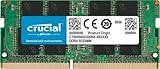
- Boosts System Performance:16GB DDR4 laptop memory that operates at 3200MHz to improve multitasking and system responsiveness for smoother performance
- Easy Installation: Upgrade your laptop RAM with ease—no computer skills required Follow step-by-step how-to guides available at Crucial for a smooth, worry-free installation
- Compatibility Guaranteed: Ensure seamless compatibility with your laptop by using the Crucial System Scanner or Crucial Upgrade Selector—get accurate recommendations for your specific device
- Trusted Micron Quality: Backed by 42 years of memory expertise, this DDR4 RAM is rigorously tested at both component and module levels, ensuring top performance and reliability for your Mac system
- ECC Type = Non-ECC, Form Factor = SODIMM, Pin Count = 260-pin, PC Speed = PC4-25600, Voltage = 1.2V, Rank and Configuration = 1Rx8 or 2Rx8
Compare the complete laptop, not just its RAM
RAM is only one part of a budget laptop’s configuration. Lenovo’s buying guidance also considers intended use, portability, and cost, and discusses the processor and storage alongside memory. A laptop with 8GB can still be a poor fit if its processor or storage is unsuitable for your applications.
- Processor: Check that it suits the apps and tasks you plan to run; more RAM cannot compensate for a processor that is a bottleneck.
- Storage: Consider the storage type and capacity for your applications and files.
- Display and portability: Decide whether the screen and size work for how and where you use the laptop.
- Overall cost: Compare the complete configurations. If paying for 8GB forces an unacceptable compromise elsewhere, weigh that trade-off against your workload.
Check upgradeability before buying 4GB
Do not assume you can add memory later. Upgrade options vary by exact laptop model. Before relying on an upgrade, check the manufacturer’s specifications for that model or ask the retailer whether its RAM can be replaced or expanded. If the answer is unclear, treat the installed memory as the configuration you will have.
Quick Recap
Rank #4

- A-Tech 8GB RAM Module, DDR4 SO-DIMM 260-Pin, 2666MHz / 2667MHz PC4-21300 (PC4-2666V)
- Non-ECC Unbuffered, JEDEC DDR4 Standard 1.2V Operating Voltage
- Compatible with select DDR4 SODIMM capable Laptop, Notebook, Mini PC, and All-in-One (AIO) computer systems. Please verify your system's memory type, form factor, and maximum supported capacity before purchasing
- Not compatible with desktop (DIMM), DDR2, DDR3, DDR5, ECC Registered (RDIMM), ECC Load Reduced (LRDIMM), or ECC Unbuffered (ECC UDIMM) memory types
- Increases available memory capacity to enhance system responsiveness, application performance, and multitasking capabilities.
A practical decision
- Choose 8GB if you can afford it and expect regular multitasking or longer-term everyday use.
- Consider 4GB only if your use is genuinely light, the saving matters, and you accept the tighter limits on simultaneous work.
- Look beyond RAM by comparing the processor, storage, display, and applications you intend to use.
- Verify upgradeability against the exact model rather than assuming the laptop can be expanded later.
Product prices and availability are accurate as of the date/time indicated and are subject to change. Any price and availability information displayed on Amazon at the time of purchase will apply.

