
The Tool Desk
Outbyte PC Repair FREEClear out junk files and repair common Windows errorsFree Scan →Outbyte Driver Updater FREEScan for outdated or missing drivers - takes under a minuteDriver Scan →iTechGuides is reader-supported. When you buy through links on our site, we may earn an affiliate commission. As an Amazon Associate I earn from qualifying purchases. Learn more
The four laptop brands with the best reputation for reliability are Apple, Lenovo, Dell, and HP—but the individual product family matters more than the logo. Choose a MacBook Air or Pro, Lenovo ThinkPad, Dell Latitude or Precision, or HP EliteBook or ProBook for the strongest combination of dependable hardware, support, repairability, and long-term value.
No manufacturer makes every laptop equally dependable. A business-class ThinkPad can be a safer long-term purchase than a budget Lenovo, just as a Dell Latitude can be a better reliability choice than a low-cost Inspiron. This guide therefore evaluates both brand reputation and the laptop families that justify each recommendation.
Key takeaways
- Apple has the strongest current consumer-trust signal, but MacBooks trade easy repair and upgrades for tightly integrated hardware and software.
- Lenovo ThinkPad T and L laptops are the strongest Windows choices when durability, replaceable components, and service documentation matter most.
- Dell Latitude and Precision systems are more relevant to a reliability-focused buyer than lower-cost Inspiron models because business support and service options differ.
- HP EliteBook and ProBook laptops are the HP families to prioritize; HP’s broad consumer range makes a blanket recommendation unsafe.
- Consumer Reports found that 16% of surveyed laptops broke or stopped working properly within three years in its 2026 analysis, but brand-level results do not predict the experience of every model.
What are the 4 laptop brands with the best reputation for reliability?
The four most defensible choices for a U.S. buyer are Apple, Lenovo, Dell, and HP. Apple is the strongest overall reputation choice; Lenovo ThinkPad is the strongest Windows choice for serviceability; Dell is compelling for business support; and HP offers a broad business-laptop alternative through EliteBook and ProBook.
| Brand | Product families to consider | Best for | Main reliability case | Biggest drawback |
|---|---|---|---|---|
| Apple | MacBook Air, MacBook Pro | Students, office users, creatives, and macOS buyers | Focused lineup, integrated software and hardware, centralized support, and strong resale | Soldered storage, difficult repairs, and macOS compatibility limits |
| Lenovo | ThinkPad T, L, X, and P series | Windows business users and buyers who value repairability | Business-oriented construction, replaceable components on many models, and detailed service documentation | Higher prices and model-specific variations in upgradeability |
| Dell | Latitude, Precision, and selected XPS models | Businesses needing Windows compatibility and support options | Mature enterprise service infrastructure, parts availability, and optional on-site support | Quality and service value vary widely across the Dell range |
| HP | EliteBook, ProBook, ZBook, and selected premium models | Windows users wanting business choices across several price tiers | Strong business portfolio, broad support availability, and accessible replacement ecosystem | Budget consumer models should not be confused with business-class HP systems |
How reliable are laptops overall?
Laptop reliability is best understood as a combination of failure risk, support quality, repairability, and useful service life—not simply whether a laptop turns on today. A laptop with a low failure rate can still be a poor ownership choice if its battery, keyboard, or storage cannot be replaced affordably.
Popular on Amazon
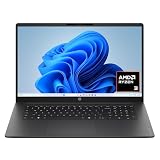
- FULL HD IPS DISPLAY - Enjoy vibrant, crystal-clear images with 178-degree wide-viewing angles
- AMD RYZEN 3 30 PROCESSOR - Everyday performance you can count on; Multitask, stream, game casually, and edit photos smoothly with responsive power and vibrant HDR visuals
- ENJOY UP TO 14 HOURS AND 15 MINUTES OF BATTERY LIFE - HP Fast Charge restores battery from 0 to 50% in approximately 45 minutes
- AMD RADEON 610M GRAPHICS - Experience smooth entertainment; Built for streaming and multitasking, enjoy realistic visuals and efficient performance for work and play
- STORAGE AND MEMORY - 512 GB PCIe NVMe M.2 SSD offers fast speed and efficient storage; and 8 GB LPDDR5 RAM memory boosts performance with higher bandwidth
According to Consumer Reports’ 2026 laptop reliability analysis, based on 75,923 portable computers purchased from 2019 through 2025, 16% of surveyed laptops broke or stopped working properly within three years. Consumer Reports models the likelihood of problems by the end of the third year; the figure is not a guarantee that an individual laptop will fail or survive.
Which?’s August 2026 laptop survey covered 6,971 laptop owners and examined faults, time to first fault, satisfaction, and likelihood to recommend. Which? uses a longer ownership perspective—up to seven years—so its results should not be combined directly with Consumer Reports’ three-year prediction.
Brand trust is a different measurement again. Lifestory Research’s 2026 trust study ranked Apple first, HP second, Microsoft third, Dell fourth, and Lenovo fifth among 9,922 U.S. people shopping for a computer. The study measures consumer trust, not observed breakdown rates, so the ranking supports reputation claims rather than proving that every Apple laptop is more reliable than every Lenovo, Dell, or HP laptop.
Outdated Drivers Are Slowing You Down
One free scan finds every outdated or missing driver and matches the right update for your exact hardware.Free scan · exact hardware matchPC Slower Than It Used to Be?
A free scan shows the junk files, broken settings and background clutter dragging Windows down - then fixes them in one click.Free scan · Windows 10 & 111. Is Apple the most reliable laptop brand?
Apple has the strongest current overall reputation signal, making MacBook Air and MacBook Pro the clearest choices for buyers who are comfortable with macOS. Apple was the most trusted personal-computer brand in Lifestory Research’s 2026 study, but trust evidence should not be presented as a universal failure-rate ranking.
Which Apple laptops should you consider?
- MacBook Air: The best fit for most students, office workers, writers, travelers, and general-purpose users.
- MacBook Pro: The better fit for sustained professional workloads, video production, software development, and buyers who need more performance or ports.
Recent MacBook Air and MacBook Pro generations use Apple silicon. MacBook Air models are generally fanless or low-maintenance, which reduces the number of moving parts compared with an actively cooled design. Apple also controls macOS, firmware, drivers, and hardware integration, reducing some compatibility and driver-management complexity.
Why is Apple a strong reliability choice?
Apple’s comparatively focused MacBook lineup makes it easier to avoid the weakest budget configurations found in much larger Windows portfolios. Apple also provides centralized support through Apple Stores and Apple Authorized Service Providers. Apple’s official repair system includes coverage checks, repair-status tracking, Apple Store service, and authorized-provider options.
MacBooks also tend to retain resale value well. Strong resale value does not reduce the chance of a hardware failure, but it can lower total ownership cost when a buyer replaces a laptop after several years.
Do these 3 things before closing this tab:
1Scan for outdated or missing drivers - takes under a minute2Repair Windows errors before they cause bigger problems3Fix the driver behind crashes, sound loss and screen glitchesWhat are Apple’s reliability and repair trade-offs?
Apple reliability does not mean Apple laptops are easy or inexpensive to repair. The 2025 MacBook Air M4 has a published service manual and possible battery repair, but iFixit reports that its storage is soldered, its keyboard is riveted, and software calibration can complicate some repairs. The 2025 MacBook Pro has non-serviceable storage and a riveted keyboard, although its Thunderbolt-port design is more modular than earlier approaches. See iFixit’s laptop repairability evaluations for the model-specific details.
Buy enough storage at purchase because MacBook storage generally cannot be upgraded later. Keyboard, display, logic-board, and accidental-damage repairs can be expensive outside coverage. macOS can also be a poor fit for Windows-only business software, specialized engineering applications, some games, and organizations built around Windows management tools.
AppleCare+ can be relevant for a portable MacBook because Apple’s U.S. terms list a $99 service fee for qualifying screen-only or enclosure-only accidental damage and $299 for other accidental damage, excluding taxes. Apple’s current AppleCare+ terms should be checked before purchase because eligibility, coverage, and fees can change.
2. Why are Lenovo ThinkPads among the most reliable Windows laptops?
Lenovo ThinkPad business laptops have one of the strongest reputations for Windows durability, serviceability, and long-term fleet support. That recommendation applies primarily to ThinkPad families—not automatically to every IdeaPad, Yoga, or budget Lenovo laptop.
Which Lenovo ThinkPad series should you consider?
| ThinkPad family | Best use | What to expect |
|---|---|---|
| T series | General business and professional work | The strongest all-around recommendation for durability, serviceability, and features |
| L series | Cost-conscious business deployments | Business-oriented design and serviceability at a lower tier than many T-series configurations |
| X series | Frequent travel and portability | Lighter designs, often with greater compromises and higher prices |
| P series | Engineering, 3D, scientific, and other demanding workloads | Mobile-workstation components and performance, usually with more weight and cost |
What makes ThinkPads good long-term ownership choices?
Many ThinkPad models provide replaceable or upgradeable storage and memory, replaceable batteries, modular ports, and extensive service documentation. Lenovo’s ThinkPad T14 Gen 6 product information identifies customer-replaceable units and an extended lifecycle, including a customer-replaceable battery.
iFixit’s 2026 analysis lists the ThinkPad T14 Gen 7 and T16 Gen 5 among highly repairable laptops, citing replaceable storage and memory, easily replaceable batteries, modular Thunderbolt ports, Lenovo replacement parts, and thorough repair instructions. iFixit describes the ThinkPad T14 Gen 6 as having replaceable storage and memory, an easily replaceable battery, a particularly good keyboard-replacement procedure, and high modularity, while noting limitations around some ports and the fan/heatsink assembly.
ThinkPads are also designed for business deployment. Enterprise support contracts, fleet management, standardized configurations, and longer service cycles can matter more to an employer than a small difference in benchmark performance.
What are the Lenovo ThinkPad drawbacks?
ThinkPad quality and repairability remain model-specific. Some memory, ports, or other components may be soldered, and premium ThinkPads can cost substantially more than mainstream consumer laptops. Lenovo’s retail configurations and frequent promotions also make direct comparisons difficult.
Free tools Windows power users keep installed
One-click scans. No signup required.
Observed Lenovo U.S. listings in the August 2026 research pass showed ThinkPad T14 Gen 6 configurations around $1,330–$1,634 and T14 Gen 7 listings around $1,618.80–$2,944.05, depending on configuration and promotion. Those figures are historical research signals rather than current prices; check the current Lenovo repairable-PC listings before publication or purchase.
3. Is Dell reliable enough for a business laptop?
Dell is a credible reliability choice when you select a Latitude or Precision system and match it with an appropriate support plan. Dell’s business infrastructure, parts availability, and optional on-site service are more relevant than the Dell logo alone, because lower-priced Inspiron laptops occupy a different market tier.
Which Dell product families are best?
- Latitude: The best Dell direction for office work, business fleets, and general professional use.
- Precision: The choice for workstation-class professional applications that need specialized components.
- XPS: A premium consumer or prosumer option, but thin construction can make thermal management and repairs more complicated.
- Inspiron: A value-oriented family that requires exact-model evaluation rather than an automatic business-grade reliability assumption.
Dell’s mature business support ecosystem can include next-business-day or on-site service on qualifying plans. Support quality and availability depend on the exact system, warranty, region, and plan purchased. Review Dell’s ProSupport options rather than assuming that every Dell warranty includes the same service.
Lifestory Research ranked Dell fourth among seven major personal-computer brands in its 2026 trust study. The result is reputation evidence, not a controlled failure-rate test. Consumer Reports also advises buyers to consider technical support, predicted reliability, and owner satisfaction instead of choosing only by manufacturer name; its laptop buying guidance is useful for evaluating the exact model.
What are Dell’s main reliability limitations?
Dell’s broad lineup creates substantial variation. A low-priced Inspiron should not be assumed to have the durability, parts access, or service experience of a Latitude. Premium thin laptops may use more compact designs that prioritize portability over easy component replacement. A support plan can also make a major difference to business ownership cost, so compare the complete purchase—including coverage—rather than comparing specifications alone.
4. Is HP a reliable laptop brand?
HP is a reliable direction when you choose an EliteBook or ProBook business laptop, but HP’s many consumer tiers make blanket claims risky. HP ranked second in Lifestory Research’s 2026 consumer-trust study, behind Apple, yet trust does not establish that every Pavilion or entry-level HP model will match an EliteBook.
Also popular on Amazon

- Intel Celeron N4120: 4 Cores & Threads, 1.1GHz Base Clock, Up to 2.6GHz Boost Clock, 4MB Cache, Intel UHD Graphics 600. The perfect combination of performance, power consumption, and value helps your device handle multitasking smoothly and reliably with four processing cores to divide up the work.
Which HP laptop families should you consider?
| HP family | Best for | Reliability-focused assessment |
|---|---|---|
| EliteBook | Premium business users and managed fleets | The strongest HP choice for business construction, support, and service options |
| ProBook | More affordable business deployments | A practical Windows business alternative, with exact-model differences to check |
| ZBook | Professional workstation workloads | Designed for demanding applications, with higher cost and weight |
| Spectre and OmniBook premium lines | Personal users wanting premium materials and features | Potentially better equipped than entry-level systems, but generation-specific evaluation remains important |
| Pavilion and low-cost HP models | Budget buyers | Value-focused rather than automatic reliability recommendations |
HP’s strength is breadth. Buyers can match a business laptop, warranty, support plan, and price tier to their needs. HP’s business laptop range is the more relevant starting point for a reliability-first purchase than the cheapest general laptop listing.
HP’s broad market presence can make parts, accessories, service providers, and replacement machines easier to find. The trade-off is that HP’s logo covers very different chassis materials, cooling systems, component layouts, and warranty configurations. Retailer listings can also use confusing or limited warranty variations, so confirm the exact coverage before paying.
Recommended Free Tools
Are business laptops more reliable than consumer laptops?
Business laptops are usually the safer reliability bet because they are designed for fleet deployment, service contracts, longer support cycles, and component servicing. Business design does not guarantee that every model will outlast every consumer laptop, but it generally gives buyers better options when a battery, keyboard, SSD, or display eventually needs attention.
Business models often prioritize durable hinges, replaceable parts, docking compatibility, standardized drivers, and professional support. A business laptop with a modest processor can therefore be a better long-term purchase than a faster ultra-thin consumer laptop that has soldered memory, limited cooling, and expensive board-level repairs.
Does laptop brand reliability matter more than the model?
No. Brand-level survey data identifies broad tendencies, but the exact chassis, product tier, processor platform, battery design, cooling system, warranty, and retailer configuration matter more for an individual purchase.
Before buying, identify the full model number and check independent reviews for hinge strength, keyboard defects, heat, battery behavior, fan noise, display faults, firmware problems, and known recalls. Do not assume that a favorable review of a ThinkPad T-series model applies to an IdeaPad, or that a favorable MacBook Pro assessment applies to every prior MacBook generation.
What’s actually slowing this PC down?
Pick the symptom - the matching free tool is one click away.
How should you choose a reliable laptop model?
- Start with the product family. Prioritize MacBook, ThinkPad T or L, Latitude, Precision, EliteBook, or ProBook before comparing individual configurations.
- Buy enough memory and storage initially. Soldered RAM or storage cannot be upgraded later, especially in many thin laptops and current MacBooks.
- Check repair documentation. Look for an official service manual, replacement parts, battery access, and whether the keyboard, ports, SSD, and memory are modular.
- Verify the warranty. Check duration, mail-in versus on-site service, accidental-damage coverage, regional limits, and whether the plan applies to the exact retailer configuration.
- Match support to the buyer. A company may value next-business-day service, while a student may prefer a lower purchase price and a nearby repair provider.
- Avoid the absolute cheapest configuration. Low prices can reflect compromises in materials, cooling, display quality, battery capacity, and serviceability.
- Consider accidental-damage coverage for mobile use. A reliable laptop can still be damaged by a fall, liquid, or pressure in a bag; accidental-damage plans address a different risk from manufacturing failure.
- Plan for battery aging. Battery capacity naturally declines over charge cycles. Gradual capacity loss is normal wear, while a sudden early decline, swelling, or shutdown problem deserves service attention.
What is the difference between reliability and repairability?
Reliability describes how likely a laptop is to keep working without a fault; repairability describes how easily and affordably the laptop can be restored when a component wears out or fails. The two qualities overlap in long-term ownership, but one cannot substitute for the other.
| Ownership priority | Best direction | Trade-off |
|---|---|---|
| Strong reputation and simple ownership | Apple MacBook Air | macOS compatibility limits and difficult upgrades |
| Windows reliability plus serviceability | Lenovo ThinkPad T or L | Often higher price and more business-oriented styling |
| Enterprise support and on-site service | Dell Latitude or Precision | Support value depends on the purchased plan |
| Maximum repairability | Framework or selected ThinkPads | Less extensive long-term failure-rate history for Framework |
| Longest practical service life | Business laptop with a replaceable battery | Usually heavier and less minimalist |
iFixit evaluations illustrate the distinction. ThinkPad models score well for modularity, while current MacBooks can be dependable yet difficult to upgrade or repair. Framework Laptop 12 and Laptop 16 are highly modular, and Which? notes that Framework laptops have easily replaceable batteries, but Framework has a shorter mass-market ownership history and less extensive long-term failure-rate data than Apple, Lenovo, Dell, or HP.
What other laptop brands deserve consideration?
Is Framework more reliable than Apple or Lenovo?
Framework is the strongest repairability alternative, not a proven overall reliability winner. Framework laptops are attractive when replaceable batteries, modular ports, and upgradeable components are more important than a long-established mass-market failure record. Repairability can reduce the cost and waste of ownership, but repairability evidence does not prove lower failure rates.
Is Microsoft Surface a reliable choice?
Microsoft Surface is a credible honorable mention for buyers who want Windows hardware from a relatively controlled product lineup. Lifestory Research ranked Microsoft third in its 2026 consumer-trust study. iFixit reports that Surface Laptop 7 has straightforward access and official manuals, but also a riveted keyboard and complications around display replacement. Surface is therefore less straightforward than ThinkPad for a reliability-first Windows buyer who prioritizes serviceability.
Quick wins for a faster PC:
Scan for outdated or missing drivers - takes under a minuteDriver Scan →Clear out junk files and repair common Windows errorsFree Scan →Fix the driver behind crashes, sound loss and screen glitchesFind Drivers →Should gaming-laptop brands be included?
Gaming brands should not automatically appear on a general reliability list. Gaming laptops produce more heat, use discrete graphics processors, draw more power, and rely on more complex cooling systems. Reliability depends heavily on the exact model’s thermal design, firmware, hinge, power delivery, and service options.
What reliability problems do laptop buyers commonly misunderstand?
- Battery wear is not automatically a defect. Batteries naturally lose capacity over time. Sudden early capacity loss, swelling, or unexpected shutdowns are more concerning than gradual aging.
- Slow performance is not necessarily hardware failure. Low free storage, background processes, thermal throttling, aging software, and operating-system updates can make a working laptop feel unreliable.
- A premium chassis can still be fragile. Thin aluminum may resist flex while remaining vulnerable to display, hinge, connector, or board-level damage.
- A good brand can have a bad generation. Hinge problems, keyboard defects, thermal issues, firmware bugs, or recall notices can affect particular models.
- Retailer configurations matter. The same family may be sold with different memory, storage, display, battery, processor, and warranty configurations.
- Geography matters. This recommendation is aimed at U.S. buyers; support coverage, service partners, parts availability, and warranty terms can differ internationally.
- Individual anecdotes are not failure-rate evidence. Owner reports can reveal possible failure modes, but they cannot calculate brand-wide reliability without a representative sample and consistent methodology.
Are expensive laptops always more reliable?
No. A higher price may buy stronger materials, a better display, a faster processor, or a more comprehensive support plan, but price alone does not guarantee reliability. Thin premium designs can be difficult to repair, while a moderately priced business laptop may offer better battery access, parts availability, and support.
Do not choose solely by CPU model, RAM capacity, storage capacity, retailer star rating, short warranty, sale price, or premium appearance. A balanced purchase includes the chassis design, cooling, component replaceability, exact warranty, support plan, and model-specific fault history.
Which laptop brand should you buy for reliability?
Choose Apple if you want the strongest current reputation signal, a focused lineup, centralized support, and macOS—and you accept soldered storage and potentially expensive repairs. Choose Lenovo ThinkPad if you want the strongest Windows combination of business durability and repairability.
Choose Dell Latitude or Precision when enterprise support, Windows compatibility, and on-site service are central to the purchase. Choose HP EliteBook or ProBook when you want a broad Windows business range with different price tiers. In every case, select the exact model and warranty carefully: the product family is a more useful reliability signal than the manufacturer’s logo.
Frequently Asked Questions
Is Apple the most reliable laptop brand?
Apple has the strongest current consumer-trust reputation in the supplied 2026 research, but that does not prove that every MacBook has the lowest failure rate. MacBooks are dependable candidates for many buyers, but soldered storage, difficult repairs, and macOS compatibility limits remain important trade-offs.
Are Lenovo ThinkPads more reliable than regular Lenovo laptops?
ThinkPad business laptops generally have a stronger reputation for durability, serviceability, and documentation than Lenovo’s broad consumer lineup. Buyers should not automatically apply ThinkPad strengths to IdeaPad, Yoga, or budget Lenovo models.
Is Framework a reliable laptop brand?
Framework is one of the strongest repairability choices, with highly modular laptops and replaceable components. Framework has a shorter mass-market ownership history and less extensive long-term failure-rate data than Apple, Lenovo, Dell, or HP, so repairability should not be treated as proof of superior reliability.
Are business laptops worth buying for personal use?
Business laptops are often worth considering for personal use when long service life, replaceable parts, durable construction, and support matter more than the lowest price or thinnest design. A ThinkPad, Latitude, or EliteBook may be a better long-term choice than a cheaper consumer laptop with fewer service options.
The Bottom Line
Bottom line: The best reliability-focused shortlist is Apple MacBook Air or Pro, Lenovo ThinkPad T or L, Dell Latitude or Precision, and HP EliteBook or ProBook. Apple leads on reputation and ecosystem simplicity; ThinkPad leads on Windows serviceability; Dell is strongest when enterprise support matters; and HP offers a broad business alternative. Treat every recommendation as model-specific, because reliability, repairability, and warranty support are related but different qualities.

