
Do these 3 things before closing this tab:
1Fix the driver behind crashes, sound loss and screen glitches2Repair Windows errors before they cause bigger problems3Scan for outdated or missing drivers - takes under a minuteThe AnandTech thread titled “$3000 Gaming build, June of 2011” was started on February 15, 2011. It discussed a planned $2,000–$3,000 gaming setup for purchase around June—not a confirmed June build. The requested package included a gaming tower, Windows 7, monitor, and peripherals, with a preference for a 23-inch 120 Hz display.
The clearest proposal paired Intel’s Core i5-2500K with NVIDIA’s GeForce GTX 580, 8 GB of DDR3, solid-state and hard-disk storage, and a 120 Hz monitor. Its forum-estimated total was about $2,435, while several participants argued that a $1,200–$1,500 tower would deliver better value and leave money for a display or later upgrades.
What the original request included
- Budget: $2,000–$3,000.
- Purpose: Gaming.
- Included items: Monitor and Windows 7, not just the tower.
- Preferred display: 23 inches and 120 Hz.
- Brand preference: None stated for Intel, AMD, or NVIDIA.
- Timing: A possible purchase around June 2011; the discussion itself began four months earlier.
The thread is therefore best read as early planning advice. It does not document a completed order, a final parts list, or the system the original poster ultimately bought.
Read the original AnandTech discussion.
The proposed approximately $2,435 configuration
One forum member assembled the following list. Prices were forum figures rather than a standardized retail quote, and several models were left unspecified.
#1 Best Overall

- POWERHOUSE 8-CORE GAMING PERFORMANCE — Driven by the AMD Ryzen 7 8700F with 8 cores and 16 threads, boosting up to 5.0 GHz for smooth, responsive gameplay and the ability to handle AAA titles, streaming, and background tasks all at once
- NEXT-GEN BLACKWELL ARCHITECTURE — The NVIDIA GeForce RTX 5070 is powered by NVIDIA's cutting-edge Blackwell GPU architecture, delivering a massive generational leap in rasterization and ray tracing performance so you can experience your games the way they were meant to be played.
- Simplistic Design: Enjoy the latest generation of Windows 11 Home for your everyday needs. *MSI recommends Windows 11 Pro for business use.
- Cool While Gaming: In conjunction with an ARGB fan Air Cooler, the Codex R2 features four system cooling fans; three in the front and one in the rear to pull in cool air and push heat out of the PC.
- Turn on the Bright Lights: With the built-in RGB lighting, take your gaming experience to the next level by pressing the MSI LED button to cycle through lighting options. Customize lighting even further with MSI Center software.
| Category | Proposed component | Listed price | Qualification |
|---|---|---|---|
| CPU | Intel Core i5-2500K | $224 | Price used in the forum recommendation |
| GPU | NVIDIA GeForce GTX 580 | $499 | Forum retail figure |
| Memory | 8 GB G.Skill DDR3 | $98 | Exact kit not stated |
| Case | Cooler Master HAF 942 | $179 | Large full-tower case |
| Power supply | 750 W unit | $129 | Exact model not stated |
| Motherboard | P67/Z68 board | $100–$200 | Range, not a specific model |
| Monitor | Acer 120 Hz display | $350 | Exact model not stated |
| CPU cooler | Aftermarket heatsink | $75 | Intended for enthusiast cooling or overclocking |
| Operating system | Windows 7 | $99 | License type not stated |
| Keyboard | Gaming keyboard | $69 | Exact model not stated |
| Mouse | Logitech gaming mouse | $70 | Exact model not stated |
| Speakers | 2.1 speaker system | $149 | Exact model not stated |
| SSD | Approximately 120 GB | $229 | Exact model not stated |
| Hard drive | Mechanical hard drive | $65 | Capacity not stated |
| Forum total | Approximately $2,435 | Not independently verified |
The list does not establish tax, shipping, assembly, warranty coverage, or a complete airflow plan. Newegg links in a 2011 forum post may also no longer resolve.
Why the i5-2500K and GTX 580 were the centerpiece
Core i5-2500K
The Core i5-2500K represented Sandy Bridge’s gaming sweet spot in the discussion. Its unlocked “K” multiplier made overclocking possible with suitable cooling, while gaming generally did not require Intel’s more expensive six-core enthusiast processors. The $224 figure was the price quoted by a participant, not a universal 2011 street price.
Choosing the i5 instead of a pricier Core i7 left more of the budget for the graphics card, monitor, storage, or future upgrades.
Rank #2

- Legend perfected: Modern design with a matte basalt black finish in an optimized chassis with customizable AlienFX lighting zones, including the striking stadium lighting.
- Game changing graphics: Step into the future of gaming and creation with the NVIDIA GeForce RTX 5070 graphics, powered by NVIDIA Blackwell architecture.
- Marathon gaming unlocked: This high-performance technology ensures clean energy is consistently available, unleashing the top-level power of Intel Core Ultra 7 265F processor as you game, livestream, and multi-task for hours on end.
- Total command: Alienware Command Center software allows you to create and edit AlienFX lighting across the ecosystem, choose and monitor your performance mode across distinct power states, and create custom gaming profiles for your whole library.
- Dell Services: 1 Year Onsite Service provides support when and where you need it. Dell will come to your home, office, or location of choice, if an issue covered by Limited Hardware Warranty cannot be resolved remotely.
GeForce GTX 580
The GTX 580 was NVIDIA’s high-end single-GPU flagship of the period. NVIDIA announced an estimated U.S. suggested price of $499, along with 512 CUDA cores, 1.5 GB of GDDR5 memory, DirectX 11 support, SLI capability, and 3D Vision Surround support. Its 2011 product positioning placed it above the GTX 570 and GTX 560 Ti.
Quick wins for a faster PC:
Fix the driver behind crashes, sound loss and screen glitchesFind Drivers →Clear out junk files and repair common Windows errorsFree Scan →Scan for outdated or missing drivers - takes under a minuteDriver Scan →NVIDIA GTX 580 announcement and NVIDIA’s May 2011 desktop line card document those specifications and positioning.
A GTX 580 made sense for maximum single-card 1080p performance, high-refresh gaming, NVIDIA 3D Vision, or a future multi-monitor Surround setup. It also avoided the driver profiles, uneven scaling, heat, noise, and power consumption associated with multi-GPU systems. The trade-off was significant: the graphics card alone consumed roughly one-fifth of the proposed complete-system budget.
Rank #3
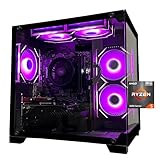
- Processor specifications: Adopting AMD Ryzen 5 5600 processor, with a basic clock speed of 3.5GHz and a turbo frequency of 4.4GHz, it can achieve fast response computing performance
- Graphics Card: Features GeForce RTX 3050 graphics card with 6GB dedicated video memory for gaming and multimedia applications
- Memory configuration: Equipped with 32GB DDR4 RAM (16GB * 2), providing sufficient memory capacity for multitasking and demanding applications
- Gaming Performance: Designed to handle modern gaming titles and graphics-intensive tasks with smooth frame rates and visual quality
- Desktop System: Complete gaming desktop computer system ready for setup and use out of the box
Why commenters resisted spending the full $3,000 on the tower
The dominant argument was diminishing returns. Once the system had a capable gaming CPU and a high-end GPU, spending substantially more on the processor or additional tower luxuries did not necessarily produce proportionate frame-rate gains.
- A roughly $1,200–$1,500 tower could provide a strong gaming core.
- The remaining money could fund a better display, audio, desk, chair, or later graphics-card upgrade.
- Future component generations could make an expensive February purchase look poor by June.
- Replacing a GPU later was often more effective than buying the most expensive CPU at the outset.
This was not a claim that every $3,000 system was wasteful. A larger budget could be rational for high-refresh or multi-monitor gaming, 3D Vision, heavy overclocking, premium cooling, a large SSD, or peripherals intended to survive several PC generations. The extra spending bought capacity and experience more reliably than it bought proportional frame rates.
Recommended Free Tools
The monitor was part of the build, not an afterthought
The original poster specifically wanted a 23-inch 120 Hz monitor, and the replies broadened the discussion to 30-inch displays and three-monitor Eyefinity or Surround arrangements.
Rank #4

- POWERED BY RTX 5070 12GB + RYZEN 7 9700X - The GeForce RTX 5070 12GB GDDR7 graphics card pairs with an 8-core AMD Ryzen 7 9700X processor to drive smooth 1440p and 4K gameplay, giving this gaming PC the headroom for modern titles, streaming, and creative work.
- 32GB DDR5 6000MHz MEMORY & 1TB NVMe SSD - 32GB of high-speed DDR5 memory and a 1TB PCIe 4.0 NVMe solid state drive deliver quick load times, smooth multitasking, and generous storage, keeping this prebuilt gaming desktop responsive under heavy workloads.
- BUILT-IN 11.3-INCH Smart DISPLAY - An integrated smart screen shows real-time CPU and GPU temperatures, usage, and weather while you play, adding a distinctive and functional touch to your battlestation.
- 850W 80+ GOLD POWER SUPPLY, 360MM LIQUID COOLING & WiFi 7 - An 850W 80 Plus Gold certified power supply provides stable, efficient power with headroom for future upgrades, while a 360mm AIO liquid cooler, WiFi 7, and an ARGB mid-tower case keep the Ryzen 7 CPU cool and connected in a clean build.
- READY TO PLAY OUT OF THE BOX - Arrives fully assembled and tested with Windows 11 Home pre-installed, so your prebuilt gaming computer is ready to set up in minutes. Assembled in the USA, and backed by a one-year limited warranty and lifetime free technical support.
Why 120 Hz mattered
A 120 Hz panel was most useful when the graphics card could produce high frame rates and the player valued motion clarity. It also made the display a longer-lived purchase than a single generation of CPU or GPU. A faster panel, however, increased the value of graphics performance; a 120 Hz target was harder to exploit than a conventional 60 Hz target.
Why larger or multiple displays changed the budget
A 30-inch high-resolution screen or a three-monitor setup could make better visible use of a premium budget, but it also increased rendering demands, desk-space requirements, and game-compatibility concerns. Display resolution, refresh rate, field of view, and supported games had to be considered together rather than treating “bigger” as automatically better.
Independent reader supportYour contribution helps us test, update, and keep practical guides available for everyone.Why waiting until June mattered
Participants repeatedly advised against fixing a premium parts list in February for a June purchase. They expected changes involving:
Best Value

- CPU: AMD Ryzen7 5700X (up to 4.6GHz) 8-Core 16-Thread to easily handle multi-line tasks
- Main board: MSI B550M-A PRO motherboard provides reliable performance and stability
- GPU: Geforce RTX 5060 8GB GDDR7 Graphics Cards (Brand may vary) Support DLSS 4 multi frame generation, ray tracing, and Reflex 2 delay optimization
- RAM: 32GB DDR4 3200MHz (16GB*2) SSD: 1TB M.2 NVMe PCIe
- Power supply: 650W (80plus bronze) certified for energy efficiency and stable performance
- Sandy Bridge availability and pricing.
- Intel’s upcoming Z68 chipset.
- AMD Bulldozer processors and their eventual reviews.
- Newer or less expensive SSD products.
- Possible next-generation graphics hardware.
These were contemporary expectations, not confirmed June-market facts. The thread tells us what enthusiasts thought might happen; it does not prove that every anticipated product was available, affordable, or faster by the intended purchase date. The final June recommendation cannot be reconstructed from the discussion alone.
What the proposal got right
- It prioritized the GPU: The GTX 580 matched the period’s high-end gaming focus.
- It avoided an unnecessary CPU premium: The i5-2500K offered an unlocked gaming-oriented platform.
- It used two kinds of storage: The SSD could host Windows and frequently played games, while the hard drive supplied inexpensive bulk capacity.
- It treated the display as a major purchase: The 120 Hz requirement shaped the rest of the system.
- It left flexibility: An approximately $2,435 list did not consume the full $3,000 ceiling.
What remained incomplete or questionable
- No exact motherboard, SSD, monitor, PSU, memory-kit, or speaker model was established.
- The Windows 7 license type was not identified.
- The prices were not a verified historical basket and may have excluded tax, shipping, or assembly.
- The thread contains no confirmed benchmark results for the proposed combination.
- Spending $179 on a large case, $75 on cooling, and substantial sums on peripherals could be sensible for an enthusiast, but those purchases did not directly raise gaming frame rates.
- A single GTX 580 was simpler than SLI, while SLI remained an enthusiast option rather than a guarantee of consistent scaling in every game.
Retrospective verdict
The best lesson from the February 2011 discussion was not “buy the most expensive parts.” It was to define the experience first. A strong gaming tower based on the i5-2500K and GTX 580 could support demanding 1080p and high-refresh play, but the monitor, storage, peripherals, and upgrade reserve determined how much of the budget the owner would actually notice.
In historical terms, this was a planning conversation about a possible June purchase—not a finalized June 2011 build. Its most durable advice was to buy a balanced gaming core, avoid paying workstation-level CPU prices for gaming, and wait until the purchase window before committing to a rapidly changing platform.
Quick Recap
Product prices and availability are accurate as of the date/time indicated and are subject to change. Any price and availability information displayed on Amazon at the time of purchase will apply.

