
iTechGuides is reader-supported. When you buy through links on our site, we may earn an affiliate commission. As an Amazon Associate I earn from qualifying purchases. Learn more
The best graphic design software in 2026 depends on the job: Photoshop and GIMP are strongest for pixels, Illustrator and Inkscape for vectors, InDesign for page layout, Figma for UI and UX, Krita and Procreate for digital painting, and Canva or VistaCreate for fast template-based content.
“Graphic design software” covers several different disciplines rather than one interchangeable product category. The right choice depends on workflow, platform, collaboration, file compatibility, learning curve, and whether you prefer open-source, subscription, license, or template-led software.
Key takeaways
- Graphic design software is not one category: Photoshop and GIMP edit pixels, Illustrator and Inkscape create vectors, InDesign and Scribus handle page layout, and Figma, Sketch, and Penpot focus on digital-product design.
- Adobe Photoshop is the stronger choice for photographs, retouching, and composites, while Adobe Illustrator is designed for scalable logos, icons, lettering, and vector artwork.
- Figma is the strongest starting point for collaborative UI, UX, prototyping, design systems, and developer handoff; Sketch is Mac-centered, while Penpot emphasizes open-source collaboration and self-hosting.
- GIMP, Inkscape, Krita, and Penpot provide the clearest free or open-source paths, but they solve different problems: raster editing, vector design, digital painting, and interface design respectively.
- Canva and VistaCreate are optimized for fast template-led marketing and social content rather than replacing every professional print, photo, or illustration workflow.
- A drawing tablet is optional for most design work but can make brush-based illustration and painting more natural; Wacom says Intuos supports Windows, Mac, Android, and ChromeOS.
How should you choose graphic design software in 2026?
The best graphic design software in 2026 depends on the work you need to produce: choose Photoshop or GIMP for pixel editing, Illustrator, CorelDRAW, Affinity, or Inkscape for vector artwork, InDesign or Scribus for multi-page documents, Figma, Sketch, or Penpot for UI and UX, Krita or Procreate for digital painting, and Canva or VistaCreate for fast template-based content.
That distinction matters because a logo, a retouched photograph, a mobile-app prototype, and a 100-page report require different tools. The sixteen options below are organized by their strongest workflows rather than forced into a single universal ranking. Prices, plan limits, operating-system support, AI features, and software versions can change, so verify those details on the vendor’s site before purchasing.
#1 Best Overall

- Wacom Intuos Small Graphics Drawing Tablet: Enjoy industry leading tablet performance in superior control and precision with Wacom's EMR, battery free technology that feels like pen on paper
- Works With All Software: Wacom Intuos tablet can be used in any software program to explore new facets of digital creativity; draw, paint, edit photos/videos, create designs, and mark up documents
- What the Professionals Use: Wacom's industry leading pen technology and pen to paper feeling makes it the preferred drawing tablet of professional graphic designers
- Software and Training Included: Only Wacom gives you software with every purchase. Register your Intuos tablet and gain access to some of the best creative software and Wacom's online training
- Wacom is the Global Leader in Drawing Tablet and Displays: For over 40 years in pen display and tablet market, you can trust that Wacom to help you bring your vision, ideas and creativity to life
| Primary job | Best starting points | Main decision criteria |
|---|---|---|
| Photo editing and composites | Photoshop, GIMP, Affinity | Raster tools, color management, plug-ins, file compatibility |
| Logos and scalable vector art | Illustrator, CorelDRAW, Inkscape, Affinity | Vector precision, typography, SVG/PDF export, ecosystem |
| Books, reports, brochures, and magazines | InDesign, Scribus, Affinity | Multi-page layout, preflight, typography, PDF production |
| UI, UX, and product design | Figma, Sketch, Penpot | Collaboration, prototyping, design systems, developer handoff |
| Digital painting and concept art | Krita, Procreate, Photoshop | Brushes, stylus support, canvas workflow, tablet platform |
| Social and marketing graphics | Canva, VistaCreate | Templates, brand kits, resizing, asset libraries, publishing |
| Free or open-source work | GIMP, Inkscape, Krita, Penpot | Interoperability, community, self-hosting, support, learning curve |
Which graphic design software is best for photo editing?
Photoshop is the strongest general-purpose choice in this list for pixel-based image editing, retouching, compositing, texture work, and image-led illustration. GIMP is the leading no-cost open-source alternative for similar raster-oriented tasks, while Affinity is worth considering for readers seeking a broader professional suite without building a workflow around Adobe.
1. Adobe Photoshop
Adobe Photoshop is best when a project starts with photographs, raster artwork, or multiple images that must be combined into a complex composite. Photoshop’s pixel-based workflow makes it appropriate for retouching, masking, textures, color work, and image effects. Adobe’s comparison of Photoshop, Illustrator, and Adobe Express distinguishes Photoshop’s pixel-based approach from Illustrator’s scalable vector workflow.
Choose Photoshop for photography, advertising composites, textured artwork, and detailed raster edits. Do not choose Photoshop as the default tool for a logo that must scale across a business card, billboard, and website; vector software is better suited to that requirement.
2. GIMP
GIMP is best for free, open-source raster editing, photo manipulation, composites, original artwork, icons, and extensible workflows. The official project describes GIMP as “the Free & Open Source Image Editor,” and documents scripting, plug-ins, color management, and cross-platform image-manipulation tools on its official product page.
GIMP is a credible Photoshop alternative when the budget, licensing model, or preference for open-source software matters. The trade-off is that GIMP is primarily an image editor, not a single replacement for a complete suite covering vector illustration, page layout, and collaborative product design.
What is the best software for logos and scalable vector art?
Adobe Illustrator is the natural starting point for precision vector work, while CorelDRAW, Affinity, and Inkscape are strong alternatives with different ecosystem and payment considerations. Vector artwork is defined by paths and shapes rather than a fixed grid of pixels, so logos and icons can scale cleanly when the file and export workflow are handled correctly.
3. Adobe Illustrator
Adobe Illustrator is best for logos, icons, lettering, illustrations, diagrams, and artwork that must remain sharp at different sizes. Adobe describes Illustrator as a vector-graphics application whose artwork can scale without losing quality; the same Adobe guidance on digital-art applications explains why Illustrator and Photoshop serve different purposes.
Illustrator is especially compelling when a designer also needs Photoshop, InDesign, or other Creative Cloud applications. Its main disadvantage is workflow complexity for beginners and the need to evaluate Adobe’s current subscription terms rather than assuming a permanent license is available.
4. CorelDRAW Graphics Suite
CorelDRAW Graphics Suite is best for professional vector design, illustration, layout, photo editing, signage, and production-oriented work on Mac or Windows. Corel’s official 2026 product page lists CorelDRAW, Corel PHOTO-PAINT, font management, a browser-based CorelDRAW web app, and AI-assisted features.
CorelDRAW is a sensible choice when vector production, signage, typography, and a broader desktop suite matter more than matching an Adobe-centered studio. Confirm the current license options, included applications, and platform details before committing.
Rank #2
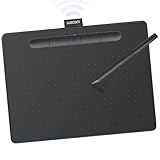
- Wacom Intuos Medium Bluetooth Graphics Drawing Tablet: Enjoy industry leading tablet performance in superior control and precision with Wacom's EMR battery free technology that feels like pen on paper
- Works With All Software: Wacom Intuos tablet can be used in any software program to explore new facets of digital creativity; draw, paint, edit photos/videos, create designs, and mark up documents
- Wireless Superior Connectivity: Connect wirelessly via Bluetooth or directly using USB-A cable which enables you to work, draw or create whether it's at a desk, on the sofa, in classrom or even outside
- Software and Training Included: Only Wacom gives you software with every purchase. Register your Intuos tablet and gain access to some of the best creative software and Wacom's online training
- Wacom is the Global Leader in Drawing Tablet and Displays: For over 40 years in pen display and tablet market, you can trust that Wacom to help you bring your vision, ideas and creativity to life
5. Affinity by Canva
Affinity by Canva is best considered by readers who want an integrated professional alternative spanning vector, photo, and layout work. Canva’s 2026 announcement says Affinity became free and presents its “craft precision” as connected to Canva’s broader brand-system workflow; read the Canva Create 2026 announcement for the vendor’s current positioning.
Recommended Free Tools
Affinity is potentially attractive for a freelancer or small team that needs more control than template software provides while also producing social and brand content in Canva. Because its product positioning changed materially during 2025–2026, verify current features, export formats, platform coverage, and whether the specific capabilities you need are included.
6. Inkscape
Inkscape is best for free, open-source vector illustration, logos, icons, diagrams, and SVG-centered work. The official Inkscape site highlights flexible drawing tools, text tools, broad file-format compatibility, and Bezier and Spiro curves.
Inkscape is the clearest open-source vector counterpart in this list. It is a good fit for learners, independent creators, and SVG-focused projects, although teams should test exchange with their existing Illustrator, CorelDRAW, or print-production workflow before standardizing on it.
Which graphic design software is best for UI and UX design?
Figma is the strongest general starting point for collaborative UI and UX design, prototyping, design systems, and developer handoff. Sketch is a strong Mac-centered alternative, while Penpot is the best fit when open-source tooling, self-hosting, and web standards are priorities.
The Tool Desk
Outbyte Driver Updater FREEScan for outdated or missing drivers - takes under a minuteDriver Scan →Outbyte PC Repair FREERepair Windows errors before they cause bigger problemsFix Now →7. Figma
Figma is best for interface design, product design, prototypes, design systems, and teams working together on digital products. Figma documents multiplayer files, comments, vector editing, auto layout, prototyping, design systems, and developer-oriented handoff on its design product page.
Figma’s collaborative canvas makes it a better choice for a distributed product team than a traditional single-user illustration application. Figma also states that “95% of the Fortune 500 uses Figma,” based on data from March 2025; that is a vendor-published adoption claim, not an independent market-share measurement.
8. Sketch
Sketch is best for Mac-based interface design with browser-based review, commenting, handoff, libraries, version history, and design-token workflows. Sketch emphasizes sharing designs in a browser, contextual comments, component libraries, and developer inspection on its collaboration page.
Choose Sketch when the design team is comfortable with a Mac-centered authoring workflow and values its integrated review and handoff features. Confirm the current distinction between the Mac-only license and subscription-based Workspace features before purchase.
Do these 3 things before closing this tab:
1Repair Windows errors before they cause bigger problems2Fix the driver behind crashes, sound loss and screen glitches3Clear out junk files and repair common Windows errors9. Penpot
Penpot is best for teams that prioritize open-source tooling, self-hosting, design-code collaboration, and open standards. Penpot supports responsive and rules-based interfaces, prototypes, CSS Grid, Flex layouts, design tokens, and standards including CSS, HTML, SVG, and JSON, according to its official product page.
Rank #3

- WACOM’S BEST PEN TECHNOLOGY: Pro Pen 3 offers amazing precision, 8192 pressure levels, tilt support & lag-free tracking for smooth, precise strokes; choose slim, straight or flared grip, adjust balance & button layout for precision and comfort
- DIAL INTO PRODUCTIVITY: Speed up and stay in the creative flow with 10 customizable tablet ExpressKeys & 2 mechanical dials conveniently located at the top of the tablet and close to your keyboard for efficiency
- DESIGNED FOR MODERN MONITORS: With a versatile 16:9 format perfect for multiple monitors and wide displays; medium size has a large active area with a small footprint 11.4 x 8.1” / 291 x 206 mm
- SLEEK AND STURDY: Measuring 4mm at its thinnest this professional-grade drawing tablet feels like pen-on-paper on your desk, combined with the robust durability of magnesium making it equally suited for your office or life on the go
- WIRELESS FREEDOM: use Intuos Pro with USB or connect wirelessly via Bluetooth to multiple computers with a simple switch
Penpot states, “Penpot is the open-source design platform for teams that need scalable collaboration.” Penpot is not a universal replacement for Photoshop or InDesign, but it is a particularly relevant choice for organizations that want more control over infrastructure and a closer relationship between design and front-end code.
| Tool | Best for | Collaboration and handoff | What it is not primarily for |
|---|---|---|---|
| Figma | Collaborative UI, UX, prototypes, and product design | Multiplayer files, comments, design systems, developer handoff | Dedicated photo editing or long-form page layout |
| Sketch | Mac-based interface design | Browser review, comments, libraries, version history, inspection | Cross-platform authoring or general raster editing |
| Penpot | Open-source, standards-based product design | Responsive layouts, tokens, prototypes, design-code collaboration | Traditional photo retouching and painting |
Which app is best for digital painting and illustration?
Krita is the strongest free and open-source choice for desktop digital painting, concept art, illustration, and comics. Procreate is the strongest iPad-centered choice for artists who prefer direct stylus interaction, while Photoshop is better when painting is part of a broader photo-compositing workflow.
10. Krita
Krita is best for digital painting, concept art, illustration, comics, and brush-based raster work. Krita describes itself as a professional free and open-source painting program on its official site. Krita is primarily raster-based, although its documentation covers vector functionality and SVG interoperability.
Krita is a strong recommendation for artists who want a purpose-built painting environment without a subscription. It should not be mistaken for a complete page-layout or collaborative UI-design platform.
11. Procreate
Procreate is best for iPad-based illustration and digital art. Procreate describes the iPad application as a complete art studio and also lists Procreate Dreams for animation and Procreate Pocket for iPhone on its official product page.
Procreate is a natural fit for artists who value a tablet-centered canvas and stylus interaction. Procreate is not a replacement for desktop page-layout software or team-oriented UI-design software, so a professional workflow may pair it with another application.
Optional hardware: A drawing tablet is not required for every graphic designer, especially for layout, templates, or mouse-and-keyboard UI work. For brush-based illustration, painting, and pressure-sensitive input, a Wacom Intuos drawing tablet can be a practical companion; Wacom lists compatibility with Windows, Mac, Android, and ChromeOS. Check the exact model and operating-system requirements before buying. This is an optional product recommendation, not a claim that every listed application requires a tablet.
Outdated Drivers Are Slowing You Down
One free scan finds every outdated or missing driver and matches the right update for your exact hardware.Free scan · exact hardware matchWindows Errors? Fix Them Before They Spread
Repair common Windows errors and clear accumulated junk for a smoother, more stable PC - no reinstall needed.Free scan · no reinstallWhich software is best for social media and marketing graphics?
Canva is the best starting point for teams and beginners who need fast social posts, presentations, marketing graphics, brand content, templates, and accessible collaboration. VistaCreate serves a similar template-led audience and adds documented features for animation, resizing, brand kits, social scheduling, and printing.
12. Canva
Canva is best when speed, templates, brand content, and collaboration matter more than manual control over every vector or typographic detail. Canva’s 2026 announcements describe an expanded professional design suite and say more than 5 million creatives had adopted Affinity since Affinity joined the Canva family in 2025; those are Canva-published statements in the Canva Create announcement.
Canva is good enough for professional graphic design when the work consists of social campaigns, presentations, internal documents, marketing assets, and repeatable brand templates. Canva is less suitable as the only tool for demanding photo retouching, precision vector illustration, complex prepress, or highly specialized typography.
Rank #4
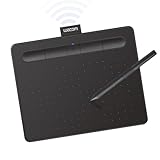
- Wacom Intuos Small Bluetooth Graphics Drawing Tablet: Enjoy industry leading tablet performance in superior control and precision with Wacom's EMR, battery free technology that feels like pen on paper
- Works With All Software: Wacom Intuos tablet can be used in any software program to explore new facets of digital creativity; draw, paint, edit photos/videos, create designs, and mark up documents
- Wireless Superior Connectivity: Connect wirelessly via Bluetooth or directly using USB-A cable which enables you to work, draw or create whether it's at a desk, on the sofa, in classroom or even outside
- Software and Training Included: Only Wacom gives you software with every purchase. Register your Intuos tablet and gain access to some of the best creative software and Wacom's online training
- Wacom is the Global Leader in Drawing Tablet and Displays: For over 40 years in pen display and tablet market, you can trust that Wacom to help you bring your vision, ideas and creativity to life
13. VistaCreate
VistaCreate is best for template-led social, business, print, and animated content. VistaCreate documents templates, brand kits, animation, AI tools, resizing, collaboration, social scheduling, and printing on its official product page.
Free tools Windows power users keep installed
One-click scans. No signup required.
VistaCreate currently advertises 200K+ professionally designed templates and 170M+ photos, videos, and vectors. Those catalog figures are vendor-published 2026 claims and can change, so treat them as a snapshot rather than a permanent product specification.
What are the best software options for page layout and publishing?
Adobe InDesign is the strongest established choice for brochures, magazines, books, reports, and other structured multi-page publications. Scribus is the open-source option to investigate, while Affinity may suit readers seeking a broader professional alternative; Scribus’s current release, operating-system support, file-format support, and production-readiness require fresh official verification.
14. Adobe InDesign
Adobe InDesign is best for arranging text and graphics into structured multi-page documents and publishing workflows. InDesign is designed for brochures, magazines, books, reports, and similar work; it should not be treated as a Photoshop or Illustrator substitute. Adobe includes InDesign among its major Creative Cloud applications and announced AI Assistant public-beta availability in InDesign in 2026 in its official Creative Cloud announcement.
Choose InDesign when typography, master pages, long documents, linked assets, and print-oriented production matter. Choose Illustrator for the logo or illustration itself, and Photoshop for raster image editing within the publication.
Quick wins for a faster PC:
Clear out junk files and repair common Windows errorsFree Scan →Fix the driver behind crashes, sound loss and screen glitchesFind Drivers →15. Scribus
Scribus is best considered for open-source desktop publishing and structured page-layout work. The available research does not establish Scribus’s current 2026 release, operating-system support, file-format support, or production-readiness, so verify those points on the official Scribus project site before using Scribus for a time-sensitive or commercial print workflow.
Scribus is worth investigating when open-source desktop publishing is a firm requirement. Test PDF output, font handling, color workflow, file exchange, and printer requirements with a representative document before migrating an established publishing process.
What other vector design software should you consider?
16. Linearity Curve
Linearity Curve is best considered as a vector illustration and design option for readers looking beyond the largest desktop suites. The available research does not verify Linearity Curve’s current 2026 platform coverage, export formats, pricing, or feature set, so those details must be checked against current official documentation before selection.
Include Linearity Curve on a shortlist when its current platform and export workflow match the project, but do not assume that it replaces Illustrator, CorelDRAW, or a full page-layout suite without testing the required formats and collaboration process.
What’s actually slowing this PC down?
Pick the symptom - the matching free tool is one click away.
What is the best free graphic design software?
The best free graphic design software depends on the discipline: GIMP is the free open-source raster editor, Inkscape is the free open-source vector tool, Krita is the free open-source painting application, and Penpot is the strongest open-source option for collaborative UI and UX design. These tools are complementary rather than interchangeable.
Best Value
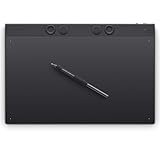
- WACOM’S BEST PEN TECHNOLOGY: Pro Pen 3 offers amazing precision, 8192 pressure levels, tilt support & lag-free tracking for smooth, precise strokes; choose slim, straight or flared grip, adjust balance & button layout for precision and comfort
- DIAL INTO PRODUCTIVITY: Speed up and stay in the creative flow with 10 customizable tablet ExpressKeys & 2 mechanical dials conveniently located at the top of the tablet and close to your keyboard for efficiency
- DESIGNED FOR MODERN MONITORS: With a versatile 16:9 format perfect for multiple monitors and wide displays; large size has a large active area with a small footprint 14.8 x 9.9” / 377 x 253 mm
- SLEEK AND STURDY: Measuring 4mm at its thinnest this professional-grade drawing tablet feels like pen-on-paper on your desk, combined with the robust durability of magnesium making it equally suited for your office or life on the go
- WIRELESS FREEDOM: Use Intuos Pro with USB or connect wirelessly via Bluetooth to multiple computers with a simple switch
| Need | Free or open-source starting point | Specialty | Important limitation to evaluate |
|---|---|---|---|
| Photo editing | GIMP | Raster manipulation, composites, scripting, plug-ins | Not a vector or multi-page publishing replacement |
| Logos and SVG | Inkscape | Vector drawing, typography, Bezier and Spiro curves | Test compatibility with existing production files |
| Digital painting | Krita | Brush-based raster painting, concept art, comics | Primarily raster-based despite some vector functionality |
| UI and UX collaboration | Penpot | Open standards, responsive interfaces, prototypes, tokens | Not intended as a general photo or print-layout editor |
How do the sixteen options differ by workflow?
The following short list is a practical selection guide rather than a ranking:
- Choose Photoshop for photographs, retouching, textures, and composites.
- Choose Illustrator, CorelDRAW, Affinity, or Inkscape for logos, icons, lettering, and scalable vector artwork.
- Choose InDesign or investigate Scribus for brochures, books, reports, magazines, and other multi-page documents.
- Choose Figma, Sketch, or Penpot for interface design, prototypes, design systems, and product-team handoff.
- Choose Krita or Procreate for digital painting and illustration; choose Procreate specifically when an iPad-centered workflow is desirable.
- Choose Canva or VistaCreate for fast, repeatable social, marketing, presentation, and branded content.
What should you check before committing to a design application?
Check the file formats your clients, printers, developers, and collaborators already use before evaluating visual features. A tool that produces attractive artwork but cannot reliably exchange the required SVG, PDF, raster, design-file, or handoff formats may create more work downstream.
- Workflow: Decide whether the project is raster, vector, page layout, UI design, painting, or template production.
- Platform: Confirm desktop, browser, iPad, Mac, Windows, Android, or ChromeOS support for the exact version and plan.
- Collaboration: Check multiplayer editing, comments, version history, libraries, design tokens, review, and developer inspection where relevant.
- Compatibility: Test imports, exports, fonts, color management, linked assets, SVG, PDF, and handoff with a real project.
- Learning curve: Template tools usually shorten production time for standard content; precision suites offer deeper control but require more training.
- Payment model: Verify whether the current option is free, open source, subscription-based, or license-based, and check what the selected tier actually includes.
Which tool should a beginner start with?
A beginner should start with Canva for quick social and marketing graphics, Inkscape for learning vector design, GIMP for learning raster image editing, Krita for digital painting, or Figma for UI and UX. The best beginner choice is the one that matches the type of work the learner wants to repeat, not necessarily the application with the largest feature list.
For a broad professional path, learning the difference between pixels, vectors, page layout, and interface design is more valuable than memorizing one application. A designer who understands that distinction can move from Canva to Illustrator, from GIMP to Photoshop, or from a template tool to InDesign with a clearer reason for the change.
Frequently Asked Questions
Which graphic design software is best for beginners?
The best graphic design software for beginners depends on the goal. Canva is the easiest starting point for template-based social and marketing graphics, while Inkscape, GIMP, Krita, and Figma are better introductions to vector design, raster editing, digital painting, and UI/UX respectively.
What is the best free graphic design software?
The best free graphic design software depends on the task: GIMP is for raster photo editing, Inkscape is for vector graphics, Krita is for digital painting, and Penpot is for collaborative UI and UX design. No single free option replaces all four workflows.
The Tool Desk
Outbyte PC Repair FREEClear out junk files and repair common Windows errorsFree Scan →Outbyte Driver Updater FREEFix the driver behind crashes, sound loss and screen glitchesFind Drivers →Is Canva good enough for professional graphic design?
Canva is good enough for professional graphic design when the work involves social posts, presentations, marketing graphics, and repeatable brand templates. Canva is less suitable as the only application for demanding photo retouching, precision vector illustration, complex prepress, or specialized typography.
What is the best alternative to Adobe Illustrator?
Adobe Illustrator is the direct Adobe choice for logos and scalable vector artwork, while Inkscape is the clearest free open-source vector alternative. CorelDRAW and Affinity are additional alternatives to evaluate for professional vector and broader design workflows.
What is the best software for UI and UX design?
Figma is the strongest general starting point for UI and UX design because it combines collaborative files, prototyping, design systems, and developer handoff. Sketch is a Mac-centered alternative, and Penpot is suited to teams prioritizing open-source tooling and self-hosting.
The Bottom Line
There is no single best graphic design software in 2026. Match the application to the medium: Photoshop or GIMP for pixels, Illustrator, CorelDRAW, Affinity, or Inkscape for vectors, InDesign or Scribus for pages, Figma, Sketch, or Penpot for UI and UX, Krita or Procreate for painting, and Canva or VistaCreate for fast branded content.
Quick Recap
Product prices and availability are accurate as of the date/time indicated and are subject to change. Any price and availability information displayed on Amazon at the time of purchase will apply.

