
Short answer: AlgoTest is the strongest overall fit for options-first research and deployment; FYERS Automate is the cleanest broker-native no-code choice; Tradetron is the most flexible broker-neutral builder; Streak is the easiest starting point for many Zerodha users; and Kite Connect, FYERS API, Upstox Developer API, or Angel One SmartAPI are better choices for developers who want to build their own systems.
This is a fit-based 2026 shortlist, not a ranking of profitability, returns, latency, uptime, or personal testing. Platform features, pricing, broker support, exchange empanelment, authentication rules, hosting requirements, and compliance arrangements can change quickly. Checked August 10, 2026: confirm the current position with the broker, exchange, and provider before depositing money or enabling live orders.




Automation can make execution more consistent, but it cannot create a trading edge. SEBI found that 93% of individual equity-F&O traders incurred losses during FY22–FY24, with aggregate losses exceeding ₹1.8 lakh crore. A bot can reduce emotional interference—or automate losses faster.
Quick comparison
| Rank | Platform | Primary style | Best for | Automation level | Main caveat |
|---|---|---|---|---|---|
| 1 | AlgoTest | Options builder, backtesting, deployment | Multi-leg Indian options research | High, depending on broker route | Verify current exchange and broker status |
| 2 | FYERS Automate | Broker-native visual workflows | Existing FYERS customers | High within FYERS | Broker lock-in and shorter documented history |
| 3 | Tradetron | Broker-neutral no-code automation | Multi-broker traders | High | Verify provider, strategy, and exchange compliance |
| 4 | AlgoBulls Phoenix/Odyssey | No-code, AI-assisted, and coded workflows | Users moving between simple and custom strategies | High | AI and ready-made strategies are not performance proof |
| 5 | uTrade Algos | AI-assisted no-code builder | Beginners and options traders | High | Cross-check current provider and exchange claims |
| 6 | QuantMan | Indicator and options strategy builder | Indicator-heavy systematic trading | High | Model slippage, charges, and execution separately |
| 7 | Quantiply | Specialist index-options automation | Nifty and Bank Nifty structures | High | Narrower scope; monitoring remains necessary |
| 8 | Streak | Semi-automated broker-assisted tool | Beginners in the Zerodha ecosystem | Medium | Not necessarily unattended execution |
| 9 | DhanHQ | Broker, API, and algo marketplace | Users wanting one integrated ecosystem | High through supported routes | Review each managed provider and strategy |
| 10 | Zerodha Kite Connect | Developer API | Developers using Zerodha | Depends on your code | You manage infrastructure, failures, and compliance |
| 11 | FYERS API | Developer API | Developers wanting API and no-code options | Depends on your code | Fully automated third-party deployment has additional requirements |
| 12 | Upstox Developer API or Angel One SmartAPI | Developer APIs | Code-first traders comparing broker capabilities | Depends on your code | Neither is a plug-and-play no-code platform |
The final position is a split recommendation, so the 12 entries cover both Upstox Developer API and Angel One SmartAPI. The order reflects workflow fit and documented capabilities—not expected returns.
#1 Best Overall
What automated algo trading software actually means
These products are often grouped together even though they automate different parts of trading:
- No-code strategy builders: AlgoTest, Tradetron, AlgoBulls, uTrade Algos, QuantMan, and Quantiply let users define rules visually or through guided options workflows. Depending on the product and broker, they may backtest, paper-trade, generate alerts, or send live orders.
- Semi-automated or broker-assisted tools: Streak can monitor conditions and send an actionable notification, after which the user acts through the broker. It should not automatically be described as an unattended execution engine.
- Broker-native ecosystems: FYERS Automate and DhanHQ combine broker connectivity with automation or ready-made strategy ecosystems. This can simplify hosting and authentication, but it also creates broker dependence.
- Developer APIs: Kite Connect, FYERS API, Upstox Developer API, and Angel One SmartAPI provide building blocks such as order placement, market data, portfolio access, historical candles, and WebSockets. They do not supply a complete, safe strategy, monitoring layer, or recovery system.
The right choice depends on whether you need a visual builder, multi-leg options logic, broker-hosted execution, multi-broker flexibility, or complete control over your own code.
Important Indian regulatory context for 2026
SEBI issued its retail algorithmic-trading framework on February 4, 2025. After implementation-timeline extensions, the framework became applicable to all stock brokers from April 1, 2026. The practical consequences depend on the broker, exchange segment, order flow, and whether you use a broker-empanelled provider or your own software. [C001][C004]
NSE implementation standards treat API orders used to automate buying and selling as algo orders. The initial threshold is 10 orders per second per exchange and segment. Below that threshold, client-side algo registration through the broker’s system is not initially required, but the orders still require exchange tagging and broker risk controls. Above the threshold, registration through the broker and exchange-specific algo IDs are required. [C002]
Free tools Windows power users keep installed
One-click scans. No signup required.
The operational requirements can include a mapped static IP, whitelisting, broker-specific API keys, two-factor authentication, daily API logout, audit trails, rate controls, and clearly allocated hosting and liability responsibilities. A retail strategy supplied by an empanelled provider will generally run on the trading member’s infrastructure. A technically sophisticated client running their own logic may need to host it from a mapped static IP. The exact implementation is broker-specific, so do not assume that a platform’s old API workflow remains valid after April 2026. [C002][C003]
Do not call a platform SEBI approved merely because it is available through a broker or describes itself as compliant. SEBI regulates the framework and brokers; exchange empanelment is a different status and is not an endorsement of profitability or strategy quality. Check the current official exchange empanelled-algo-provider listing and the provider’s current registration and disclosure details. [C003][C004]
Black-box strategies require particular care. NSE guidance says a provider offering a black-box algo must register as a Research Analyst, maintain a detailed research report for each algo, and become an algo provider before offering the product. Ask for the strategy classification, provider identity, research documentation, and applicable registration details before subscribing. [C003]
NSE’s FAQ also states that market orders are not permitted for algo orders, and commodity algo trading has additional restrictions including limits on IOC orders. Confirm the permitted order types, exchange segment, and broker implementation before assuming that an existing strategy can be automated unchanged. [C003]
Quick wins for a faster PC:
Repair Windows errors before they cause bigger problemsFix Now →Scan for outdated or missing drivers - takes under a minuteDriver Scan →Clear out junk files and repair common Windows errorsFree Scan →The 12 best options, builders, ecosystems, and APIs
1. AlgoTest — best overall for options backtesting and systematic deployment
Best for: Options traders whose workflow begins with multi-leg Indian options research and progresses from backtest to forward test to live execution.
AlgoTest is the strongest options-first choice in this shortlist. Its 920 Algo documentation describes options strategy construction, backtesting, forward testing, and live automated execution, with support for more than 50 brokers according to the provider. The workflow is useful because it separates historical research, forward or paper validation, and live deployment instead of treating a backtest as a live result. [C007]
The provider-published pricing examples are ₹1 per backtest, ₹50 per strategy per month for forward testing, and live execution from ₹100 per strategy per month. These are not independent price checks and should be reverified on the live pricing page before publication or purchase. Brokerage, statutory charges, slippage, data, and broker costs are separate questions.
Why choose it: Options-oriented strategy design, historical testing, forward testing, multi-broker execution, and a clear test-to-deployment workflow.
Recommended Free Tools
Limitations: Provider-reported broker counts, order volumes, backtest results, and execution claims are not independent validation. Confirm the current NSE/BSE route, broker support, exchange empanelment, authentication, and hosting arrangement for the exact strategy you intend to run.
Verdict: The best options-first research and deployment workflow in this list, provided its current live-order route passes your compliance and operational checks.
2. FYERS Automate — best broker-native no-code workflow
Best for: Existing FYERS customers who want rule-based automation without maintaining a separate third-party server.
FYERS Automate is integrated into FYERS Web and the FYERS app. Its official product material describes drag-and-drop workflows, pre-built templates, entries, exits, stop-losses, targets, cross-symbol triggers, webhooks, and risk-management workflows. A broker-native design can reduce the number of external logins and infrastructure components you must maintain. [C016]
FYERS support documentation says its Automate backtesting covers equity cash, equity derivatives, and MCX commodities. It provides net and gross views, slippage inputs, trade-level output, and documented historical data beginning April 1, 2024. FYERS also warns that backtests do not guarantee future performance and that live execution can differ because of liquidity, charges, and market conditions. [C017]
Why choose it: Native broker integration, no daily third-party login in the usual workflow, visual conditions, portfolio and P&L checks, and webhooks.
Limitations: You are tied to FYERS, and the documented backtest history is shorter than that of some specialist platforms. Automation is also limited to supported instruments and the workflow model provided by the broker.
Verdict: The cleanest broker-hosted route for a FYERS customer who values simplicity over broker portability.
Do these 3 things before closing this tab:
1Repair Windows errors before they cause bigger problems2Fix the driver behind crashes, sound loss and screen glitches3Clear out junk files and repair common Windows errors3. Tradetron — best broker-neutral no-code automation ecosystem
Best for: Traders who want one visual strategy framework across multiple broker accounts or supported markets.
Tradetron provides visual strategy construction, backtesting, paper trading, live deployment, strategy templates, and broker connectivity. Its current backtesting material describes minute-level historical data, net-cost reporting, Monte Carlo analysis, strategy grading, and support for NSE, NFO, MCX, BSE, and other supported markets including crypto. [C008][C009]
A notable strength is that Tradetron explicitly describes the limitations of its simulations. Minute-level testing cannot reproduce every tick, bid/ask spread, latency event, partial fill, rejected order, or external signal. Treat a strategy grade or Monte Carlo output as a research aid—not proof of future profitability. [C008]
Why choose it: Broker-neutral architecture, visual strategy construction, options and position-management logic, backtesting, and paper trading.
Crashes, No Sound, or Screen Glitches?
Random freezes, missing sound and display glitches usually trace back to one bad driver. Find and replace yours safely.Free scan · under a minutePC Slower Than It Used to Be?
A free scan shows the junk files, broken settings and background clutter dragging Windows down - then fixes them in one click.Free scan · Windows 10 & 11Limitations: Confirm the current broker list, plan limits, exchange route, strategy classification, and whether a marketplace strategy is white-box or black-box. A March 25, 2026 adjudication order involving ITI Securities Broking Limited referred to TradeTron and other algo platforms. That is regulatory history to investigate, not evidence that every Tradetron user or strategy is unlawful. [C005]
Verdict: The best multi-broker no-code option, subject to verification of the exact provider and deployment route.
4. AlgoBulls Phoenix/Odyssey — best for mixed no-code, AI-assisted, and coded workflows
Best for: Traders who may start with visual tools but want a path toward AI-assisted creation, expert help, or custom code.
AlgoBulls presents Phoenix as a strategy-building toolkit that supports code-from-scratch development, AI-assisted creation, expert assistance, and no-code construction. Its retail offering also describes ready-made strategies, backtesting, paper trading, and automated execution. [C015]
What’s actually slowing this PC down?
Pick the symptom - the matching free tool is one click away.
Why choose it: Multiple strategy-building modes, ready-made strategies, risk controls, backtesting, and a managed-infrastructure proposition give it a broader range than a single-purpose visual builder.
Limitations: Ready-made and black-box strategies require careful review of research reports, provider status, performance-claim rules, and exchange registration. Treat AI as a construction or analysis feature, not evidence that a strategy can predict markets. A polished interface or AI-generated rule set does not replace testing and risk controls.
Verdict: A strong fit for mixed-skill users who want to move between no-code, AI-assisted, and coded workflows.
5. uTrade Algos — best emerging AI/no-code alternative
Best for: Beginners and options traders interested in a newer AI-assisted, no-code interface.
uTrade Algos describes AI-assisted strategy creation, a no-code builder, pre-built strategies, backtesting, and live deployment. The provider also describes itself as an NSE- and BSE-approved algo vendor. That approval statement is a provider claim and should be cross-checked against current official exchange records rather than repeated as a blanket guarantee. [C014]
Why choose it: Guided no-code construction, AI prompts, pre-built strategies, and an integrated backtest-to-live workflow may be appealing to users who do not want to write code.
Limitations: Verify the exact exchange listing, supported brokers, hosting model, strategy classification, current pricing, and provider registration. Avoid claims that AI bots are profitable or reliable by default; the provider itself acknowledges that AI cannot guarantee profits.
Verdict: A promising alternative for beginners, but it deserves more verification before real-money deployment than a mature broker/API route.
6. QuantMan — best for indicator-heavy options strategy builders
Best for: Traders who want many indicators, custom entry and exit rules, re-entry logic, and options structures without writing code.
QuantMan documentation describes visual strategy construction, backtesting, and one-click live deployment. It states that the platform covers more than five years of minute-level data, equity, options, futures, and pair trading, with a large broker-integration set. These counts and time spans can change, so check the current dashboard rather than relying on an old comparison page. [C013]
Why choose it: Indicator library, equity/futures/options coverage, custom conditions, re-entry controls, and live strategy deployment.
Limitations: Backtests may exclude slippage unless you model it, and brokerage, taxes, liquidity, and execution conditions affect live results. Do not compare a clean backtest directly with live performance without adding realistic costs and fill assumptions.
The Tool Desk
Outbyte Driver Updater FREEFix the driver behind crashes, sound loss and screen glitchesFind Drivers →Outbyte PC Repair FREEClear out junk files and repair common Windows errorsFree Scan →Verdict: The best fit here for indicator-rich, options-oriented no-code experimentation.
7. Quantiply — best for automated index-options structures
Best for: Intraday Nifty and Bank Nifty futures and options traders who need specialist multi-leg execution.
Quantiply focuses on fully automated index-options structures. Its documentation highlights multi-strategy execution, live strategy-level monitoring, combined-premium targets and stop-losses, leg-level risk controls, premium-matched entries, and structures such as straddles, strangles, butterflies, condors, and directional spreads. [C011]
The provider says the algo runs on its servers through broker APIs. It also says frequent monitoring remains necessary and does not promise completely autonomous, error-free execution. Its risk documentation discusses broker and exchange latency, market-order conversion, open positions, and the need for manual intervention when something goes wrong. [C012]
Outdated Drivers Are Slowing You Down
One free scan finds every outdated or missing driver and matches the right update for your exact hardware.Free scan · exact hardware matchWindows Errors? Fix Them Before They Spread
Repair common Windows errors and clear accumulated junk for a smoother, more stable PC - no reinstall needed.Free scan · no reinstallWhy choose it: Focused index-options workflows, leg-level controls, simultaneous strategies, combined-premium management, and live monitoring.
Limitations: The market scope is narrower than that of general builders. Confirm current broker availability and test how the system handles rejected legs, partial fills, disconnected APIs, expiry-day volatility, and open positions after a failure.
Verdict: The specialist choice for structured Nifty or Bank Nifty options automation—not a general-purpose equity automation platform.
8. Streak — best beginner-friendly Zerodha-linked semi-automation
Best for: Zerodha users learning systematic trading and testing rule-based ideas without code.
Streak provides strategy creation, indicators, scanners, backtesting, paper trading, and deployment within the Zerodha ecosystem. Its documentation describes a workflow in which Streak monitors deployed instruments and sends an actionable notification, after which the user acts and the order is sent through the broker. That makes Streak important to describe as semi-automated or broker-assisted, rather than automatically equivalent to an unattended execution engine. [C010]
Why choose it: Beginner-friendly conditions, Zerodha integration, backtesting, paper trading, and educational material make it a less intimidating starting point.
Limitations: It depends on the Zerodha ecosystem and may require user action at the execution stage. Confirm the current Streak product, plan, supported instruments, alert behavior, and live-order workflow before assuming it will place orders unattended.
Verdict: The best learning-oriented entry point for many Zerodha users, but not necessarily the deepest full-automation tool.
9. DhanHQ — best broker-native API plus ready-made-algo ecosystem
Best for: Traders who want a broker account, developer infrastructure, market data, and access to ready-made strategies in one ecosystem.
DhanHQ combines trading APIs, real-time market data, developer tooling, ready-made algos, and a marketplace-style deployment model. Its official material describes use cases including scalping, options selling, equity swing trading, and commodities. It says managed algos are handled by SEBI-registered Research Analysts or empanelled algo providers. [C020]
Why choose it: Broker-native operation, free API positioning, market-data access, ready-made strategies, and a single ecosystem for users who do not want to assemble every component independently.
Limitations: Managed, curated, or expert does not mean guaranteed performance. Check the named provider’s registration, exchange empanelment, strategy classification, research documentation, fees, and current disclosures before subscribing.
What’s actually slowing this PC down?
Pick the symptom - the matching free tool is one click away.
Verdict: The best integrated broker/API marketplace for readers who prefer Dhan’s ecosystem and are willing to assess each strategy individually.
10. Zerodha Kite Connect — best developer API for Zerodha users
Best for: Developers building Python, Java, Node.js, C#, Go, Rust, or other custom systems around a Zerodha account.
Kite Connect provides HTTP APIs for order execution, portfolio management, live market data, historical candles, and WebSocket streaming. Zerodha lists a free Personal tier for order and account APIs and a Connect tier priced at ₹500 per month for real-time WebSocket and historical candle data, subject to current terms. [C019]
Why choose it: Mature developer documentation, SDKs, order management, portfolio access, live streams, and historical data support make it a strong code-first foundation.
Free tools Windows power users keep installed
One-click scans. No signup required.
Limitations: The API is not a finished trading system. You must build strategy logic, risk controls, monitoring, alerting, logging, position reconciliation, retry handling, and a kill switch. Under the 2026 framework, pay attention to static-IP mapping, authentication, order tagging, rate limits, broker controls, and daily session requirements. [C002][C019]
Verdict: The best code-first choice for a developer already using Zerodha.
11. FYERS API — best broker API with a no-code fallback
Best for: Developers and fintech builders who want broker APIs but may also use a native no-code workflow.
FYERS markets its trading, historical-data, and real-time-data APIs as free and provides integrations for Python, Node.js, JavaScript, C#, Java, Go, and other environments. The separate FYERS Automate product gives non-programmers a native alternative. [C016][C018]
Quick wins for a faster PC:
Clear out junk files and repair common Windows errorsFree Scan →Scan for outdated or missing drivers - takes under a minuteDriver Scan →Why choose it: Multiple language options, historical and real-time data, and the ability to move between custom code and native automation are useful for developers who are still deciding how much infrastructure to own.
Limitations: FYERS API terms state that fully automated trading may require relevant approvals. FYERS’ April 2026 notice also explains that third-party platforms must be empanelled and hosted within broker infrastructure to continue placing orders. Distinguish personal API coding from third-party retail-algo deployment, and confirm the current broker workflow before going live. [C018][C021]
Verdict: A strong developer-friendly option where the trader is comfortable managing both code and compliance.
12. Upstox Developer API or Angel One SmartAPI — best low-cost code-first alternatives
Best for: Developers comparing broker APIs, sandbox testing, market-data access, and language support.
Upstox Developer API
Upstox documents OAuth authentication, order placement and lifecycle management, portfolio and account APIs, market-data feeds, WebSockets, static-IP controls, and a sandbox supporting place, modify, and cancel order testing. The sandbox is particularly useful for validating order-state handling before connecting to live funds. [C022]
Angel One SmartAPI
SmartAPI provides REST-like APIs for order execution, portfolio management, live WebSocket market data, historical candles, and multiple Indian market segments. Angel One describes the APIs as free and compatible with Python, Node.js, Java, R, PHP, C#, Go, and other languages. [C023]
Why choose either: Upstox is attractive when OAuth, static-IP controls, and sandbox workflows matter. SmartAPI is attractive when broad segment coverage, WebSockets, and language support are priorities.
Limitations: Neither is a plug-and-play no-code platform. The developer must build strategy logic, monitoring, risk controls, reconciliation, recovery handling, and compliance processes. Verify current API rate limits, data entitlements, static-IP rules, supported order types, authentication requirements, and broker hosting arrangements.
Verdict: Both are capable code-first alternatives, but an API is only the foundation of an automated trading system.
Independent reader supportYour contribution helps us test, update, and keep practical guides available for everyone.How to choose the right platform
| If you are… | Start by evaluating… | Why |
|---|---|---|
| Trading multi-leg options | AlgoTest, Quantiply, QuantMan | These are oriented toward options structures, legs, premiums, and options-specific testing. |
| An existing FYERS customer | FYERS Automate first | Native integration can reduce external hosting and login complexity. |
| Using several brokers | Tradetron or a multi-broker options platform | You can compare broker routes without rebuilding every rule. |
| New to systematic trading | Streak, FYERS Automate, or a simple no-code builder | Visual conditions and paper trading reduce the initial coding burden. |
| Interested in AI-assisted construction | AlgoBulls or uTrade Algos | Both offer AI-assisted or guided strategy-building claims, but neither makes AI a substitute for validation. |
| Building custom infrastructure | Kite Connect, FYERS API, Upstox API, or SmartAPI | APIs provide control, but you own the engineering and operational risk. |
| Seeking a managed strategy | DhanHQ or an empanelled provider | You still need to check registration, disclosures, strategy classification, and risk. |
Backtesting is not live trading
A backtest answers a narrow question: how would these rules have behaved against a particular historical dataset and simulation model? It does not prove that the same orders can be filled at the same prices today.
Live results can differ because of bid-ask spreads, market impact, latency, partial fills, rejected orders, broker downtime, data revisions, option liquidity, slippage, charges, taxes, expiry-day behavior, and changing market regimes. Tradetron, Quantiply, and FYERS each document variations of these limitations in their own material. [C008][C012][C017]
Before enabling live orders:
- Write the rules precisely. Define entries, exits, position sizing, stop-losses, re-entry, expiry handling, maximum daily loss, and what happens when data or an API connection disappears.
- Use realistic costs. Include brokerage, exchange charges, taxes, slippage, spreads, and likely partial fills. A strategy that works only before costs is not ready.
- Test more than one market period. Include trending, sideways, volatile, low-liquidity, and gap conditions. Avoid optimizing every parameter against one historical window.
- Forward-test or paper-trade. Compare the intended order with the order that would actually be sent, including timing, quantity, price, rejected legs, and broker responses.
- Start with constrained risk. Use the smallest practical size, a maximum loss limit, a kill switch, and alerts for every position, rejection, disconnection, and abnormal fill.
- Reconcile positions manually. At the end of each session, compare the platform’s position record with the broker’s actual position and confirm that no orphaned leg or unclosed order remains.
What does it cost to start?
There is no reliable single monthly price because the total cost may include platform subscriptions, backtest credits, broker API fees, market-data subscriptions, brokerage, statutory charges, slippage, support, a VPS, a reserved public IP, and monitoring software.
Recommended Free Tools
Examples from the researched products include AlgoTest’s provider-published per-backtest and per-strategy figures, Tradetron’s current backtest-credit model, and Zerodha’s ₹500-per-month Connect tier for real-time WebSocket and historical candle data. These figures are volatile and should be checked on the live pricing page immediately before purchase. [C007][C008][C019]
Ask each provider:
- Is historical data included, and how far back does it go?
- Are backtests charged by run, credit, strategy, instrument, or subscription?
- Is paper trading included?
- Is live deployment included or billed separately?
- Is broker API access free or paid?
- Are brokerage and statutory charges modelled?
- Is a VPS or static IP required?
- Is daily two-factor authentication or manual reauthorization required?
- What happens when an API session, broker connection, strategy process, or data feed fails?
Do you need a VPS or static IP?
Users of a broker-hosted workflow may not need to rent a server themselves. A developer running custom code, however, may need an always-on host, reliable internet connectivity, a mapped static IP, and a process for restarting services and reconciling positions after an outage.
If your broker requires whitelisting or mapped hosting, compare a static IP VPS for algo trading only after checking the broker’s supported regions, operating systems, public-IP rules, security requirements, latency expectations, backups, and provider terms. A VPS solves an infrastructure problem; it does not make a strategy compliant or profitable. [C002][C003]
Compliance and safety checklist before connecting real funds
- Confirm that the broker supports the chosen platform, instruments, strategy type, and order workflow.
- Check the current exchange empanelment route where it applies. Do not substitute a provider’s marketing language for an official listing.
- Determine whether the strategy is white-box or black-box.
- For a black-box product, verify the provider’s Research Analyst status, detailed research report, algo-provider status, and current disclosures.
- Confirm who handles exchange algo-ID tagging, audit trails, risk controls, hosting, and broker liability.
- Understand static-IP mapping, whitelisting, broker-specific API keys, two-factor authentication, and daily API-session requirements.
- Check the order-rate limit. Stay within the applicable threshold or confirm the registration and algo-ID process for higher rates.
- Confirm permitted order types. NSE’s FAQ states that market orders are not permitted for algo orders and that commodity algo trading has additional IOC restrictions.
- Verify that the strategy survives rejected orders, partial fills, disconnected APIs, stale data, broker downtime, and a restart.
- Install a kill switch and configure alerts for entries, exits, rejected orders, open positions, disconnections, and maximum loss.
- Paper-trade or forward-test after backtesting.
- Understand that hypothetical backtests may differ materially from live fills and that automation can accelerate losses.
Learn before you automate
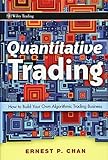
Software tutorials often teach which buttons to press but not how to distinguish a genuine edge from overfitting, survivorship bias, unrealistic fills, or excessive leverage. A relevant quantitative trading book is Ernest P. Chan’s Quantitative Trading: How to Build Your Own Algorithmic Trading Business, which discusses strategy development, backtesting, and implementation using tools such as Excel, MATLAB, Python, and R. It is educational material—not a guaranteed strategy and not a substitute for Indian regulatory advice. [C025]
The Tool Desk
Outbyte Driver Updater FREEScan for outdated or missing drivers - takes under a minuteDriver Scan →Outbyte PC Repair FREERepair Windows errors before they cause bigger problemsFix Now →Readers who want formal study can also investigate the NSE NCFM Algorithmic Trading Module or QuantInsti EPAT. Check current enrollment, syllabus, pricing, and any commercial relationship before signing up. Neither is a replacement for broker-specific compliance or live risk controls. [C024][C026]
What we would not recommend
Do not choose a platform solely because it advertises AI, a high historical return, a large broker count, a high order volume, a strategy grade, or a ready-made bot. Provider-reported statistics are useful context but are not independent performance testing.
Do not fund a black-box strategy until you can identify the provider, understand the disclosures, verify the relevant registration or empanelment route, and explain how the system handles a failed order or open position.
Finally, do not buy unrelated PC-cleanup, security, or entertainment products simply because they can be attached to a software article. They do not solve the central decision here, which is selecting and operating a compliant trading workflow.
Source and verification note
This shortlist synthesizes official broker and platform documentation, NSE and SEBI regulatory material, and provider-published product information. The platform capabilities, prices, broker counts, historical-data ranges, and exchange-status claims are subject to change. Recheck the official source, current broker documentation, exchange empanelled-provider page, and live pricing before publication or deployment. This article is educational and is not investment, legal, or compliance advice. [C001][C002][C003][C004][C006]
Frequently Asked Questions
Which is the best automated algo trading software in India in 2026?
There is no universal winner. AlgoTest is the strongest fit for options-first research and deployment, FYERS Automate is the simplest broker-native workflow for FYERS customers, Tradetron is the most flexible broker-neutral no-code option, and Kite Connect or another broker API is better for developers who want to build and operate their own system.
Is algo trading software approved by SEBI?
Do not describe a platform broadly as SEBI approved. SEBI establishes the regulatory framework and brokers implement controls; exchange empanelment, broker support, Research Analyst registration, and black-box algo requirements are separate matters. Check the current exchange listing and the provider’s exact status.
Can automated trading software guarantee profits?
No. Automation can improve consistency and reduce manual execution errors, but it does not create a profitable strategy. Backtests are hypothetical and can differ from live results because of slippage, spreads, latency, partial fills, rejected orders, charges, and changing market conditions.
Do these 3 things before closing this tab:
1Fix the driver behind crashes, sound loss and screen glitches2Repair Windows errors before they cause bigger problems3Scan for outdated or missing drivers - takes under a minuteDo I need coding skills to automate trading?
Not always. AlgoTest, FYERS Automate, Tradetron, AlgoBulls, uTrade Algos, QuantMan, and Quantiply provide visual or guided workflows. Streak is more broker-assisted. APIs such as Kite Connect, FYERS API, Upstox Developer API, and Angel One SmartAPI require you to build the strategy, monitoring, risk controls, and failure recovery yourself.
Do I need a VPS for algo trading?
A broker-hosted workflow may not require you to rent a server. Custom API systems may need an always-on host and, where required by the broker, a mapped static IP and whitelisting. Confirm the broker’s current hosting and authentication requirements before choosing a VPS.
The Bottom Line
Bottom line: Choose AlgoTest for options-first research, FYERS Automate for a simple FYERS-native workflow, Tradetron for multi-broker no-code flexibility, Streak for learning inside Zerodha, and a broker API for full control over custom code. Whichever route you choose, verify the 2026 broker and exchange requirements, paper-trade after backtesting, add realistic costs and slippage, and operate with monitoring, reconciliation, and a kill switch. Automation is an execution tool—not a profit guarantee.
Quick Recap
Product prices and availability are accurate as of the date/time indicated and are subject to change. Any price and availability information displayed on Amazon at the time of purchase will apply.
Recommended Free Tools

