
Wix is the best all-round website builder for most U.S. beginners and small businesses in 2026. Choose Squarespace if visual design matters most, Shopify if selling products is the main business, WordPress.com for serious publishing, and Hostinger for the lowest introductory price. Designers should look at Webflow or Framer; agencies at Duda; and complex or B2B retailers at BigCommerce.
There is no universal winner. A portfolio, restaurant website, newsletter, online store, and multi-location B2B catalog have different requirements. This comparison ranks the leading platforms by use case, flexibility, content tools, commerce, cost, and portability—not by a single score that hides important trade-offs.
Pricing scope: U.S. dollars, with prices and plan information checked against the supplied 2026 snapshot for August 10, 2026. Website-builder prices, introductory offers, renewal rates, transaction fees, and included features can change by region and billing term. Taxes, domain renewals, professional email, payment-processing charges, apps, plugins, and other add-ons may be extra.
Quick recommendation
| Builder | Best for | Free plan or trial | Annual starting snapshot | Main drawback |
|---|---|---|---|---|
| 1. Wix | Most beginners and small businesses | Free plan; 14-day paid-plan money-back guarantee | Light: $17/month | Busy interface and hosted-platform lock-in |
| 2. Squarespace | Design-led businesses and portfolios | No permanent free plan; trial availability should be checked | Basic: about $16/month | Less free-form and 2% online transaction fee on Basic |
| 3. Shopify | Serious ecommerce | Three days, then $1/month for three months on the current offer | Basic: $29/month | Apps and payment costs can make it expensive |
| 4. WordPress.com | Blogs, publishers, and content-heavy sites | Free plan | Personal: $4/month annually | More learning and configuration than visual builders |
| 5. Hostinger | Low-cost launches and side projects | No permanent free plan shown | Premium: $2.99/month on a 48-month term | Large renewal increase and long upfront commitment |
| 6. Webflow | Advanced visual design and CMS sites | Free Starter plan | Basic: $14–$15/month yearly, depending on current pricing display | Steep learning curve and separate billing models |
| 7. Framer | Modern portfolios and marketing pages | Free plan | Basic: $10/month | Limited fit for complex stores and large publishing operations |
| 8. Duda | Freelancers and agencies | 14-day trial without a credit card | Basic: $19/month | Poor value for one basic personal site |
| 9. BigCommerce | Complex catalogs, B2B, and multi-storefront commerce | Check the current offer | Core: $29/month annually | More complex pricing and GMV-triggered upgrades |
| 10. GoDaddy | Fast, basic small-business launches | Limited free version; current premium trial terms should be verified | Basic: $9.99/month introductory | Limited customization and extensibility |
One-sentence guide: Choose Wix for the safest all-round choice, Squarespace for design, Shopify for a serious store, WordPress.com for publishing, Hostinger for low cost, Webflow or Framer for design control, Duda for client work, BigCommerce for complex commerce, and GoDaddy for the quickest basic launch.
#1 Best Overall

- Ergonomic Posture Correction: Designed to elevate your laptop to the perfect eye level, this adjustable laptop stand significantly reduces neck, shoulder, and spinal fatigue. Transform your desk into a healthier workstation, ideal for long hours of typing, Zoom meetings, or gaming.
- Unshakable Dual-Rod Stability: Unlike single-hinge models, our stand features a highly engineered dual-support rod mechanism. It perfectly distributes weight to ensure a 100% wobble-free typing experience, safely supporting heavy-duty devices up to 22 lbs (10kg).
- Advanced Thermal Cooling Panel: Maximize your device's performance. The unique geometric heat-vent design on the upper panel provides superior airflow compared to standard solid stands. This continuous heat dissipation prevents your laptop from thermal throttling and hardware damage during intensive tasks.
- Universal 10-16” Compatibility: A versatile computer riser that seamlessly fits all 10 to 16-inch laptops. Broadly compatible with MacBook Pro/Air, Dell XPS, HP, Lenovo, ASUS, Chromebook, and large gaming laptops. The anti-slip silicone pads firmly grip your device and protect it from scratches.
- Foldable, Portable & Ready to Go: Maximize your productivity anywhere. The dual-foldable design allows the stand to collapse completely flat in seconds. Easily slip it into your backpack or briefcase, making it the ultimate portable office accessory for business trips, cafes, or hybrid work setups.
How this ranking works
This is an evidence-based comparison synthesized from current platform documentation and comparative coverage from TechRadar, Tom’s Guide, WIRED, Creative Bloq, and SiteBuilderReport. It does not claim that this publication independently built and performance-tested every platform.
The ranking uses this decision framework:
- Ease of use: 20%
- Design control and template quality: 15%
- Features and integrations: 15%
- SEO, accessibility, and content controls: 15%
- Ecommerce capability: 10%
- Performance and mobile behavior: 10%
- Total cost of ownership: 10%
- Portability, support, and scalability: 5%
Those weights explain why Wix ranks first overall but does not win every category. A commerce-first platform should not be judged mainly on template editing, and a one-page portfolio should not be forced into the same mold as a 20,000-product store.
What is a website builder?
A website builder is a hosted or semi-hosted service that combines some or all of a visual editor, templates or design systems, hosting, domain connection, SSL/TLS, content management, forms, analytics, SEO controls, ecommerce, bookings, and AI-assisted design or content generation.
The label covers several different products:
- General-purpose hosted builders: Wix, Squarespace, GoDaddy, and Hostinger.
- Commerce platforms: Shopify and BigCommerce.
- Visual development platforms: Webflow and Framer.
- Managed publishing platforms: WordPress.com.
- Agency platforms: Duda.
- Self-hosted CMS software: WordPress.org, which is not the same product as WordPress.com.
WordPress.org describes WordPress as software that can be downloaded and installed on a web host. With self-hosted WordPress, the owner separately chooses hosting and manages updates, security, backups, themes, and plugins. WordPress.com is a managed hosted service.
1. Wix — best overall
Best for: Small businesses, service providers, restaurants, freelancers, appointment-based businesses, personal brands, and first-time site owners who want room to grow.
Wix offers the broadest compromise between beginner accessibility and business depth. Its drag-and-drop editor, templates, AI-assisted creation, SEO controls, forms, bookings, marketing features, and ecommerce cover more common scenarios than most general-purpose builders. Both TechRadar and Tom’s Guide currently place Wix first overall, although other publications favor Squarespace for design.
Price snapshot
Wix’s published U.S. annual prices show Free, Light at $17/month, Core at $29/month, Business at $39/month, and Business Elite at $159/month. The annual-equivalent first-year cost for Light is therefore about $204 before tax. Wix’s supplied pricing information does not give a universal renewal figure; check the checkout page and your account’s renewal terms before purchase. Monthly billing costs more than the annual equivalent.
The free plan includes Wix hosting and the editor, but uses a Wix-branded address and is not a professional custom-domain setup. A paid plan is required to connect a custom domain. Wix advertises a 14-day money-back guarantee rather than a conventional paid-plan free trial. See Wix’s current plans and premium-plan pricing rules.
Recommended Free Tools
Why choose it
- Good balance of ease, design freedom, business tools, AI, SEO settings, and ecommerce.
- Suitable for both a five-page brochure site and a business that later adds bookings, forms, products, or marketing automation.
- Wix Harmony is integrated into the standard Wix platform rather than being a separately priced product, according to Wix’s explanation.
Limitations
- The large number of tools can make the dashboard feel busy.
- Free-form editing can produce inconsistent desktop and mobile layouts unless every breakpoint is reviewed.
- It is a proprietary hosted platform. Moving a complete working site—including dynamic features—is not the same as exporting an independent website.
- Advanced business features may require moving through several paid tiers.
Verdict: Wix is the safest default when you want to launch without coding but do not want to outgrow a very basic builder quickly. It is not automatically the fastest, cheapest, or best for SEO; those claims require controlled testing and a defined use case.
2. Squarespace — best for design-led websites
Best for: Portfolios, photographers, consultants, restaurants, creative professionals, personal brands, and small businesses where visual presentation is central.
Squarespace consistently produces polished results through strong templates, typography, galleries, blogging tools, and a cohesive design system. WIRED calls it the best builder for most users, while TechRadar and Creative Bloq position it as a leading design-focused option.
Price snapshot
The current plan structure is Basic, Core, Plus, and Advanced. The supplied U.S. comparison lists annual-equivalent prices of approximately $16, $23, $39, and $99 per month, with monthly prices of $21, $32, $48, and $119. Basic therefore works out to about $192 for the first year at the quoted annual-equivalent rate. Confirm the checkout total and renewal terms because Squarespace says plans and prices can vary by billing cycle and account. Check Squarespace pricing and its plan guide.
Crashes, No Sound, or Screen Glitches?
Random freezes, missing sound and display glitches usually trace back to one bad driver. Find and replace yours safely.Free scan · under a minutePC Slower Than It Used to Be?
A free scan shows the junk files, broken settings and background clutter dragging Windows down - then fixes them in one click.Free scan · Windows 10 & 11Annual billing can include a free custom domain for the first year. The Basic plan carries a 2% online transaction fee according to the current comparative pricing information. That fee matters for a low-margin store and is separate from payment processing.
Why choose it
- Strong typography, spacing, galleries, and templates reduce the amount of design work required.
- All current website plans support drag-and-drop editing.
- The platform supports selling products, content, courses, memberships, invoices, and proposals, with more commerce features on higher tiers.
Limitations
- It is less free-form than Wix and favors its design system.
- Its store tools are not as deep as Shopify or BigCommerce.
- The Basic-plan transaction fee can materially affect a growing or low-margin store.
- Test unusual layouts before committing; a template may look ideal but be difficult to restructure substantially.
Verdict: Pick Squarespace when a professional visual result matters more than maximum customization. It is particularly convincing for a portfolio, studio, restaurant, consultant, or personal brand.
3. Shopify — best for serious ecommerce
Best for: Product businesses, subscription brands, multichannel merchants, retailers, and stores with daily inventory and order-management requirements.
Shopify is an ecommerce operating platform rather than merely a page builder with a store attached. Its core value is in products, variants, inventory, checkout, payments, shipping, sales channels, point-of-sale, analytics, and a large app ecosystem. TechRadar identifies it as the strongest dedicated online-store platform.
Free tools Windows power users keep installed
One-click scans. No signup required.
Rank #2

- 【Adjustable & Ergonomic】:This laptop stand can be adjusted to a comfortable height and angle according to your actual needs, letting you fix posture and reduce your neck fatigue, back pain and eye strain. Very comfortable for working in home, office and outdoor.
- 【Sturdy & Protective】 :Made of sturdy metal, it can support up to 17.6 lbs (8kg) weight on top; With 2 rubber mats on the hook and anti-skid silicone pads on top & bottom, it can secure your laptop in place and maximum protect your device from scratches and sliding. Moreover, smooth edges will never hurt your hands.
- 【Heat Dissipation】 :The top of the laptop stand is designed with multiple ventilation holes. The open design offers greater ventilation and more airflow to cool your laptop during operation other than it just lays flat on the table.
- 【Portable & Foldable】:The foldable design allows you to easily slip it in your backpack. Ideal for people who travel for business a lot.
- 【Broad Compatibility】:Our desktop book stand is compatible with all laptops from 10-15.6 inches, such as MacBook Air/ Pro, Google Pixelbook, Dell XPS, HP, ASUS, Lenovo ThinkPad, Acer, Chromebook and Microsoft Surface, etc.Be your ideal companion in Home, Office & Outdoor.
Price snapshot
Current U.S. annual prices are Basic $29/month, Grow $79/month, and Advanced $299/month. That means first-year platform costs of approximately $348, $948, and $3,588, before tax, apps, domains, and payment fees. Monthly prices are $39, $105, and $399. Shopify Plus starts at $2,300/month. The current offer shown in the supplied snapshot is a three-day free trial followed by $1/month for three months.
Shopify Payments online card rates shown for Basic, Grow, and Advanced start at 2.9% + $0.30, 2.7% + $0.30, and 2.5% + $0.30. If you use a third-party payment provider, the listed third-party transaction fees are 2%, 1%, and 0.6%, respectively. POS Pro costs an additional $89/month per location. Verify the live Shopify pricing page for your country, payment provider, and card mix.
Why choose it
- Strong product, inventory, checkout, shipping, and multichannel workflows.
- Supports unlimited products, social and marketplace selling, and in-person selling.
- A large app ecosystem can fill specialized operational gaps.
Limitations
- A basic brochure site with a few products may not justify the cost.
- App subscriptions can significantly increase ownership cost.
- Design flexibility is generally less free-form than Wix, Webflow, or Framer.
- Blogging and editorial publishing are weaker than WordPress.
Verdict: Use Shopify when products, orders, inventory, checkout, or sales channels are the business—not merely an optional section of the website.
4. WordPress.com — best for blogs and content-heavy sites
Best for: Bloggers, publishers, newsletters, membership content, documentation, editorial sites, and businesses expecting substantial content growth.
WordPress.com combines the WordPress publishing ecosystem with managed hosting, automatic updates, security, themes, revisions, newsletters, subscriptions, and paid-plan plugin access. Do not confuse it with self-hosted WordPress.org.
Price snapshot
The U.S. pricing page lists Personal at $4/month when billed annually or $2.75/month when billed every three years. Premium is listed at $8/month annually. Personal therefore costs approximately $48 for the first year at the quoted annual rate; at the same listed rate, a second year would also be $48, although future renewals and promotions can change. A three-year Personal commitment is shown as $2.75/month, or about $99 for the full term. See current WordPress.com pricing.
The free plan includes WordPress.com hosting, a WordPress.com subdomain, 1 GB of storage, unlimited pages and posts, and basic seven-day traffic statistics. Paid plans include hosting, managed updates, SSL, CDN, security features, and a free domain for the first year on annual or multi-year billing. WordPress.com currently says plugin installation is available on every paid plan, including Personal, with access to more than 50,000 plugins. That corrects older comparisons that say plugins require the Business plan. See the current plan features.
Why choose it
- Excellent foundation for frequent publishing, archives, categories, newsletters, and long-term content.
- Managed hosting reduces the maintenance burden compared with self-hosted WordPress.
- Paid-plan plugin access is now broader than many older guides report.
Limitations
- The editor and ecosystem require more learning than a simple block-based builder.
- Plugins introduce configuration, compatibility, and security considerations.
- Self-hosted WordPress.org offers more direct control but shifts updates, backups, security, and hosting responsibility to the owner.
- Each WordPress.com site requires its own plan, which matters for agencies or multiple projects.
Verdict: Choose WordPress.com when publishing is the center of the project. Choose self-hosted WordPress only if you specifically need its control and are prepared to maintain it.
Do these 3 things before closing this tab:
1Fix the driver behind crashes, sound loss and screen glitches2Repair Windows errors before they cause bigger problems3Scan for outdated or missing drivers - takes under a minute5. Hostinger Website Builder — best introductory value
Best for: Side projects, simple business sites, freelancers, portfolios, and budget-conscious users.
Hostinger combines hosting, domain registration, email, AI-assisted creation, templates, ecommerce, backups, and a drag-and-drop builder at a low introductory price. TechRadar ranks it as a best-value option.
Price snapshot
The current U.S. page shows:
- Premium: $2.99/month on a 48-month term; renewal shown as $10.99/month.
- Unlimited: $3.79/month on a 48-month term; renewal shown as $16.99/month.
- Cloud Startup: $7.99/month on a 48-month term; renewal shown as $25.99/month.
These figures are paid upfront, with the monthly number representing the total term divided by 48. Premium therefore requires approximately $143.52 upfront for four years, not $2.99 paid one month at a time. The effective second-year cost remains covered by that commitment; after the initial term, the listed Premium renewal is about $131.88 per year before tax. The equivalent figures for Unlimited and Cloud Startup renewal are about $203.88 and $311.88 per year.
Hostinger advertises a 30-day money-back guarantee and 24/7 support. Its current pages show free domain registration for one year, AI tools, hosting, backups, and integrated ecommerce. Plan names and ecommerce eligibility have changed across current pages and older reviews, so verify storage, number of sites, products, backups, email limits, and the exact ecommerce plan at checkout. Check the current offer.
Why choose it
- Low effective introductory price with many bundled basics.
- Useful for getting a simple site online without buying hosting separately.
- AI tools can accelerate a first draft.
Limitations
- Templates and design polish are less distinctive than Squarespace.
- AI copy and imagery require substantial editing.
- The low price depends on a long upfront commitment and renews much higher.
- Do not assume an older review’s plan limits still apply.
Verdict: Hostinger is attractive when upfront budget is the primary concern, but compare its post-introduction cost and commitment against a builder with simpler annual billing.
6. Webflow — best for advanced visual design and structured CMS work
Best for: Designers, agencies, startups, marketing teams, and sites requiring custom responsive systems, interactions, or structured content.
Webflow is better understood as a visual development platform than as a simple template builder. It provides granular control over layout, responsive behavior, interactions, CMS structures, visual systems, and custom code.
Important 2026 plan change
Webflow changed its Site and Workspace plans beginning May 13, 2026, combining the previous CMS and Business Site plans into a unified Premium Site plan, introducing a Team plan, changing limits, and adding AI credits to Workspace plans. Its legacy Editor ended on August 4, 2026. See Webflow’s plan-change documentation.
Quick wins for a faster PC:
Clear out junk files and repair common Windows errorsFree Scan →Fix the driver behind crashes, sound loss and screen glitchesFind Drivers →Repair Windows errors before they cause bigger problemsFix Now →Rank #3

- 【Adjustable & Ergonomic】:This laptop stand can be adjusted to a comfortable height and angle according to your actual needs, letting you fix posture and reduce your neck fatigue, back pain and eye strain. Very comfortable for working in home, office and outdoor.
- 【Sturdy & Protective】 :Made of sturdy metal, it can support up to 17.6 lbs (8kg) weight on top; With 2 rubber mats on the hook and anti-skid silicone pads on top & bottom, it can secure your laptop in place and maximum protect your device from scratches and sliding. Moreover, smooth edges will never hurt your hands.
- 【Heat Dissipation】 :The top of the laptop stand is designed with multiple ventilation holes. The open design offers greater ventilation and more airflow to cool your laptop during operation other than it just lays flat on the table.
- 【Portable & Foldable】:The foldable design allows you to easily slip it in your backpack. Ideal for people who travel for business a lot.
- 【Broad Compatibility】:Our printer stand is compatible with all laptops from 10-15.6 inches, such as MacBook Air/ Pro, Google Pixelbook, Dell XPS, HP, ASUS, Lenovo ThinkPad, Acer, Chromebook and Microsoft Surface, etc.Be your ideal companion in Home, Office & Outdoor.
Price snapshot
The visible pricing information supplied for the current page shows Starter free and Basic at $14/month billed yearly. The May 2026 support documentation describes post-change Basic at $15/month yearly and Premium at $25/month yearly. Because those official references conflict, the live U.S. checkout must be treated as authoritative before publication or purchase. Basic is approximately $168–$180 for the first year at those displayed rates.
A paid Site plan is required to publish to a custom domain. Site plans and Workspace plans are separate. Basic is for static sites without CMS or ecommerce; under the new structure, CMS use requires Premium. Read the Webflow Site plan guide.
Why choose it
- More responsive-layout, interaction, and design-system control than beginner-focused builders.
- Well suited to structured marketing content and professional design workflows.
- Useful for teams that need a visual interface without giving up developer-oriented capabilities.
Limitations
- Steeper learning curve.
- Separate Site and Workspace billing is easy to misunderstand.
- CMS, bandwidth, localization, seats, and add-ons need to be modeled against expected growth.
- Exporting page files does not reproduce every hosted Webflow feature.
Verdict: Webflow is compelling when the design system and responsive behavior deserve expert control. It is excessive for someone who simply needs a contact page.
7. Framer — best for modern portfolios and marketing sites
Best for: Designers, portfolios, startup landing pages, agencies, and visually expressive marketing sites.
What’s actually slowing this PC down?
Pick the symptom - the matching free tool is one click away.
Framer is strong for animations, interactions, landing pages, fast visual iteration, and design-forward presentation. WIRED describes it as a React-based JavaScript application with a design-professional focus.
Price snapshot
The current pricing page shows Free, Basic at $10/month, Pro at $30/month, and Enterprise with custom pricing. Basic is therefore about $120 for the first year and Pro about $360, before add-ons. Basic includes 30 pages, two CMS collections, 1,000 CMS items, and 50 GB bandwidth. Pro includes 150 pages, ten CMS collections, 2,500 CMS items, and 100 GB bandwidth. Verify current renewal and usage terms at Framer pricing.
The free plan uses a Framer domain. Basic and Pro include a custom domain, with a free .com shown for yearly billing. AI agents and credits, localization, A/B testing, advanced hosting, and extra editors can add cost. Pro adds staging, branching, previews, redirects, and larger limits.
Why choose it
- Fast path to visually ambitious marketing pages and portfolios.
- Strong design-oriented workflow for people comfortable thinking in layouts and components.
- Useful animation and interaction capabilities.
Limitations
- Less suitable for complex ecommerce, large editorial operations, or sophisticated business workflows.
- CMS limits can become restrictive as content grows.
- Additional editor and localization costs matter in agency budgets.
Verdict: Framer is a strong choice for a polished, modern marketing presence, not a general replacement for Shopify or WordPress in complex projects.
The Tool Desk
Outbyte Driver Updater FREEScan for outdated or missing drivers - takes under a minuteDriver Scan →Outbyte PC Repair FREERepair Windows errors before they cause bigger problemsFix Now →8. Duda — best for agencies and freelancers
Best for: Agencies, freelancers, white-label providers, local-business website programs, and teams managing many client sites.
Duda is designed around multiple client sites, reusable assets, permissions, client feedback, white-labeling, code access, and agency workflows. It is not primarily optimized for a casual individual user.
Price snapshot
Duda’s current annual-billing snapshot shows approximately:
- Basic: $19/month, or $228 per year.
- Team: $29/month, or $348 per year.
- Agency: $52/month, or $624 per year.
- White Label: $149/month, or $1,788 per year.
- Custom: quote-based.
Duda advertises a 14-day trial without requiring a credit card. Agency and White Label plans include four sites; lower tiers include one site, with additional sites charged separately. It provides AWS and CloudFront hosting, and states that hosted sites receive unlimited bandwidth and storage plus a 99.5% uptime guarantee. Ecommerce and bookings are separate add-ons. See Duda pricing and ecommerce pricing.
Crashes, No Sound, or Screen Glitches?
Random freezes, missing sound and display glitches usually trace back to one bad driver. Find and replace yours safely.Free scan · under a minuteWindows Errors? Fix Them Before They Spread
Repair common Windows errors and clear accumulated junk for a smoother, more stable PC - no reinstall needed.Free scan · no reinstallWhy choose it
- Client permissions, reusable components, feedback, and white-label workflows.
- Better fit for repeatable agency production than a consumer-focused builder.
- Higher plans provide stronger support, client-management, and export capabilities.
Limitations
- Poor value for one simple site.
- Account-plan-plus-site pricing requires careful calculation.
- Ecommerce and bookings can materially raise total cost.
- Entry plans do not provide the full agency workflow.
Verdict: Duda earns its place when you manage clients or many sites. A solo business owner building one site should normally start with Wix or Squarespace instead.
9. BigCommerce — best for larger or more complex stores
Best for: Larger catalogs, B2B, multiple brands or regions, complex product rules, multi-storefront commerce, and merchants considering headless implementations.
BigCommerce should be compared with Shopify, not with a basic brochure-site builder. Its strengths include B2B, multiple storefronts, omnichannel selling, catalog complexity, and headless storefront options. See the BigCommerce product overview.
Price snapshot after the June 2026 change
- Core: $29/month billed annually, up to $30,000 in trailing-twelve-month GMV; approximately $348 for a year.
- Growth: $79/month billed annually, up to $100,000 TTM GMV; approximately $948 for a year.
- Scale: $299/month billed annually, with a $33,333 monthly GMV threshold and overage rules; approximately $3,588 for a year before overages.
- Performance: custom pricing starting at $1,499/month billed annually.
Open Payment Provider fees on self-service plans are listed as 2.0% for Core, 1.0% for Growth, and 0.6% for Scale, unless the merchant uses an eligible embedded payment provider. Plans can automatically upgrade when GMV thresholds are exceeded. Read the current pricing and June 2026 pricing update before modeling costs.
Do these 3 things before closing this tab:
1Clear out junk files and repair common Windows errors2Scan for outdated or missing drivers - takes under a minute3Repair Windows errors before they cause bigger problemsRank #4
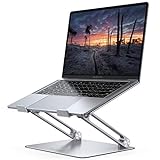
- Wide Compatibility: The laptop stand for desk is compatible with all laptops from 10" up to 17.3", including popular models like MacBook, MacBook Air, MacBook Pro, Surface Laptop, Dell XPS, Google Pixelbook, HP, ASUS, Acer, Chromebook, Alienware, etc.
- Adjustable & Portable Design: The laptop riser can be easily adjusted to comfortable height and angle based on your actual need. Besides, you also can fold the laptop stand up to carry around for travel and business trips or store it in your laptop bag.
- Upgrade Large Base: Made of high-quality aluminum alloy, the larger heavier base greatly improves the stability of the notebook stand. The laptop stand will never shaking, sliding and falling when you type on your laptop with this notebook holder.
- Ergonomic Design: The MacBook air pro stand holder works as a raiser to elevate the laptop screen to your eye level. The office computer stand let you fix posture and relieves neck, shoulder and spinal pain, it's very comfortable for working at home, office and outdoor, make typing more easier.
- Heat Dissipation: The multiple ventilation holes offers better ventilation and more airflow to cool your laptop and prevent from overheating and crashes. Anti-skid silicone and smooth edge can protects your laptop from sliding and scratches.
Why choose it
- Strong fit for B2B, multi-storefront, complex catalogs, and channel-heavy operations.
- Commerce depth without immediately building a completely custom stack.
- Useful for merchants whose needs go beyond a conventional single-store setup.
Limitations
- More complex terminology and configuration than Shopify.
- Costs can rise as sales cross GMV thresholds.
- Theme and design workflows are less beginner-friendly.
- Old claims that BigCommerce has no transaction fees are incomplete after the 2026 payment-provider changes.
Verdict: Choose BigCommerce when catalog, B2B, storefront, or payment-provider requirements justify its complexity. It is excessive for a service business selling one or two products.
10. GoDaddy Website Builder — best for a fast basic business launch
Best for: Local businesses, sole proprietors, users already using GoDaddy domains or email, and owners who want a site online quickly.
GoDaddy combines a simple editor with domains, email, marketing, analytics, SEO, support, and selling tools. It is convenient when bundled services and speed matter more than design depth.
Price snapshot
The supplied current comparison lists:
- Basic: $9.99/month introductory, renewing at $16.99/month. Approximate first-year cost: $119.88; listed second-year renewal: $203.88.
- Premium: $14.99/month introductory, renewing at $29.99/month. Approximate first-year cost: $179.88; listed second-year renewal: $359.88.
- Commerce: $20.99/month introductory, renewing at $34.99/month. Approximate first-year cost: $251.88; listed second-year renewal: $419.88.
GoDaddy’s own pricing page advertises Website Builder from $9.99/month on an annual term. The product page says premium features are free for seven days, while comparative coverage reports a 30-day trial. Resolve that discrepancy during signup rather than assuming either period. See Website Builder details and current pricing.
Recommended Free Tools
The limited free version is not equivalent to a full professional site. Current comparative coverage places ecommerce, payments, and inventory tools on the Commerce plan. GoDaddy has no broad app marketplace comparable to Shopify or Wix.
Verdict: GoDaddy is practical for a simple local-business site that must be assembled quickly, especially if the domain and email are already there. Choose Wix or Squarespace when customization and future extensibility matter more.
Real website-builder costs: first year, renewal, and hidden extras
A headline such as “from $2.99 per month” is not a complete price. Compare the amount charged today, the renewal price, the number of sites covered, and the tools you actually need.
| Platform | Illustrative first-term platform cost | Second-year or renewal information | Costs to investigate |
|---|---|---|---|
| Wix | Light: about $204 annually at $17/month | Universal renewal figure not supplied; check account checkout | Domain after first year, email, higher-tier business features, ecommerce fees |
| Squarespace | Basic: about $192 annually at the quoted $16/month equivalent | Confirm current renewal and billing-cycle price | 2% Basic online transaction fee, domain after first year, email and commerce upgrades |
| Shopify | Basic: $348 annually; Grow $948; Advanced $3,588 | Annual rate shown is the planning baseline; future prices can change | Payment processing, third-party transaction fees, apps, POS Pro, domain |
| WordPress.com | Personal: about $48 annually; Premium: about $96 | At the listed annual rate, Personal would be $48 in year two; verify renewal | Domain after first year, premium themes, plugins, commerce features, separate plans per site |
| Hostinger | Premium: $143.52 paid upfront for 48 months; Unlimited $181.92; Cloud Startup $383.52 | Premium listed renewal is $10.99/month; Unlimited $16.99; Cloud $25.99 | Long-term commitment, storage, sites, email, ecommerce limits, domain renewal |
| Webflow | Basic: approximately $168–$180 annually based on conflicting 2026 references | Check live checkout | Workspace seats, separate Site plan, CMS, bandwidth, localization, add-ons |
| Framer | Basic: about $120 annually; Pro about $360 | Verify current renewal and usage terms | Editors, localization, AI credits, A/B testing, bandwidth and CMS limits |
| Duda | Basic: about $228 annually; Team $348; Agency $624 | Verify renewal; additional sites cost extra on lower tiers | Additional sites, ecommerce, bookings, white-label and export capabilities |
| BigCommerce | Core: $348 annually; Growth $948; Scale $3,588 | GMV can trigger upgrades and overages | Open Payment Provider fees, payment processing, storefronts, GMV thresholds |
| GoDaddy | Basic: about $119.88 introductory; Premium $179.88; Commerce $251.88 | Listed Basic renewal $203.88; Premium $359.88; Commerce $419.88 | Domain, email, commerce plan, premium trial terms, renewal price |
Also budget for sales tax, domain renewal after a promotional first year, professional email, stock media, paid templates, apps, plugins, booking systems, multilingual features, additional editors, and payment processing. A platform can be inexpensive for one site but costly for an agency or a store.
What does “free website” really mean?
Free plans are useful for learning, prototypes, temporary campaigns, and personal experiments. They are usually poor choices for a business whose domain and brand need to look independent.
Common restrictions include:
- A platform subdomain instead of your own domain.
- Platform branding or advertising.
- Limited storage or bandwidth.
- No ecommerce, bookings, or advanced forms.
- Limited analytics and SEO controls.
- Reduced support.
- No professional email.
- Little or no export capability.
TechRadar warns that free plans commonly use branded subdomains and may display platform advertising. Before publishing a free site, ask whether you can connect a domain, remove branding, add analytics, collect leads, and move the site later.
AI website builders: useful accelerator, not an autopilot
AI matters when it saves real work, not merely because a plan has an AI checkbox. Evaluate whether the tool can:
- Generate a coherent site structure rather than unrelated pages.
- Preserve the brand’s voice and terminology.
- Revise one section without unexpectedly changing the rest of the site.
- Create editable layouts rather than a static mockup.
- Generate metadata, alt text, forms, products, or CMS content.
- Produce responsive and accessible output.
- Show usage limits, credits, or add-on charges clearly.
- Let the user undo, audit, and correct changes.
Wix integrates Wix Harmony into the standard platform. Hostinger promotes AI-assisted site creation and content tools. Webflow’s 2026 Workspace changes include AI credits, while Framer’s current plans include AI agents and credits with usage varying by plan. These are workflow features, not guarantees of a finished site.
Free tools Windows power users keep installed
One-click scans. No signup required.
Review every AI-generated page for factual errors, generic copy, unsupported business claims, incorrect legal language, poor alt text, duplicate metadata, inconsistent terminology, and mobile layout problems. AI is most useful for first drafts, page outlines, repetitive edits, and metadata suggestions—not for replacing editorial judgment.
SEO: compare controls, not promises
No builder can guarantee search rankings. Search performance also depends on content quality, information architecture, links, technical implementation, accessibility, and the competitiveness of the query.
Before choosing a platform, confirm that it supports the controls your project needs:
- Editable title tags and meta descriptions.
- Canonical URLs.
- XML sitemap and robots.txt controls.
- Redirects when URLs change.
- Clean or configurable URLs.
- Structured-data or schema controls.
- Image alt text.
- Open Graph and social metadata.
- Blog and CMS support.
- Search-indexing controls.
- International SEO and hreflang support.
- Custom code or schema injection.
- Fast mobile rendering.
- Accessible headings, links, forms, menus, and focus states.
General builders such as Wix and Squarespace provide the common controls most small sites need. WordPress.com is stronger when SEO is part of a large publishing operation and plugins or custom content workflows matter. Webflow provides more structural and code-level control. Shopify and BigCommerce prioritize commerce SEO and product catalogs. The right choice depends on the site’s content model, not on a universal “best for SEO” label.
Best Value

- ✔️[Foldabe & Protable] - Foldable laptop stand for desk & Protable computer stand, It combines the advantages of market brackets, convenient travel laptop stand. Easy to use. Suitable for working at home, office and outdoor, improve comfort.
- ✔️[360°Rotation] - The computer stand with 360° rotating base, 360° rotation connected with the base is more flexible, the computer stand allows you to rotate the laptop to any angle.
- ✔️[Stable & Durable] - The Computer stand is made of one-piece fiber metal material, which is more durable and stable than ordinary aluminum alloy computer stands. The upgraded rotating base makes the stand performance more stable, and the non-slip silicone protects the laptop from sliding.Only supports laptops up to 16 inches.
- ✔️[Ergonmic Desing] - You can freely adjust the height and angle of the laptop stand to keep it at eye level, which helps to reduce the pressure on your body while working. Whether sitting or standing, there is a comfortable angle.
- ✔️[Wide Compatibility] - Our laptop stand is compatible with all laptops from 10-16 inches, such as MacBook Air/Pro, Google PixelBook, Dell XPS, HP, ASUS, Lenovo ThinkPad, Acer, Chromebook and Microsoft Surface, etc. It is an ideal companion for computer workers.
How to choose an ecommerce platform
Ask these questions before selecting a store builder:
- How many products, variants, and inventory locations will you have?
- Do you sell physical products, digital downloads, subscriptions, or memberships?
- How complicated are tax, shipping, discount, and gift-card rules?
- Which payment gateways and card types do you need?
- Are platform transaction fees charged in addition to payment processing?
- Do you need abandoned-cart recovery, POS, marketplace feeds, or social selling?
- Will you need B2B pricing, customer groups, purchase orders, or multiple storefronts?
- Do you need multiple currencies, international tax, or localized sites?
- Can customers filter a large catalog effectively?
- Do you need APIs, a headless storefront, or warehouse integrations?
- Can sales volume automatically move you to a more expensive plan?
Routing is straightforward: use Wix or Squarespace for a small secondary store, compare Hostinger for a budget store after verifying its current plan, choose Shopify for a dedicated growing store, and examine BigCommerce for complex catalog, B2B, or multi-storefront needs. A content-led store may suit WordPress.com Commerce or self-hosted WordPress with WooCommerce, but self-hosting brings maintenance and plugin responsibilities.
Portability and platform lock-in
Hosted builders make infrastructure easy by handling hosting, security, updates, and much of the technical stack. The trade-off is dependence on the vendor’s editor, CMS, database, checkout, forms, booking engine, memberships, analytics, and integrations.
Before committing, ask:
- Can you export HTML, CSS, JavaScript, images, and other media?
- Can blog posts and CMS records be exported in a usable format?
- Can you keep the domain and existing URLs?
- Can you preserve redirects, metadata, structured data, and search history?
- Will forms, ecommerce, bookings, memberships, search, analytics, and checkout survive?
- Does the exported site still work without the platform’s editor or CMS?
Exporting page files is not the same as migrating a working website. A static export may preserve the appearance of a page while losing forms, dynamic collections, checkout, accounts, bookings, search, redirects, and integrations. Webflow explicitly separates its hosted capabilities from what can be exported. Wix and other hosted builders also require careful planning for dynamic features. WordPress-based sites generally offer a more familiar content-migration path, but plugins and themes still need to be replaced or reconfigured when changing hosts.
Ease versus control
The central trade-off is not good versus bad:
- Wix, GoDaddy, and Hostinger reduce setup friction but constrain some advanced workflows.
- Squarespace produces polished results quickly but favors its design system.
- Webflow and Framer allow more sophisticated visual work but require greater design knowledge.
- WordPress.com offers extensibility but introduces ecosystem complexity.
- Duda optimizes for agency operations rather than individual simplicity.
This is why ease and design flexibility should be scored separately. SiteBuilderReport’s comparison describes the familiar pattern: easier builders often offer less customization, while flexible platforms such as Webflow have steeper learning curves.
Accessibility and performance are implementation questions
A builder’s feature list does not prove that the resulting website is accessible or fast. Test the actual template and content you will publish.
Accessibility checklist
- Logical heading hierarchy.
- Keyboard navigation and visible focus states.
- Readable color contrast.
- Meaningful image alt text.
- Proper form labels and useful error messages.
- Descriptive link names.
- Mobile zoom and responsive text.
- Usable menus and dialogs.
- Reduced-motion behavior for animated content.
Performance checklist
Do not repeat claims that one builder is the fastest or best for Core Web Vitals without a controlled test. Results depend on templates, image sizes, fonts, video, third-party scripts, apps, content volume, caching, CDN behavior, location, device, and network. Use identical content, image files, locations, devices, and test conditions if performance is part of your decision.
Which website builder should you choose?
- Need the easiest all-round site? Start with Wix.
- Want the best-looking result with minimal design tweaking? Choose Squarespace.
- Is selling products the main business? Choose Shopify.
- Need B2B, a large catalog, or multiple storefronts? Evaluate BigCommerce.
- Will you publish frequently? Choose WordPress.com.
- Need the lowest introductory cost? Compare Hostinger’s upfront commitment and renewal rate with Wix and Squarespace.
- Need advanced visual control? Choose Webflow.
- Need motion-rich landing pages or a modern portfolio? Choose Framer.
- Build and manage sites for clients? Choose Duda.
- Already use GoDaddy and need a basic site quickly? GoDaddy may be convenient.
Alternatives worth considering
- Weebly: Still relevant for simple sites and some free-plan commerce use cases, but current comparative coverage describes its design and update cadence as dated.
- HubSpot Website Builder: Worth considering when CRM, lead management, and marketing automation matter more than maximum design flexibility.
- Carrd: Excellent for inexpensive one-page sites, but not a general-purpose CMS or serious store platform.
- WooCommerce with self-hosted WordPress: Powerful and extensible, but you separately manage hosting, maintenance, security, updates, and often paid plugins.
- Webnode, Site123, and Strikingly: Reasonable for narrower beginner or one-page projects, but less compelling for the broader use cases covered in the main ranking.
- Custom code or a static-site stack: Better for maximum portability and performance control, but worse for nontechnical owners who need to edit content themselves.
A fair hands-on test protocol
If a review uses the words “tried and tested,” it should actually build and evaluate the platforms using a repeatable process. A fair test would use the same five-page small-business brief on every platform:
Quick wins for a faster PC:
Repair Windows errors before they cause bigger problemsFix Now →Scan for outdated or missing drivers - takes under a minuteDriver Scan →Clear out junk files and repair common Windows errorsFree Scan →- Home, About, Services or Products, Blog or FAQ, and Contact pages.
- Identical copy, logo, images, navigation, calls to action, and domain structure.
- A newsletter signup and one booking or ecommerce workflow where supported.
Record:
- Time to a usable homepage and to a published five-page site.
- Clicks required for common tasks.
- Desktop, tablet, mobile, and intermediate-width behavior.
- Metadata, URL, sitemap, robots, canonical, and redirect controls.
- Form delivery, spam protection, SSL activation, and domain connection.
- Backup, restore, export, and migration behavior.
- Support response quality.
- Actual checkout price, renewal price, required add-ons, and transaction fees.
- Page speed under identical test conditions.
- Accessibility problems in the generated output.
Comparative reviews from TechRadar, Tom’s Guide, WIRED, and SiteBuilderReport describe different methodologies, so their results should not be presented as one interchangeable laboratory test. If a publisher has not performed this process, it should call the article a comparison or evidence-based guide rather than claim independent hands-on testing.
Frequently Asked Questions
What is the best website builder overall in 2026?
Wix is the strongest all-round recommendation for most U.S. beginners and small businesses because it balances ease of use, design flexibility, business tools, AI, SEO controls, and ecommerce. Squarespace may be better for a design-led site, and Shopify is better when ecommerce is the primary operation.
Is it cheaper to use a free website builder?
A free plan can be useful for learning or a temporary project, but it commonly uses a platform subdomain, displays branding, limits storage or analytics, and excludes professional commerce features. A paid plan is normally required for a credible business site with a custom domain.
Is Wix or Squarespace better?
Choose Wix for more free-form editing, broader business tools, and flexibility. Choose Squarespace for polished templates, typography, galleries, and a more controlled design system. Squarespace’s Basic plan also has a 2% online transaction fee, which matters if you sell products.
Should a small store use Shopify or a regular website builder?
Use Shopify when products, inventory, checkout, shipping, payment workflows, POS, or sales channels are central to the business. Wix or Squarespace can be more economical when the store is secondary and contains only a few products.
Which website builder is best for SEO?
There is no universal SEO winner. Compare title and metadata editing, canonical URLs, sitemaps, redirects, structured data, image alt text, indexing controls, content management, international SEO, mobile rendering, and accessibility. Strong content and site architecture matter as much as the builder.
Can I move my website to another platform later?
Sometimes, but exporting page files does not guarantee a complete migration. Dynamic CMS content, forms, checkout, bookings, memberships, analytics, search, redirects, and integrations may need to be rebuilt. Ask about export formats and URL preservation before choosing a hosted platform.
The Bottom Line
For most people, start with Wix. Move to Squarespace when presentation is the priority, Shopify or BigCommerce when commerce operations drive the project, and WordPress.com when publishing is the core business. Hostinger can minimize the introductory bill, but its long upfront term and renewal price deserve scrutiny. Webflow and Framer reward design expertise; Duda rewards agency workflows; GoDaddy rewards speed and convenience.
The Tool Desk
Outbyte Driver Updater FREEFix the driver behind crashes, sound loss and screen glitchesFind Drivers →Outbyte PC Repair FREEClear out junk files and repair common Windows errorsFree Scan →The best choice is the platform whose limitations you can live with after the launch—not the one with the most impressive “starting at” price or the loudest AI claim.
Quick Recap
Product prices and availability are accurate as of the date/time indicated and are subject to change. Any price and availability information displayed on Amazon at the time of purchase will apply.

