
Yes—a valid session cookie can let someone use your signed-in account without entering your password or repeating multi-factor authentication (MFA). Treat it like a temporary credential, but remember it is not your password: the service can expire or revoke a session separately. Here’s what the analogy gets right, where it falls short, and what to do if a session may be exposed.
What a session cookie does
After you sign in, a website commonly gives your browser a session identifier, often stored in a cookie. The browser sends it with later requests, and the service uses it to recognize your authenticated session. That is why you can move between pages without signing in again each time.

The identifier is not necessarily your password or a copy of it. It is a separate piece of information that represents an already-authenticated session. OWASP explains that an established session identifier is temporarily equivalent to the strongest authentication method used to establish that session. In practical terms, possession may be enough to act as you while the session remains valid. OWASP Session Management Cheat Sheet
Can someone log in with my cookies?
If someone obtains a still-valid session cookie, they may be able to hijack that session without repeating the original password-and-MFA sign-in. OWASP notes that a stolen valid session cookie can enable hijacking for the remainder of the session lifetime. OWASP Cookie Theft Mitigation Cheat Sheet
PC Slower Than It Used to Be?
A free scan shows the junk files, broken settings and background clutter dragging Windows down - then fixes them in one click.Free scan · Windows 10 & 11Crashes, No Sound, or Screen Glitches?
Random freezes, missing sound and display glitches usually trace back to one bad driver. Find and replace yours safely.Free scan · under a minute#1 Best Overall
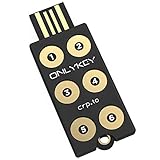
- ✅ PROTECT ONLINE ACCOUNTS – A password manager, two-factor security key, and secure communication token in one, OnlyKey can keep your accounts safe even if your computer or a website is compromised. OnlyKey is open source, verified, and trustworthy.
- ✅ UNIVERSALLY SUPPORTED – Works with all websites including Twitter, Facebook, GitHub, and Google. Onlykey supports multiple methods of two-factor authentication including FIDO2 / U2F, Yubico OTP, TOTP, Challenge-response.
- ✅ PORTABLE PROTECTION – Extremely durable, waterproof, and tamper resistant design allows you to take your OnlyKey with you everywhere.
- ✅ PIN PROTECTED – The PIN used to unlock OnlyKey is entered directly on it. This means that if this device is stolen, data remains secure, after 10 failed attempts to unlock all data is securely erased.
- ✅ EASY LOG IN –No need to remember multiple passwords because by plugging OnlyKey to your computer, it automatically inputs your username and password. It works with Windows, Mac OS, Linux, or Chromebook, just press a button to login securely!
This is why MFA remains important but does not make an issued session token harmless. MFA protects the sign-in process; it does not necessarily challenge someone who is presenting a valid session already accepted by the site. Revoking or expiring the session is what makes that particular token unusable.
Why the password comparison is useful—but incomplete
The analogy is useful because the impact can be similar: a stolen token may give an attacker access to your account. But a session cookie differs from a password in several ways:
Rank #2

- POWERFUL SECURITY KEY: The Security Key C NFC is the essential physical passkey for protecting your digital life from phishing attacks. It ensures only you can access your accounts.
- WORKS WITH 1000+ ACCOUNTS: Compatible with Google, Microsoft, and Apple. A single Security Key C NFC secures 100 of your favorite accounts, including email, password managers, and more.
- FAST & CONVENIENT LOGIN: Plug in your Security Key C NFC via USB-C and tap it, or tap it against your phone (NFC) to authenticate. No batteries, no internet connection, and no extra fees required.
- TRUSTED PASSKEY TECHNOLOGY: Uses the latest passkey standards (FIDO2/WebAuthn & FIDO U2F) but does not support One-Time Passwords. For complex needs, check out the YubiKey 5 Series.
- BUILT TO LAST: Made from tough, waterproof, and crush-resistant materials. Manufactured in Sweden and programmed in the USA with the highest security standards.
- It represents a session, not your underlying secret. A service can invalidate that session without changing your password.
- Its usefulness is time-limited. It stops working when the service expires or revokes it, though the duration varies by site.
- It may avoid a fresh login challenge. The attacker may not need your password or MFA code while the session remains accepted.
For websites, identifier unpredictability matters too. MDN summarizes OWASP guidance recommending at least 64 bits of entropy for session identifiers. That figure concerns how difficult a token is to guess; it is not a recommendation about password length. MDN: HTTP cookies
What cookie protections do—and do not do
Cookie attributes reduce particular risks, but none makes a session token safe against every way it could be exposed. The protections below are primarily implementation choices for the website.
Do these 3 things before closing this tab:
1Scan for outdated or missing drivers - takes under a minute2Repair Windows errors before they cause bigger problems3Fix the driver behind crashes, sound loss and screen glitchesRank #3

- Requires 3 "AAA" batteries (included)
- Unit auto-locks for 30 minutes after 5 consecutive incorrect PINs
| Protection | What it helps address | Important limit |
|---|---|---|
Secure with HTTPS |
Restricts the browser to sending the cookie over secure connections, helping protect against exposure over unencrypted transport. | Does not protect a token copied from an infected or compromised device. |
HttpOnly |
Prevents ordinary page scripts from reading the cookie value directly. | Injected script may still make authenticated requests from the browser, which attaches cookies automatically. |
SameSite |
Restricts some cross-site cookie sending and can help with certain cross-site request forgery (CSRF) scenarios. | It is not a general anti-theft or anti-cross-site-scripting (XSS) defense, nor a universal substitute for CSRF protections. |
| Short idle and absolute expiration, plus revocation | Limits how long a copied token can remain useful. | The website must enforce the limits and balance security against the time users need to complete tasks. |
| Reauthentication for sensitive actions | Adds a fresh check before high-impact account changes. | It does not undo actions an attacker has already taken. |
| Device- or session-bound protections and anomaly detection | May make reuse from an unfamiliar context harder to accept or help flag suspicious activity, depending on design. | Signals can be missing or unreliable; an IP address or browser fingerprint alone is not proof of account theft. |
OWASP and MDN describe cookie attributes and session-management controls in more detail. OWASP Session Management Cheat Sheet · MDN: HTTP cookies
How website operators can reduce session-cookie risk
- Serve the application over HTTPS and set
Secureon session cookies. - Set
HttpOnlyunless client-side code genuinely needs access to the cookie value. Preventing direct reads is useful, but it does not stop every action malicious script could initiate. - Choose
SameSite=StrictorSameSite=Laxwhere the application’s flows allow it, and retain appropriate CSRF protections rather than relying on SameSite as a complete replacement. - Limit cookie scope with appropriate
DomainandPathsettings. MDN describes the__Host-prefix for host-only cookies that useSecure, omitDomain, and setPath=/. - Expire sessions when they are no longer needed, using idle and absolute limits suited to the account’s risk and the task users must complete.
- Require fresh authentication before sensitive changes, and provide practical controls for reviewing or revoking sessions.
OWASP lists common idle-timeout examples of 2–5 minutes for high-value applications and 15–30 minutes for low-risk applications. These are guidance ranges, not mandatory settings for every site; the appropriate limit depends on application criticality and usability. OWASP Session Management Cheat Sheet
Independent reader supportYour contribution helps us test, update, and keep practical guides available for everyone.What account holders can do
You generally cannot inspect or configure a service’s session-cookie protections yourself. You can reduce common opportunities for compromise by keeping your browser and device updated and avoiding unknown software or browser extensions. These are general hygiene measures, not guarantees against theft.
If you suspect someone has accessed your account, use the service’s controls to revoke other sessions or sign out all devices if available, then review account activity. The exact menu names and the effect of a password change on existing sessions vary by provider, so do not assume that changing your password alone signs every device out. Change it if password compromise is also plausible, enable stronger sign-in protection if available, and contact the provider for financial or otherwise sensitive accounts. OWASP identifies reauthentication as the most reliable verification when hijacking is suspected. OWASP Cookie Theft Mitigation Cheat Sheet
Quick Recap
Best Value

- FIDO-ONLY FUNCTIONALITY: Supports FIDO2 (passkeys) and FIDO U2F protocols for passwordless and second-factor authentication. Does not support OTP, TOTP, Smart Card (PIV), or other advanced features - upgrade to YubiKey 5 Series for extended functionality
- SECURE AND CONVENIENT: Passwordless MFA login with the YubiKey Bio authenticator and biometric information using a fingerprint, with a PIN as a fallback. Simply plug in via USB and use your fingerprint to authenticate
- DEVICE & OS COMPATIBILITY: Compatible with Windows, macOS, ChromeOS, and Linux. Works seamlessly with supported services like Google and Microsoft accounts, and major password managers. See the full compatibility list at "Works With YubiKey"
- DURABLE & RELIABLE: Resistant to tampering, water, and crushing. No batteries or network connectivity required, offering dependable authentication without any downtime. Securely manufactured in USA & Sweden
- Yubico Authenticator App - Fingerprint enrollment, passkey management and PIN configuration available via the app app - Upgrade to YubiKey 5 Series to generate one-time-passwords (OTP) via Yubico Authenticator and for advanced compatibility (OATH, PIV)
Product prices and availability are accurate as of the date/time indicated and are subject to change. Any price and availability information displayed on Amazon at the time of purchase will apply.

