
For extra space that can run most Xbox Series X|S-optimized games directly, choose a compatible expansion card. A USB external HDD or SSD is better for a larger game library, transferring games, and playing supported Xbox One and earlier titles—but most optimized games stored on USB must be moved to the console’s internal SSD or an expansion card before you can play them.
Expansion card vs. USB drive: the key difference
The two options add storage, but they are not interchangeable for playing games. A compatible Xbox Series X|S expansion card connects through the console’s dedicated Storage Expansion port and is designed to run optimized games. A USB external drive can store games and run supported older titles, but it generally serves as a library or transfer drive for optimized games.
| What matters | Xbox Series X|S expansion card | USB external HDD or SSD |
|---|---|---|
| Run most optimized Series X|S games from added storage | Yes, with compatible cards. Microsoft says the Seagate card matches internal SSD performance; WD describes the C50 as supporting Xbox Velocity Architecture. | Generally no. Move most optimized games to the internal SSD or an expansion card to play them. |
| Play supported Xbox One and earlier games directly | Yes. Xbox Wire says expansion cards can also be used like external storage for backward-compatible games. | Yes, for supported titles. |
| Connection | Console’s dedicated Storage Expansion port | USB 3.0 or newer; Seagate specifies at least 128 GB. |
| Best suited to | Extra install space with direct play for optimized games | Bulk storage, a game library, transfers, and compatible older games |
Sources: Xbox Wire on Seagate expansion cards, Seagate’s USB-drive guidance, Xbox’s technology glossary, and WD’s C50 data sheet.
Can you play Series X|S games from an external hard drive?
You can store Series X|S-optimized games on a USB drive, but most need to be moved to the internal SSD or a compatible expansion card to launch. The Xbox glossary distinguishes the internal SSD or expansion card as the storage for optimized games, while USB drives can be used with previous-generation titles. Individual game behavior can vary, so check a game’s storage and play requirements if you are unsure.
Free tools Windows power users keep installed
One-click scans. No signup required.
#1 Best Overall
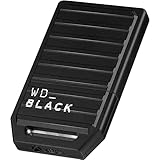
- OFFICIALLY LICENSED STORAGE FOR XBOX. Play effortlessly with full Xbox integration and enjoy gaming experiences that adhere fully to Microsoft’s quality standards.
- SPACE FOR MASSIVE GAMES. With up to 2TB[1] of storage, you have plenty of room to grow your game library and explore massive worlds.
- SUPERSPEED NVMe CORE. Revolutionize your gaming experience with reduced wait times, fast responses, and full immersion.
- OPTIMIZED FOR XBOX. Xbox Velocity Architecture unlocks the full potential of the WD_BLACK C50, allowing it to achieve blazing-fast performance and seamless, high-speed access to your favorite games.
- QUICK RESUME SUPPORT. The storage expansion card seamlessly integrates with your console's Quick Resume, enabling instant transition between multiple suspended games — so you can pick up exactly where you left off without delay.
Supported Xbox One and earlier games can be played directly from a compatible USB drive. Xbox hardware leader Jason Ronald described moving an existing compatible USB 3.1 drive from Xbox One to Series X|S and playing immediately; that guidance concerns supported older games, not a promise that optimized Series X|S games can launch from USB. See the Xbox Wire podcast transcript.
When an expansion card makes sense
Choose an expansion card if you want added capacity for optimized games without repeatedly transferring them to the internal drive. Microsoft says the Seagate Storage Expansion Card maintains internal SSD performance. Its 2021 announcement described the card as matching the internal drive’s sustained performance and gave 2.4 GB/s as the custom internal SSD’s raw I/O throughput. That is a platform figure from Microsoft, not an independent comparison of retail cards with USB drives.
Two examples documented by the manufacturers are the Seagate Storage Expansion Card for Xbox Series X|S and the WD_BLACK C50 Expansion Card for Xbox. Microsoft’s 2021 announcement named 512 GB and 2 TB Seagate versions; Western Digital’s data sheet lists the C50 at up to 2 TB. Those are product references, not confirmation of current stock, regional availability, or the complete market selection.
Microsoft’s Seagate Storage Expansion Card product page describes its performance, while WD’s C50 data sheet identifies its support for Xbox Velocity Architecture. Check the listing for your region to confirm the exact model and capacity.
Rank #2

- EFFORTLESS XBOX INTEGRATION. Officially licensed for Xbox Series X|S consoles.
- ROOM FOR MORE GAMES. Up to 2TB(1) of storage gives you space to grow your library by up to 50(4) more games.
- NVME SPEED YOU CAN FEEL. Low-latency performance matches Xbox Velocity Architecture, so games play directly from the card.
- QUICK RESUME READY. Instantly switch between multiple suspended games without losing progress or waiting.
- XBOX GAME PASS ULTIMATE. Enjoy a 1-month trial with access to hundreds of games across console, PC, and cloud(2).
When a USB external drive makes sense
Choose USB storage if you want a broader library drive, need a place to keep games between play sessions, or mainly play supported Xbox One and earlier titles. Seagate’s support guidance calls for USB 3.0 or newer and at least 128 GB. Both HDDs and SSDs can fill this role; the cited sources do not establish a precise price or performance ranking between them.
For most optimized games, USB storage adds capacity but not direct-play space. You will need to manage transfers between the external drive and the internal SSD or an expansion card when you want to play those titles.
How to choose
- Want to play optimized games from added storage? Get a compatible Xbox Series X|S expansion card.
- Want a large library or storage for compatible older games? Use a USB 3.0-or-newer external drive with at least 128 GB.
- Need both? Use an expansion card for optimized games you want ready to play and a USB drive for library storage or supported older titles.
- Comparing products? Check capacity, current total price, and convenience. Expansion cards avoid the transfer step for optimized games; USB drives generally do not.
Setting up storage
Expansion card
- Insert the compatible card into the console’s dedicated Storage Expansion port.
- Select it as an install destination when managing where games are stored. Microsoft says games can be played from the card or moved and copied between storage locations.
USB external drive
- Connect a USB drive that meets Seagate’s stated minimum of USB 3.0 and 128 GB.
- Use it to store games or play supported Xbox One and earlier titles.
- When you want to play most optimized Series X|S games stored there, move them to the internal SSD or a compatible expansion card.
For USB compatibility and optimized-game transfer guidance, see Seagate Support and Microsoft’s Xbox glossary.
Quick Recap
Product prices and availability are accurate as of the date/time indicated and are subject to change. Any price and availability information displayed on Amazon at the time of purchase will apply.
Quick wins for a faster PC:
Clear out junk files and repair common Windows errorsFree Scan →Scan for outdated or missing drivers - takes under a minuteDriver Scan →
