
Quick wins for a faster PC:
Clear out junk files and repair common Windows errorsFree Scan →Scan for outdated or missing drivers - takes under a minuteDriver Scan →For a home where one centrally placed router provides reliable coverage, a single Wi‑Fi 7 router is usually the simpler choice. Choose mesh when distance, walls, floors, or an awkward layout leave persistent weak areas—and you can place additional nodes where they receive a useful connection. Mesh adds access points; it does not automatically make Wi‑Fi faster.
Wi‑Fi 7 and mesh solve different problems
Wi‑Fi 7 describes a wireless networking generation and its capabilities. Mesh describes a way to distribute access points around a home. A Wi‑Fi 7 mesh kit combines both, but a single Wi‑Fi 7 router can also provide Wi‑Fi 7 features. The topology decision is about where coverage is needed; the Wi‑Fi generation is about what compatible devices and equipment can support.
That distinction matters when shopping: extra nodes may improve service in a weak area, but add little if your existing router already covers the rooms you use. Similarly, a Wi‑Fi 7 label does not mean every phone, computer, or smart device will use all Wi‑Fi 7 features.
When a single Wi‑Fi 7 router makes more sense
- Your router can sit in a reasonably central, open location and already reaches the rooms where you work, stream, or play.
- You do not have persistent dead zones that interfere with the activities you care about.
- You prefer one device to configure and maintain, rather than a kit of multiple access points.
- Your broadband plan or devices, rather than Wi‑Fi coverage, are the likely limit on performance.
A single router avoids the need to choose node locations and coordinate additional access points. It is not inherently faster than mesh in every home; its advantage is simplicity when one access point is enough.
#1 Best Overall
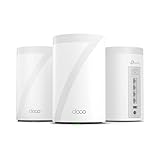
- 𝐅𝐞𝐚𝐭𝐮𝐫𝐞-𝐑𝐢𝐜𝐡 𝐖𝐢-𝐅𝐢 𝐁𝐮𝐢𝐥𝐭 𝐭𝐨 𝐋𝐚𝐬𝐭: Get expansive whole-home coverage, fast Wi-Fi 7 speeds, and a future-ready 10G WAN/LAN port that stays ahead as your network grows. Ideal for both everyday users and performance-focused homeowners.
- 𝗩𝗮𝘀𝘁 𝗠𝗲𝘀𝗵 𝗖𝗼𝘃𝗲𝗿𝗮𝗴𝗲 & 𝗗𝗲𝘃𝗶𝗰𝗲 𝗖𝗮𝗽𝗮𝗰𝗶𝘁𝘆: The 3-pack mesh system covers up to a vast 7,600 sq.ft. and supports over 200 devices without compromising performance, ensuring seamless connectivity.
- 𝐁𝐄𝟏𝟎𝟎𝟎𝟎 𝐓𝐫𝐢-𝐁𝐚𝐧𝐝 𝐖𝐢-𝐅𝐢 𝟕 𝐒𝐩𝐞𝐞𝐝𝐬: Delivers up to 5,188 Mbps (6 GHz), 4,324 Mbps (5 GHz), and 574 Mbps (2.4 GHz) speeds for 4K/8K streaming, AR/VR gaming, and more. Performance varies by conditions, distance to devices, & obstacles such as walls.
- 𝗙𝗼𝘂𝗿 𝟮.𝟱𝗚 𝗪𝗔𝗡/𝗟𝗔𝗡 𝗣𝗼𝗿𝘁𝘀: Includes four 2.5G WAN/LAN ports and a USB 3.0 port, making it an ideal choice for future-proofing your home network.
- 𝐒𝐢𝐦𝐮𝐥𝐭𝐚𝐧𝐞𝐨𝐮𝐬 𝐖𝐢𝐫𝐞𝐝 & 𝐖𝐢𝐫𝐞𝐥𝐞𝐬𝐬 𝐁𝐚𝐜𝐤𝐡𝐚𝐮𝐥: Tri-band Wi-Fi 7 and 10G Ethernet work together to balance traffic between Deco units for faster, more stable whole-home coverage. Backhaul requires at least two Deco units.
When Wi‑Fi 7 mesh is worth considering
- Signal remains unreliable in rooms far from the router or across floors.
- Dense walls, a long or irregular floor plan, or an awkward router location prevent one access point from serving the areas you use.
- You can place nodes in intermediate locations where they still have a solid connection to the main unit.
- You want to use wired Ethernet between nodes, or have a mesh system whose wireless backhaul suits your layout.
Do not choose node count from home size alone. Floor area does not reveal how walls, floors, interference, and node placement will affect the result. An extra node placed where it receives a weak signal may not solve the far room.
What to compare before choosing a mesh kit or router
Coverage and placement
Identify the rooms where the connection actually fails and consider where the main unit and any extra nodes can go. Coverage claims in square feet are manufacturer estimates, not guarantees for a specific floor plan. For example, TP-Link advertises coverage of up to 9,600 sq. ft. for the Deco BE95; that figure is a vendor claim, not a prediction for every home (TP-Link Deco BE95).
Rank #2

- 𝐃𝐞𝐜𝐨 𝟕 𝐒𝐮𝐩𝐞𝐫𝐜𝐡𝐚𝐫𝐠𝐞𝐝 𝐰𝐢𝐭𝐡 𝟒-𝐒𝐭𝐫𝐞𝐚𝐦 𝐁𝐄𝟓𝟎𝟎𝟎 𝐃𝐮𝐚𝐥-𝐁𝐚𝐧𝐝 𝐖𝐢𝐅𝐢 𝟕: Delivers up to 4324 Mbps (5 GHz) and 688 Mbps (2.4 GHz) speeds for 4K/8K streaming, AR/VR gaming, and more◇. Performance varies by conditions, distance to devices, & obstacles such as walls.
- 𝐒𝐞𝐚𝐦𝐥𝐞𝐬𝐬 𝐖𝐡𝐨𝐥𝐞-𝐇𝐨𝐦𝐞 𝐂𝐨𝐯𝐞𝐫𝐚𝐠𝐞: Covers up to 6,600 sq. ft. for over 150 devices with the option to expand anytime by adding another Deco router. All Deco routers work together.
- 𝐒𝐢𝐦𝐮𝐥𝐭𝐚𝐧𝐞𝐨𝐮𝐬 𝐖𝐢𝐫𝐞𝐝 & 𝐖𝐢𝐫𝐞𝐥𝐞𝐬𝐬 𝐁𝐚𝐜𝐤𝐡𝐚𝐮𝐥: Wi-Fi 7 and 2.5G Ethernet work together to balance traffic between Deco units for faster, more stable whole-home coverage. Backhaul requires at least two Deco units.§
- 𝐄𝐚𝐬𝐲 𝐒𝐞𝐭𝐮𝐩 & 𝐌𝐚𝐧𝐚𝐠𝐞𝐦𝐞𝐧𝐭: Set up and control your network in minutes with the Deco App. Keep your WiFi performing at its best by keeping the firmware updated through the App. All Wi-Fi routers require a separate modem. ⌂
- 𝐎𝐮𝐫 𝐂𝐲𝐛𝐞𝐫𝐬𝐞𝐜𝐮𝐫𝐢𝐭𝐲 𝐂𝐨𝐦𝐦𝐢𝐭𝐦𝐞𝐧𝐭 - TP-Link is a signatory of the U.S. Cybersecurity and Infrastructure Security Agency’s (CISA) Secure-by-Design pledge. This device is designed, built, and maintained, with advanced security as a core requirement.
Backhaul between nodes
Backhaul is the connection carrying traffic between mesh nodes. Ethernet can provide a wired link where cable runs are practical; wireless backhaul shares the radio environment. Check whether the system supports wired backhaul and whether its Ethernet ports suit your network. A node still needs a useful connection to the rest of the system.
Clients and Wi‑Fi 7 features
Check which of your devices support Wi‑Fi 7, 6 GHz, and Multi-Link Operation (MLO). The router alone cannot confer those client capabilities. TP-Link notes that clients need relevant Wi‑Fi 7 support for its advertised simultaneous-band maximum on the Deco BE11000 (TP-Link Deco BE11000).
Rank #3

- WHOLE-HOME COVERAGE WITH NO DEAD ZONES: The router plus satellites create a seamless mesh system that blanket up to 6,000 sq ft in fast, reliable WiFi from the front door to the backyard and basement to rooftop, link up to 70 devices on one network
- EVERYONE ONLINE AT ONCE, NO SLOWDOWNS: Dual-Band technology with Enhanced Backhaul helps deliver faster WiFi across your home so WiFi stays fast on every device simultaneously
- NEXT-GEN WIFI 7 SPEEDS: Up to 5 Gbps, 2.4X faster than WiFi 6, for 8K streaming, gaming, VR & video calls. Your phones, laptops and TVs all connect, including WiFi 6 and WiFi 5. Real-world speeds vary depending on connected devices and internet plan
- EASY SET UP WITH THE ORBI APP: Guided step-by-step setup gets your mesh network running fast, then manage devices and guest WiFi from anywhere
- WORKS WITH ANY INTERNET PROVIDER: Compatible with cable or fiber Internet Service Provider equipment and ready for plans up to 2.5 Gbps. Simply connect Orbi to your existing modem for whole-home WiFi
MLO can use multiple frequency bands under supported implementations, but it is not a universal speed multiplier. In a 2026 residential field trial, the Wireless Broadband Alliance reported up to doubled aggregate throughput under heavy 6 GHz co-channel interference, 35–48% lower application-layer latency, and up to 40% lower MAC-layer jitter. The trial used a commercially available tri-band Wi‑Fi 7 access point in a 4,500-square-foot single-family unit and a client using Intel BE200 silicon with Enhanced Multi-Link Single Radio architecture. Those are trial results under described conditions, not expected gains for every home, device, or mesh kit (Wireless Broadband Alliance trial announcement, 26 February 2026).
Internet service and ports
A router’s advertised combined Wi‑Fi rate is not the same as a device’s measured connection speed or your broadband speed. Compare WAN and LAN port capabilities with your internet plan and wired devices; a high advertised wireless rate cannot make a slower internet plan faster.
Rank #4

- OUR MOST AFFORDABLE WI-FI 7 ROUTER - eero 7 helps you future-proof your network and make the most of Wi-Fi 7 performance starting today.
- SAY GOODBYE TO DEAD SPOTS - eero 7 minimizes network disruptions to help ensure you have fast, reliable wifi in every room of your home.
- FULL SPEED AHEAD - Support for internet plans up to 2.5 Gbps with two auto-sensing 2.5 GbE ports and wireless speeds up to 1.8 Gbps.
- HIGHLY CONNECTED - Three eero 7s support 120+ devices and 6,000 sq. ft. of coverage, so there’s plenty of reliable Wi-Fi 7 performance to go around.
- BACKWARD COMPATIBLE - eero 7 is backward compatible with all previous generations of eero and compatible with eero Built-in on select Amazon Echo devices.
Cost and management
Compare the full mesh kit cost with a single router, and check whether future expansion requires nodes from the same ecosystem or model range. Consider app dependence and the management options you actually need. If one router already solves your coverage problem, extra nodes add cost and setup without addressing a real gap.
Independent reader supportYour contribution helps us test, update, and keep practical guides available for everyone.What product specifications can—and cannot—tell you
Official product pages can establish advertised features and configuration, but their rates and coverage claims are not independent comparisons of real-world performance.
What’s actually slowing this PC down?
Pick the symptom - the matching free tool is one click away.
Quick Recap
Best Value

- 𝐍𝐞𝐱𝐭-𝐆𝐞𝐧 𝐖𝐢-𝐅𝐢 𝟕 𝐰𝐢𝐭𝐡 𝟒-𝐒𝐭𝐫𝐞𝐚𝐦 𝐃𝐮𝐚𝐥-𝐁𝐚𝐧𝐝 𝐮𝐩 𝐭𝐨 𝟑.𝟔 𝐆𝐛𝐩𝐬 - Designed with the latest Wi-Fi 7 technology, featuring Multi-Link Operation (MLO), Multi-RUs, and 4K-QAM, The Deco 7 BE23 delivers full speeds of up to 2882 Mbps on the 5GHz band, 688 Mbps on the 2.4GHz band with 4 streams and achieve optimized performance on latest WiFi 7 laptops and devices, like the iPhone 16 Pro, and Samsung Galaxy S24 Ultra.
- 𝐖𝐢𝐝𝐞 𝐂𝐨𝐯𝐞𝐫𝐚𝐠𝐞 𝐰𝐢𝐭𝐡 𝐒𝐭𝐫𝐨𝐧𝐠 𝐂𝐨𝐧𝐧𝐞𝐜𝐭𝐢𝐨𝐧 - Enjoy seamless max Wi-Fi coverage up to 6,500 sq. ft (3-Pack) and 150 devices without compromising performance. 4x high-gain antennas per node and 4x high-power FEMs deliver far-reaching, reliable signals for remote workers, gamers, students, and more.
- 𝐔𝐥𝐭𝐫𝐚-𝐅𝐚𝐬𝐭 𝟐.𝟓 𝐆𝐛𝐩𝐬 𝐖𝐢𝐫𝐞𝐝 𝐏𝐞𝐫𝐟𝐨𝐫𝐦𝐚𝐧𝐜𝐞 - Each Deco 7 BE23 unit is equipped with two 2.5 Gbps WAN/LAN ports, offering warp-speed connectivity for high-performance wired devices. Integrate with a multi-gig modem for gigplus internet.
- 𝐎𝐮𝐫 𝐂𝐲𝐛𝐞𝐫𝐬𝐞𝐜𝐮𝐫𝐢𝐭𝐲 𝐂𝐨𝐦𝐦𝐢𝐭𝐦𝐞𝐧𝐭 - TP-Link is a signatory of the U.S. Cybersecurity and Infrastructure Security Agency’s (CISA) Secure-by-Design pledge. This device is designed, built, and maintained, with advanced security as a core requirement.
- 𝐒𝐭𝐫𝐨𝐧𝐠𝐞𝐫, 𝐌𝐨𝐫𝐞 𝐑𝐞𝐥𝐢𝐚𝐛𝐥𝐞 𝐁𝐚𝐜𝐤𝐡𝐚𝐮𝐥 - The Deco 7 BE23 enhances stability with simultaneous wireless and wired backhaul, leveraging Wi-Fi 7 MLO for stronger, more stable connections.
| Example | What the manufacturer or specification page says | How to interpret it |
|---|---|---|
| TP-Link Deco BE95 | BE33000 quad-band Wi‑Fi 7 mesh system; optional Ethernet backhaul; coverage advertised up to 9,600 sq. ft. | The area is a vendor claim, not guaranteed reach in a particular home. |
| TP-Link Deco BE11000 | Tri-band Wi‑Fi 7 mesh; page says Wi‑Fi 7 clients need MLO and 6 GHz support for the stated simultaneous-band maximum. | The page’s coverage figures conflict between text and visuals; verify the current regional kit and SKU rather than relying on one exact area. |
| TP-Link Deco WB7200 / Deco 7 BE3600 | Dual-band Wi‑Fi 7 mesh; coverage stated as up to 4,500 sq. ft. for a two-pack; relevant client support required for Wi‑Fi 7 features. | The coverage is the manufacturer’s stated figure for a two-pack, not a floor-plan guarantee. |
| Ubiquiti UniFi U7 Mesh | Wi‑Fi 7 managed access point with 2.4 and 5 GHz radios, 2.5 GbE uplink, PoE, and an advertised 1,500 sq. ft. coverage area. | This is a managed access point, not a like-for-like simple consumer router kit; the stated area is advertised coverage. |
A practical way to decide
- Map the problem: note the rooms and activities affected by weak or unreliable Wi‑Fi, rather than starting with a target device count.
- Check the single-router option: if a well-placed router already serves those rooms reliably, favor the simpler setup.
- Plan node locations: if gaps persist, identify intermediate places for mesh nodes that can maintain a useful link to the main unit.
- Compare backhaul: determine whether Ethernet is available between locations and check the kit’s wired-backhaul support and port speeds.
- Match features to devices and service: check client support for Wi‑Fi 7 features such as 6 GHz and MLO, and compare router ports with your broadband plan.
- Weigh the whole setup: compare the complete mesh kit and its management requirements with the cost and complexity of one router.
Product prices and availability are accurate as of the date/time indicated and are subject to change. Any price and availability information displayed on Amazon at the time of purchase will apply.

