
Power-factor correction is usually more useful in industrial facilities because motors, transformers, and other inductive equipment can draw substantial reactive power. Capacitors installed near those loads supply reactive power locally, reducing the reactive current flowing through upstream distribution equipment. Depending on the tariff and the facility’s measured load profile, this can reduce power-factor or reactive-demand charges and free capacity in feeders and transformers.
That does not mean every industrial site will save money, or that one universal correction device fits every plant. The right approach depends on how loads operate, the electrical system, utility billing, and harmonic conditions.
Why industrial loads can benefit from power-factor correction
Power factor describes the relationship between working power, measured in kilowatts (kW), and apparent power, measured in kilovolt-amperes (kVA). Inductive equipment such as motors and transformers draws reactive power to sustain magnetic fields as well as the real power used to perform work. A low power factor means more current is needed from the supply for a given amount of working power.
Capacitors can provide reactive power close to the inductive load. This offsets some of the reactive demand locally, reducing the reactive current that must travel through upstream cables, transformers, and other distribution equipment. The load still performs its real work; correction does not reduce the kW required for that work. Eaton explains the industrial context and basic principle in its power-factor overview.
What’s actually slowing this PC down?
Pick the symptom - the matching free tool is one click away.
#1 Best Overall

- 200 AMP Surge Protection: Specifically designed for homes with 200 AMP electrical service, offering robust protection against power surges and voltage spikes.
- Energy Savings: Improves power factor and reduces wasted energy, leading to lower electricity bills and increased efficiency.
- Durable & Reliable: Built with industrial-grade materials, ensuring long-lasting protection for all connected devices and appliances.
- Comprehensive Protection with Warranty: Protects your home or office from electrical surges caused by lightning, power outages, and grid disturbances. Get a Fifteen (15) year comprehensive Warranty.
- Easy Installation: Can be easily installed by a licensed electrician directly into your main electrical panel for seamless protection.
Industrial sites are a natural setting for this approach because they often have multiple inductive loads and their own distribution equipment. Whether correction lowers a bill depends on the utility’s tariff: some billing structures penalize low power factor or reactive demand, while others may not produce meaningful savings. The facility’s load profile and tariff need to be evaluated together.
Choose a correction approach to match the load
“Power-factor correction device” can refer to several arrangements, not one standard box. The appropriate choice depends especially on whether the reactive load is steady or changes substantially over time.
Rank #2

- WHOLE-HOUSE ELECTRICAL STABILITY Designed to support electrical stability in residential systems with 50A to 200A service panels.
- POWER FACTOR CORRECTION TECHNOLOGY Helps improve electrical efficiency by optimizing reactive power management inside the system.
- ELECTRICAL STABILITY SUPPORT Designed to support electrical stability and power factor performance in residential electrical systems.
- SUPPORTS HIGH-DEMAND APPLIANCES Designed to support electrical stability for HVAC systems, dryers, refrigerators, water heaters, and other compatible high-demand household equipment.
- INDUSTRIAL GRADE CONSTRUCTION Built using durable internal components engineered for long-term residential use.
| Approach | Where it can fit | Trade-offs to assess |
|---|---|---|
| Individual load capacitors | Selected loads, often motors, where local correction is appropriate. | Can correct near the load and reduce current in its supply path, but adds installation and protection requirements. Motor-specific limits must be checked. |
| Fixed capacitor bank | A relatively constant reactive load. | Can be a straightforward option, but provides less flexibility if demand falls. |
| Automatically switched bank | A feeder or facility whose reactive demand varies. | Switches compensation as demand changes and can help avoid over-capacitance when load is light; controller, switching, and equipment costs are part of the decision. |
| Combination | A larger plant with different load groups or operating patterns. | Can address distinct load conditions, but requires a coordinated design. |
An automatically switched low-voltage capacitor bank is industrial switchgear selected for a designed installation, not a casual plug-in product. IEC 61921:2017 covers low-voltage AC shunt capacitor banks for power-factor correction, including banks that may include switching and controlgear; the IEC catalog lists a stability date of 2026. Eaton describes its AutoVAR 600 automatic capacitor bank as an example for varying low-voltage facility loads. These references establish equipment types, not that a particular product is suitable for a particular site.
What engineers need to evaluate before sizing or placing equipment
A generic kVAR recommendation cannot be made responsibly from the title or a single power-factor reading. Sizing and placement depend on the operating conditions of the facility and the electrical system. Eaton’s plant-engineering guide identifies load type, load constancy, available system capacity, motor starting, and utility billing among the design variables; Schneider Electric’s Electrical Installation Guide section on power-factor correction discusses equipment choices, placement, compensation, and harmonics.
Do these 3 things before closing this tab:
1Clear out junk files and repair common Windows errors2Fix the driver behind crashes, sound loss and screen glitches3Repair Windows errors before they cause bigger problemsRank #3
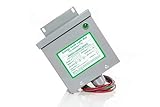
- Reduced energy demand (recycles reactive power)
- Surge protection (for your entire home)
- Increased heat dissipation (extends life of appliances)
- Investment return 8-25% Guaranteed
- 5- year unconditional warranty on Dryer Unit
- Load type and location: Identify which equipment creates reactive demand and whether local, feeder-level, or facility-level correction is appropriate.
- Load variability: Establish how demand changes across shifts, production cycles, and idle periods. A fixed amount of capacitance may not suit a facility whose demand varies widely.
- System capacity and motor starting: Review the feeder, transformer, and starting method as part of the design, rather than treating correction as an isolated add-on.
- Motor-terminal limits: For capacitors connected at motor terminals, check manufacturer data and do not exceed the permitted kVAR. Eaton warns that excessive correction can cause motor self-excitation.
- Tariff and billing: Confirm how the utility calculates charges and whether power factor or reactive demand affects the bill.
- Harmonics: Assess the harmonic environment and potential resonance risk before installing capacitors. A plain capacitor bank should not be represented as a cure for harmonic distortion; filter or detuned designs require system-specific analysis.
- Installation and lifecycle: Compare installed cost, switching and protection needs, maintenance, and how the correction behaves when the facility is lightly loaded.
Capacitor banks are electrical switchgear. Their voltage and kVAR rating, switching, protection, harmonic compatibility, and installation must be designed for the facility and applicable local requirements by qualified personnel.
Independent reader supportYour contribution helps us test, update, and keep practical guides available for everyone.Why the industrial case differs from plug-in residential claims
Industrial correction can matter because a facility may face power-factor or reactive-demand charges and may benefit from reducing reactive current through its own distribution system. Those conditions are not the same as the typical household billing relationship. NIST explains that reducing line current with a residential capacitor-type device does not by itself lower a typical household electricity bill: power factor rises correspondingly, so the billing relationship does not yield the claimed savings. That distinction is not evidence against industrial correction, where tariffs and distribution conditions can differ.
Rank #4
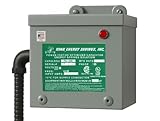
- 200 AMP Surge Protection: Specifically designed for homes with 200 AMP electrical service, offering robust protection against power surges and voltage spikes.
- Improves power factor and reduces wasted energy, leading to lower electricity bills and increased efficiency.
- Durable & Reliable: Built with industrial-grade materials, ensuring long-lasting protection for all connected devices and appliances.
- Comprehensive Protection with Warranty: Protects your home or office from electrical surges caused by lightning, power outages, and grid disturbances. Get a Fifteen (15) year comprehensive Warranty.
- Easy Installation: Can be easily installed by a licensed electrician directly into your main electrical panel for seamless protection.
Are savings guaranteed?
No. A plant’s bill, tariff, operating profile, equipment cost, and design determine whether correction pays off. Eaton’s September 2024 plant-engineering guide says an optimally designed system may pay for itself in less than two years “in many areas.” This is Eaton’s conditional statement, not a guaranteed or independently established typical payback for industrial facilities. A site-specific estimate should use the customer’s billing method and measured operating profile.
Quick Recap
Product prices and availability are accurate as of the date/time indicated and are subject to change. Any price and availability information displayed on Amazon at the time of purchase will apply.

