
PC Slower Than It Used to Be?
A free scan shows the junk files, broken settings and background clutter dragging Windows down - then fixes them in one click.Free scan · Windows 10 & 11Crashes, No Sound, or Screen Glitches?
Random freezes, missing sound and display glitches usually trace back to one bad driver. Find and replace yours safely.Free scan · under a minuteAI server buildouts can push memory prices higher because suppliers are directing constrained production capacity toward server products just as demand for server memory and AI-related storage is growing. That pressure does not affect every product equally: PC RAM, server DRAM, consumer SSDs and enterprise SSDs have different supply and demand conditions. TrendForce’s latest outlook, published 30 September 2026, forecast higher 4Q26 contract prices for conventional DRAM and NAND Flash, but those forecasts are not predictions of the retail price of a particular RAM kit or SSD.
How AI server growth can raise memory prices
AI servers use large amounts of high-performance memory, including high-bandwidth memory (HBM), and cloud providers are also expanding conventional server memory and storage to support AI workloads. When demand for those products rises quickly, manufacturers have incentives to allocate production resources to the server markets where demand is strongest. That can leave less capacity or flexibility available for other memory products, including PC DRAM.
The supply response is not immediate. TrendForce’s 30 September 2026 outlook cited constraints in components, packaging, testing capacity and front-end production flexibility. These bottlenecks limit how quickly suppliers can convert demand into additional finished products. The result can be tight supply and upward pressure on contract prices even while consumers are buying fewer PCs or SSDs.
This is a market-wide mechanism, not a rule that every AI server purchase directly removes a specific RAM kit from a retailer’s shelf. Consumer retail prices also depend on the product, local inventory, retailer pricing and the timing of wholesale contracts.
Quick wins for a faster PC:
Scan for outdated or missing drivers - takes under a minuteDriver Scan →Clear out junk files and repair common Windows errorsFree Scan →Fix the driver behind crashes, sound loss and screen glitchesFind Drivers →#1 Best Overall

- Boosts System Performance: 32GB DDR5 RAM laptop memory kit (2x16GB) that operates at 5600MHz, 5200MHz, or 4800MHz to improve multitasking and system responsiveness for smoother performance
- Accelerated gaming performance: Every millisecond gained in fast-paced gameplay counts—power through heavy workloads and benefit from versatile downclocking and higher frame rates
- Optimized DDR5 compatibility: Best for 12th Gen Intel Core and AMD Ryzen 7000 Series processors — Intel XMP 3.0 and AMD EXPO also supported on the same RAM module
- Trusted Micron Quality: Backed by 42 years of memory expertise, this DDR5 RAM is rigorously tested at both component and module levels, ensuring top performance and reliability
- ECC Type = Non-ECC, Form Factor = SODIMM, Pin Count = 262-Pin, PC Speed = PC5-44800, Voltage = 1.1V, Rank And Configuration = 1Rx8
What the latest forecasts say—and what they do not
TrendForce’s 30 September 2026 outlook forecast conventional DRAM contract prices to rise 10–15% quarter over quarter in 4Q26, and NAND Flash contract prices to rise 15–20% quarter over quarter. These are forecasts for market contract prices in that quarter, not observed retail changes or guaranteed increases for an individual product.
| Market measure | TrendForce forecast | How to interpret it |
|---|---|---|
| Conventional DRAM contract prices, 4Q26 | Up 10–15% QoQ | Quarter-specific contract-price forecast; not a forecast for the retail price of a desktop RAM kit. |
| NAND Flash contract prices, 4Q26 | Up 15–20% QoQ | Quarter-specific contract-price forecast; NAND is used in SSDs, but this is not a consumer SSD retail forecast. |
| Conventional DRAM contract prices, 3Q26 | Up 13–18% QoQ | TrendForce’s earlier forecast, published 3 July 2026. |
| NAND Flash contract prices, 3Q26 | Up 10–15% QoQ | TrendForce’s earlier forecast, published 3 July 2026. |
The comparison suggests a moderation in TrendForce’s forecast quarterly increase for conventional DRAM between 3Q26 and 4Q26, while its forecast increase for NAND was higher in 4Q26. A slower forecast increase is not a forecast that prices will fall. Nor should the NAND forecast be applied directly to every SSD: the underlying demand and purchasing conditions differ between consumer and enterprise products.
Rank #2
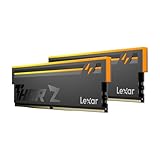
- Unleash Next-Gen Dominance: Experience Lexar DDR5 RAM performance with the Lexar THOR Z Series RGB DDR5 RAM 32GB Kit (2x16GB). Clocking at a blistering 6000MHz with low CL38 latency, this DDR5 desktop memory delivers up to 6000 MT/s for a full-throttle advantage. Whether you're building a high-end gaming rig or a professional workstation, this Lexar 32GB RAM kit ensures your system keeps pace with next-gen titles
- Sleek & Robust Thermal Design: Engineered for both aesthetics and endurance, this Lexar DDR5 RAM 6000MHz features an all-new streamlined design. The solid, sandblasted aluminum heatsink fuses a minimalist, razor-sharp aesthetic with uncompromising thermal control. This Lexar THOR Z Series armor ensures your DDR5 memory stays cool under pressure, delivering sustained peak performance during intense gaming sessions
- Game in Style with Brighter RGB Lighting: Elevate your build's aesthetics with the enhanced customizable RGB lighting on this Lexar RGB DDR5 RAM. Brighter and more vibrant than previous generations, the Lexar THOR Z Series RGB DDR5 RAM allows you to synchronize lighting effects with your components, creating a truly immersive gaming atmosphere that stands out from the crowd
- On-die ECC & PMIC for Rock-Solid Stability: Go beyond speed with reliability. This Lexar DDR5 RAM kit integrates On-die Error Correction Code (ECC) to automatically correct data errors, vastly improving stability and reliability for your critical tasks. The onboard Power Management Integrated Circuit (PMIC) ensures efficient power delivery, boosting the overall power efficiency of your DDR5 desktop memory for a longer-lasting, more stable system
- Seamless Compatibility with Intel & AMD: Worry-free upgrade guaranteed. The Lexar THOR Z Series DDR5 RAM is built for broad compatibility with the latest platforms. It fully supports Intel XMP 3.0 and AMD EXPO one-click overclocking, making it effortless to achieve the rated speeds. Trust Lexar DDR5 RAM to deliver seamless performance with mainstream DDR5 motherboards
Why RAM and SSD prices can move differently
PC DRAM
TrendForce said PC makers continued procuring agreed volumes during 2026, while warning that PC DRAM supply could decline in 2027 as more capacity shifts toward server applications. Higher component costs were also weighing on notebook sales. This points to possible supply pressure for PC memory, but it does not establish the timing or size of a retail price change for a particular DDR generation or kit.
Server DRAM
Improving CPU availability supported greater procurement of registered DIMMs (RDIMMs) for general-purpose servers, including systems supporting agentic AI. TrendForce expected server DRAM to remain undersupplied in 4Q26. It also noted that long-term agreements moderated some suppliers’ price increases, so contract terms can affect how quickly market tightness appears in individual deals.
Do these 3 things before closing this tab:
1Clear out junk files and repair common Windows errors2Fix the driver behind crashes, sound loss and screen glitches3Repair Windows errors before they cause bigger problemsRank #3

- Requires overclocking/BIOS adjustments. Maximum speed and performance depends on system components, including motherboard and CPU.
- G.SKILL Flare X5 Series DDR5 U-DIMM Memory Kit, Model: F5-6000J3636F16GX2-FX5
- Non-ECC, DDR5 U-DIMM, 288-pin, for Desktop PC & Gaming
- Includes JEDEC default profile, and AMD EXPO & Intel XMP 3.0 memory overclock profile
- Do not mix memory kits. Memory kits are sold in matched kits that are designed to run together as a set. Mixing memory kits will result in stability issues or system failure.
Client SSDs and other consumer storage
NAND demand was mixed in TrendForce’s September outlook: AI-related demand supported the market, while consumer demand was weaker. PC makers could use existing inventories and reduce SSD capacity in mainstream systems to manage costs. Limited purchasing needs restrained client SSD price increases, illustrating why a rising NAND contract forecast does not mean every consumer SSD will rise at the same rate.
Enterprise SSDs
Enterprise storage faced stronger AI-linked demand. TrendForce forecast enterprise SSD bit demand to grow by more than 80% year over year in 2026 and said most incremental supply was already committed. It forecast faster enterprise SSD price growth in 4Q26 than in the previous quarter. This is an enterprise-market demand forecast, not a forecast for consumer SSD retail prices.
Rank #4

- Elevated performance for gamers & creators: 128GB kit DDR5 for enhanced productivity—accelerate demanding tasks and enjoy higher frame rates with this high-speed RAM
- Enhanced PC performance: Crucial Pro RAM 128GB kit with 2x64GB DDR5 operating at the speed of 5600MHz with 5200MHz or 4800MHz downclock support
- Top-tier RAM capacity: 128GB DDR5 RAM kit (2x64GB) compatible with latest Intel Core Ultra Series 2 & 14th Gen Core CPUs and AMD Ryzen 9000 Series desktop CPUs and above
- Low-profile, matte black heat spreader: Enhance your gaming rig with a sleek, modern look. With our integrated low-profile heat spreader, Crucial DDR5 Pro can even fit in smaller PCs
- Supports Intel XMP 3.0 and AMD EXPO on the same module: Achieve easy performance recovery on CPUs that suppress rated memory speeds with Intel XMP 3.0 or AMD EXPO turned on in the UEFI/BIOS settings. Get the full value of your investment without overpaying for performance
What could happen in 2027 and 2028?
A TechRadar report dated 1 October 2026 relayed Micron’s view that memory and storage supply-demand conditions would be much tighter in calendar 2027 and 2028 than in 2026. Micron also said it did not have line of sight to when supply and demand would return to balance, even with additional industry DRAM cleanroom plans and strong demand. That is a company outlook reported by a secondary publication, not a guaranteed outcome or an independent industry consensus. It is a reason to track conditions, not proof that every consumer component will keep getting more expensive.
How to plan a RAM or SSD purchase
- Identify what you actually need. Decide whether the upgrade is system memory (DRAM) or storage (an SSD using NAND). Their markets and forecasts can diverge, so “memory prices” is too broad a basis for a buying decision.
- Check compatibility before comparing prices. For a desktop RAM upgrade, confirm the motherboard and system support the kit’s DDR generation, form factor, capacity and specifications. For any system, check its documentation before buying; market forecasts cannot establish whether a particular part will work in your device.
- Compare equivalent products and current local offers. Match capacity and relevant specifications, then compare current retail price and availability. A contract-price forecast is not a substitute for checking the exact product you can buy.
- Let urgency decide whether to wait. If the upgrade is needed now, make the choice based on compatibility, availability and the price of suitable products. If it is optional, monitor the product category you need and reassess. The market outlooks do not establish a universally best month to buy.
- Watch the segment, not just the headline. Changes in PC DRAM, server DRAM, client SSDs and enterprise SSDs are not interchangeable. Consumer inventories and weaker demand can limit price pressure in one category even when server-oriented segments remain tight.
Why the 2026 forecasts changed over the year
TrendForce’s January 2026 outlook forecast 1Q26 conventional DRAM contract prices to rise 55–60% QoQ and NAND Flash contract prices to rise 33–38% QoQ. Those were forecasts made in January, not actual retail increases or current predictions. The January outlook linked the expected increases to suppliers reallocating advanced-process nodes and new capacity toward server and HBM products to meet AI server demand.
What’s actually slowing this PC down?
Pick the symptom - the matching free tool is one click away.
Best Value
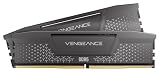
- Disclaimer: Maximum Speed requires overclocking/PC BIOS adjustments. Maximum speed and performance depend on system components, including motherboard and CPU
- AMD EXPO & Intel XMP 3.0 Compatible Only: Dual memory profiles allow you to easily select optimized settings for your platform, whether you’re running an AMD or Intel processor
- Onboard Voltage Regulation: Enables easier, more finely-tuned, and more stable overclocking through CORSAIR iCUE software than previous generation motherboard control
- Maximum Bandwidth and Tight Response Times: Optimized for peak performance on the latest AMD and Intel DDR5 motherboards
- Hand-Sorted, Tightly-Screened Memory Chips: Ensure consistent high-frequency performance with aggressive timing options
By July, TrendForce’s 3Q26 forecast was lower for conventional DRAM and NAND, and its September outlook described a further moderation in the conventional DRAM forecast while raising its NAND forecast relative to July. The changing forecasts show why an earlier market estimate should not be treated as a standing price rule: product segment, quarter, consumer demand, inventories and supply constraints all matter.
Quick Recap
Product prices and availability are accurate as of the date/time indicated and are subject to change. Any price and availability information displayed on Amazon at the time of purchase will apply.

