
Learning what QLC means changed how I compare SSDs: I no longer treat the lowest sticker price as enough reason to buy. QLC packs four logical bits into each NAND cell, compared with three for TLC, which can make storage denser and less costly to produce. That distinction alone does not tell me whether a particular drive is a good value, how fast it will be in my workload, or how long it will last.
What QLC means—and what it does not tell you
QLC is short for quad-level cell: Samsung explains that QLC NAND stores four logical bits per physical cell, while TLC stores three. That greater density can allow more storage capacity in a given amount of NAND, and Samsung describes QLC as cheaper than TLC in general. It is a technology-level explanation, not proof that a QLC SSD costs less than a comparable TLC model in a store today.
The bit count is not a speed rating or a lifespan guarantee. You cannot determine an SSD’s real-world performance or endurance from QLC versus TLC alone; those questions require the exact model’s specifications and relevant product-specific evidence. Samsung’s 860 QVO white paper explains the cell-density distinction.
Why I now check the exact model and capacity
QLC is not, by itself, a reason to reject a drive. A more useful comparison starts with the SSD you can actually buy: its capacity, price per terabyte, interface, warranty and endurance rating, alongside the kind of writing you expect it to handle. A low price for one capacity or interface may not represent a better deal than a different model that fits your computer and use more closely.
#1 Best Overall

- SPEED UP PROJECTS. Launch creator applications fast with uncompromising PCIe 4.0 read speeds up to 7,100MB/s,[2] (1TB and 2TB[1] models) and write speeds up to 6,700MB/s[2] (1TB[1]-4TB[1] models).
- CREATE AND STORE MORE. Make more room for your 4K videos and high-resolution images with capacities from 500GB[1] up to 4TB[1] on M.2 2280 built with our trusted 8th generation SANDISK BiCS QLC 3D CBA NAND.
- IT GOES WHERE YOU GO. With an all-new power efficient design, your drive delivers high performance with low power, giving you more time to be productive while on the go.
- UNCOMPROMISED RELIABILITY. With up to 1,200 TBW[3] (4TB[1] model) endurance rating, your drive is designed for creators.
- KEEP YOUR DRIVE UPDATED. Monitor your SSD’s performance and check for updates with the downloadable SANDISK Dashboard application.[5]
Use the Samsung 870 QVO as a specification example
Samsung identifies the 870 QVO as a QLC SATA SSD. Its warranty table gives different total bytes written (TBW) limits by capacity, and pairs each limit with a three-year limited warranty. The warranty ends when either the stated period or the capacity’s TBW limit is reached, whichever comes first.
| 870 QVO capacity | Samsung-listed endurance limit | Limited warranty |
|---|---|---|
| 1TB | 360 TBW | Three years |
| 2TB | 720 TBW | Three years |
| 4TB | 1,440 TBW | Three years |
| 8TB | 2,880 TBW | Three years |
These are Samsung’s published, capacity-specific warranty limits, not predictions of when an individual SSD will fail. The 870 QVO data sheet and Samsung’s SSD warranty terms are the places to check for product details and applicable coverage. Samsung’s 2020 announcement of the 870 QVO also identifies it as a QLC product and describes the family’s 8TB model.
Rank #2
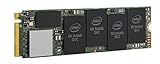
- 1B Storage Capacity
- M2. 2280 Form Factor
- PCIe NVMe 3.0 x4 Interface
- 1800 MB/s Sequential Read Speeds. 1800 Sequential Write Speeds. Intel QLC 3D NAND
How to compare SSDs before buying
- Compare like capacities and local prices. Calculate each option’s current price per terabyte at the capacity you need. QLC’s general density and cost advantage does not establish that a particular QLC model is cheaper today.
- Confirm compatibility. Check whether your computer accepts the drive’s interface and physical form factor. SATA and NVMe are not interchangeable just because both products are SSDs.
- Read the exact capacity’s endurance and warranty terms. Compare the model’s TBW limit and warranty duration, and note any condition that ends coverage first.
- Match the drive to your writing workload. Consider whether you mostly read data and write occasionally, or regularly write large amounts of data. Frequent or sustained large writes deserve closer attention to product-specific endurance and performance information.
- Look for evidence about the exact model. Use a reliable review or the vendor’s specification for performance questions. Do not infer speed from the QLC or TLC label by itself.
What changed in my buying criteria
I stopped asking only which SSD had the lowest price. I now compare the exact drive’s price per terabyte, compatibility, warranty, capacity-specific TBW and fit for the work I expect it to do. QLC explains how a drive can store bits more densely; it is one useful clue, not a verdict on the purchase.
Quick Recap
Best Value

- Fast NVMe performance for daily computing needs — up to 3,200MB/s.date transfer rate:3200.0 megabytes_per_second
- SSDs offer shock-resistance against accidental bumps and drops
- The slim M.2 2280 form factor is ideal for computers with an NVMe slot
- Downloadable Western Digital SSD Dashboard monitors the health and usage of your drive
- Rest assured with a Western Digital 3-year limited warranty
Rank #4

- SPEED UP PROJECTS. Launch creator applications fast with uncompromising PCIe 4.0 read speeds up to 7,100MB/s,[2] (1TB and 2TB[1] models) and write speeds up to 6,700MB/s[2] (1TB[1]-4TB[1] models).
- CREATE AND STORE MORE. Make more room for your 4K videos and high-resolution images with capacities from 500GB[1] up to 4TB[1] on M.2 2280 built with our trusted 8th generation SANDISK BiCS QLC 3D CBA NAND.
- IT GOES WHERE YOU GO. With an all-new power efficient design, your drive delivers high performance with low power, giving you more time to be productive while on the go.
- UNCOMPROMISED RELIABILITY. With up to 1,200 TBW[3] (4TB[1] model) endurance rating, your drive is designed for creators.
- KEEP YOUR DRIVE UPDATED. Monitor your SSD’s performance and check for updates with the downloadable SANDISK Dashboard application.[5]
Rank #3

- Fast NVMe performance for daily computing needs — up to 3,200MB/s.date transfer rate:3200.0 megabytes_per_second.Specific uses: Business, personal
- SSDs offer shock-resistance against accidental bumps and drops
- The slim M.2 2280 form factor is ideal for computers with an NVMe slot
- Downloadable Western Digital SSD Dashboard monitors the health and usage of your drive
- Rest assured with a Western Digital 3-year limited warranty
Product prices and availability are accurate as of the date/time indicated and are subject to change. Any price and availability information displayed on Amazon at the time of purchase will apply.
The Tool Desk
Outbyte Driver Updater FREEScan for outdated or missing drivers - takes under a minuteDriver Scan →Outbyte PC Repair FREERepair Windows errors before they cause bigger problemsFix Now →
