
AI accelerators need to move data between memory and compute quickly. High-bandwidth memory (HBM) provides a wide memory interface using stacked DRAM, while advanced packaging places HBM stacks close to processor dies and connects them with dense, short interconnects. Together, they can provide high memory bandwidth and fit substantial compute and memory into one package—but neither guarantees faster results for every AI workload.
Why AI accelerators need high-bandwidth memory
An AI processor can perform calculations only when the required data and instructions reach its compute units. When a workload needs frequent access to large amounts of data, the memory connection can limit how effectively the processor stays supplied. HBM is designed to address that challenge with memory dies stacked together and a broad interface for moving data.
HBM is not simply memory with a larger capacity. Its role is to provide high data bandwidth near the processor. Capacity, bandwidth and compute are distinct parts of the system: a package may have substantial memory capacity without delivering the bandwidth a particular workload needs, and a workload that does not depend heavily on memory traffic may not benefit as much from more bandwidth.
Micron describes its HBM3E as designed for complex AI computation and associates proximity enabled by advanced packaging with bandwidth and power benefits. These are Micron’s product claims, not a guarantee that every accelerator or application will see the same result. Micron’s HBM3E product brief
The Tool Desk
Outbyte Driver Updater FREEFix the driver behind crashes, sound loss and screen glitchesFind Drivers →Outbyte PC Repair FREERepair Windows errors before they cause bigger problemsFix Now →#1 Best Overall

- ESP32-S3-ePaper-1.54 development board onboard 1.54inch e-paper display, 200 × 200 resolution, features high contrast and wide viewing angle. Onboard audio codec chip, supports voice capture and playback, enabling AI voice interaction applications
- ESP32-S3 1.54inch e-Paper AIoT development board adopts high-performance 32-bit LX7 dual-core processor, up to 240MHz main frequency. Supports 2.4GHz Wi-Fi (802.11 b/g/n) and Bluetooth 5 (LE), with onboard antenna
- Onboard PCF85063 RTC chip and SHTC3 temperature & humidity sensor for accurate RTC management and environmental monitoring
- Built-in 512KB Static RAM, 384KB ROM, with integrated 8MB Flash and 8MB PSRAM
- Onboard TF card slot for external storage of images or files. Onboard programmable PWR and BOOT side buttons for customized function development. Reserved 2 × 6 2.54mm pitch pin header for convenient external expansion
What advanced packaging does
HBM needs a physical path to the logic die that uses it. Advanced packaging brings separate memory and compute dies together in one package and provides the dense connections between them. In TSMC’s CoWoS approach, dies are assembled on an interposer, which is then integrated with a package substrate. The interposer carries connections among the logic dies and HBM stacks.
That physical integration matters because the memory architecture and the package connection work as a system. HBM supplies the memory interface; packaging provides proximity and routing to the compute die. If either part is poorly matched to the design, the package may not deliver the intended bandwidth for memory-intensive work. This is a system-level design consideration, not a claim that memory is the bottleneck in every AI task.
Rank #2

- This is is 1.54inch e-Paper AIoT development board. Onboard 1.54inch e-paper display, 200 x 200 resolution, features ultra-low power consumption and ambient light readability, suitable for portable devices and long-battery-life scenarios. Supports 2.4GHz Wi-Fi (802.11 b/g/n) and Bluetooth 5 (LE), with onboard antenna.
- Integrated with an RTC chip, SHTC3 temperature and humidity sensor, TF card slot, low-power audio codec chip circuit, and Lithium battery recharge management circuit. Reserved interfaces including USB, UART, I2C, and GPIO for easy functionality expansion and sensor connectivity, providing a flexible and reliable development platform for IoT terminals, electronic tags, portable displays, and other applications.
- Supports AI Speech Interaction: Allows access to online large model platforms such as ChatGPT, DeepSeek, Doubao, etc. Onboard audio codec chip, supports voice capture and playback, enabling AI voice interaction applications.
- Built-in 512KB Static RAM, 384KB ROM, with integrated 8MB Flash and 8MB PS RAM. Onboard PCF85063 RTC chip and SHTC3 temperature & humidity sensor for accurate RTC management and environmental monitoring.
- Onboard TF card slot for external storage of images or files. Onboard programmable PWR and BOOT side buttons for customized function development. Reserved 2 × 6 2.54mm pitch pin header for convenient external expansion.
TSMC describes CoWoS as integrating multiple system-on-chip dies and HBM stacks to enhance compute power and memory bandwidth in high-performance computing products. That is the company’s description of its platform, not an independent performance measurement. TSMC CoWoS technology
How CoWoS packaging options differ
“Advanced packaging” includes different interposer and interconnect designs. TSMC documents three CoWoS approaches; they should be compared by construction, routing, package scale, power and signal integrity, and manufacturing readiness—not treated as a universal ranking.
PC Slower Than It Used to Be?
A free scan shows the junk files, broken settings and background clutter dragging Windows down - then fixes them in one click.Free scan · Windows 10 & 11Crashes, No Sound, or Screen Glitches?
Random freezes, missing sound and display glitches usually trace back to one bad driver. Find and replace yours safely.Free scan · under a minuteRank #3
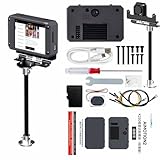
- 【Flagship performance, extremely fast response】Equipped with a 1.6GHz main frequency chip, the KPU computing power is 13.7 times that of the K210 visual module, and the CPU computing power is 8.5 times that of the K210. It supports real-time operation of complex AI models and can easily cope with high-load tasks such as image recognition and voice processing.
- 【Flexible expansion development】A new 12Pin GPIO interface is added, which is compatible with a variety of sensors and modules; pre-installed GUI program, a large program based on the RTSmart system, contains 30+ functional gameplay, integrates most of the core functions, and each function comes with instructions, so you can experience the fun of AI without programming basics.
- 【Multi-controller compatibility】Equipped with a serial communication interface, it can be seamlessly connected to various controllers, and supports connection to PC computers, MSPM0, STM32, ESP32, PICO, Raspberry Pi, UNO, Microbit, Jetson, RDK and other mainstream controller development. You can easily output the visual recognition results to an external controller through the serial port without delving into complex visual algorithms, making it easy to create innovative AI projects.
- 【Multi-function AI visual camera】The K230 visual module is equipped with a 2.4-inch LCD capacitive touch screen with clear display and a 2MP camera for quick debugging and control. The module integrates a serial port, which can easily connect various sensors to expand functions. , with color recognition, road sign recognition, visual line patrol, face recognition, label recognition, QR code and barcode recognition, feature detection, digital recognition and other functions.
- 【Developers from entry to mastery】Provides original model training tutorials+self-developed upper computer toolkits, compatible with ESP32 ecology, suitable for education, maker and industrial visual project development. Yahboom provides technical Q&A + lifetime firmware updates to help your AI project from prototype to landing without worry!
| Approach | Documented construction | Relevant design considerations |
|---|---|---|
| CoWoS-S | Uses a silicon interposer. TSMC describes high-density interconnects and embedded deep-trench capacitors, with logic chiplets and HBM cubes placed over the interposer. | Interposer size, fine routing, integration density, power delivery and production maturity. |
| CoWoS-R | Uses a redistribution-layer (RDL) interposer to connect SoC dies and/or HBM, with polymer and copper traces. TSMC says volume production began in 2023. | RDL routing characteristics, package scaling, signal and power behavior, and fit for the specific application. |
| CoWoS-L | Combines an RDL-based interposer with embedded local silicon interconnects, supporting integration of diverse embedded chips and larger HPC products. | Local high-density links, overall package scale, design complexity and the production status of the intended product. |
These are TSMC-defined platform options, not a survey of every advanced-packaging technology. A suitable choice depends on the chip design and its requirements; the labels alone do not establish which option will be best for a particular product. TSMC CoWoS technology
Independent reader supportYour contribution helps us test, update, and keep practical guides available for everyone.What package size and production milestones tell you
Package area affects how much compute and memory can be integrated, but a platform’s maximum capability is not the size of every product made with it. TSMC’s current CoWoS technology page, accessed in 2026, states that CoWoS-S supports an interposer size of up to 3.3 times reticle size, approximately 2,700 mm². That is a stated platform capability, not a typical or guaranteed package size.
Rank #4

- High-Performance AI Voice Interaction Development Board: Features a dual-core RISC-V processor (up to 160MHz), onboard dual microphone array, speakers, and an ES8311 audio codec chip, supporting noise reduction and echo cancellation. It can easily connect to large online models like DeepSeek for intelligent voice dialogue.
- Integrating Advanced Wireless Connectivity: ESP32-C6 supports Wi-Fi 6, Bluetooth 5.0, and Zigbee 3.0/Thread protocols, boasting excellent RF performance and multi-protocol compatibility, making it suitable for wireless communication development in IoT and wearable devices.
- Equipped with a 1.83-inch capacitive touchscreen LCD: (240×284 resolution, 65K colors), it offers high responsiveness and light transmittance. Combined with an onboard six-axis sensor (accelerometer + gyroscope) and RTC chip, it supports motion monitoring, step counting, and low-power real-time clock applications.
- Low Power Design: built-in Batt. recharge chip, a Type-C interface, and supports flexible clock and power control, enabling low-power operation in various scenarios, making it convenient for carrying around and long-term use.
- Rich Interfaces: It offers a wealth of expansion interfaces and customization features, including GPIO, I2C, and UART pads, two programmable side buttons, support for external sensors and debugging, and facilitates rapid prototyping and functional verification.
The same TSMC page says CoWoS-R volume production began in 2023 and that the first CoWoS-L products at 3.5 times reticle size have been in volume production since 2024. Separately, TSMC’s 2025 Annual Report says CoWoS-L entered its second year of volume production in 2025 and that larger-reticle products were expected to begin volume production in 2026. The 2026 timing is a company-reported expectation in that report, not confirmation that those products subsequently entered production. TSMC 2025 Annual Report
Why integration creates engineering challenges
Putting more dies and HBM stacks into a package increases the demands on the interposer and the package as a whole. The design must route many signals among separate dies while also delivering power and maintaining signal integrity. Package area, interconnect topology and manufacturing readiness matter alongside headline bandwidth.
- Routing density: Connections must support communication among compute dies and multiple HBM stacks within the available area.
- Signal and power integrity: Dense routing must carry signals reliably while the package delivers power to the integrated components.
- Package scale: Larger interposers can enable more integration, but the maximum platform size should not be mistaken for the size of every product.
- Manufacturing readiness: A design’s usefulness depends not only on its architecture but also on whether it can be produced at the required scale and maturity.
As packages grow or incorporate more components, these concerns become part of system architecture rather than a final assembly detail. The relevant trade-offs depend on the specific design; the documented CoWoS variants do not establish a single approach as superior in all cases.
Quick Recap
Product prices and availability are accurate as of the date/time indicated and are subject to change. Any price and availability information displayed on Amazon at the time of purchase will apply.

