
Free tools Windows power users keep installed
One-click scans. No signup required.
Start with the American Meteor Society (AMS) annual meteor shower calendar for activity dates, peak nights and moonlight notes. Cross-check the International Meteor Organization (IMO) calendar for a more technical view of predicted peaks and observational variability. For background, use NASA’s meteor shower information. These sources help you choose a night, but none can promise a good display at your location: local darkness, Moon timing, radiant visibility and weather matter too.
Which meteor shower forecast should you use?
For a practical starting point, use the AMS calendar. It lays out when showers are active, their forecast peak nights and the Moon conditions that may affect viewing. The IMO calendar is a useful independent cross-check, especially if you want more detail about predicted peaks and the possibility that observed activity may differ from expectations. NASA’s material explains the basics, including why a peak date is not a guarantee of the best local viewing.

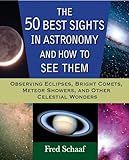
For example, the AMS 2026/2027 calendar lists the Orionids as active from October 2 through November 7, 2026, with a peak night of October 21–22. It notes 74% lunar illumination and warns of significant interference while the Moon is above the horizon. The same calendar lists the Southern Taurids’ November 4–5 peak with 25% lunar illumination and generally favorable conditions, and the Northern Taurids’ November 11–12 peak with 4% illumination and very favorable conditions. These are planning estimates, not promises about what an individual observer will see.
How to read a meteor shower calendar
Active dates and peak night are different
A shower’s active period is the span when its meteors may be visible; the peak is the forecast period when activity is expected to be greatest. The peak is not an exact appointment. It may occur earlier or later than expected, or during daylight for your location, and nearby nights can still be worth watching. The AMS puts it plainly: “It is a forecast rather than an exact appointment.” NASA likewise notes that peak viewing dates can vary by a day or two.
The Tool Desk
Outbyte Driver Updater FREEFix the driver behind crashes, sound loss and screen glitchesFind Drivers →Outbyte PC Repair FREERepair Windows errors before they cause bigger problemsFix Now →#1 Best Overall

- [Friendly to Beginners] No need for any tools, even the astronomy beginners can easily and quickly assemble our telescope and make use of it without confusion or difficulties, which is ideal for your lovely children.
- [High Magnification] Astronomical telescopecan set 36X,72X,90X,180X.equipped with 2x multiplier mirrors, so that you can freely mix, observe different distances and sizes objects.
- [Reflector Telescope] Including three eyepieces (k25mm and k10mm), our Telescope features fully-coated glass optics and high transmission coatings, which can create a brighter image quality and higher magnification power.
- [Large Aperture] 114mm aperture and 900mm focal length provide more lights and clearer images, even beginners can get clear images. The bigger the aperture, the bigger the field of vision, and the clearer the image.
- [Strong Tripod] Being made of aluminum, the tripod has a sturdy but lightweight frame, convenient to carry and stable to observe, with the 360 ° rotation design providing you a full range of scenery needless to move.
Hourly rates are not a personal viewing guarantee
Rates describe expected shower activity under stated conditions, not the number each person will necessarily count. In the AMS 2026/2027 calendar, a normal Orionid maximum is described as producing 10–20 shower meteors per hour; exceptional past years from 2006–2009 reached 50–75 per hour. The same entry characterizes recent Orionid displays as low to average. Your observed rate may be lower if the radiant is low, the Moon is bright or the site is affected by light pollution.
Look for uncertainty and updates
The IMO’s 2026 calendar discusses additional peaks and enhancements reported through observation, as well as predicted enhancements that were not observed. It says its working list may change as data improve, and notes that moonlit skies affect visual observers more than video cameras. When comparing forecasts, check whether a calendar distinguishes the active interval from the peak, explains its uncertainty, gives useful local timing context and identifies its year or update status.
How to find the best local viewing time
- Choose a date near the forecast peak. Keep nearby nights as options if the peak-night Moon or weather looks unfavorable.
- Check moonrise and moonset, not just the phase. Even on a bright lunar date, a period when the Moon is below the horizon can provide darker skies.
- Plan for the shower and your location. Midnight to dawn is often a productive window, but the best time depends on the shower and whether its radiant is above your horizon. Convert the forecast to your local time zone and verify the local circumstances.
- Get away from nearby lights and scan broadly. Meteors can appear across a wide area of sky, so do not stare only at the radiant. The AMS recommends observing with the unaided eye; a reclining chair or sleeping bag can make looking upward more comfortable, but equipment is not required.
- Check the weather separately. A shower calendar does not predict local cloud cover. A clear nearby night may be a better choice than the exact peak under clouds.
Where to check next
If you’re asking “Where can I find the next meteor shower?” start with the current-year AMS calendar, then compare the IMO calendar’s forecast notes. If you’re asking “What time is the meteor shower tonight?”, use the forecast peak as a starting point and check local moonrise, moonset, radiant visibility and weather. A calendar can identify the likely opportunity; your location determines the useful viewing window.
Quick Recap
Rank #4

- High Magnification:Protect your eyes.Perfect Refracting telescope for beginners or kids to explore sky
- Adjustable Tripod :This telescope allows for many different viewing positions with adjustable aluminum tripod
- No-tool Set Up:This telescope is quick and easy to set up even for the novice and will encourage to love learning about
- Multifunction :telescope excels at daytime birding use as well as viewing wildlife
- water proof, dusproof, shockproof design:Nitrogen-filled water proof and O-ring optical components can prevent moisture.
Rank #3
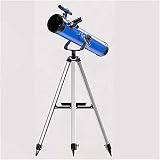
- High Magnification:Protect your eyes.Perfect Refracting telescope for beginners or kids to explore sky
- Adjustable Tripod :This telescope allows for many different viewing positions with adjustable aluminum tripod
- No-tool Set Up:This telescope is quick and easy to set up even for the novice and will encourage to love learning about
- Multifunction :telescope excels at daytime birding use as well as viewing wildlife
- water proof, dusproof, shockproof design:Nitrogen-filled water proof and O-ring optical components can prevent moisture.
Product prices and availability are accurate as of the date/time indicated and are subject to change. Any price and availability information displayed on Amazon at the time of purchase will apply.

