
Windows Errors? Fix Them Before They Spread
Repair common Windows errors and clear accumulated junk for a smoother, more stable PC - no reinstall needed.Free scan · no reinstallOutdated Drivers Are Slowing You Down
One free scan finds every outdated or missing driver and matches the right update for your exact hardware.Free scan · exact hardware matchProtect yourself first, then stabilize the book: isolate active mold, start air-drying a clean-water-wet book promptly, and avoid rubbing soot. If the water may be contaminated, the book is valuable or irreplaceable, or the damage is extensive, keep handling to a minimum and contact a qualified book or paper conservator.
What to do first: protect people and limit further damage
Separate the damaged book from unaffected books. If the water may contain sewage or other contaminants, do not handle the book as an ordinary clean-water accident; seek appropriate professional help. Wear protective gloves when dealing with mold or soot, and avoid disturbing wet or furry mold growth. The Library of Congress says the objective of response and recovery is “to prevent further damage and, in situations with water, to prevent mold growth” (Library of Congress Response and Recovery).
Move the book to a place where you can control temperature, humidity, and air circulation. Do not apply heat, scrub surfaces, or use household cleaning products. Photograph the condition before treatment if you may need to document damage for an insurer or owner.
How to dry a book wet by clean water
For one book affected by a clean-water spill or leak, gentle air-drying is often the simplest first response. Begin promptly: the Canadian Conservation Institute warns that mold can begin growing within 24 hours after a book gets wet (Basic Care – Books, 2018). That is a risk window, not a guarantee mold will appear at a specific time; conditions matter.
#1 Best Overall

- 【Eco-friendly Bamboo Dish Rack】: This kitchen counter dish rack is made of 100% bamboo as a raw material, with bamboo's eco-friendly, sturdy and easy-to-clean features, making it an excellent kitchen organizer.
- 【Save Space】The kitchen plate organizer divides the space in an orderly manner, so that each plate/cup/ or book can be placed independently in a compartment, effectively solving the messy situation of stacking tableware/books, etc., so that you can quickly find the book you want to read or the plate you want to use, greatly improving the efficiency of life and learning.
- 【Widely Used】 The structure of this dish racks for kitchen counter is very simple and easy to use, with 4 slots, it can be used to organize plates/cups/cutting boards/pot lids/books/photo frames/paintings and some other items, but please note that the thickness of the storable items should be less than 1.14 inches.
- 【Easy to Install】Each complete rack consists of 4 parts - 2 long racks and 2 connecting pegs, we adopt negative tolerance design, each long rack has 2 corresponding holes, just press the two connecting pegs into the corresponding holes of the two long racks, and you will get a complete and solid rack.
- 【Daily Maintenance】1. Try not to use detergent and other strong cleaning chemicals brushing, so as not to damage its protective layer 2. cleaning can be used to wipe with light salt water and dry and then use can effectively extend the service life 3. do not prolonged exposure to sunlight
- Gently fan the book open. Do not force the spine or separate pages that are stuck together.
- Stand it on absorbent material and replace that material as it becomes wet.
- As it dries, turn the book upside down to expose different areas and help it dry more evenly.
- Keep the room cool and relatively dry, and increase air circulation. A fan can help, but do not aim it directly at the book.
- Once dry, assess the binding and pages. A book may be distorted in shape or size after significant water damage.
The Library of Congress recommends airing wet books immediately while controlling room temperature and relative humidity (Books: Preservation FAQ). If a newly wet book cannot be air-dried within two days, its guidance is to prepare and freeze it, following the Northeast Document Conservation Center’s freezing guidance. For collection-scale incidents, freeze-drying is a professional preservation option; the Canadian Conservation Institute recommends that this work be carried out by professional paper conservators.
What to do about mold on a book
If the mold is active
Wet or furry growth should be treated as active mold. Do not brush or vacuum it: disturbing active growth can spread spores. Isolate the book, keep people away from the affected area as practical, and control humidity and temperature. The Library of Congress advises not disturbing active mold and notes that experienced conservation help may be required (Collection Emergencies).
Rank #2

- ARTWORK DRYING RACK: A reliable and spacious multi-shelf drying rack for art, suitable for small paintings, watercolor pieces, posters, prints and more
- FLAT FLEXIBLE SHELVES: Includes 25 wire shelves spaced an equal 1" apart with a 3 lbs. capacity, laying perfectly flat to protect and dry your masterpieces; each shelf can be lifted for easy access
- VERSITLE: Features three rolling caster wheels to allow for easy portability throughout the space, or mount to the wall to save space, all included.
- EASY SETUP: Each shelf can be slid into place without the need for screws or additional tools, and necessary materials for a wall-mounted display are included
- RELIABLE CONSTURCTION: Made from a sturdy steel material, this 14.5"D x 17.5"W x 38"H rack will withstand prolonged use in the classroom, and can be easily cleaned with any cleaning agent
If the mold is dry or dormant
Dry mold still calls for caution and isolation. Do not use an ordinary household vacuum. The Canadian Conservation Institute describes HEPA-filter vacuuming for dry mold on book covers and edges, with inspection of the inside and outside covers, spine, and text block (Mould Growth on Paper Collections). This is conservation guidance, not a blanket recommendation to clean valuable books yourself.
Mold can weaken paper and boards. If pages are affected, each needs assessment; if growth is only on the exterior, conservation guidance keeps the book firmly closed while the outside is cleaned. For valuable, fragile, or structurally damaged books, ask a conservator rather than attempting treatment. Mold staining may remain even after growth is no longer active, so appearance alone does not establish whether it is safe to clean.
Rank #3

- Product Specification: The set includes 2 pack 5 layers paint display racks, capable of holding up to 10 different art boards. Overall dimensions are 11.8" (L) x 4.5" (W) x 7.4" (H). Each slot measures 2 inches wide, suitable for canvases under 2 inches thick. The small art drying rack is designed to allow artworks to dry naturally without sticking or damage.
- Premium Bamboo Build: Crafted from quality bamboo, this artwork storage rack features a refined wood grain finish that blends well in studios, home workspaces, galleries, and museums. The wood storage stand for canvas boards add a warm, artistic touch while keeping your pieces neatly stored.
- Tiered Structure for Better Display: The Wood Kids Bookshelf rack’s stepped design elevates each slot progressively, allowing artworks to be stored and viewed clearly. This space-saving layout makes it easier to organise multiple canvases without clutter.
- Straightforward Assembly: Each paint canvas organizer is made up of five parts—two angled side frames and three connecting rods. Assembly involves screwing the rods into place and securing them by hand. (If needed, the rods may be trimmed slightly to ease installation.)
- Versatile Use: In addition to holding canvases and artboards, this wooden tabletop art rack can be used for storing books, CDs, DVDs or handheld consoles. The art drying rack for classroom is suitable for art studios, exhibitions, schools and training centres, it serves both professionals and hobbyists alike.
How to handle smoke odor and soot
Reduce smoke odor
Smoke odor and visible soot are separate problems. For odor, the Library of Congress suggests careful dusting with a clean, soft cosmetic brush or magnetic dusting cloth, then exposing more of the book’s surface to air. Another option is to place the book in a closed container with activated charcoal or baking soda for several days. Keep the absorber from touching the book and check the book daily for mold (Collection Emergencies FAQ).
Address soot cautiously
Soot may contain oily residue, and rubbing can push it deeper into paper. The Library of Congress smoke-and-soot guidance recommends low-suction HEPA vacuuming with a soft brush attachment, moving straight up and down rather than dragging the brush across the surface; a flexible screen can help protect fragile material. It also describes wearing latex or nitrile gloves and blotting—not rubbing—with a vulcanized rubber sponge, sometimes called a cosmetic sponge (Smoke and Soot).
Rank #4

- 18 Removable Shelves: Provides ample drying space for multiple art projects, paintings, and artwork simultaneously, ideal for busy classrooms, studios, and schools
- Mobile Design with Lockable Wheels: Features smooth-rolling casters with locking mechanism for easy mobility and secure positioning when stationary
- Sturdy Metal Construction: Built with durable metal frame that ensures stability and long-lasting performance for heavy-duty classroom and studio use
- Space-Saving Vertical Storage: Compact footprint maximizes floor space while offering generous drying capacity for various sizes of artwork and paintings
- Versatile Application: Perfect for art classrooms, painting studios, schools, and professional art spaces requiring organized and efficient artwork drying solutions
Cleaning soot carries substantial risk, especially on fragile or unique books. Do not try this on an irreplaceable item without professional advice. A soot-cleaning sponge is for careful blotting of soot only; it is not a treatment for mold, water damage, or smoke odor.
Independent reader supportYour contribution helps us test, update, and keep practical guides available for everyone.Should you treat the book, freeze it, call a conservator, or replace it?
The right choice depends on the book’s value and condition, the kind and scale of damage, and whether the book can be replaced. Consider these factors before taking a more invasive step:
Recommended Free Tools
Best Value
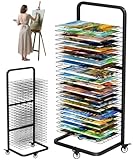
- Multifunctional & Practical:With a 16.6 "x 13" footprint while maintaining a compact profile. Our art drying rack for classroom maximizes storage in a tight craft room. You can stack paintings without interfering with each other. This mobile art studio display rack is constructed of metal, built to holder artworks without bending. Say goodbye to the smudged art display!
- 25 Shelves & Efficient Drying:Featuring 25 shelves, each measuring 16 inches by 9.5 inches, with a precise 1-inch spacing. Each shelf of painting drying rack lay flat, lifted or detachable effortlessly as needed.This art storage rack makes full use of the vertical space, keeping a large number of paintings neat and orderly. While ensuring efficient airflow for quick drying.
- Mobility & Lockable:3 smooth-swivel & lockable casters enable our canvas art storage rack easy movement and transportation, ideal for repositioning art materials safely. Provide both stability and effortless mobility. Casters assembly is swift and intuitive, allowing you to place the drying rack for art wherever you need, and no longer be troubled by the inability to move it.
- Multi-Scenario Usage:The paper drying rack can organize different sizes of paper, including A4, A3, and A2. Our paint drying rack 25 adjustable shelves provide expansive capacity for paintings, drawings, watercolor pieces, posters, canvas boards, and kids artwork storage, suitable for diverse environments, including homes, studios, art clubs, gallery, classrooms and schools.
- Exquisite & Easy to Assemble:Our painting rack feature modern coatings and possess both aesthetic and practical qualities, exuding a strong artistic atmosphere. You can install this canvas drying rack quickly by following the instructions and start using it immediately. Whether you're looking for a more beautiful or more efficient organizer, the classroom drying rack is the way to go.
- Uniqueness and value: A family document, rare edition, or irreplaceable book deserves professional assessment.
- Damage type: Active mold, contamination, soot, and clean-water wetting have different risks and should not be treated alike.
- Extent: Damage confined to an exterior cover is different from mold or soot across pages, a weakened text block, or a soaked collection.
- Time and scale: A single clean-water-wet book may be air-dried; if drying within two days is not feasible, freezing may help stabilize it. Collection-scale freeze-drying should be handled professionally.
- Likely outcome and cost: Conservation work takes time and can be costly when done correctly. The Library of Congress notes that for an infrequently used collector’s item, leaving it as-is, boxing it, and improving storage may be preferable to unnecessary intervention (Books: Preservation FAQ).
- Replaceability: If the book is readily replaceable and treatment is extensive, compare the cost and likely result of conservation with replacing it.
For help locating qualified preservation expertise, the Library of Congress emergency preparedness resources provide further collection-care guidance. Avoid making a permanent treatment decision while the book is wet or mold is active; stabilize it first, then assess what remains.
Quick Recap
Product prices and availability are accurate as of the date/time indicated and are subject to change. Any price and availability information displayed on Amazon at the time of purchase will apply.

