
Before replacing or upgrading a server BMC, identify the exact server and controller, confirm the approved part or firmware path for that model, and prepare a recovery plan for configuration and out-of-band access. A BMC is not a universally interchangeable component: on some servers it is a separate replaceable module, while on others it is integrated with the system board. Back up supported settings before service, follow the OEM’s firmware sequence, and verify management functions after the change.
Identify the server and how its BMC is implemented
Record the server make, exact model and generation, service tag or serial number, controller type, installed BMC firmware, and any relevant management licenses. These details determine which hardware parts, firmware packages, and recovery procedures apply. Check the server’s OEM service manual, parts list, compatibility information, and firmware release notes; do not infer compatibility from a similar-looking board or controller.


Find out whether the BMC is a discrete field-replaceable module, an embedded component, or part of the system board. A failed or upgraded controller may therefore require a controller-only service procedure—or system-board replacement and recovery. For example, Dell documents restoring service identity and a server profile after system-board replacement, subject to prerequisites for the covered system. See Dell’s service-tag restoration guidance and Lifecycle Controller profile backup and restore guidance.
Redfish support does not make hardware interchangeable. The DMTF standard defines an out-of-band management interface and data model; implementations may have optional features and OEM extensions, and the standard does not prescribe particular hardware or firmware. Consult the DMTF Redfish specification and verify compatibility against the actual server model.
Do these 3 things before closing this tab:
1Repair Windows errors before they cause bigger problems2Scan for outdated or missing drivers - takes under a minute3Clear out junk files and repair common Windows errors#1 Best Overall
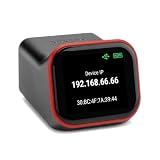
- REMOTE BIOS/UEFI ACCESS — CONTROL A DEAD MACHINE: Reach any computer at the BIOS/UEFI level from your web browser, even when the OS is frozen, crashed, or powered off. Full 1080p @ 60Hz HDMI capture with keyboard, video, and mouse — under 100ms latency for control that feels like sitting at the machine.
- BUILT FOR HOMELAB, PROXMOX & HEADLESS SERVERS: The out-of-band access your homelab, Proxmox host, or headless server has been missing — install an OS via BIOS, reboot a hung machine, or manage it remotely with no monitor attached. A capable alternative to enterprise IPMI/BMC for hardware that doesn't have it.
- POE BUILT IN + FULL-SIZE HDMI — ONE CABLE, NO ADAPTERS: PoE is standard, so a single Ethernet cable delivers power and network — no wall wart, no splitter. Full-size HDMI means no fragile mini-HDMI dongle to lose. Drop it in a rack and it just works.
- OPEN-SOURCE & AUDITABLE — SECURITY YOU CAN VERIFY: Fully open-source Rust firmware (GPL) you can inspect yourself on GitHub — no black box, and no software agent on the machine you're managing. On your own network it's a direct web console with no account required. Reach it from outside through the included free relay — no VPN to configure, no subscription. FCC, CE, and RoHS certified.
- NO SUBSCRIPTION, WORKS WITH EVERYTHING: Wake-on-LAN, remote power control (optional ATX expansion board), 32GB eMMC storage, ISO/virtual-media mount, and an on-device touchscreen. No VPN required — and if you already run Tailscale, it works out of the box (free firmware update). One-time purchase, no fees. OS-independent — Windows, Linux, macOS, Raspberry Pi.
Prepare a recovery copy before service
Export the controller or server profile using the supported method for the platform, then separately record settings and recovery details the export omits. Keep the backup somewhere accessible while the server or controller is unavailable, and protect it as sensitive configuration data. Confirm what is included and excluded: credentials, network settings, licenses, certificates, logs, firmware images, attached-device settings, and add-in-card data may not all be captured.
DMTF defines a Redfish Replacement export type for configuration needed for system replacement, but whether a target service supports it—and what its restore workflow contains—depends on that implementation. Discover the capabilities of the specific service rather than assuming a universal export and restore process. See the Redfish specification.
Rank #2

- AMD socket sTR5 supports up to 96-core CPUs: Ready for AMD Ryzen Threadripper PRO 7000 WX-Series Processors.
- Ultrafast connectivity:Seven PCIe 5.0 x16 slots, dual 10 Gb LAN ports, four M.2 slots, two rear USB4 40Gbps Type-C and SlimSAS NVMe support.
- CPU and memory overclocking: Support for up to 2TB ECC R-DIMM DDR5 memory modules (1DPC)
- Robust power and thermal design: 32 power stages with two 8-pin power connectors for the CPU, massive VRM cooling, chipset and M.2 heatsinks with active fans, and M.2 thermal pad.
- PCIe Q-release Slim: Remove the graphics card by directly pulling it up, instead of pressing a PCIe latch.
Vendor workflows have their own limits. Dell’s iDRAC9 documentation says profile restoration compares Service Tags and applies settings to matching components in the same locations or slots. On covered systems, Easy Restore can recover items such as the Service Tag, Asset Tag, license data, UEFI diagnostics, and BIOS, iDRAC, and NIC settings; it does not back up firmware images, vFlash data, or add-in-card data. Check Dell’s iDRAC9 profile backup and restore documentation for the applicable system and procedure.
Dell also documents profile backup on vFlash with export to USB or network storage, subject to platform and licensing limits. vFlash is a model-specific recovery option, not a universal BMC replacement requirement. See Dell’s Lifecycle Controller instructions.
Free tools Windows power users keep installed
One-click scans. No signup required.
Rank #3

- 【Controller】:10GbE PCI-E NIC with Original Intel E610-XAT2 controller, which supports virtualization and each port supports up to 64 VFs and multiple acceleration features such as SR-IOV and VF offload.
- 【Cabling Type】: RJ45 Category 6, Category 6A, Category 5e up to 100m
- 【Data Rate】:Dual RJ45 ports(100MbE/1GbE/2.5GbE/5GbE/10GbE auto-negotiation) let you connect to network cable for meeting the demands of data center environments. PCIe v4.0 x4; (Compatible with 1.1/2.0/3.0), X4/X8/X16 Lane.
- 【Power consumption】: It only consumes about 5.1 W at full load, which is 60% more energy-efficient than the previous generation X550‑T2, and the full-load temperature is also very low, making it very suitable for your small PCs, NAS, and so on.
- 【Management function】:Supports enterprise management protocols such as SPDM, PLDM, BMC pass-through, NC‑SI, and Redfish
Check firmware compatibility and update order
For an upgrade, obtain the package from the server OEM’s official support channel and confirm that it is intended for the exact server and controller generation. Read the package readme, release notes, and change history before starting. Check for:
- Minimum starting firmware and any required intermediate versions.
- Dependencies on BIOS/UEFI or other component firmware, including required update order.
- Known issues, downgrade or rollback support, and any limits on restoring an earlier version.
- How the update is activated and whether the BMC reboots independently or requires a host restart or power cycle.
Lenovo’s XClarity Controller 3 guidance warns that incorrect firmware can cause server malfunction and directs administrators to the update readme and change history for applicable prerequisites and sequencing. It also notes that some updates require a restart. Follow the instructions for the specific system and package: Lenovo XCC3 firmware update guidance.
Independent reader supportYour contribution helps us test, update, and keep practical guides available for everyone.Plan for loss of remote management
A BMC upgrade or replacement can interrupt out-of-band access, including remote console and power control. Schedule a maintenance window, arrange console or physical access where possible, and make sure someone can recover access if the controller’s address, network settings, or credentials change. Save the current firmware version and configuration so the team can compare the result with the pre-change state.
During a firmware update, do not interrupt power or reset the controller unless the OEM procedure explicitly directs it. If the management connection disappears during an expected BMC reboot, follow the package’s documented activation and recovery steps rather than treating loss of access alone as proof that the update failed.
Windows Errors? Fix Them Before They Spread
Repair common Windows errors and clear accumulated junk for a smoother, more stable PC - no reinstall needed.Free scan · no reinstallCrashes, No Sound, or Screen Glitches?
Random freezes, missing sound and display glitches usually trace back to one bad driver. Find and replace yours safely.Free scan · under a minuteVerify the controller after the change
Once service or the update is complete, check each item that matters to the server’s operation and management setup:
- Confirm server and controller identity, firmware version, and update or restoration status.
- Verify management-network reachability, VLAN and addressing, administrator access, and any required licenses.
- Check sensor inventory, event visibility and delivery, and monitoring-system or orchestration integrations.
- Test remote power operations and, where used, remote console, virtual media, and the APIs relied on by your tools.
- Review logs for update, restoration, or hardware errors; compare restored settings with the pre-change record and recover excluded settings manually through approved processes.
Redfish feature support can vary because optional elements and OEM extensions are permitted. Verify the functions your systems actually use against the target controller rather than assuming that a standard interface guarantees feature parity.
Use the platform procedure, not a generic BMC recipe
These checks help prepare a replacement or upgrade; they do not replace the service manual or firmware instructions for the exact server. iDRAC, iLO, XClarity Controller, and other vendor names refer to platform-specific implementations, with different hardware designs, recovery behavior, firmware sequencing, and licensing rules. Confirm the part number, procedure, backup method, and package against the server’s OEM documentation before proceeding.
Quick Recap
Product prices and availability are accurate as of the date/time indicated and are subject to change. Any price and availability information displayed on Amazon at the time of purchase will apply.
The Tool Desk
Outbyte Driver Updater FREEFix the driver behind crashes, sound loss and screen glitchesFind Drivers →Outbyte PC Repair FREERepair Windows errors before they cause bigger problemsFix Now →
