
Do these 3 things before closing this tab:
1Clear out junk files and repair common Windows errors2Fix the driver behind crashes, sound loss and screen glitches3Repair Windows errors before they cause bigger problemsSpyCloud’s 2025 Identity Exposure Report says its recaptured data averages 146 exposed records per corporate user and 229 per consumer. The company’s March 19, 2025 announcement also highlights 17.3 billion cookies recovered from malware-infected devices—a different threat from reused passwords because stolen session cookies can let an attacker take over an already authenticated session.
What SpyCloud reports about exposed identities
SpyCloud says its 2025 report analyzes identity data it recaptured from breaches, infostealer malware infections, phishing campaigns and combolists. The company’s March 19, 2025 announcement reports these averages:

| Group | Stolen or exposed records per user | Unique emails per user | Credential pairs per user |
|---|---|---|---|
| Corporate users | 146 | 13 | 141 |
| Consumers | 229 | 27 | 227 |
These are averages SpyCloud reports from its dataset, not counts that apply to every employee or consumer. The announcement does not define the sampling frame or explain in sufficient detail how it calculated the per-user averages, so the figures cannot be independently validated from that release alone.
Why SpyCloud frames exposure as interconnected
The report’s central argument is that identity risk is not limited to one stolen password or one breached account. SpyCloud says criminals can combine current and historical records from different sources to build a broader picture of a person’s digital identity. A breach may reveal credentials or personal information; malware can collect credentials and session data from an infected device; phishing can capture information entered into a deceptive site.
#1 Best Overall
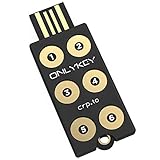
- ✅ PROTECT ONLINE ACCOUNTS – A password manager, two-factor security key, and secure communication token in one, OnlyKey can keep your accounts safe even if your computer or a website is compromised. OnlyKey is open source, verified, and trustworthy.
- ✅ UNIVERSALLY SUPPORTED – Works with all websites including Twitter, Facebook, GitHub, and Google. Onlykey supports multiple methods of two-factor authentication including FIDO2 / U2F, Yubico OTP, TOTP, Challenge-response.
- ✅ PORTABLE PROTECTION – Extremely durable, waterproof, and tamper resistant design allows you to take your OnlyKey with you everywhere.
- ✅ PIN PROTECTED – The PIN used to unlock OnlyKey is entered directly on it. This means that if this device is stolen, data remains secure, after 10 failed attempts to unlock all data is securely erased.
- ✅ EASY LOG IN –No need to remember multiple passwords because by plugging OnlyKey to your computer, it automatically inputs your username and password. It works with Windows, Mac OS, Linux, or Chromebook, just press a button to login securely!
When records overlap, an exposed email address, password pair or other personal detail may help an attacker connect separate accounts to the same person. That can create paths to account takeover, fraud or further access. SpyCloud’s announcement describes this as a risk across both personal and professional identities; it does not establish that every record in its dataset was linked to a particular individual or used in an attack.
How the exposure channels differ
| Channel | Data SpyCloud highlights | Potential risk |
|---|---|---|
| Breaches and combolists | Credentials and other identity records | Reused credentials may enable access to other accounts. |
| Infostealer malware | Credentials and session cookies taken from infected devices | Credential misuse or session hijacking, depending on what was captured. |
| Phishing campaigns | Information victims submit to deceptive pages; SpyCloud reports email addresses and associated IP addresses in many recaptured logs. | Account takeover or misuse of captured identity information. |
These are mechanisms described in SpyCloud’s announcement, not independent measurements of how often each one leads to harm. The company reports that its recaptured darknet data grew 22% year over year, exceeding 53.3 billion distinct identity records and 750 billion total stolen assets. Those totals describe SpyCloud’s collection, not all cybercrime or all exposed people.
Rank #2

- POWERFUL SECURITY KEY: The Security Key C NFC is the essential physical passkey for protecting your digital life from phishing attacks. It ensures only you can access your accounts.
- WORKS WITH 1000+ ACCOUNTS: Compatible with Google, Microsoft, and Apple. A single Security Key C NFC secures 100 of your favorite accounts, including email, password managers, and more.
- FAST & CONVENIENT LOGIN: Plug in your Security Key C NFC via USB-C and tap it, or tap it against your phone (NFC) to authenticate. No batteries, no internet connection, and no extra fees required.
- TRUSTED PASSKEY TECHNOLOGY: Uses the latest passkey standards (FIDO2/WebAuthn & FIDO U2F) but does not support One-Time Passwords. For complex needs, check out the YubiKey 5 Series.
- BUILT TO LAST: Made from tough, waterproof, and crush-resistant materials. Manufactured in Sweden and programmed in the USA with the highest security standards.
Why stolen session cookies are not just another password leak
A password is a credential used to authenticate. A session cookie is a token a service may use to recognize a browser after authentication. SpyCloud reports recapturing 17.3 billion cookies from malware-infected devices and says stolen cookies can enable MFA bypass and hijack active sessions. If an attacker can use a valid stolen session, the attacker may not need to repeat the login process or pass the MFA step that was already completed.
That distinction matters for response: changing a password addresses the credential, but does not necessarily invalidate a stolen session. Affected users or administrators may also need to revoke active sessions or sign out devices through the service’s account controls, then investigate the infected device and follow the organization’s incident-response process. The exact controls and consequences depend on the service; the SpyCloud announcement does not specify universal cookie lifetimes or a one-size-fits-all remediation procedure.
Rank #3

- Requires 3 "AAA" batteries (included)
- Unit auto-locks for 30 minutes after 5 consecutive incorrect PINs
Other figures in SpyCloud’s 2025 announcement
SpyCloud reports several additional figures tied to its recaptured dataset and to 2024 activity:
- 548 million credentials exfiltrated via infostealer malware.
- 3.1 billion passwords recaptured in 2024, which SpyCloud says was a 125% increase from the prior year.
- Among users whose credentials were exposed in breaches the previous year, SpyCloud says 70% reused previously compromised passwords.
- 44.8 billion PII assets, reported as a 39% increase from 2023.
- Of recaptured phished-data logs in 2024 from popular phishing-as-a-service platforms such as ONNX, SpyCloud says 97% included an email address and 64% had an associated IP address.
- 127,000 .gov credentials recaptured; SpyCloud also reports a 67% all-time password-reuse rate observed in the public sector.
These figures are claims in the company’s announcement, not independently verified prevalence estimates. In particular, the release does not provide enough methodological detail to interpret the .gov figure as a measure of all government credentials or to establish how representative the reported user groups are.
Independent reader supportYour contribution helps us test, update, and keep practical guides available for everyone.What the accessible announcement does—and does not—establish
SpyCloud published the announcement on March 19, 2025, describing the report as an analysis of recaptured identity data. It presents the findings as evidence for considering linked personal and work exposures together. However, the announcement does not include a full methodology, sampling frame or definitions sufficient to independently assess the averages, the representativeness of the data, or causal relationships between an exposure and a later attack. Its figures should therefore be read as SpyCloud’s observations of its own recaptured data, not as a census of all users or stolen information.
The announcement also promotes SpyCloud’s identity threat protection and investigation services. That commercial context does not independently validate the report’s findings or amount to an evaluation of the product. Read the SpyCloud announcement for the company’s complete public account.
Quick Recap
Best Value

- FIDO-ONLY FUNCTIONALITY: Supports FIDO2 (passkeys) and FIDO U2F protocols for passwordless and second-factor authentication. Does not support OTP, TOTP, Smart Card (PIV), or other advanced features - upgrade to YubiKey 5 Series for extended functionality
- SECURE AND CONVENIENT: Passwordless MFA login with the YubiKey Bio authenticator and biometric information using a fingerprint, with a PIN as a fallback. Simply plug in via USB and use your fingerprint to authenticate
- DEVICE & OS COMPATIBILITY: Compatible with Windows, macOS, ChromeOS, and Linux. Works seamlessly with supported services like Google and Microsoft accounts, and major password managers. See the full compatibility list at "Works With YubiKey"
- DURABLE & RELIABLE: Resistant to tampering, water, and crushing. No batteries or network connectivity required, offering dependable authentication without any downtime. Securely manufactured in USA & Sweden
- Yubico Authenticator App - Fingerprint enrollment, passkey management and PIN configuration available via the app app - Upgrade to YubiKey 5 Series to generate one-time-passwords (OTP) via Yubico Authenticator and for advanced compatibility (OATH, PIV)
Product prices and availability are accurate as of the date/time indicated and are subject to change. Any price and availability information displayed on Amazon at the time of purchase will apply.

