
The Tool Desk
Outbyte PC Repair FREEClear out junk files and repair common Windows errorsFree Scan →Outbyte Driver Updater FREEScan for outdated or missing drivers - takes under a minuteDriver Scan →Shadow IoT is connected equipment used on an organization’s network without proper approval, security visibility, accountable ownership, or lifecycle controls. A smart camera, printer, sensor, or building-control device can therefore become a security blind spot even when it is working as intended. The practical response is to find devices continuously, identify who and what they serve, restrict their communications, and assign each one a support and retirement plan.
What counts as shadow IoT?
IoT means internet-connected or network-connected physical devices that collect, transmit, or act on data. “Shadow” describes the gap in governance: a device is operating, but it is missing from approved asset records or normal security processes such as onboarding, patching, monitoring, and retirement. It may have been installed informally by an employee, a facilities team, a contractor, or a supplier.
Examples can include employee-installed cameras, printers, smart displays, badge readers, environmental sensors, building-management equipment, and industrial or medical devices. A device does not have to connect directly to the public internet to pose a risk; access to an internal network can be enough to expose data or provide a foothold.
Shadow IoT overlaps with shadow IT, but the physical-device context matters. An IoT device may have limited logging, infrequent firmware updates, or a direct relationship to building operations, manufacturing, or patient care. An approved device can also become unmanaged if its owner leaves, support ends, or its network and firmware status are no longer tracked.
Do these 3 things before closing this tab:
1Fix the driver behind crashes, sound loss and screen glitches2Repair Windows errors before they cause bigger problems3Scan for outdated or missing drivers - takes under a minute#1 Best Overall

- 𝐄𝐚𝐬𝐲 𝐒𝐞𝐭𝐮𝐩 𝐈𝐧𝐝𝐨𝐨𝐫/𝐎𝐮𝐭𝐝𝐨𝐨𝐫 𝐂𝐚𝐦𝐞𝐫𝐚 — 2.5K HD video, vibrant color night vision and IP66, ensuring you never miss a moment, day or night,rainy or sunny. With dual-band 2.4G/5G WiFi & Plug and play setup of the cameras for home security - just download app and scan QR code! No tools needed for tabletop use, mounting screws included for walls
- 𝟐.𝟓𝐊 𝐐𝐇𝐃 & 𝐂𝐨𝐥𝐨𝐫 𝐍𝐢𝐠𝐡𝐭 𝐕𝐢𝐬𝐢𝐨𝐧 — Experience crystal-clear visibility day and night with full-color night vision enhanced by a built-in white light. Perfect as a baby monitor, pet camera, or security camera to monitor your home inside and out
- 𝐒𝐦𝐚𝐫𝐭 𝐀𝐈 𝐃𝐞𝐭𝐞𝐜𝐭𝐢𝐨𝐧 & 𝐀𝐥𝐞𝐫𝐭𝐬 — Stay informed about what matters most with human/motion/sound detection up to 33 feet away. The camera deters intruders with flashing lights and a siren while sending instant alerts to your phone — keeping you one step ahead of any suspicious activity. Call +1 (978) 437-5767 for expert support with setting up and optimizing Vimtag cameras, available Monday to Friday, 9:00 AM - 6:00 PM (ET)
- 𝐄𝐧𝐡𝐚𝐧𝐜𝐞𝐝 𝐓𝐰𝐨-𝐖𝐚𝐲 𝐀𝐮𝐝𝐢𝐨 - Communicate effortlessly with guests or check in on pets using the upgraded two-way audio feature of this indoor camera, allowing you to see, hear, and speak from anywhere
- 𝐓𝐰𝐨 𝐑𝐞𝐜𝐨𝐫𝐝𝐢𝐧𝐠 𝐎𝐩𝐭𝐢𝐨𝐧𝐬 & 𝐑𝐞𝐚𝐥-𝐓𝐢𝐦𝐞 𝐒𝐡𝐚𝐫𝐢𝐧𝐠 - With the mobile app, you can access the baby camera's video anytime, anywhere, view real-time footage, and even share monitoring content with family, keeping you informed about your home dynamics while you're away.Enjoy secure cloud recording with Vimtag Cloud (subscription required) for detecting people, sounds, motion. Alternatively, you can insert a microSD card (sold separately) for local video storage
Why unmanaged IoT creates security and operational risk
- Security blind spots: If a device is missing from inventory, teams may not know who should patch it, whether it is still needed, or what normal network behavior looks like.
- Weak or outdated protections: Some devices have default credentials, limited logging, unsupported firmware, or unpatched vulnerabilities. NIST’s 2021 SP 1800-15 executive summary explains that known vulnerabilities can allow devices to be commandeered into botnets and used in distributed denial-of-service attacks.
- A foothold for wider attacks: Microsoft reports that an attacker who gains access to an IoT device may use it to monitor traffic, perform reconnaissance, or move laterally through infrastructure.
- Privacy, safety, and continuity consequences: Cameras and microphones may expose sensitive information; badge systems can affect access to facilities; and medical or industrial equipment can be connected to processes where disruption has physical or operational consequences.
There is no universal, independently measured prevalence figure established by the official guidance cited here. Treat vendor figures as attributed findings rather than a general estimate of how common shadow IoT is. In an Infoblox survey of 2,650 IT professionals in 2020, 80% said they had found shadow-IoT devices connected to their network in the prior 12 months, and 29% said they had found more than 20. Microsoft Security reported in 2023 an average of 3,500 connected enterprise devices without an endpoint-detection-and-response agent; that is not a count of shadow IoT specifically. Microsoft also said in 2023 that users were 71% more likely to be infected on an unmanaged device. The same article cited IDC’s forecast of 41 billion IoT devices across enterprise and consumer environments by 2025; that was a forecast, not a measured current count.
How to find unknown IoT devices on a network
Combine passive monitoring with carefully scoped discovery
Passive discovery uses existing network telemetry to identify devices from their traffic without actively probing them. Active discovery sends queries or probes to find reachable devices and may reveal assets that are quiet during the observation period. Microsoft Defender for Endpoint documents both methods and can place discovered unmanaged endpoints, network devices, and IoT/OT devices in an inventory. Coverage depends on which networks and telemetry sources are visible to the tools in use, so a single scan should not be treated as proof that every device has been found.
Scope active discovery with network and operational owners, especially on industrial, medical, and other safety-sensitive segments. Unplanned probing can create disruption. Reconcile technical findings with procurement, facilities, and plant records: each source may identify devices the others miss.
Build an inventory that supports decisions
For each device, record enough to decide whether it belongs, how it should communicate, and who can maintain it:
Free tools Windows power users keep installed
One-click scans. No signup required.
- MAC and IP addresses, manufacturer, model, and firmware version;
- physical location, network segment, accountable owner, and support contact;
- approved business purpose, data handled, and whether the device is exposed to the internet;
- patch or firmware support status, plus safety or operational impact if it is blocked or unavailable;
- lifecycle state, such as proposed, approved, active, under review, or retired.
Use asset discovery to identify candidates, not to declare every unfamiliar device malicious. Confirm ownership and purpose before blocking equipment that may support a legitimate function.
How to mitigate shadow-IoT risk
-
Discover continuously
Use passive network telemetry and carefully scoped active discovery, and alert when new devices appear. Repeat discovery rather than relying on a one-time inventory so that temporary installations, replacements, and newly connected equipment are noticed.
Rank #2
Sale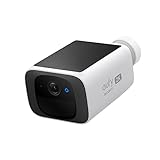 eufy Security SoloCam S220, Solar Security Camera, Wireless Camera Outdoor
- Continuously Powered by Solar: Just 3 hours of sunlight is enough to keep the camera running. The tiny size and wire-free design allow it to be installed anywhere.
- Day and Night Clarity: Enjoy clear black-and-white night vision thanks to infrared LEDs and an f/1.6 aperture. Please note that spotlight color night vision is not supported.
- Easy Installation: Use anywhere thanks to its tiny size and wire-free design. Drill one hole, once.
- Human Detection: Al alerts you to anyone in your yard, whether family, a courier, or a stranger. Connect to HomeBase 3 for individual facial recognition.
- No Monthly Fee: One-time purchase. No monthly fees or hidden costs. On-device storage and AI for complete security and transparency.
-
Classify each device and assign an owner
Reconcile discovered devices with procurement, facilities, and operational records. Give each approved device a responsible owner, documented purpose, support contact, and lifecycle state. If no owner can be identified, do not leave the device indefinitely in an unknown state: quarantine it, accept it formally with compensating controls, replace it, or remove it.
-
Place devices in controlled network zones
Use a dedicated VLAN or an equivalent security zone for IoT and operational technology where feasible. Permit only the flows required for the device’s documented function, including access to approved management services. A separate VLAN is useful only when access rules actually restrict traffic between zones; segmentation without effective policy does not by itself prevent lateral movement.
Crashes, No Sound, or Screen Glitches?
Random freezes, missing sound and display glitches usually trace back to one bad driver. Find and replace yours safely.Free scan · under a minutePC Slower Than It Used to Be?
A free scan shows the junk files, broken settings and background clutter dragging Windows down - then fixes them in one click.Free scan · Windows 10 & 11Special offer. See more information about Outbyte and uninstall instructions. Please review EULA and Privacy policy.For compatible devices and infrastructure, Manufacturer Usage Description (MUD) can help apply a device’s intended network behavior. NIST SP 1800-15 (2021) describes MUD as a way for the network to permit traffic needed for the device’s intended function and prohibit other communication.
-
Harden credentials and administration
Replace factory defaults with unique credentials, use certificates or strong authentication when supported, disable unused services, and restrict administrative access to approved systems and personnel. Avoid direct internet exposure unless it is required, approved, and protected by appropriate controls.
-
Patch, compensate, or replace
Track firmware support and known vulnerabilities. Apply vendor updates through a process suitable for the device’s operational role. NIST SP 800-213 frames IoT cybersecurity requirements across selection, acquisition, deployment, and use, which helps organizations account for security before a device becomes difficult to change.
If a device cannot be patched or brought up to the normal standard, document the exception and reduce its exposure: isolate it, restrict its allowed communications, increase monitoring, and plan replacement where the residual risk is not acceptable. For safety-critical equipment, coordinate changes with the responsible operational team rather than disconnecting it abruptly.
PerformancePC Slower Than It Used to Be?DriversCrashes, No Sound, or Screen Glitches?PerformanceWindows Errors? Fix Them Before They SpreadSpecial offer. See more information about Outbyte and uninstall instructions. Please review EULA and Privacy policy.Rank #3
Sale Energizer Connect Smart 1080p HD Outdoor Security Socket Camera with Siren Alarm, Remote Access, Motion Alerts, 2 Way Audio and Night Vision, 2.4GHz Wi-Fi, Black
- High-definition pan and tilt camera: Capture every detail in pristine 1080p HD quality, from any angle, with the Energizer Connect security camera's 355-degree horizontal and 48-degree vertical pan and tilt capabilities.
- Night Vision Equipped: Camera has 4 led lights and 4 IR lights that switch automatically depending on the lighting conditions, allowing you to see color at night or black and white in total darkness.
- Two-Way Audio: Allowing you to listen and talk to the person in the video, using the built-in microphone and speaker, or siren alarm to deter intruders.
- Flexible Storage Options: Choose cloud storage with a complimentary 30-day trial or utilize a micro SD card (up to 128GB, not included) for local recording.
- 2.4GHz Wi-Fi Compatible: Connects to your 2.4ghz wifi network, which is the most common wifi frequency. It does not support 5ghz wifi networks.
-
Monitor and prepare a safe response
Alert on newly seen devices, unexpected destinations, protocol changes, credential attacks, and unusual traffic volume. Define who can investigate and who can authorize blocking or quarantine. The response procedure should account for the possibility that disconnecting a device could interrupt a safety-critical or essential business function.
-
Retire devices securely
When a device is no longer approved or needed, revoke its credentials and certificates, remove its network access, erase stored data where applicable, document disposal, and update the inventory. Removing the physical device without closing its access and records leaves avoidable gaps behind.
Choosing an approach that fits the environment
Discovery and enforcement solve different parts of the problem. A scanner can reveal devices without providing a way to control their communications; a network-control product can block traffic but may disrupt legitimate operations if the inventory and classifications are wrong. Evaluate approaches against the organization’s networks and device roles rather than assuming one tool covers every need.
| Approach | What it helps with | What it does not solve by itself |
|---|---|---|
| Passive discovery and asset inventory | Finding devices visible in available network telemetry and tracking identity, location, and status. | Enforcing least-privilege traffic rules or assigning accountable business ownership. |
| Active discovery | Identifying reachable devices through scoped queries or probes. | Guaranteeing complete coverage; probing also needs operational scoping and does not establish a device’s approved purpose. |
| Segmentation and network access control | Restricting device communication to approved zones, services, or flows. | Accurately classifying devices or deciding whether a device is safe and necessary to operate. |
| Lifecycle and vulnerability management | Connecting ownership, support status, patch decisions, exceptions, and retirement. | Discovering devices that are absent from the records unless paired with network visibility and reconciliation. |
In addition to discovery coverage and classification accuracy, compare ownership and lifecycle integration, segmentation controls, patchability, monitoring depth, privacy and safety impact, operational disruption, and total cost. The right balance depends on whether the environment is primarily office IT, facilities, industrial operations, healthcare, or a mix.
What’s actually slowing this PC down?
Pick the symptom - the matching free tool is one click away.
What to do first
Start with a view of connected devices and a way to validate findings with the teams that own networks and physical operations. Prioritize devices with unknown owners, unsupported firmware, broad network access, internet exposure, sensitive data, or safety and continuity implications. Then close the governance gap: document purpose and ownership, apply restrictions appropriate to the device, and keep the inventory current through changes and retirement.
NIST’s NISTIR 8228 (2019) notes that organizations may not be aware of the IoT devices they already use or of how IoT changes cybersecurity and privacy risks compared with conventional IT. That is why shadow IoT is not just a scanning problem: reducing risk requires visibility joined to ownership, network controls, maintenance, and a safe plan for devices that cannot be secured or removed immediately.
Quick Recap
Product prices and availability are accurate as of the date/time indicated and are subject to change. Any price and availability information displayed on Amazon at the time of purchase will apply.

