
The Tool Desk
Outbyte PC Repair FREERepair Windows errors before they cause bigger problemsFix Now →Outbyte Driver Updater FREEFix the driver behind crashes, sound loss and screen glitchesFind Drivers →MU-MIMO (multi-user multiple-input multiple-output) lets a Wi-Fi access point communicate with multiple compatible devices during the same transmission opportunity, using spatial streams to separate their data. Wi-Fi 6 extends the feature to both downlink and uplink; Wi-Fi 6E adds access to the 6 GHz band. MU-MIMO can improve capacity when several devices are active, but it does not guarantee a speed boost for one device.
What is MU-MIMO?
Wi-Fi airtime is shared: devices generally take turns transmitting and receiving. With single-user MIMO (SU-MIMO), an access point can use multiple spatial streams to communicate with one client at a time. Multi-user MIMO coordinates spatial streams so it can communicate with multiple clients within the same transmission opportunity. The access point uses the streams to distinguish the clients’ data.
In practical terms, MU-MIMO is a way for a router or access point to serve several devices more efficiently when they need data at the same time. It is not a single-client speed multiplier.
What changed from Wi-Fi 5 to Wi-Fi 6?
| Feature | Wi-Fi 5-era MU-MIMO | Wi-Fi 6 (802.11ax) MU-MIMO |
|---|---|---|
| Direction | Downlink: access point to clients. Qualcomm’s Wi-Fi 6 overview and the Wi-Fi Alliance’s Wi-Fi 6 explanation describe the change. | Downlink and uplink: access point to clients and clients back to the access point, where the equipment supports those modes. Qualcomm’s Wi-Fi 6 overview. |
| Multi-user capability | Specific stream and client limits vary by equipment; not stated in the cited comparison sources. | Qualcomm describes 802.11ax support for up to 8×8 MU-MIMO in both directions, which can serve up to eight users simultaneously under that capability description. A particular access point or client may support fewer streams. Qualcomm’s Wi-Fi 6 overview. |
| Spectrum | Wi-Fi 5 operates in 2.4 and 5 GHz. Wi-Fi Alliance’s Wi-Fi 6 explanation. | Wi-Fi 6 operates in 2.4 and 5 GHz; Wi-Fi 6E extends Wi-Fi 6 operation to 6 GHz, subject to regional availability and rules. Wi-Fi Alliance’s Wi-Fi 6 explanation. |
The eight-user figure describes a capability, not a promise that every Wi-Fi 6 router can serve eight clients this way. Check the specifications for the exact access point and radio, including supported stream counts and whether uplink MU-MIMO is implemented.
Outdated Drivers Are Slowing You Down
One free scan finds every outdated or missing driver and matches the right update for your exact hardware.Free scan · exact hardware matchPC Slower Than It Used to Be?
A free scan shows the junk files, broken settings and background clutter dragging Windows down - then fixes them in one click.Free scan · Windows 10 & 11#1 Best Overall
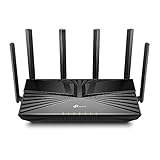
- Gigabit WiFi for 8K Streaming – 4400 Mbps WiFi for faster browsing, streamings, and downloading, all at the same time.
- Fully Featured Wi-Fi 6 – Equips with the top structure of 4T4R and HE160 on the 5 GHz band to enable 3.8 Gbps ultra-fast connection.
- Connect 200+ Devices – Supports MU-MIMO and OFDMA to reduce congestion and quadruple the average throughput
- Extensive Coverage – 6× antennas and Beamforming ensure broad coverage
- HomeShield – TP-Link's premium security services keep your home network safe with cutting-edge features for network and IoT protection
What does MU-MIMO do on a Wi-Fi router?
When multiple compatible clients are active, MU-MIMO can let the access point send data to several of them in the same transmission opportunity rather than serving them one after another. Wi-Fi 6 uplink MU-MIMO also addresses data flowing from clients to the access point—for example, video-call audio and video, live sharing, or other uploads. The benefit is most relevant when multiple users or devices are competing for airtime.
MU-MIMO and OFDMA are different tools
Wi-Fi 6 also uses OFDMA, which can serve multiple users with different bandwidth needs simultaneously. MU-MIMO separates transmissions by spatial streams; OFDMA divides channel resources in a different way. They complement each other as parts of Wi-Fi 6’s capacity toolkit rather than doing the same job. Qualcomm explains both features in its Wi-Fi 6 overview.
Rank #2

- Next-Gen Gigabit Wi-Fi 6 Speeds: 2402 Mbps on 5 GHz and 574 Mbps on 2.4 GHz bands ensure smoother streaming and faster downloads; support VPN server and VPN client¹
- A More Responsive Experience: Enjoy smooth gaming, video streaming, and live feeds simultaneously. OFDMA makes your Wi-Fi stronger by allowing multiple clients to share one band at the same time, cutting latency and jitter.²
- Expanded Wi-Fi Coverage: 4 high-gain external antennas and Beamforming technology combine to extend strong, reliable, Wi-Fi throughout your home.
- Improved Battery Life: Target Wake Time helps your devices to communicate efficiently while consuming less power.
- Improved Cooling Design: No heat ups, no throttles. A larger heat sink and redefined case design cools the WiFi 6 system and enables your network to stay at top speeds in more versatile environments.
Does MU-MIMO make Wi-Fi faster?
It can improve how efficiently a network serves multiple clients, particularly in busy environments. That is a capacity benefit: more concurrent service can reduce the airtime burden of taking turns. It does not mean one device will automatically receive a higher peak rate, and it does not promise a particular improvement in coverage or throughput.
For context, the Wireless Broadband Alliance reported that a 2021 Wi-Fi 6E field trial by CableLabs and Intel achieved 1.7 TCP Gbps downlink and 1.2 TCP Gbps uplink near the access point using 160 MHz channels. The trial took place in a 3,600-square-foot, two-story home with Wi-Fi 6E laptops and an ASUS access point. These are results for that setup—not a general speed guarantee or a measurement isolating MU-MIMO’s contribution. Wireless Broadband Alliance field-trial announcement, December 2, 2021.
Rank #3

- New-Gen WiFi Standard – WiFi 6(802.11ax) standard supporting MU-MIMO and OFDMA technology for better efficiency and throughput.Antenna : External antenna x 4. Processor : Dual-core (4 VPE). Power Supply : AC Input : 110V~240V(50~60Hz), DC Output : 12 V with max. 1.5A current.
- Ultra-fast WiFi Speed – RT-AX1800S supports 1024-QAM for dramatically faster wireless connections
- Increase Capacity and Efficiency – Supporting not only MU-MIMO but also OFDMA technique to efficiently allocate channels, communicate with multiple devices simultaneously
- 5 Gigabit ports – One Gigabit WAN port and four Gigabit LAN ports, 10X faster than 100–Base T Ethernet.
- Commercial-grade Security Anywhere – Protect your home network with AiProtection Classic, powered by Trend Micro. And when away from home, ASUS Instant Guard gives you a one-click secure VPN.
Is MU-MIMO important for Wi-Fi 6?
MU-MIMO is a useful Wi-Fi 6 capacity feature, but whether it matters to you depends on your devices and how you use the network. Its case is strongest when several compatible clients are active at once; if one device is the only one making substantial demands, MU-MIMO may not change its experience noticeably.
For MU-MIMO to work between an access point and a client, both need compatible support. NETGEAR’s product-support guidance says MU-MIMO takes effect with two or more compatible clients connected. That is vendor-specific guidance; check your own equipment’s documentation for supported bands, directions, and stream counts. A Wi-Fi 6 or 6E label alone does not establish that every optional mode or stream count is present. NETGEAR’s MU-MIMO explanation.
Rank #4

- AX3000 WiFi 6 Speed: Get up to 2402 Mbps on 5 GHz and 574 Mbps on 2.4 GHz for smooth 4K streaming, gaming, video calls, and fast downloads across your home.
- Built for Busy Homes: OFDMA and MU-MIMO help multiple phones, laptops, TVs, and gaming devices share the network efficiently, reducing congestion when everyone is online.
- 7 dBi High-Gain Coverage & EasyMesh: High-gain antennas and Beamforming extend stronger WiFi throughout your home. EasyMesh support lets you expand coverage with compatible routers and roam seamlessly from room to room.
- VPN & Secure IoT Networking: Built-in OpenVPN, WireGuard, PPTP, and L2TP support flexible VPN connections, while a dedicated IoT network helps isolate smart-home devices from your primary network.
- Easy Setup with NFC & 4 Gigabit Ports: Set up and manage your router through the Tenda app or web interface. NFC tap-to-connect makes joining WiFi easier, while 4× Gigabit ports with automatic WAN/LAN detection simplify wired connections.
- Check the access point: Look for MU-MIMO support on the band you use and whether it supports downlink, uplink, or both.
- Check the clients: A compatible access point cannot provide the full multi-user mode to clients that lack support.
- Consider your usage: The feature is more relevant when multiple compatible devices are active and competing for airtime.
- Keep expectations realistic: Results vary with radio configuration, client capabilities, device location, channel conditions, and traffic.
What is the difference between Wi-Fi 6 and Wi-Fi 6E?
Wi-Fi 6 is the name for Wi-Fi based on IEEE 802.11ax. Wi-Fi 6E is Wi-Fi 6 extended to the 6 GHz band, where permitted by regional rules. The “E” refers to that spectrum extension; it does not identify a different kind of MU-MIMO. MU-MIMO is a multi-user feature, while 6 GHz is an additional band in which compatible Wi-Fi 6E equipment can operate. Wi-Fi Alliance’s Wi-Fi 6 explanation.
As with other bands, an access point and client need compatible 6 GHz support to use that band. Choosing 6E therefore does not by itself establish that a particular device supports a particular MU-MIMO mode.
Do these 3 things before closing this tab:
1Scan for outdated or missing drivers - takes under a minute2Repair Windows errors before they cause bigger problems3Fix the driver behind crashes, sound loss and screen glitchesQuick Recap
Best Value
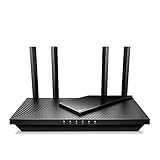
- Dual-Band AX3000 WiFi 6 Router - Experience incredible WiFi 6 speeds up to 2402 Mbps at 5GHz Band and 574 Mbps at 2.4GHz Band on the 160 MHz channel. Stream stutter-free 8K/4K videos, enjoy lag-free online gaming ¹ ²
- 2x 2.5 Gbps Multi-Gigabit Connectivity - Archer AX55 Pro features a 1x 2.5 Gbps WAN/LAN port, a 1x 2.5 Gbps LAN port, and 3x 1 Gbps LAN ports for all your expansion needs.
- Vast Coverage - 4 x high-performance antennas boost WiFi signals throughout your home and Beamforming technology detects devices to concentrate signals towards them, providing a strong and reliable WiFi to every corner of your house.
- Boosted Throughput – MU-MIMO delivers multiple data streams to several devices at once, while OFDMA splits a single stream across multiple devices. Together, they enhance overall WiFi efficiency and support simultaneous connections.
- Support for VPN Client & Server - Allow devices in your home network to access remote VPN servers without needing to install VPN software on every device.
Product prices and availability are accurate as of the date/time indicated and are subject to change. Any price and availability information displayed on Amazon at the time of purchase will apply.

