
LTPO is a display backplane technology that helps an OLED screen adapt its refresh rate to what you are viewing. It can refresh quickly for motion and more slowly for relatively static content, potentially reducing display power use. The exact refresh range and battery impact depend on the device, its settings, and the content.
What is an LTPO display?
LTPO stands for a hybrid thin-film transistor (TFT) backplane that combines low-temperature polycrystalline silicon (LTPS) and oxide semiconductor TFTs. A backplane is the substrate and transistor circuitry behind a display’s pixel-emitting layer; it is not the whole screen. In an OLED display, that circuitry controls the electrical operation of the emissive pixels. Its materials and structure can affect factors such as resolution and power use. Samsung Display’s backplane explainer describes the backplane as the substrate and TFTs that support display operation.
The hybrid approach is intended to combine useful properties of the two transistor types. A technical review describes LTPO as a backplane integration approach that can support pixel circuits designed to operate at both low and high frame rates. It is an enabling technology for variable refresh, not a setting that guarantees the same refresh behavior on every device. The review also notes integration and processing challenges. The 2020 technical review of LTPO backplanes discusses its use in OLED and LCD applications and its manufacturing considerations.
How does LTPO work?
Refresh rate is the number of times a display updates its image each second, measured in hertz (Hz). At a fixed high rate, a screen may update more often than necessary for a still image or a page of text. Variable refresh lets the display change its rate in response to the content or operating conditions: a high rate can help with fast-moving games, while a lower rate may be sufficient for email or a static image. The device’s display hardware and system software work together to determine the actual rate.
#1 Best Overall

- 6.7" flexible LTPO AMOLED display, HDR10+ & SGS Low Blue Light, 10-bit color depth, 120Hz refresh rate, 2412x1080px at 394 ppi, 4700mAh Battery, LED Glyph Backdoor
- 256GB/12GB RAM, No SD Card Slot, Qualcomm SM8475 Snapdragon 8+ Gen 1 (4nm), Octa-Core, Adreno 730
- Rear Camera: 50MP, f/1.9 + 50MP, f/2.2 (ultrawide), OIS, Video: 4K at 30/60fps, Front Camera: 32MP, f/2.5, Android 13, Nothing OS 2.6
- CDMA 800/1900, 3G: HSDPA 800/850/900/1700(AWS)/1900/2100; 4G LTE: 1/2/3/4/5/7/8/12/17/18/19/20/25/26/28/30/32/34/38/39/40/41/42/48/66/71; 5G: 1/2/3/5/7/8/12/20/25/28/30/38/40/41/66/71/75/77/78 SA/NSA - Dual SIM
- Professionally Renewed Device. Compatible with Most GSM Carriers like AT&T, T-Mobile, MetroPCS, etc. Will not work with CDMA Carriers Such as Verizon, Straight Talk, etc.,
Samsung Display gives illustrative use cases of 120Hz for games, 60Hz for movies, 30Hz for email, and 10Hz for still images. These examples explain the principle; they are not a specification for every LTPO device. Samsung also cited a 10–120Hz range in its historical Galaxy Note20 Ultra 5G example. Other products may support different ranges. Samsung Display’s variable-refresh-rate explainer outlines how refresh needs differ by content.
Does LTPO save battery?
It can reduce the display’s power use when the panel refreshes less often for suitable content. But a lower refresh rate does not translate directly into the same percentage improvement in total phone battery life: the display is only one part of a device’s power use, and the benefit depends on how the phone is used and how its display is implemented.
In a 2020 release, Samsung Display reported up to 22% lower display operating power than existing smartphones in general use, and 60% lower operating power while showing still images at 10Hz compared with conventional fixed-frequency panels. These are manufacturer-reported display-power figures under the stated scenarios, not independent measurements or a promise of equivalent whole-phone battery-life gains. Samsung Display’s 2020 announcement describes those comparisons and identifies the Galaxy Note20 Ultra 5G as its first flagship smartphone to commercialize the company’s adaptive-frequency technology.
What are LTPO’s benefits and drawbacks?
Potential benefits
- Smoother motion when needed: A device can use a higher refresh rate for fast movement, such as gaming, if its panel and software support it.
- Lower display power in suitable situations: A lower refresh rate can avoid unnecessary updates when content is relatively static.
- Flexible operation: The panel can balance motion smoothness and power use across different kinds of content, subject to the device’s implementation.
Limits and tradeoffs
- The range varies by device: The LTPO label alone does not tell you the maximum rate, the minimum rate, or which settings and content trigger them.
- Software has a role: The operating system can mediate refresh behavior. Apple’s developer documentation for ProMotion says apps cannot force the display to a particular actual refresh rate, and notes that higher rates can use significantly more power. Apple’s ProMotion developer guidance explains this system-level control.
- Manufacturing is more involved: The hybrid backplane requires integration and processing work; the cited technical review identifies these as challenges.
- Some claims are not established: The cited sources do not establish a universal retail-price premium, defect rate, or durability penalty for LTPO. Those should not be inferred from the technology label.
How to compare LTPO devices
Compare exact models and variants rather than assuming that a product family name guarantees LTPO or a particular refresh range. Check the manufacturer’s specification for the specific region and model you are considering, then consider how the display behaves in your usual apps and settings.
Do these 3 things before closing this tab:
1Clear out junk files and repair common Windows errors2Scan for outdated or missing drivers - takes under a minute3Repair Windows errors before they cause bigger problemsQuick Recap
Best Value
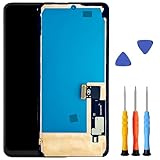
- Finalize Repair Solutparticlemail: Includes gluey frame, protective hardened glass, and all necessary factors for a expert screenfix with physical response optimization
- Advanced Display Technology: Factory adjusted led panel with environmental light transducer assist, providing pointed visuals, accurate colors, and flexible fingerprint recognition
- Strengthened Durability & Security: Scratch immune, against frown varnished display with shock penetrable plan and intact camera clippings for permanent use and optimal physical response
- Premium led Display Replaconcredrink: Direct current led screen replacement set with LTPO technology for dynamic colors, power efficiency, and full touch transducer functionality, ensuring seamless execution
- Accuracy Fit & Easy Installatparticlemail: Developed for exact smartphone agreement, highlighting pre applied gluey and a step by guide for bother complimentary homemade installation with encompassed hardened glass
Rank #4

- 📱【Powerful Snapdragon 5G 8+ Gen 1 chipset】With the Snapdragon 8+ Gen 1 chipset, Phone (2) boasts an 80% improvement on performance over its predecessor. Now with rapid speed, the best in-house heat management, advanced camera capabilities. Cue phenomenal graphics. No charging head in the package.NOTE: 5G connectivity may vary based on regional availability and local operator support.AT&T (full support) T-Mobile (full support)
- 📸【Dual rear camera Tuned to perfection】Nothing Phone (2) uses upgraded the 50 MP main + 50 MP ultra-wide camera with smart tuning effects Including a new Motion Capture 2.0 algorithm, which uses AI technology to accurately detect moving subjects in real-time. And 2X Super-Res Zoom that can preserve any scene’s finest details.For picture-perfect portraits, we gave the front camera a bigger 32 MP sensor, which is two times more than Phone (1). Brings every colour, hue and expression to life.
- 💎【Energy efficient display Beauty lasts】Nothing Phone (2) adapts Now bigger and brighter, Phone (2) has a 6.7” flexible LTPO AMOLED display with 1600 nits peak pixel brightness. Brilliant. With LTPO, Phone (2) can intuitively adapt its 120 Hz refresh rate to preserve power when you're not on your phone. A killer display that doesn’t murder battery life.
- 🔋【4700mAH Fast charging battery】Nothing phone (2) supports At 4,700 mAh, Phone (2) houses our longest lasting battery yet. Charge fully in just 55 minutes. Compatible with 15W Qi wireless charging. Phone (2) also doubles as a 5W wireless charger so you can power accessories like Ear (2) on-the-go.
- ♻【Sustainability Force of nature】With a focus on recycled materials, renewable energy, packaging, and longevity, Nothing Phone (2) is designed to be one of the most sustainable smartphones on the market.
Rank #3

- For USA Buyers: This Smartphone is not compatible/will not work with any CDMA Networks including: VERIZON, SPRINT, US CELLULAR. Please check with your network provider for 3G or 4G/LTE compatibility check before you purchase.
- Dual-SIM, Network Compatibility, SIM CARD 1 AND 2 [2G : GSM 850/ 900/ 1800/ 1900 and/or3G : WCDMA 850(B5) / 900(B8) / 1700(B4) / 1900(B2) / 2100(B1) and/or4G : LTE 700(B12)/ 700(B13)/ 700(B17)/ 700(B28)/ 800(B20)/ 850(B5)/ 850(B18)/ 850(B19)/ 850(B26)/ 900(B8)/ 1500(B32)/ 1700(B4)/ 1700(B66)/ 1800(B3) 1900(B2)/ 1900(B25)/ 1900(B39)/ 2000(B34)/ 2100(B1)/ 2300(B40)/ 2500(B41)/ 2600(B7)/ 2600(B38)/ 3500(B42)/ 3500(B48)/ 3700(B43) and/or5G : NR N1/N2/N3/N5/N7/N8/N20/N26/N28/N38/N40/N41/N66/N75/N77/N78/SA/NSA/Sub6]
- 6.67 inches, LTPO P-OLED, 1220 x 2712 pixels
- 256GB Storage, 8GB RAM, microSDXC
- Android 15, Mediatek Dimensity 7300 (4 nm)), Octa-core (4x2.5 GHz Cortex-A78 & 4x2.0 GHz Cortex-A55)
- Check the supported range. Look for both the highest and lowest refresh rates, and whether the advertised range applies to the mode you plan to use.
- Find out whether adaptation is automatic. Review display settings that may enable, limit, or disable adaptive refresh.
- Consider app and content support. A device’s system software may constrain a requested refresh rate; an app does not necessarily control the panel’s actual rate.
- Use comparable battery tests. Compare device-level results from tests with similar brightness, content, and settings. Do not treat a panel-power claim as a whole-phone battery result.
- Confirm the exact variant. Check the model and region instead of inferring a specification from a shared family name.
Product prices and availability are accurate as of the date/time indicated and are subject to change. Any price and availability information displayed on Amazon at the time of purchase will apply.

