
Quick wins for a faster PC:
Scan for outdated or missing drivers - takes under a minuteDriver Scan →Clear out junk files and repair common Windows errorsFree Scan →HD audio, also called high-resolution audio, generally means digital audio with a higher sample rate and bit depth than CD’s 44.1 kHz, 16-bit PCM. There is no single industry-wide cutoff: 96 kHz/24-bit PCM is a common example, not a guarantee that a recording has more original detail or will sound better.
What does HD audio mean?
“HD audio” is shorthand for high-resolution audio. The Audio Engineering Society (AES) describes its commonly understood meaning as digital formats whose sampling rates and bit depths exceed those of CD: 44.1 kHz and 16 bits. The term is not governed by one universal threshold, so labels can vary between organizations and products. AES’s high-resolution audio explainer uses CD as the comparison point, while Sony’s definition gives 96 kHz/24-bit or higher as a typical example.
| # | Preview | Product | Price | |
|---|---|---|---|---|
| 1 |

|
Sennheiser HD 280 Pro Headphone, Black | $79.08 | Buy on Amazon |
| 2 |
|
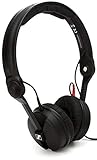
Sennheiser Pro Audio Professional HD 25 On-Ear DJ Headphones Black | $130.34 | Buy on Amazon |
| 3 |

|
Sennheiser HD 206 Stereo Headphone | $56.99 | Buy on Amazon |
| 4 |

|
Sennheiser HD 599 Open-Back Wired Audiophile Headphones, Ivory | $239.95 | Buy on Amazon |
Sample rate and bit depth are separate
- Sample rate, measured in hertz (Hz), describes how often the digital system samples the audio signal.
- Bit depth describes the number of bits used for each sample.
Both figures describe a digital audio representation. A higher value in either does not, by itself, tell you how the recording was made or mastered.
What counts as an HD audio source?
A source is the origin and delivery path of the audio, not simply a file extension or device label. A high-resolution source may be a native-resolution digital release, a file containing PCM audio, or a compatible playback chain. Check the actual file specifications and, when available, information about the recording and mastering.
#1 Best Overall
- Dynamic, closed ear headphones with up to 32 dB attenuation of outside sound
- Lightweight and comfortable, ergonomic design, Cord Length 3.3 9.8 feet Coiled
- Extended frequency response and warm, natural sound reproduction
- Around the ear design with padded earcups
- Earpads, headband padding, and audio cord are easily replaceable, ensuring long life
Native-resolution digital releases
A digital release in PCM or DSD may qualify when it was produced and delivered at a resolution above the CD reference. The Library of Congress’s recommended audio formats prefer native-resolution files and identify 96 kHz/24-bit or higher PCM and 2.8 MHz or higher DSD as preservation preferences for released high-resolution files. These are the Library’s recommendations, not universal industry thresholds. DSD is a different audio representation from PCM.
Lossless PCM files such as FLAC
FLAC is a lossless codec: it can preserve PCM audio without lossy compression. But “FLAC” alone does not mean HD audio. A FLAC file can contain CD-quality PCM or audio at other sample rates and bit depths; inspect the file’s actual properties. The FLAC technical standard, RFC 9639, defines the codec, not the provenance or resolution of the recording it contains.
Rank #2
- High sensitivity due to lightweight aluminium voice coils
- Capable of handling very high sound pressure levels
- Very lightweight and comfortable, even if used for long periods of time
- Tough, detachable, single-sided cable
Uncompressed audio in a file container
Audio resolution and file container are different things. For example, ISO/IEC 23003-5:2020 specifies carriage of uncompressed linear PCM (LPCM) audio in the MPEG-4 family of files. The container identifies how audio is packaged; it does not prove that the audio exceeds CD resolution.
A compatible playback chain
The source must also make it through compatible playback equipment. Sony lists Walkman players, headphones, headphone amplifiers, speakers and other product categories as optimized for High-Resolution Audio. Capabilities vary by model, so check the specific player, software, output connection and other components for support of the file’s format and rate. A general label such as “phone,” “DAC” or “wireless headphones” is not enough to establish compatibility.
PC Slower Than It Used to Be?
A free scan shows the junk files, broken settings and background clutter dragging Windows down - then fixes them in one click.Free scan · Windows 10 & 11Crashes, No Sound, or Screen Glitches?
Random freezes, missing sound and display glitches usually trace back to one bad driver. Find and replace yours safely.Free scan · under a minuteDoes HD audio sound better than CD?
Not necessarily. A high-resolution label describes delivery-format parameters; it does not establish that the recording came from a higher-resolution master, nor does it guarantee an audible improvement for every listener. The AES emphasizes that resolution figures are delivery modes within a broader audio-processing chain and points to the limited relevance of bandwidth beyond typical human hearing. The sources cited here do not establish a universal audible advantage across recordings, listeners, playback systems and listening environments.
Provenance matters because a file can carry a higher sample-rate or bit-depth label without proving that its original source contained additional detail. The Library of Congress prefers native-resolution files over upsampled files in its preservation guidance. That preference does not mean every high-rate file has been upsampled; it means the displayed numbers alone cannot settle the question.
Quick Recap
Rank #4
- Premium, around-ear, open back headphones: Audiophile sound combined with premium design and materials
- Padded headband and luxurious velour covered ear pads perfect for long listening sessions with no pressure on the ears
- Multiple connectivity options: Robust 3 meter detachable cable and 6.3 millimeter jack and additional 1.2 meter detachable cable with 3.5 millimeter Jack
- Timeless design cues: Ivory color, matte finish together with the brown headband stitching and matte metallic detail convey quality at first glance
- Premium Components: Sennheiser engineered transducers use aluminum voice coils delivering high efficiency, excellent dynamics and extremely low distortion
How to evaluate an HD audio source
- Check provenance. Look for information about the source recording, master and release. Prefer a documented native-resolution release over assuming that a larger number means more original detail.
- Check whether it is lossless. Lossless encoding preserves the encoded audio, but does not tell you whether the content is above CD quality.
- Read the sample rate and bit depth. Compare them with CD’s 44.1 kHz/16-bit PCM reference. A common high-resolution example is 96 kHz/24-bit PCM, but no universal cutoff applies.
- Confirm playback support. Check the specifications of the player and output chain for the particular format, sample rate and bit depth. Do not assume all devices support every high-resolution format.
HD audio versus CD and lossless audio
| Term | What it tells you | What it does not establish |
|---|---|---|
| CD-quality PCM | The CD reference is 44.1 kHz, 16-bit PCM. | It is not above-CD high-resolution audio under the common definition. |
| High-resolution audio | Commonly refers to digital audio above the CD sample-rate and bit-depth reference; 96 kHz/24-bit PCM is a typical example. | There is no single universal threshold, and the label alone does not prove provenance or audible benefit. |
| Lossless audio | The encoding preserves the audio rather than discarding information through lossy compression; FLAC is one example. | It does not say whether the audio is CD quality or higher-resolution. |
| DSD | A digital audio representation distinct from PCM; the Library of Congress lists 2.8 MHz or higher DSD among its high-resolution preservation preferences. | The cited figure is a preservation recommendation, not a universal industry cutoff or evidence of audible superiority. |
Product prices and availability are accurate as of the date/time indicated and are subject to change. Any price and availability information displayed on Amazon at the time of purchase will apply.

