
GPS vehicle tracking uses a receiver in or associated with a vehicle to calculate its location from signals broadcast by GPS satellites. To show that location remotely, a tracking system also needs a way to display or transmit the receiver’s data; GPS satellites themselves do not track cars or send their locations to owners.
What GPS vehicle tracking means
GPS is a positioning, navigation and timing service. Satellites broadcast timing and navigation signals, and a GPS receiver uses them to calculate its position. Vehicle tracking applies that positioning capability to a car, truck, bus or other vehicle. It is an application of GPS, not a separate satellite network.
GPS.gov describes GPS as having space, control and user segments: satellites make up the space segment, the control segment monitors and manages the system, and receivers used by people and devices are part of the user segment. A vehicle’s receiver is therefore a user of GPS signals, not a transmitter reporting its location to the satellites. GPS.gov’s GPS overview and the U.S. Coast Guard Navigation Center’s GPS FAQ explain the receiver and satellite roles.
How GPS vehicle tracking works
- Satellites broadcast signals. GPS satellites send timing and navigation information that a receiver can use.
- The vehicle receiver calculates a position. It measures signal travel times from multiple satellites. The Coast Guard describes measurements from four satellites being processed together to solve position, velocity and time.
- A display or software makes the location useful. The calculated position can appear on an in-vehicle navigation display or be used by mapping, fleet or dispatch software.
- A communication link sends the location elsewhere when needed. For remote tracking, a device or associated system must transmit location data to another screen or computer. A GPS receiver alone does not necessarily provide remote, live tracking.
In short: satellite signals → vehicle receiver calculates a position → software or a display uses it → a communication component sends it elsewhere if remote access is required. GPS satellites broadcast signals one way; they do not receive a vehicle’s location report. See GPS.gov’s overview of driving with GPS.
#1 Best Overall
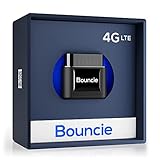
- Real-Time GPS Tracker Device for Vehicles — Ideal for personal use or fleet management, this car GPS tracker provides up-to-the-minute location updates. Our car tracking device also provides unlimited trip history, including a detailed route history
- Driving Insights — Our OBD tracker for cars monitors speed, acceleration, hard braking, idle time, and more. This versatile family and fleet GPS tracker for cars also helps improve road safety by sending alerts in response to unsafe driving practices
- Vehicle Health — Unlike other vehicle tracking devices, our car tracker device continuously monitors diagnostic engine data, alerting you to potential maintenance issues, so you can avoid downtime and keep fleet and family vehicles in peak condition
- Geo-Fencing & Accident Detection — Set up geo-fences to receive notifications when your vehicle enters or exits designated areas; Equipped with advanced sensors and software, this vehicle tracker device instantly detects impacts and sends SMS alerts
- Easy To Install & Low Monthly Subscription — Our OBD GPS tracker for vehicles plugs directly into OBD2 ports and works on most vehicles 1996 and newer; $9.65 monthly subscription required - no hidden activation or return fees - cancel anytime
What vehicle tracking is used for
Vehicle location can support several different tasks. GPS.gov identifies uses including in-vehicle navigation, automatic vehicle location, commercial vehicle routing and dispatch, mass transit, road maintenance and emergency vehicles.
- Navigation: show a vehicle’s location to its driver for route guidance.
- Fleet operations: help dispatchers locate vehicles and coordinate routing or service.
- Transit and public services: monitor buses, road-maintenance vehicles or emergency vehicles.
- Asset location: help locate a vehicle when its position is transmitted to an authorized user or service.
GPS tracking versus fleet telematics
Location tracking answers where a vehicle is. Fleet telematics can combine location with additional information about the vehicle and its use, such as diagnostics, mileage, fuel economy or operating practices. A Minnesota Department of Human Services fleet policy describes telematics-related aims including efficiency, safety, diagnostics, fuel economy, mileage tracking, proper operation and theft prevention. Those are potential uses, not features guaranteed in every tracker. Minnesota DHS’s Telematics Tracking in Fleet Vehicles Policy was initially issued July 24, 2018, and its contact information was updated October 22, 2024.
Rank #2

- Premium GPS Tracker — The LandAirSea 54 GPS tracker provides accurate global location, real-time alerts, and geofencing. Easily attaches to vehicles, ATVs, golf carts, or other critical assets.
- Track Movements in Real-Time — Track and map (with Google Maps) in real-time on web-based software or our SilverCloud App. Location updates as fast as every 3 seconds with historical playback for up to 1 year.
- Powerful & Discreet — The motion-activated GPS tracker will sleep when not in motion for extended periods, preserving the battery life. The ultra-compact design and internal magnet create the ultimate discreet tracker.
- Lifetime Warranty — This GPS tracker is built to last. LandAirSea, a USA-based company and pioneer in GPS tracking offers a unconditional lifetime warranty that covers any manufacturing defects in the device encountered during normal use.
- Subscription Required — Affordable subscription plans are required for each device. Fees start as low as $9.95 a month for annual plans and $19.95 for monthly plans. No contracts, cancel anytime for a hassle-free experience.
When evaluating a system, distinguish whether it provides location alone or broader vehicle data, whether location is shown locally or transmitted remotely, and what update and communication requirements apply to that specific product. Privacy, data access, retention and consent practices also depend on the system and context.
Do GPS satellites track your car?
No. GPS satellites transmit signals; a receiver associated with the vehicle calculates its position. A separate communication capability may then send that position to a navigation display, fleet service or remote user. The exact components and services depend on the system.
Quick wins for a faster PC:
Repair Windows errors before they cause bigger problemsFix Now →Scan for outdated or missing drivers - takes under a minuteDriver Scan →Rank #3

- LONG-BATTERY VEHICLE TRACKING – Built for cars, trailers, fleets, equipment, boats, and motorcycles, Tracki’s trailer GPS tracker uses a 10,000mAh battery for 2 to 7 months active at 1–5 minute updates or up to 12 months in sleep mode.
- SUBSCRIPTION-POWERED SERVICE – The Tracki GPS tracker connects through 4G LTE Cat1 with built-in global SIM, giving app access, real-time location updates, alerts, and support after activation; Subscription Required, Cancel Anytime.
- FLEET-WIDE CONTROL – A practical fleet GPS tracker for work vehicles, with subscription-powered 15-second to 1-minute updates plus speed, geofence, movement, idle time, impact, and battery alerts through SMS, email, and app notifications.
- TRAILER & ASSET COVERAGE – A GPS tracker for trailer, car, truck, RV, boat, or equipment use, with 185+ country coverage, GPS accuracy of 5 to 10 meters outdoors, and Wi-Fi fallback indoors when GPS signals are harder to reach.
- SECURE TWO-WHEEL MONITORING – Use this motorcycle tracker for authorized bikes and powersport assets, with a built-in strong magnet, included screw mount, and weatherproof design for flexible vehicle placement.
Privacy and legal context
Vehicle location data can raise privacy questions, especially when someone other than the driver installs or manages a tracking system. In a summary last modified September 23, 2013, GPS.gov reported that the U.S. Supreme Court’s January 23, 2012, decision in United States v. Jones required law enforcement to obtain a warrant before attaching a GPS device to a suspect’s vehicle to monitor its movements. The page also notes that the Court did not fully decide the separate question of long-term monitoring. This is a summary of a particular U.S. law-enforcement case, not a universal rule for workplace or private tracking, or for other jurisdictions. Read GPS.gov’s archived summary of the ruling.
Quick Recap
Rank #4

- 📱 Global Cloud Positioning – Works with both Google's Find Hub and Apple‘s Find My (Not for Huawei app or GPS app)
- 📢 Loud Alert Sound – Built-in speaker with up to 110dB for quick locating
- 🔋 Far Superior Battery Life – Up to 2 years battery life on Android and ios
- 💧 IP68 Waterproof – It provides protection against rainwaterand splashes
- 🔊 Visualize Distance – Visualize distance using Find my & Find Hub technology within Bluetooth range, allowing you to immediately see the distance
Product prices and availability are accurate as of the date/time indicated and are subject to change. Any price and availability information displayed on Amazon at the time of purchase will apply.

