
Esperanto’s ET-SoC-1 is a data-center AI inference accelerator built around more than a thousand RISC-V cores, announced on August 24, 2021. The “1,000-core” label is rounded: Esperanto lists 1,088 small ET-Minion cores and four larger ET-Maxion cores, while an EE Times tally reaches 1,093 by including a service processor. The design paired many low-power cores with per-core vector and tensor acceleration. Esperanto has since said it ceased operations and that its intellectual property was acquired by Nekko.ai, so current sales, evaluation access, and support are not established.
What is Esperanto’s ET-SoC-1?
ET-SoC-1 is a specialized RISC-V system-on-chip Esperanto designed for machine-learning inference and other massively parallel workloads. Esperanto announced it at Hot Chips 33 on August 24, 2021, describing it as a “supercomputer-on-a-chip” for data-center environments with air-cooling and constrained power budgets. The launch announcement said the chip was designed to operate below 20 W; that is a design claim, not a statement that every workload or system draws that amount. Esperanto’s announcement
Its distinctive approach was to use a very large array of relatively small RISC-V processors rather than rely on a few giant accelerator cores. Founder Dave Ditzel told EE Times, “We are the first to put a thousand RISC-V cores on a single chip.” That is the founder’s characterization of the design. EE Times’ launch report
How many cores does ET-SoC-1 have?
The figures use different counting conventions rather than contradicting one another:
Do these 3 things before closing this tab:
1Scan for outdated or missing drivers - takes under a minute2Clear out junk files and repair common Windows errors3Fix the driver behind crashes, sound loss and screen glitches#1 Best Overall

- 🍊[High-Performance RISC-V Development Board]: Orange Pi RV2 features an octa-core RISC-V processor with integrated AI acceleration. It delivers 2.0 TOPS AI performance, with single-core CPU performance surpassing ARM A55 by over 30%.
- 🍊[Supports AI Model Deployment]: Orange Pi RV2 provides AI computing power through CPU core integration, enabling fast AI model deployment and seamless compatibility with all major AI ecosystems, supporting various edge AI large models.
- 🍊[Flexible Memory & Storage Options]: Equipped with 2GB/4GB/8GB LPDDR4X RAM and supports optional eMMC modules (32GB/64GB/256GB) for enhanced storage flexibility.
- 🍊[Comprehensive Connectivity]: Orange Pi RV2 offers HDMI output, GPIO interface, USB 2.0 & 3.0, Gigabit Ethernet, 3.5mm headphone jack, and two M.2 M-Key slots (PCIe 2.0 2-Lane) for NVMe SSD expansion. And comes with Wi-Fi 5.0 + Bluetooth 5.0 (BLE) for seamless wireless connectivity.
- 🍊[Wide range of Applications]: Orange Pi RV2 is highly versatile, making it ideal for NAS, smart robotics, smart home, industrial control, edge computing, and commercial electronics.
| Count | What it includes | Source |
|---|---|---|
| 1,088 ET-Minion cores and four ET-Maxion cores | The two processor types emphasized on Esperanto’s product page. | Esperanto product page |
| 1,093 RISC-V cores | EE Times’ count of 1,088 Minions, four Maxions, and one service processor. | EE Times, August 24, 2021 |
So “1,000-core” is a rounded headline description. If counting the service processor as well as the two core families, EE Times reports a total of 1,093.
How the chip’s architecture works
ET-Minion: the parallel-workhorse core
Esperanto describes each ET-Minion as a 64-bit, in-order RISC-V core with a custom vector/tensor unit optimized for machine learning. The large number of these cores was intended to spread parallel inference work across the chip.
Rank #2

- ESP32-P4-WIFI6 multimedia development board adopts ESP32-P4, with a 400MHz dual-core RISC-V processor and supports up to 32MB PSRAM, integrated ESP32-C6, supports Wi-Fi 6/BLE 5 wireless connections and other functions through SDIO
- 128 KB HP ROM, 16 KB LP ROM, 768 KB HP L2MEM, 32 KB LP S-R-A-M, 8 KB TCM, 32MB PSRAM in the chip's package, with onboard 32MB Nor Flash
- Powerful image and voice processing capability. Provides image and voice processing interfaces including JPEG Codec, Pixel Processing Accelerator, Image Signal Processor, H264 encoder. Supports AI speech interaction
- Rich human-machine interfaces, as MIPI-CSI, MIPI-DSI, USB 2.0 OTG, SDIO 3.0 TF card slot, microphone, speaker header, etc. Adtaping 2*20 GPIO headers with 27 x remaining programmable GPIOs. Built-in 40PIN GPIO expansion interface
- Security features: Secure Boot, Flash Encryption, cryptographic accelerators, and TRNG. Additionally, hardware access protection mechanisms help to enable Access Permission Management and Privilege Separation
ET-Maxion: cores for system tasks
The four 64-bit, out-of-order ET-Maxion cores provide capacity for self-hosted operating-system use. This complements the Minions’ parallel compute role rather than making the chip simply a collection of identical cores.
Memory, I/O, and manufacturing details
Esperanto’s product page lists more than 160 million bytes of on-chip SRAM, LPDDR4x DRAM interfaces, eMMC flash, and PCIe Gen4 x8. In a technical article for RISC-V International, Ditzel said ET-SoC-1 was built on TSMC 7-nm technology, contained more than 24 billion transistors, and could address up to 32 GB of external memory. Ditzel’s technical article
Rank #3
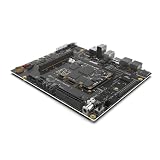
- High Performance RISC-V Development Board: Powered by a quad-core SiFive P550 64-bit CPU (up to 1.8GHz) with 4MB L3 cache, delivering unmatched processing power for high-performance Linux and AI applications.
- Advanced AI Acceleration: Integrated 19.95 TOPS NPU supports FP16 and INT8, ideal for large language models (LLMs), computer vision, and AI-driven edge computing.
- Robust Memory & Storage: Choose 16GB or 32GB LPDDR5-6400 RAM, 128GB eMMC storage, and expandable via SATA, microSD, or PCIe Gen3 x4 for demanding workloads.
- Rich Connectivity & Multimedia: Features HDMI 2.0, USB 3.2 Gen1, PCIe, GPIO, and 8K video encoding/decoding, perfect for IoT, robotics, and media-centric projects.
- Developer-Ready Platform: Preinstalled Ubuntu 24.04, Debian 12 support, GCC/LLVM tools, and open-source SDKs streamline RISC-V software and OS development.
What workloads was it designed to accelerate?
Esperanto positioned ET-SoC-1 first for machine-learning inference, especially recommendation models, and later described a wider set of intended uses. The company cited generative AI, computer vision, digital signal processing (DSP), high-performance computing (HPC), and mixed AI/HPC workloads. These are company-described use cases, not a guarantee that every model or application ran equally well.
In April 2022, Esperanto said initial customer evaluations were underway. Its evaluation program let users run off-the-shelf models and vary the model, dataset, data type, batch size, and compute-cluster configuration. In April 2023, the company said versions of Meta’s Open Pre-trained Transformer (OPT) models ran on ET-SoC-1 at multiple precision levels and context sizes, using its ML SDK to port them. Esperanto press-release archive
Rank #4

- ESP32-P4-WIFI6-DEV-KIT high-performance development board, based on ESP32-P4 and ESP32-C6, with RISC-V 32-bit dual-core and single-core processors, supports 2.4GHz Wi-Fi 6 and Bluetooth 5 / BLE 5
- 128 KB HP ROM, 16 KB LP ROM, 768 KB HP L2MEM, 32 KB LP S-R-A-M, 8 KB TCM. 32MB PSRAM in the chip's package, with onboard 16MB Nor Flash
- Supports AI speech interaction, allows access to online large model platforms. Provides image and voice processing interfaces including JPEG Codec, Pixel Processing Accelerator, Image Signal Processor, H264 encoder
- Rich human-machine interfaces such as MIPI-CSI, MIPI-DSI, USB 2.0 OTG, Ethernet, SDIO 3.0 TF card slot, microphone, speaker header, etc. Reserved PoE Module header. Adtaping 2*20 GPIO headers with 28 x remaining programmable GPIOs
- Security features: Secure Boot, Flash Encryption, cryptographic accelerators, and TRNG. Additionally, hardware access protection mechanisms help to enable Access Permission Management and Privilege Separation
Esperanto’s May 2023 General Purpose SDK announcement expanded the pitch to mathematical computation, DSP, and pre- and post-processing on the RISC-V cores and their vector/tensor units. Its technology materials described support for PyTorch and TensorFlow models through ONNX, as well as direct programming of the core fabric. These describe the company’s software offering at the time; they do not establish that the tools remain maintained or supported.
Independent reader supportYour contribution helps us test, update, and keep practical guides available for everyone.How much power does it use, and what performance was claimed?
There is no single power figure that applies to all ET-SoC-1 workloads or systems. Figures in launch-era materials refer to different conditions and should be read with their source and scope:
Recommended Free Tools
Best Value
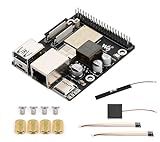
- High-Performance Dual-Core with Ample Memory--- Equipped with a 360MHz dual-core RISC-V processor, 32MB of onboard PSRAM, and 32MB of Flash memory, providing powerful processing capabilities and ample runtime for complex multimedia applications and edge computing.
- Powerful Multimedia Processing Center--- Integrated with a dedicated image processor (ISP), H.264 video encoder, and JPEG codec, perfectly supporting camera input and video processing, making it an ideal choice for developing smart displays, video surveillance, and other projects.
- Hardware-Level Security Protection--- Built-in digital signature, encryption accelerator, and key management unit, providing a one-stop hardware-level security solution from secure boot and data encryption to access control management, ensuring the security of your products and data.
- Full Connectivity Coverage: Wi-Fi 6, Bluetooth, PoE Power Supply--- Onboard with an ESP32-C6 chip, supporting the latest Wi-Fi 6 and Bluetooth 5.0; it also integrates an Ethernet port with PoE functionality, providing high-speed, flexible, and stable network connectivity, and can be powered directly via Ethernet cable, simplifying deployment.
- Rich interfaces and strong expandability--- It provides a MIPI camera/display interface, high-speed USB, SD card slot, microphone/speaker interface and a large number of programmable GPIOs, which greatly facilitates the expansion of external devices and meets the needs of various human-computer interaction and Internet of Things applications. Supports AI Speech Interaction: Allows access to online large model platforms such as ChatGPT, DeepSeek, Doubao, etc.
| Claim | Scope and qualification | Source |
|---|---|---|
| Designed for peak rates of 100–200 TOPS | Peak design range depending on ET-Minion operating frequency; not a measured result for every configuration. | David R. Ditzel, RISC-V International, 2022 |
| Less than 20 W | Ditzel said the chip used under 20 W for many workloads; this is not a universal draw specification. | David R. Ditzel, RISC-V International, 2022 |
| 10–60 W profiles; 20 W “sweet spot” per chip | EE Times described voltage and power profiles and a 20 W-per-chip target in the context of a six-chip Glacier Point card rated under 120 W total. | EE Times, 2021 |
| As low as 25 W per chip | Esperanto’s April 2023 claim for inference on versions of Meta OPT at multiple precision levels and context sizes; a distinct workload and setup from the earlier sub-20-W claims. | Esperanto press-release archive |
Ditzel also recounted preliminary Hot Chips data projecting more than 100 times better performance per watt for an Esperanto accelerator card than a standard server platform on the MLPerf Deep Learning Recommendation Model benchmark. This was a preliminary projection described by the company’s founder, not an independently validated benchmark result.
What products and systems were described?
Esperanto’s product materials described an ET-SoC-1 PCIe Gen4 card with 32 GB of LPDDR4x DRAM, as well as a 2U server configuration with eight or sixteen accelerator cards, dual Xeon host processors, and up to 1 TB of DDR4-3200 main memory. The company also presented a generative-AI appliance. These are historical product descriptions, not confirmation that any configuration can currently be ordered or supported.
For an enterprise evaluation, the relevant comparison is not just chip count. A single card and a multi-card server differ in total system power and cooling, accelerator and host memory capacity, host CPU, workload fit, software requirements, and rack or deployment constraints. The historical materials do not provide current pricing or a current supported configuration matrix.
Can you buy or evaluate an Esperanto accelerator now?
Current availability is unclear. Esperanto’s currently accessible homepage says that “Esperanto Technologies has ceased operations” and that “Esperanto Technologies’ IP has been acquired by Nekko.ai.” Esperanto homepage Historical materials described evaluation servers, a 2023 cloud-access program, accelerator cards, and systems partners, but they do not establish current inventory, evaluation access, licensing, support, or successor-company maintenance.
What’s actually slowing this PC down?
Pick the symptom - the matching free tool is one click away.
Before planning a deployment or integration, an organization would need to confirm directly with Nekko.ai or a current partner whether ET-SoC-1 hardware, software, documentation, and support are available. Earlier named partners included Penguin Solutions, E4 Computer Engineering, MEGWARE, and Elematec; those past relationships alone do not establish that any of them can supply or support the technology now.
Quick Recap
Product prices and availability are accurate as of the date/time indicated and are subject to change. Any price and availability information displayed on Amazon at the time of purchase will apply.

