
What is Dell APEX? Dell APEX is a portfolio of subscription, as-a-Service, and pay-per-use offerings for infrastructure, private cloud, storage, data protection, high-performance computing, and client devices. Dell APEX is not one server, appliance, financing product, or public cloud; the selected service determines the deployment location, management scope, billing method, and contract obligations.
In practical terms, Dell APEX lets an organization consume selected Dell technology through a recurring or usage-based commercial model rather than buying, deploying, supporting, and refreshing every component in the traditional way. Depending on the offer, Dell may provide the hardware, software, deployment, monitoring, support, management, capacity planning, and lifecycle services.
Key takeaways
- Dell APEX is a branded portfolio covering infrastructure subscriptions, private cloud, storage, data protection, data-center utility services, cloud platforms, HPC, and PC as a Service.
- Dell APEX is usually not a public cloud; infrastructure may remain in a customer data center, edge site, or colocation facility while using a subscription or consumption-based model.
- APEX billing is offer-specific and may combine metered usage, installed capacity, minimum commitments, capacity buffers, fixed subscription charges, or per-seat pricing.
- Dell requires deployment and support for the APEX Infrastructure program, while managed services are available only for selected offerings and must be confirmed in the contract.
- The commercial decision should compare full lifecycle cost, operational responsibility, software licensing, scalability, and exit terms—not just the monthly infrastructure charge.
What is Dell APEX in plain English?
Dell APEX is a portfolio of Dell subscription and as-a-Service offerings that lets organizations consume IT capabilities instead of purchasing and operating all of the underlying infrastructure in the traditional way. Dell describes APEX as a broad cloud-as-a-Service portfolio, while some Dell commercial pages use APEX more narrowly to describe hardware subscriptions. Those descriptions are different levels of the same brand: APEX is the portfolio, and each named APEX service has its own technology, billing, management, and contract model.
Dell uses “APEX” as a product brand rather than consistently presenting it as an acronym with one official expansion. A reader may encounter the name in three related contexts:
Outdated Drivers Are Slowing You Down
One free scan finds every outdated or missing driver and matches the right update for your exact hardware.Free scan · exact hardware matchWindows Errors? Fix Them Before They Spread
Repair common Windows errors and clear accumulated junk for a smoother, more stable PC - no reinstall needed.Free scan · no reinstall#1 Best Overall

- Note:The eSATA port on this product does not support the use of a computer’s SATA-to-eSATA adapter. Hot-swapping is not supported. The computer’s eSATA port must support RAID functionality to properly access multiple drive bays via the eSATA port; otherwise, only one drive bay can be accessed.
- 【Reliable External Storage System for Individuals】The 3.5 hard drive enclosure supports 2.5/3.5 inches HDD and SSD , max capacity up to 80TB( 20TB for each hard drive), it's a ideal external hard drive enclosure for personal or enterprise using.Save space on your desktop or laptop.
- 【No heat,】The 4 bay hard drive reader built in Aluminum-Alloy materials and 2 inch Fans.Maximize the security of your data.NOTE:Fan noise is around 40-50 decibels, not recommended if you are very sensitive to noise.
- 【8 Raid Modes】This external hdd raid enclosure supports RAID 0/1/3/5/10, CLONE, LARGE, NORMAL.NOTE:When replacing RAID, you need to go back to NORMAL and set the desired RAID mode.Designing RAID may result in data loss.MAC OS no Raid software. Raid Mode Switching Method Disconnect the power, use a screwdriver, toggle the paddle to the corresponding mode, press and hold the reset button, turn on the power, hold reset for ten seconds, the raid mode will be successfully switched.
- 【Up to 5Gbps】This raid enclosure equips with JMS567+JMB393 chip and USB 3.0, eSATA output interface.
- Commercial subscriptions: recurring or consumption-based ways to acquire Dell infrastructure or devices.
- Technical services: offerings such as private cloud, storage, data protection, cyber resilience, and cloud management.
- APEX Cloud Platforms: integrated platforms combining Dell infrastructure, software, and a cloud operating environment for on-premises and edge use.
Dell’s cloud-as-a-Service overview and APEX portfolio page are the best starting points for separating the overall brand from individual services.
Traditional infrastructure versus APEX
| Traditional purchase | APEX-style consumption |
|---|---|
| Buy hardware and licenses | Select a defined service or infrastructure configuration |
| Deploy and integrate equipment | Dell or a shared team may deploy the environment, depending on the offer |
| Operate, monitor, support, and refresh equipment | Customer, Dell, or both perform those responsibilities under the service agreement |
| Pay primarily upfront, then fund support and refreshes | Pay a recurring subscription, usage charge, or combination of both |
The comparison is directional, not universal. APEX does not eliminate every customer responsibility, and an APEX contract is not automatically a fully managed cloud service.
Is Dell APEX a public cloud?
Usually, no. Dell APEX is better understood as a portfolio that provides cloud-like consumption and management experiences across on-premises, edge, colocation, and selected public-cloud environments. Dell APEX Infrastructure and APEX Private Cloud are designed for infrastructure located in or near the customer’s environment. That arrangement can help organizations retain control over physical placement, latency, connectivity, and data location while adopting a more flexible commercial model.
The statement “Dell APEX is Dell’s version of AWS” is therefore misleading. A more accurate description is: Dell APEX is a Dell-branded set of infrastructure, cloud, storage, device, and managed-service offerings that can support private and hybrid-cloud operating models.
What’s actually slowing this PC down?
Pick the symptom - the matching free tool is one click away.
Some APEX services can operate in a public cloud or manage public-cloud resources, but the portfolio does not give every APEX customer the broad, self-service, hyperscale service catalog of AWS, Microsoft Azure, or Google Cloud. Workload portability, cloud-native services, data transfer, and control-plane dependencies must be assessed service by service.
What are the main Dell APEX offerings?
The APEX name covers several materially different products and commercial models. The following taxonomy is more useful than treating APEX as one platform.
| Offering | What it provides | Typical buyer or workload | Important qualification |
|---|---|---|---|
| APEX Infrastructure | On-premises infrastructure, software, and services consumed through a subscription or usage-based model | Servers, storage, HCI, private cloud, cloud platforms, and cyber resilience | Deployment and support are required for the program; billing terms vary by offer |
| APEX Private Cloud | Private-cloud compute, storage, virtualization, automated deployment, and cloud-console integration | Private cloud, virtualized workloads, VDI, and controlled enterprise environments | Configurations and virtualization licensing depend on geography, date, and the quoted design |
| APEX Data Center Utility | A broader pay-per-use model for data-center infrastructure and operations | Organizations with changing demand, multiple sites, or multiple infrastructure assets | Customization, tracking, management, and invoicing are contract-dependent |
| APEX storage and data protection | Elastic file and block storage, backup targets, public-cloud storage, cyber recovery, and related services | Storage growth, backup, recovery, ransomware resilience, and hybrid data protection | Deployment and management responsibilities differ significantly between services |
| APEX Cloud Platforms | Turnkey Dell infrastructure integrated with software and a cloud operating stack | On-premises and edge environments needing consistent cloud or multicloud operations | Supported software stacks and platform capabilities must be verified for the target design |
| APEX PC as a Service | Per-seat device, software, deployment, support, security, and lifecycle services | Enterprise laptop and desktop fleets | This is an endpoint subscription, not a data-center infrastructure service |
| APEX High Performance Computing | Subscription-based HPC infrastructure and associated services | Engineering, research, simulation, analytics, and AI/HPC workloads | Availability and configurations should be confirmed for the customer’s geography |
The Dell APEX Infrastructure description covers the infrastructure-focused program. Dell’s APEX Cloud Platforms technology overview explains the integrated-platform category, while the APEX PC as a Service description covers the separate per-seat model.
What is Dell APEX Infrastructure?
Dell APEX Infrastructure is an as-a-Service offering for Dell on-premises infrastructure, software, and services. Dell positions the offering across servers, storage, cyber resilience, private cloud, HCI, and cloud platforms. Infrastructure may run in a customer data center, at an edge location, or in a colocation facility.
APEX Infrastructure is aimed at organizations that want to reduce upfront purchasing, align spending more closely with capacity, scale within an agreed framework, or obtain deployment and support from Dell. Dell’s public description says deployment and support are required for the APEX Infrastructure program. Managed services can be added where the selected product and geography support them.
What is Dell APEX Private Cloud?
Dell APEX Private Cloud is a private-cloud environment built from Dell infrastructure and virtualization or cloud-platform software, with automated deployment and cloud-console integration. A cited Dell validated design describes configurations based on VxRail and VMware components and discusses one- or three-year subscription terms. Those configurations should not be treated as universal: virtualization product names, licensing, supported hardware, packaging, and availability can change.
Before comparing APEX Private Cloud with a public cloud, establish whether the buyer needs a private-cloud control plane, a specific hypervisor, a managed operating model, or simply virtual machines on Dell hardware. Those requirements lead to different costs and responsibilities.
Rank #2

- 【Reliable External Storage System for Individuals and business】The 3.5 hard drive enclosure supports 2.5/3.5 inches HDD and SSD, max capacity up to 20TB for each hard drive, it's a ideal external hard drive enclosure for personal or enterprise using.Save space on your desktop or laptop.
- 【No heat】The 6 bay hard drive enclosure built in Aluminum-Alloy materials and two 2.7 inch Fans.Maximize the security of your data. NOTE:Fan noise is around 40-50 decibels, not recommended if you are very sensitive to noise.
- 【Up to 5Gbps】This dual bay enclosure equips with advanced chips and USB 3.0 output interface.Transfer 1G files in 3-5 seconds with USB 3.0 Ports, which is 10 times faster than USB 2.0.
- 【Hot Swappable Convenience】The HDD enclosure supports hot swapping, allowing users to replace hard drives without powering off the device. This feature enhances convenience and efficiency in data transfer processes.
- 【Tool-Free Installation】Featuring a tool-free hard drive tray design, the external hard drive enclosure enables easy installation and removal of hard drives without requiring additional tools. Plug and play! No fuss, no muss!
See the Dell APEX Private Cloud design guide for the cited design example, then request a current configuration for the relevant country and publication date.
Do these 3 things before closing this tab:
1Fix the driver behind crashes, sound loss and screen glitches2Clear out junk files and repair common Windows errors3Scan for outdated or missing drivers - takes under a minuteWhat is Dell APEX Data Center Utility?
Dell APEX Data Center Utility is a broader consumption model for data-center infrastructure and operations. Dell describes a model intended for organizations with fluctuating demand or multiple assets and sites, with customization, automated tracking, expert management, and a consolidated monthly invoice.
Data Center Utility should not be confused with a single server subscription. The buyer needs to understand which assets are covered, how utilization is tracked, what management services are included, and whether the commercial model includes minimum capacity or term commitments.
What is APEX PC as a Service?
APEX PC as a Service is Dell’s per-seat subscription model for endpoint fleets. Dell describes a single monthly per-seat package that can combine Dell hardware, software, peripherals, deployment, support, security, imaging, unified endpoint management, provisioning, and lifecycle services.
The exact package is configurable and governed by the customer agreement. A PCaaS quote should identify the device model, accessories, software, enrollment period, support level, replacement process, security services, end-of-term treatment, and whether equipment is returned, refreshed, or transferred. PCaaS is relevant to a CIO or procurement team searching for APEX, but it should not be interpreted as a data-center infrastructure subscription.
How does Dell APEX work?
Dell APEX generally works by matching a selected Dell technology and service scope to a contractual consumption model. The precise sequence and billing unit depend on the offering, but an APEX Infrastructure engagement commonly follows these steps:
- Choose the technology: Identify the server, storage, cyber-resilience, private-cloud, HCI, or cloud-platform capability required.
- Define the location: Specify the customer data center, edge site, colocation facility, or another approved deployment location.
- Select services: Define deployment, support, monitoring, management, capacity planning, data protection, and lifecycle services. Mandatory and optional services must be separated.
- Set capacity and commitments: Document installed capacity, usable capacity, minimum commitment, buffer capacity, scaling rules, and any reduction rights.
- Deploy and connect: Dell or the agreed delivery team installs and configures the environment, while the customer supplies any required facilities, connectivity, access, and security controls.
- Operate and measure: The customer, Dell, or a shared team performs the responsibilities listed in the responsibility matrix. Usage or capacity is measured according to the contract.
- Bill and expand: The organization receives recurring charges based on the agreed model. Additional capacity, software, support, or services may change the charge.
- Refresh, renew, reduce, or exit: The contract should explain hardware refresh, renewal pricing, capacity reduction, migration, equipment return, data sanitization, and termination.
How is Dell APEX billed?
There is no single public Dell APEX price or universal APEX billing formula. Dell pricing is generally quote-based and depends on the workload, infrastructure configuration, capacity, contract term, deployment location, software, support, managed services, and data-protection requirements.
| Possible billing basis | What the buyer should clarify |
|---|---|
| Metered consumption | What is measured, how often it is measured, and whether usage is based on allocated, usable, or consumed capacity |
| Installed capacity | Whether charges apply to all installed hardware even when utilization is low |
| Minimum commitment | The minimum monthly or term-based payment and whether unused capacity can be carried forward |
| Capacity range or buffer | How much additional capacity can be used before charges change and whether the buffer is offer-specific |
| Fixed infrastructure subscription | Which configured hardware, software, support, and services are included in the recurring amount |
| Per-seat subscription | Device, software, support, peripherals, and lifecycle services included for each enrolled user |
“Pay for what you use” therefore needs careful interpretation. Enterprise infrastructure consumption may mean metered storage, installed capacity, allocated capacity, a minimum committed amount, a configured infrastructure block, or a combination of fixed and variable charges. It does not necessarily mean a bill that tracks every CPU cycle or every gigabyte-second.
Dell’s public APEX Infrastructure billing information describes an installed-capacity buffer and says that, for certain Dell Flex on Demand Storage, Data Protection, and VxRail offerings, billing can be capped at 85% of total installed capacity. The same page excludes servers from that cap and excludes dark sites, non-metered deployments, and customers that do not comply with contract terms. The 85% rule must not be generalized to every APEX product or contract.
The Tool Desk
Outbyte Driver Updater FREEScan for outdated or missing drivers - takes under a minuteDriver Scan →Outbyte PC Repair FREERepair Windows errors before they cause bigger problemsFix Now →Before requesting a quote, ask Dell to provide the metering definition, billing interval, minimum commitment, overage rate, capacity-reduction rights, expansion pricing, early-termination charges, renewal terms, and all mandatory services in writing.
Where does Dell APEX infrastructure run?
Dell APEX infrastructure can run in a customer data center, at an edge location, or in a colocation facility, depending on the selected offering and deployment requirements. Some APEX services may operate in a public-cloud environment or manage public-cloud resources, but location is not uniform across the portfolio.
Rank #3

- High-Speed Data Transmission: The D4-320 hard drive enclosure (a DAS, NOT a NAS) utilizes the USB 3.2 Gen2 protocol, achieving high-speed data transmission of up to 10Gbps. When equipped with four hard drives, the actual read/write speed can reach up to 1,016 MB/s (combined read/write with four SATA III HDDs of 8TB each). With just one SSD installed, the read speed effortlessly reaches 510 MB/s (SATA III 1TB SSD). The D4-320 supports a single HDD up to 30TB, with a total capacity of 120TB, and is compatible with various hard drives, including 3.5-inch SATA hard drives, 2.5-inch SATA hard drives, and 2.5-inch SATA SSDs
- Plug-and-Play Compatibility: The D4-320 USB storage supports 4 individual disks (NO RAID function), and is plug-and-play, eliminating the need for drivers. It is highly compatible with MAC, Windows, and Linux operating systems. The USB Type-C interface supports various computer interfaces, including USB 3.0, USB 3.1, USB 3.2, Thunderbolt 3, and Thunderbolt 4
- Hot Swappable Convenience: The D4-320 HDD enclosure supports hot swapping, allowing users to replace hard disks without powering off the device. This feature enhances convenience and efficiency in data transfer processes
- Tool-Free Hard Drive Management: Featuring a tool-free hard drive tray design, the D4-320 external HDD enclosure enables easy installation and removal of hard drives without requiring additional tools. Furthermore, the D4-320 incorporates TerraMaster's unique Push-lock design, automatically securing the hard drive tray upon insertion, preventing the hard drive from falling out or disconnecting
- Efficient Heat Dissipation and Quieter Operation: The D4-320 direct attached storage incorporates an intelligent temperature-controlled fan for optimal heat dissipation. Additionally, specialized sound-absorbing panels and vibration damping measures contribute to a quieter operation, with noise levels reduced by up to 50% compared to the previous generation. In standby mode, the noise level drops below 21 dB(A), creating a remarkably quiet user environment
| Deployment location | Why an organization may choose it | Responsibility to verify |
|---|---|---|
| Customer data center | Local data control, predictable latency, existing facilities, and direct network access | Power, cooling, rack space, physical security, remote hands, connectivity, and certifications |
| Edge site | Low-latency processing, manufacturing, retail, branch, or remote-site workloads | Local support, environmental conditions, connectivity resilience, and physical access |
| Colocation facility | Professional data-center facilities without building or operating a private site | Colocation charges, cross-connects, access policy, shared responsibility, and service boundaries |
| Public cloud or public-cloud management context | Hybrid operations or services that depend on a public-cloud platform | Cloud licensing, data transfer, control-plane dependency, egress, and workload portability |
Physical locality does not automatically transfer compliance responsibility to Dell. The contract, data-processing terms, security controls, audit evidence, and customer regulatory obligations still need review.
Who manages Dell APEX infrastructure?
APEX infrastructure may be customer-managed, Dell-managed, or jointly managed; the selected service and order documents determine the boundary. Infrastructure management does not automatically include application, database, middleware, identity, security operations, or compliance work.
The responsibility matrix should explicitly assign:
- Hardware monitoring, replacement, and firmware updates.
- Hypervisor, operating-system, and management-platform patching.
- Capacity expansion and performance troubleshooting.
- Network connectivity and firewall changes.
- Backup configuration, recovery testing, and cyber-recovery operations.
- Application, database, middleware, and identity support.
- Security logging, vulnerability management, and compliance evidence.
- Physical access, rack security, power, cooling, and remote-hands work.
- Hardware refresh, data migration, secure erasure, and equipment removal.
Dell states that managed services are available for PowerScale, PowerStore, and VxRail through the APEX Infrastructure program, but the scope and availability must be confirmed in the quote and service description. The Dell APEX portfolio FAQ is a useful starting point, not a substitute for the customer-specific responsibility matrix.
Does Dell APEX reduce capital expenditure?
Dell APEX can shift some spending from upfront capital expenditure to recurring operating expenditure, but the shift does not automatically make the environment cheaper. The financial result depends on utilization, contract duration, growth, hardware refresh assumptions, financing structure, software licensing, facilities, support, staffing, and the customer’s accounting treatment and jurisdiction.
A sound comparison models the full lifecycle cost of each option:
- Hardware acquisition, financing, or subscription charges.
- Server, storage, hypervisor, operating-system, backup, security, and management licenses.
- Support, managed services, deployment, and professional services.
- Power, cooling, rack space, connectivity, and colocation.
- Internal operations, monitoring, patching, backup, security, and compliance labor.
- Capacity purchased but not used, minimum commitments, and overage charges.
- Hardware refresh, migration, renewal, removal, and data-sanitization costs.
- Public-cloud transfer, egress, support, reservation, and managed-service costs.
Dell’s APEX portfolio page reports Dell-presented estimates of 67% faster deployment, 50% improvement in IT staff efficiency, 40% lower three-year operating cost, and 96% less unplanned downtime. Those figures come from an IDC white paper commissioned by Dell Technologies using a composite organization and survey data. The figures are study results reported by Dell, not independent benchmarks or guarantees for every customer. Consult the Dell APEX portfolio methodology notice for the stated context.
How does Dell APEX compare with buying Dell equipment outright?
| Decision area | Dell APEX | Buying Dell infrastructure outright |
|---|---|---|
| Cash flow | Recurring charges may reduce upfront spending | Higher upfront purchase or financing outlay |
| Ownership | Ownership, lease, or return obligations depend on the agreement | Customer generally owns the equipment after purchase |
| Capacity | May scale within an agreed subscription and capacity framework | Capacity is purchased in discrete increments |
| Lifecycle | Refresh and support may be bundled | Customer plans refresh, support renewal, and disposal |
| Operations | Dell deployment, support, or management may be included or added | Customer controls the operational model and hires services separately |
| Long-term cost | May be attractive when flexibility and services have high value | May cost less over a long, highly utilized equipment life |
| Control | Contract terms govern scaling, software, support, and exit | Customer retains broader control over equipment and lifecycle decisions |
Ownership may be preferable for stable workloads, high utilization, strong internal operations teams, and organizations that keep hardware beyond the initial support term. APEX may be preferable when avoiding large periodic purchases, obtaining capacity quickly, or outsourcing selected lifecycle tasks is more valuable than maximizing ownership control.
How does Dell APEX compare with public cloud?
| Criterion | Dell APEX | Public cloud |
|---|---|---|
| Physical location | Often customer-controlled, edge, or colocation infrastructure | Provider data centers, with service-specific region and placement choices |
| Control | Greater control over physical infrastructure and data placement | More abstraction and less control over underlying hardware |
| Elasticity | Scaling is bounded by the installed design, contract, and delivery process | Usually broader self-service elasticity, subject to quotas and service limits |
| Billing | May combine subscription, metering, minimums, installed capacity, and services | Often service-metered, with separate compute, storage, transfer, support, and license charges |
| Operations | Customer, Dell, or shared responsibility | Provider manages the cloud platform; customer still manages workload configuration and security responsibilities |
| Data transfer | Local access may reduce dependence on cloud transfer paths | Transfer and egress can materially affect workload economics |
| Best fit | Private, hybrid, edge, sovereignty, latency, and dedicated-infrastructure needs | Cloud-native services, rapid experimentation, global reach, and highly variable workloads |
Public cloud is often the stronger fit for short-lived, highly variable, or cloud-native workloads that benefit from provider-managed services. APEX can be stronger where latency, data sovereignty, existing Dell skills, physical control, or local connectivity matter. The right comparison uses a complete workload bill, not only a compute rate.
What are the main alternatives to Dell APEX?
AWS Outposts
AWS Outposts is a relevant alternative when the organization wants AWS infrastructure and service concepts in a customer location or nearby environment. AWS publishes pricing for some Outposts server configurations and states that listed prices can include delivery, installation, infrastructure maintenance, patches, and upgrades, while operating-system charges, AWS service usage, support, and some data-transfer charges may be separate. See the AWS Outposts pricing page and AWS Outposts documentation.
Quick wins for a faster PC:
Scan for outdated or missing drivers - takes under a minuteDriver Scan →Clear out junk files and repair common Windows errorsFree Scan →The commercial advantage of Outposts is a close fit for teams standardized on AWS APIs, tooling, and services. The trade-off is dependence on AWS service and support economics rather than a Dell-centered hardware and support model. AWS prices and configurations are regional and subject to change.
Rank #4

- High Speed Data Transmission: The D2-320 hard drive enclosure (a DAS, NOT a NAS) adopts USB 3.2 Gen2 protocol for high-speed data transmission up to 10Gbps. With 2 hard drives in RAID 0, the read/write speed can reach up to 521MB/s (SATA III HDD 8TB x 2). With 2 SSD's in RAID 0, the read speed can reach 1075MB/s (SATA III 1TB SSD x 2)
- Multiple RAID Configurations: The D2-320 is a hardware RAID enclosure and it supports RAID 0, RAID 1, JBOD and SINGLE which can better satisfy various demands of users. In RAID 1, data will be in a mirror backup. When there is a damaged hard drive, you can directly replace the hard drive, and the data will be recovered automatically. This provides an absolute security for the data
- Super-Large Storage Capacity: The D2-320 USB storage enclosure can support up to two 3.5" and 2.5" SATA HDD, as well as 2.5" SATA SSD, with a maximum capacity of 22TB per drive, providing users with up to 44TB (22TB x 2) of storage space
- Intelligent Temperature Control: The D2-320 HDD enclosure has an intelligent temperature-controlled and low-noise fan that automatically adjusts its speed based on the temperature of the hard disk. This feature ensures that the hard disk operates at its best temperature and provides better heat dissipation
- Tool-Free Hard Drive Installation: The D2-320 external hard drive enclosure features a tool-free hard drive tray design that allows for easy installation and removal of hard drives without the need for any tools. Furthermore, the D2-320 incorporates a brand new Push-lock unique design from TerraMaster, which automatically locks the hard drive tray when you insert the hard drive, preventing the hard drive from falling out or disconnecting
HPE GreenLake
HPE GreenLake is a broad-market comparison for consumption-based infrastructure and managed services. Buyers should compare the HPE ecosystem, management experience, available hardware, managed-service scope, capacity commitments, and exit terms with the specific Dell APEX proposal. Consult the official HPE GreenLake page; current packaging, pricing, and regional availability require verification before publication or procurement.
Microsoft Azure Local
Azure Local is relevant for organizations seeking Azure-consistent operations on customer-controlled infrastructure. The comparison should cover Microsoft identity, Azure management, Azure Arc requirements, licensing, supported hardware, control-plane dependencies, and regional charges. Begin with the official Azure Local product page and validate the current design before preparing a cost comparison.
Nutanix Cloud Platform
Nutanix Cloud Platform is relevant when the buyer prioritizes hyperconverged infrastructure, multicloud management, or a software-defined and potentially hardware-flexible strategy. A fair comparison must normalize Nutanix software, hardware, support, hypervisor, deployment, and lifecycle costs against the bundled elements of the APEX proposal. The official Nutanix Cloud Platform page provides the vendor’s current product context.
Free tools Windows power users keep installed
One-click scans. No signup required.
When is Dell APEX a good fit?
Dell APEX is most compelling when an organization wants dedicated or locally placed Dell infrastructure with a more flexible commercial and operational model than an outright purchase. Potentially suitable situations include:
- Private-cloud environments that must remain on-premises or at the edge.
- VDI and other virtualized workloads needing predictable dedicated capacity.
- Databases and latency-sensitive systems that are poorly suited to a distant public cloud.
- Storage growth, backup, cyber recovery, and data-protection programs.
- AI, research, engineering, simulation, and HPC environments where infrastructure demand is growing.
- Distributed enterprise sites that need standardized infrastructure and support.
- Organizations with fluctuating demand that can accept contractual capacity commitments.
- Endpoint fleets where a single per-seat device and lifecycle package is operationally valuable.
- IT teams that already have Dell skills, tooling, support relationships, and preferred platforms.
When might Dell APEX be a poor fit?
Dell APEX may be a poor fit when the environment is too small, too temporary, too unpredictable, or too dependent on cloud-native services for a contracted infrastructure model to add value. Warning signs include:
- The organization cannot accept minimum commitments or multi-year terms.
- Workloads are short-lived and can run more economically on ordinary public-cloud services.
- The buyer requires complete hardware ownership and unrestricted lifecycle control.
- Procurement rules require competitive component-level purchasing.
- The existing data center is efficient, highly utilized, and inexpensive to operate.
- The required APEX configuration is unavailable in the local geography.
- The team wants a serverless or fully abstracted cloud experience.
- The workload depends on a cloud-native service that APEX does not provide.
- Metering, support boundaries, price increases, or exit terms remain unclear.
- The organization is unwilling to accept dependence on Dell hardware, software, services, or contract terms.
What should you ask Dell before signing an APEX contract?
A buyer should request a service description, order form, pricing schedule, responsibility matrix, and exit plan before evaluating the quoted monthly price. Ask these questions in writing:
- What exactly is metered: raw capacity, usable capacity, allocated capacity, consumed capacity, seats, or a fixed infrastructure block?
- What is the minimum monthly or term commitment?
- Can capacity be reduced, and what financial consequences apply?
- What happens when capacity exceeds the baseline or buffer?
- Which deployment, support, monitoring, and management services are mandatory?
- Who owns the equipment during and after the term?
- Who handles firmware, hypervisor, operating-system, database, application, and security operations?
- Which software licenses are included, separately charged, customer-supplied, or subject to renewal?
- What uptime, response-time, replacement, recovery, and service-credit commitments apply?
- How are price increases, renewals, extensions, and hardware refreshes handled?
- What happens at termination, merger, acquisition, or site closure?
- Who pays for migration, equipment removal, data export, secure sanitization, and return shipping?
- Are there geography, facility, connectivity, hardware, hypervisor, or public-cloud restrictions?
- What customer facilities are required for rack space, power, cooling, networking, physical access, and security?
- What is excluded from the quoted recurring price?
What information is needed to request a Dell APEX quote?
A useful APEX quote requires workload, capacity, location, software, service, and commercial information—not just a server count. Prepare the following:
Recommended Free Tools
- Compute, memory, storage, IOPS, throughput, and network requirements.
- Current utilization, peak utilization, seasonality, and expected growth.
- Required usable and raw capacity, performance tiers, resiliency, and data-protection objectives.
- Workload locations, latency requirements, data-sovereignty constraints, and connectivity design.
- Hypervisor, operating-system, database, backup, security, and management software.
- Required availability, recovery-point objective, recovery-time objective, and cyber-recovery testing.
- Desired deployment date, contract term, refresh cycle, and expansion schedule.
- Preferred customer-managed, Dell-managed, or shared operating responsibilities.
- Existing Dell equipment, support agreements, facilities, and staff skills.
- Budget treatment, capital-versus-operating-spend preference, procurement rules, and approval requirements.
- End-of-term ownership, return, migration, and data-sanitization requirements.
Common Dell APEX mistakes and edge cases
Interpreting pay-per-use too literally
A customer may expect a completely variable bill and discover minimum commitments, installed-capacity charges, buffer capacity, or mandatory services. The contract’s definition of “use” matters more than the marketing label.
Assuming capacity can be reduced as easily as it can be increased
Expansion may be straightforward while reduction is restricted by minimums or term commitments. Require explicit downscaling rights, notice periods, and financial consequences.
Forgetting that the facility may remain the customer’s responsibility
Even when Dell supplies or manages infrastructure, the customer may still need to provide rack space, power, cooling, network connectivity, physical access, fire suppression, physical security, remote hands, and suitable data-center certifications.
Comparing hardware without normalizing software
VMware, Microsoft, Red Hat, backup, security, and management licensing can materially change total cost. An APEX hardware quote should not be compared with a public-cloud compute rate until software, support, transfer, facilities, and labor are included consistently.
Quick wins for a faster PC:
Scan for outdated or missing drivers - takes under a minuteDriver Scan →Clear out junk files and repair common Windows errorsFree Scan →Fix the driver behind crashes, sound loss and screen glitchesFind Drivers →Best Value
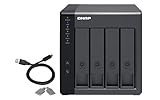
- Direct-attached storage device via USB Type-C for Windows, macOS and Linux
- Use the TR-004 as external storage for NAS backup
- Expand the capacity of your QNAP NAS
- 4 x 3.5-inch SATA 3Gb/s (Diskless)
- Hardware RAID supports RAID 0, 1, 5, JBOD, and individual disks
Assuming “managed” means application-managed
Infrastructure management may not include databases, middleware, applications, identity, security operations, or compliance work. The responsibility matrix must name each layer.
Assuming APEX guarantees multicloud portability
A consistent management experience does not mean workloads move freely between every cloud. Refactoring, licensing changes, performance differences, data-transfer costs, and platform dependencies can still apply.
Ignoring end-of-term arrangements
The agreement should address equipment ownership, return or removal, data sanitization, migration assistance, renewal pricing, refresh, continuing support, early termination, and contract transfer after a merger or acquisition.
Using historical launch prices as current prices
Dell announced early Project APEX offerings with historical example pricing, including a hybrid-cloud example as low as $47 per instance per month in 2020. That launch-era figure is not a current universal APEX price and should not be used to estimate a present deployment. See Dell’s Project APEX launch announcement for the historical context.
Frequently Asked Questions
Is Dell APEX a product or a service?
Dell APEX is a portfolio of subscription, as-a-Service, and pay-per-use products and services rather than one product. The portfolio includes infrastructure, private cloud, storage, data protection, cloud platforms, HPC, data-center utility services, and PC as a Service.
Does Dell APEX require infrastructure to be in a Dell data center?
No. Depending on the offering, Dell APEX infrastructure may run in a customer data center, edge location, or colocation facility. Some services may operate in or manage public-cloud environments, so the deployment location must be confirmed for the specific quote.
Is Dell APEX cheaper than buying Dell hardware?
Dell APEX is not automatically cheaper than buying Dell hardware outright. A proper comparison must include the contract term, utilization, minimum commitments, software, support, facilities, staffing, refresh, financing, and exit costs.
Does Dell manage everything in Dell APEX?
No. Dell APEX can be customer-managed, Dell-managed, or shared depending on the offering and contract. Hardware management may not include operating systems, databases, applications, identity, security operations, or compliance work.
Free tools Windows power users keep installed
One-click scans. No signup required.
How much does Dell APEX cost?
Dell APEX has no single public price. Pricing is generally quote-based and depends on the infrastructure configuration, capacity, workload, location, term, software licenses, support, managed services, and offer-specific billing rules.
The Bottom Line
Bottom line: Dell APEX is best viewed as a commercial and operational model for consuming selected Dell technology—not as a single private cloud, a replacement for AWS or Azure, or a guarantee of lower cost. APEX is worth serious evaluation when local infrastructure control, Dell integration, capacity flexibility, deployment speed, and bundled lifecycle services matter. The decision should follow a normalized total-cost model and a detailed review of metering, minimums, management responsibility, software licensing, scaling, and exit terms.
Recommended next step: Request an APEX assessment or quote after documenting workload size, utilization, growth rate, deployment location, software stack, support requirements, contract term, capacity commitments, and end-of-term requirements.
Quick Recap
Product prices and availability are accurate as of the date/time indicated and are subject to change. Any price and availability information displayed on Amazon at the time of purchase will apply.
What’s actually slowing this PC down?
Pick the symptom - the matching free tool is one click away.

