
The Tool Desk
Outbyte Driver Updater FREEScan for outdated or missing drivers - takes under a minuteDriver Scan →Outbyte PC Repair FREEClear out junk files and repair common Windows errorsFree Scan →Biomass torrefaction is a controlled heat treatment that can make crop residues easier to store, grind and transport as solid fuel. Biomass is heated with oxygen excluded or limited—commonly at 200–300°C—so it loses moisture and some volatile compounds without being fully carbonized. The treated material can then be densified into pellets or briquettes. The result is a potential fuel upgrade, not a guarantee that every residue will make a suitable product or replace coal.
What torrefaction does to biomass
Torrefaction is a pretreatment, not the burning of crop waste. Heat changes the biomass while oxygen is absent or restricted; combustion happens later if the resulting solid fuel is burned. IRENA describes torrefaction at 200–300°C, below the 400–600°C range it gives for pyrolysis, a process that produces oil, char and gas streams (IRENA, Biomass for Heat and Power: Technology Brief).
During torrefaction, moisture and some organic compounds leave the material, and much of its fibrous structure breaks down. The solid becomes more brittle and easier to grind, and is described as more hydrophobic than untreated biomass. These traits can simplify handling and storage, although they do not remove the need to manage moisture, dust or fuel specifications.
Which crop residues can be considered?
Agricultural residues are the stalks, leaves and other plant material left after the main food or fiber product is harvested. The U.S. Department of Energy lists corn stover—including stalks, leaves, husks and cobs—along with wheat straw, oat straw, barley straw, sorghum stubble and rice straw as examples (U.S. Department of Energy, Biomass: An Energy Resource).
Quick wins for a faster PC:
Fix the driver behind crashes, sound loss and screen glitchesFind Drivers →Repair Windows errors before they cause bigger problemsFix Now →Scan for outdated or missing drivers - takes under a minuteDriver Scan →#1 Best Overall
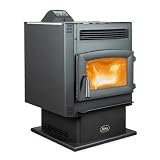
- FREIGHT SHIPPING: THIS ITEM SHIPS VIA LTL FREIGHT CARRIER VALID PHONE NUMBER OR EMAIL ADDRESS IS REQUIRED FOR DELIVERY
- Produces up to 30,000 BTUs of heat, providing reliable warmth for spaces up to 2,200 square feet
- Large 90 lb. hopper provides up to 47 hours of continuous operation
- Smart Stove Technology automatically adjusts pellet feed rates based on room temperature, optimizing heat output to maintain the desired temperature while minimizing unnecessary fuel consumption, resulting in up to 10% in fuel savings
- Control your stove through our mobile app with WiFi and Bluetooth connectivity, the included remote, or easy-to-use top-mounted digital controls
These materials are candidates, not interchangeable inputs. Their moisture, ash, composition and supply conditions differ, affecting process settings and the properties of the fuel. IEA Bioenergy’s 2015 review said many lignocellulosic materials were theoretically suitable and noted studies of straw, hay, roadside grass and other agricultural residues; it also described commercial experience with alternative or mixed feedstocks as limited at that time (IEA Bioenergy Task 32, Status overview of torrefaction technologies). That historical assessment should not be read as a current market census.
How crop residue becomes a solid fuel
- Collect and prepare the feedstock. Residues are bulky and variable, so a plant needs to handle the specific material it receives.
- Dry and size it as needed. Incoming moisture affects how much energy is available from process gases and how the plant can integrate heat. In the configuration discussed by the IEA Bioenergy review, incoming moisture was generally recommended not to exceed about 15%; this is not a universal specification, since process design and feedstock economics can change the useful limit.
- Heat it with oxygen excluded or limited. A common torrefaction range is 200–300°C. The treatment drives off moisture and some volatile matter and alters the solid’s structure.
- Manage process vapors and gases. In a suitably designed and operated system, gases may provide heat for drying and torrefaction. The energy balance depends on feedstock moisture, treatment severity, reactor technology and heat integration; the review’s conditional net-efficiency range of about 70–98% depends on those factors and is not a universal plant result.
- Cool, then grind and densify if appropriate. The brittle material can be ground more readily. Pelletizing or briquetting produces a denser form that is easier to handle and ship, but adds energy demand and process hazards.
What the fuel-property figures show—and do not show
IEA Bioenergy’s 2015 comparison table illustrates how torrefied pellets, conventional wood pellets, coal and charcoal differ. These are report-specific comparison values, not guaranteed product specifications; actual figures vary with feedstock and processing.
Rank #2
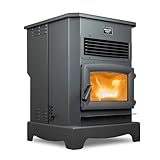
- FREIGHT SHIPPING: THIS ITEM SHIPS VIA LTL FREIGHT CARRIER AND WILL BE DELIVERED CURBSIDE OR DIVEWAY ONLY. VALID PHONE NUMBER OR EMAIL ADDRESS IS REQUIRED FOR DELIVERY
- Produces up to 33,000 BTUs of heat, providing reliable warmth for spaces up to 3,000 square feet
- Extra-large 170 lb. hopper provides up to 80 hours of continuous operation
- Smart Stove Technology automatically adjusts pellet feed rates based on room temperature, optimizing heat output to maintain the desired temperature while minimizing unnecessary fuel consumption, resulting in up to 10% in fuel savings
- Control your stove through our mobile app with WiFi and Bluetooth connectivity, the included remote, or easy-to-use top-mounted digital controls
| Fuel in the 2015 comparison | Lower heating value | Bulk energy density | Moisture by weight |
|---|---|---|---|
| Torrefaction pellets | 20–24 MJ/kg | 15.0–18.7 GJ/m³ | 1–5% |
| Conventional wood pellets | 15–18 MJ/kg | 7.5–10.4 GJ/m³ | 7–10% |
| Coal | 23–28 MJ/kg | 18.4–23.8 GJ/m³ | 10–15% |
| Charcoal | 30–32 MJ/kg | 6–6.4 GJ/m³ | Not stated in the comparison table |
Lower heating value per kilogram measures energy by weight; bulk energy density measures energy in a given volume. Pelletization can raise the latter without making the underlying biomass equivalent to coal. The review reports that pelletizing torrefied chips increased volumetric energy density by a factor of 4–8 compared with the chips. It also cites approximately 150 kWh/ton for torrefied-biomass pelletizing versus 50–60 kWh/ton for wood pellets in its comparison, and warns that friction in press channels can create fire and dust-explosion risks. These are figures and cautions from that review, not guarantees for every mill.
Torrefaction aims to retain more volatile matter than charcoal production, which has much lower volatile matter. Ash content can rise slightly because some dry matter is lost during treatment.
What’s actually slowing this PC down?
Pick the symptom - the matching free tool is one click away.
Rank #3
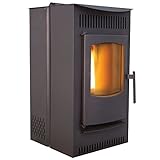
- Easy to Clean - There are no tubes, corrugations, or hidden chambers
- Manual, Thermostat, Weekly and Eco operating modes to heat your home on your schedule
- Eco mode offers the ability for the Serenity stove to toggle between on and off to maintain the desired room temperature
- 40lb hopper capacity
- 1,500 sq ft. heating capacity, 32,000 BTU
Where torrefied biomass may fit
Improved grindability and greater density can make torrefied biomass more practical for industrial handling and some co-firing applications. Whether a particular fuel works in a plant depends on its specifications, equipment, supply chain and delivered cost. Torrefied crop residue is not automatically a drop-in coal replacement. IRENA notes that even after pretreatment, biomass energy density remains below coal’s and that local resource availability and transport economics matter.
Independent reader supportYour contribution helps us test, update, and keep practical guides available for everyone.What determines whether the process makes sense?
- Feedstock quality and consistency: Moisture, ash and composition influence process control and the fuel produced.
- Heat recovery: Process gases may support drying and heating, but the net energy outcome depends on reactor design, treatment severity, incoming moisture and heat integration.
- Densification trade-offs: Pellets can reduce storage and transport burdens by increasing energy per volume, while requiring additional energy and careful dust and fire controls.
- Supply and use: Local residue availability, transport distance, plant compatibility and delivered cost affect whether the fuel is practical.
- Sustainability: A waste-derived fuel is not automatically carbon neutral or environmentally harmless. The UK Biomass Strategy frames biomass as low-carbon when produced sustainably and emphasizes genuine greenhouse-gas reductions, cost effectiveness, food security and biodiversity (UK Department for Energy Security and Net Zero, Biomass Strategy 2023).
For context, the UK strategy estimates that bioenergy supplied 8.6% of UK energy in 2022, most of it supported by government. That is a figure for UK bioenergy overall, not for torrefaction or crop-residue fuels specifically.
Quick Recap
Best Value

- Derived from 100% virgin soft wood from the United Kingdom, Heat Fuel pellets are the number one pellets for biomass stoves. Completely chemical free, so absolutely no toxicity whatsoever, there are no chemicals or glue used in the manufacturing process, our pellets are compressed using only natural methods
- Heat Fuel pellets start burning quickly, providing a high temperature output which will heat your room up rapidly. Light easily, burn ultra-efficiently with very little ash and are clean burning producing reduced amounts of smoke. Produce so much energy, they will heat your room up quickly and safely unlike pellets produced using chemicals
- 10kg bags for easy storage and will last longer. Ethically sourced timber from responsible forestry and more effective than imported hardwood pellets which take longer to burn, produce far more smoke with less heat.
- 100% renewable energy - Ultra-low CO2 output - Manufactured to ENPLUSA1 standards (same as food grade pellets used in Pizza Ovens)
- Odourless and natural with absolutely NO additives, NO chemicals and NO binding agents
Rank #4

- Built-in WiFi – Smart Home Technology
- Heats 2000 to 3000 sq ft
- 130 lb large capacity hopper capacity
Product prices and availability are accurate as of the date/time indicated and are subject to change. Any price and availability information displayed on Amazon at the time of purchase will apply.

