
An active-matrix display is a flat-panel display that uses switching devices at individual pixels to control their electrical state. Thin-film transistors (TFTs) are a common way to do this, often with a storage capacitor that holds a pixel’s programmed voltage between updates. Active matrix describes how pixels are addressed—not how the screen produces an image—so both LCD and OLED panels can use it.
How active-matrix addressing works
A display contains a grid of pixels. In an active-matrix panel, a switching transistor is associated with each pixel. The display’s circuitry selects a pixel and applies its data; a storage capacitor can help retain that voltage while the panel prepares the next frame. This gives the panel control over pixels individually rather than relying only on the intersection of shared row and column conductors. IEEE’s overview of active-matrix addressing describes this transistor-and-capacitor arrangement.

That per-pixel switching is the key distinction in the name: “active” refers to the addressing circuitry, not to whether pixels emit light. It supports the design of high-resolution panels, but the label alone does not specify a screen’s resolution or guarantee its picture quality.
Active matrix vs. passive matrix
Both designs use rows and columns to organize a pixel grid. The difference is what happens at each pixel: an active-matrix panel includes a switching element there; a passive-matrix panel selects pixels through row-and-column intersections without a separate active switch at every pixel.
Recommended Free Tools
#1 Best Overall

- Resolution: 1280 x 1024/75Hz SXGA, TFT Active Matrix, 250 nits brightness, 1000:1 contrast ratio, 5ms response rate, 0.294 mm pixel pitch
- Controls/Adjustments: Brightness, contrast, H/V position, H/V size, input select, color temperature, phase, clock
- Display Positions Adjustments: Height, pivot (rotation), swivel, tilt
- OSD Languages: Chinese (simplified), English, German, French, Italian, Spanish, Dutch, Japanese
- Interfaces: 1 x DVI-D - 24 pin digital DVI 1 x VGA - 15 pin HD D-Sub (HD-15) 2 x USB - 4 pin USB Type A
| Architecture | How pixels are addressed | What the term tells you |
|---|---|---|
| Active matrix | A switching device is associated with each pixel; a capacitor may hold its programmed value between updates. | A pixel-addressing architecture that can be used with LCD or OLED. |
| Passive matrix | Rows and columns select pixels at their intersections, without an active switch at every pixel. | A different addressing arrangement, not a display medium such as LCD or OLED. |
The architectural distinction explains why active-matrix designs can avoid limitations of passive row-column addressing, but it does not establish that every active-matrix screen will outperform every passive-matrix screen in every respect. Actual results depend on the panel and its implementation.
Is TFT the same as active matrix?
No. TFT means thin-film transistor: a transistor technology commonly used as the pixel switch in an active-matrix display. A TFT LCD is therefore a familiar example of an active-matrix LCD, but “active matrix” describes the addressing arrangement while “TFT” identifies a technology used to implement it. Corning’s display technology glossary defines TFT in the context of active-matrix LCDs and notes that TFT backplanes can also serve OLED displays.
Rank #2

- Mounting Type: Built-in 100 mm VESA, Back of monitor
Active-matrix LCD and AMOLED are different display technologies
Active matrix can be paired with different image-producing technologies:
- Active-matrix LCD: Liquid crystals modulate light, and an LCD module typically includes a backlight. A TFT-LCD is a common example of an active-matrix LCD.
- Active-matrix OLED (AMOLED): The active-matrix backplane controls OLED pixels, which emit light. It is still active matrix, but it is not an LCD.
So “active matrix” does not mean “LCD,” and “TFT” does not make an OLED panel an LCD. They refer to the pixel-control architecture or its switching technology; LCD and OLED refer to how the display produces or controls light. See Photonics Marketplace’s definition of active-matrix display for the term’s use with both LCD and OLED.
Crashes, No Sound, or Screen Glitches?
Random freezes, missing sound and display glitches usually trace back to one bad driver. Find and replace yours safely.Free scan · under a minutePC Slower Than It Used to Be?
A free scan shows the junk files, broken settings and background clutter dragging Windows down - then fixes them in one click.Free scan · Windows 10 & 11What the label does—and does not—tell you
“Active matrix” tells you that the display uses active pixel-level switching. By itself, it does not establish contrast, response time, viewing angle, brightness, power use, or overall quality. Those depend on whether the panel is LCD or OLED and on its specific design and implementation.
If you are choosing a replacement or component, treat “active matrix” as an architectural description, not a compatibility specification. For example, the U.S. International Trade Commission’s technical overview of LCD panel construction provides context for LCD panels; a particular module still needs to match the intended device’s resolution, size, controller, connector, and voltage.
Quick Recap
Best Value
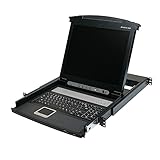
- Integrated KVM console featuring a 17" TFT LCD active matrix monitor , keyboard and touchpad
- 1280 x 1024 resolution on 19" rack mount LCD provides a sharp video display
- Custom ASIC provides an auto-sensing function that recognizes the position of each station on the installation
- Adjustable depth to fit different sizes of racks
- Fully Supports DDC2B; Operation Temperature: 0~40°C
Rank #4
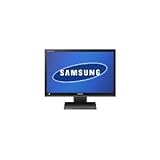
- Large 22" diagonal (21.5" viewable) screen for working with multiple windows. Its wide 170° viewing angle allows group viewing. Included stand also lets you adjust the monitor height, tilt and perspective.
- Digital and analog computer connections offer flexibility. DVI-D connection provides digital signals for the highest-quality images. Or use the analog VGA connection, which supports nearly all PC video cards.
- LED backlighting for vivid colors and deeper blacks. LED backlighting also permits a thinner panel design and saves energy compared to standard LCD monitors, which use fluorescent backlighting.
- 5ms response time for crisp, clear motion video. Helps eliminate blurring or ghosting in action video.
- Detachable adaptor helps maximize your workspace. Allows the monitor to be easily moved and installed. Carry handle for easy portability.
Product prices and availability are accurate as of the date/time indicated and are subject to change. Any price and availability information displayed on Amazon at the time of purchase will apply.

