
A Nest Learning Thermostat is a connected thermostat that learns from household temperature adjustments and uses them to personalize a heating and cooling schedule. The learning feature depends on the model generation: the 4th-generation thermostat calls it Smart Schedule, while earlier Nest Learning Thermostats and the Nest Thermostat E use Auto-Schedule.
What does “learning” mean on a Nest thermostat?
Learning means the thermostat uses temperature changes people make on the thermostat or in its app as signals about preferred temperatures and timing. It can then shape a schedule around those preferences. Google’s help documentation describes the adjustments and schedule changes the thermostat uses; it does not specify a particular AI or machine-learning architecture.
How does the Nest Learning Thermostat learn?
Nest Learning Thermostat (4th gen): Smart Schedule
On the 4th-generation model, Google calls the feature Smart Schedule. It learns from temperature adjustments made on the thermostat or in the app. Depending on its settings, it can optimize schedule temperatures, adjust when scheduled Sleep temperatures begin, and add Eco temperatures using signals from a phone’s location or the thermostat’s motion sensor. Google explains Smart Schedule and its settings.
Smart Schedule has three modes:
- Automatic: The thermostat applies schedule changes and notifies you.
- Suggestions: It proposes changes for you to accept or reject.
- Off: It makes no Smart Schedule changes.
Earlier Nest Learning Thermostats and Thermostat E: Auto-Schedule
On the Nest Learning Thermostat (3rd generation or earlier) and Nest Thermostat E, the learning feature is called Auto-Schedule. The thermostat learns preferred temperatures at different times and prepares a schedule after a few days; it can continue fine-tuning as people make adjustments. Google notes that the 4th-generation model learns differently, so these descriptions should not be treated as identical across generations. Google’s overview of how Nest thermostats learn describes the generation differences.
#1 Best Overall

- Nest’s smartest, most advanced thermostat yet, the Google Nest Learning Thermostat (4th gen) is a beautiful, brilliant way to save energy, keep your home comfortable, and help make sure your heating and cooling systems are running smoothly[4]
- Savings you can count on: The Nest Learning Thermostat can help save up to 31% on heating and cooling bills[2]
- Improved compatibility: It works with most 24V systems, including gas, electric, oil, forced air, heat pump, and radiant, and no C wire is required for installation in most homes; visit the Nest Compatibility Checker for more info[5]
- Easy control in the Google Home app: Adjust on your phone from anywhere[1] or by using your voice with Alexa, Siri, or Google Assistant smart speaker[3], it’s easy to install yourself and it’s Matter compatible for simple integration into your smart home[5]
- Beautiful design: With a 60% larger display[11] and Dynamic Farsight, you can see info from across the room[1]; choose the design, like a clock or the weather; it automatically adjusts brightness for the best readability or you can adjust manually
How does it handle an empty home?
Google says all Nest thermostat models can automatically switch to Eco Temperatures when nobody is home and return to the normal schedule when someone comes back. This is separate from the generation-specific schedule-learning names: Nest Learning Thermostats and Thermostat E have Auto-Schedule on older generations, while the standard Nest Thermostat uses Savings Finder suggestions rather than Auto-Schedule. Google’s schedule overview covers these distinctions.
Will a Nest Learning Thermostat work with your HVAC system?
The 4th-generation model is designed for most 24-volt heating and cooling systems, including gas, electric, oil, forced-air, heat-pump, and radiant systems. It supports multiple heating and cooling stages and related equipment, but the exact capabilities depend on the system’s wiring and configuration. Some proprietary systems are incompatible. Check Google’s thermostat compatibility checker before buying or starting an installation.
Rank #2

- Nest’s smartest, most advanced thermostat yet, the Google Nest Learning Thermostat (4th gen) is a beautiful, brilliant way to save energy, keep your home comfortable, and help make sure your heating and cooling systems are running smoothly[4]
- Savings you can count on: The Nest Learning Thermostat can help save up to 31% on heating and cooling bills [2]
- Improved compatibility: It works with most 24V systems, including gas, electric, oil, forced air, heat pump, and radiant, and no C wire is required for installation in most homes; visit the Nest Compatibility Checker for more info[5]
- Easy control in the Google Home app: Adjust on your phone from anywhere[1] or by using your voice with Alexa, Siri, or Google Assistant smart speaker[3], it’s easy to install yourself and it’s Matter compatible for simple integration into your smart home[5]
- Beautiful design: With a 60% larger display[11] and Dynamic Farsight, you can see info from across the room[1]; choose the design, like a clock or the weather; it automatically adjusts brightness for the best readability or you can adjust manually
Does the 4th-generation Nest Learning Thermostat need a C wire?
Google says the 4th-generation thermostat is designed to work without a common C wire in most installations. Its technical specifications say a C wire or Nest Power Connector is necessary in fewer than 1% of cases to ensure sufficient power in all conditions. That figure is Google’s product specification, not an independently measured rate. If the compatibility guidance indicates that your system needs a power solution, consider the Nest Power Connector or help from an HVAC professional. See Google’s 4th-generation technical specifications and power and wiring guidance.
What comes with the 4th-generation thermostat?
Google lists the display and base, trim plate, steel plate, mounting screws and wire labels, and one Nest Temperature Sensor (2nd gen) in the box. You do not need to buy a sensor simply to have one available. An additional sensor may be useful if you want temperature readings in other rooms. The Nest Power Connector is a conditional accessory for installations that need a power solution, not a standard required add-on. Google’s product specifications list the included items.
Do these 3 things before closing this tab:
1Fix the driver behind crashes, sound loss and screen glitches2Repair Windows errors before they cause bigger problems3Scan for outdated or missing drivers - takes under a minuteRank #3

- Nest’s smartest, most advanced thermostat yet, the Google Nest Learning Thermostat (4th gen) is a beautiful, brilliant way to save energy, keep your home comfortable, and help make sure your heating and cooling systems are running smoothly[4]
- Savings you can count on: The Nest Learning Thermostat can help save up to 31% on heating and cooling bills[2]
- Improved compatibility: It works with most 24V systems, including gas, electric, oil, forced air, heat pump, and radiant, and no C wire is required for installation in most homes; visit the Nest Compatibility Checker for more info[5]
- Easy control in the Google Home app: Adjust on your phone from anywhere[1] or by using your voice with Alexa, Siri, or Google Assistant smart speaker[3], it’s easy to install yourself and it’s Matter compatible for simple integration into your smart home[5]
- Beautiful design: With a 60% larger display[11] and Dynamic Farsight, you can see info from across the room[1]; choose the design, like a clock or the weather; it automatically adjusts brightness for the best readability or you can adjust manually
What should you check before installation?
- Check system compatibility. Use Google’s compatibility checker and verify your HVAC equipment and wiring.
- Review installation guidance. Google’s setup instructions describe app-guided installation. Setup requires the Google Home app.
- Get help if wiring or power is unclear. Proprietary equipment, wiring details, or a need for a power solution can affect installation. Contact a local HVAC professional if you cannot confirm compatibility or wiring requirements.
What else should you know about the 4th-generation model?
Google says the 4th-generation thermostat works with Google Home and Matter-enabled apps and voice assistants. Its specifications list ENERGY STAR certification, a two-year standard retail warranty, and a five-year standard warranty for HVAC Pros. Warranty terms and product specifications can change, so check Google’s current technical specifications for the terms that apply to your purchase.
Independent reader supportYour contribution helps us test, update, and keep practical guides available for everyone.How to compare it with another thermostat
When comparing thermostats, focus on what they do and what your home needs rather than assuming that every product described as “smart” learns a schedule in the same way. Useful comparison points include:
Rank #4
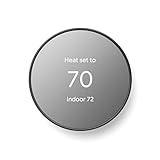
- ENERGY STAR certified smart thermostat for home that helps you save energy and stay comfortable.Connectivity : Wi-Fi - 802.11b/g/n 2.4 GHz, 802.11a/n 5 GHz Wi-Fi., Wireless interconnect : Bluetooth Low Energy Please refer to the product description section below for all applicable legal disclaimers.Product note: You can also check your system’s compatibility before purchasing a Nest thermostat with our online Nest Compatibility Checker on the Google Nest support page
- The Nest Thermostat is designed to work without a C wire in most homes, but for some systems, including heating only, cooling only, zone controlled, and heat pump systems, you’ll need a C wire or other compatible power accessory
- Nest Thermostat turns itself down when you leave, so you don’t waste energy heating or cooling an empty home. Lock feature: No
- Programmable thermostat that lets you create an energy efficient schedule in the Google Home app on your Android or iPhone
- Remote control lets family members change the thermostat temperature from anywhere on a phone, laptop, or tablet[1]
- Whether the thermostat changes a schedule from observed adjustments or only suggests edits.
- How much control you retain over accepting, rejecting, or turning off schedule changes.
- Compatibility with your HVAC system, wiring, heating and cooling stages, and any power requirements.
- Support for the apps and smart-home systems you use.
- Whether room sensors are included and what else installation may require.
Google’s product and help pages describe Nest features and compatibility, but they do not establish independent, product-to-product performance results.
Quick Recap
Product prices and availability are accurate as of the date/time indicated and are subject to change. Any price and availability information displayed on Amazon at the time of purchase will apply.

