
A hub-and-spoke system is a network arrangement in which peripheral nodes connect to a central node called the hub. The spokes connect to the hub; they do not necessarily connect directly to one another. The pattern appears in fields such as computer networking, cloud architecture, transportation, and school partnerships, but its operating rules and trade-offs vary by use.
What does hub and spoke mean?
Think of a wheel: its center is the hub, and the lines radiating outward are the spokes. In a hub-and-spoke network, the hub is the central connection point and each spoke is a peripheral node linked to it. Depending on the design, the hub may route traffic, coordinate activity, or concentrate shared services.
It is a structural pattern, not one universal operating procedure. A network topology can also be arranged as a mesh, a line, or a tree; each describes a different pattern of connections. The Geography of Transport Systems explains these topology distinctions.
How is hub and spoke different from a mesh?
In a hub-and-spoke arrangement, each spoke connects to the hub. In a full mesh, nodes connect directly to one another. That changes how many connections must be managed and whether communication between two peripheral nodes has to pass through a central point.
The Tool Desk
Outbyte Driver Updater FREEScan for outdated or missing drivers - takes under a minuteDriver Scan →Outbyte PC Repair FREERepair Windows errors before they cause bigger problemsFix Now →#1 Best Overall

- Wi-Fi 6 Mesh Wi-Fi - Next-gen Wi-Fi 6 AX3000 whole home mesh system to eliminate weak Wi-Fi for good(2×2/HE160 2402 Mbps plus 2×2 574 Mbps)
- Whole Home WiFi Coverage - Covers up to 6500 square feet with seamless high-performance Wi-Fi 6 and eliminate dead zones and buffering. Better than traditional WiFi booster and Range Extenders
- Connect More Devices - Deco X55(3-pack) is strong enough to connect up to 150 devices with strong and reliable Wi-Fi
- Our Cybersecurity Commitment - TP-Link is a signatory of the U.S. Cybersecurity and Infrastructure Security Agency’s (CISA) Secure-by-Design pledge. This device is designed, built, and maintained, with advanced security as a core requirement
- More Gigabit Ports - Each Deco X55 has 3 Gigabit Ethernet ports(6 in total for a 2-pack) and supports Wired Ethernet Backhaul for better speeds. Any of them can work as a Wi-Fi Router
| Consideration | Hub and spoke | Mesh |
|---|---|---|
| Direct connections | Each spoke connects to the hub; spokes may not have direct links to one another. | Nodes connect directly to one another in a full mesh. |
| Complexity as nodes grow | Centralized connectivity can reduce the number of peer relationships to manage. | Direct connections become more numerous as nodes are added; AWS notes that mesh complexity increases as networks grow. |
| Path between peripheral nodes | May pass through the hub, depending on the implementation. | Can use a direct connection between nodes. |
| Centralized services or control | Can make it easier to concentrate routing, policy, or shared services at the hub. | Does not inherently concentrate those functions at one point. |
| Hub congestion or outage | As an architectural inference, congestion at or loss of a required hub can affect spokes that depend on it. The impact depends on redundancy and design. | No single central hub is required by the topology, though individual links or nodes can still fail. |
Hub and spoke is often attractive when a central point can simplify connections or provide shared control. Mesh can avoid routing every exchange through a hub, but managing direct relationships gets harder as the network grows. Neither topology is automatically better: the right choice depends on traffic, scale, resilience needs, and what the central point is expected to do.
What does hub and spoke look like in computer networks?
In a computer network, the hub can be a central routing point connecting separate locations. How spoke-to-spoke traffic moves is an implementation choice, not something guaranteed by the term itself.
Rank #2

- A New Way to WiFi: Deco Mesh technology gives you a better WiFi experience in all directions with faster WiFi speeds and strong WiFi signal to cover your whole home.
- Better Coverage than traditional WiFi routers: Deco S4 three units work seamlessly to create a WiFi mesh network that can cover homes up to 5, 500 square feet. No dead zone anymore.
- Seamless and Stable WiFi Mesh: Rather than wifi range extender that need multiple network names and passwords, Deco S4 allows you to enjoy seamless roaming throughout the house, with a single network name and password.
- Incredibly fast 3× 3 6 Stream AC1900 speeds makes the deco capable of providing connectivity for up to 100 devices.
- With advanced Deco Mesh Technology, units work together to form a unified network with a single network name. Devices automatically switch between Decos as you move through your home for the fastest possible speeds.
Cisco Catalyst SD-WAN
Cisco’s Catalyst SD-WAN documentation for releases 26.x and later describes a specific configuration: spokes receive route information for hubs rather than other spokes, and spoke-to-spoke traffic passes through a transport gateway. Cisco puts it this way: “All spoke-to-spoke traffic flows through the transport gateway, which re-originates routes for each spoke.” Cisco lists fewer spoke peers and centralized firewall-policy application among the benefits; its documented topology does not support on-demand direct spoke tunnels. See Cisco’s Hub-and-Spoke configuration documentation, updated September 28, 2026.
AWS cloud connectivity
AWS presents Transit Gateway as an example of a hub for routing among multiple VPCs or VPN-connected networks. In its architectural guidance dated March 31, 2022, AWS recommends hub and spoke for more than two network address spaces in that VPC and on-premises connectivity context. AWS says direct connection can work for two networks, while mesh complexity increases as more networks are added. This is AWS guidance for that context, not a universal threshold for choosing a topology. Read the AWS Transit Gateway guidance.
Rank #3
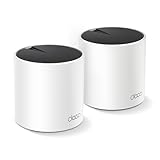
- Wi-Fi 6 Mesh Wi-Fi - Next-gen Wi-Fi 6 AX3000 whole home mesh system to eliminate weak Wi-Fi for good(2×2/HE160 2402 Mbps plus 2×2 574 Mbps)¹²
- Whole Home WiFi Coverage - Covers up to 4500 square feet with seamless high-performance Wi-Fi 6 and eliminate dead zones and buffering. Better than traditional WiFi booster and Range Extenders¹
- Connect More Devices - Deco X55(2-pack) is strong enough to connect up to 150 devices with strong and reliable Wi-Fi¹
- Our Cybersecurity Commitment - TP-Link is a signatory of the U.S. Cybersecurity and Infrastructure Security Agency’s (CISA) Secure-by-Design pledge. This device is designed, built, and maintained, with advanced security as a core requirement
- More Gigabit Ports - Each Deco X55 has 3 Gigabit Ethernet ports(6 in total for a 2-pack) and supports Wired Ethernet Backhaul for better speeds. Any of them can work as a Wi-Fi Router
Does the term apply outside networking?
Yes. The same structural idea—one central participant linked to several peripheral participants—can describe arrangements in other fields. The roles and responsibilities are specific to each arrangement.
School partnerships in England
England’s Department for Education describes a hub-and-spoke partnership as a small group of generally no more than four or five schools, with one school acting as the lead. The lead school coordinates the partnership and may host events or contribute resources, while strategic responsibilities are shared. This is guidance for England’s school partnership model, not a universal rule about school networks. See the Department for Education’s Partnership models guide, updated October 19, 2022.
Rank #4

- 𝐃𝐞𝐜𝐨 𝟕 𝐒𝐮𝐩𝐞𝐫𝐜𝐡𝐚𝐫𝐠𝐞𝐝 𝐰𝐢𝐭𝐡 𝟒-𝐒𝐭𝐫𝐞𝐚𝐦 𝐁𝐄𝟓𝟎𝟎𝟎 𝐃𝐮𝐚𝐥-𝐁𝐚𝐧𝐝 𝐖𝐢𝐅𝐢 𝟕: Delivers up to 4324 Mbps (5 GHz) and 688 Mbps (2.4 GHz) speeds for 4K/8K streaming, AR/VR gaming, and more◇. Performance varies by conditions, distance to devices, & obstacles such as walls.
- 𝐒𝐞𝐚𝐦𝐥𝐞𝐬𝐬 𝐖𝐡𝐨𝐥𝐞-𝐇𝐨𝐦𝐞 𝐂𝐨𝐯𝐞𝐫𝐚𝐠𝐞: Covers up to 6,600 sq. ft. for over 150 devices with the option to expand anytime by adding another Deco router. All Deco routers work together.
- 𝐒𝐢𝐦𝐮𝐥𝐭𝐚𝐧𝐞𝐨𝐮𝐬 𝐖𝐢𝐫𝐞𝐝 & 𝐖𝐢𝐫𝐞𝐥𝐞𝐬𝐬 𝐁𝐚𝐜𝐤𝐡𝐚𝐮𝐥: Wi-Fi 7 and 2.5G Ethernet work together to balance traffic between Deco units for faster, more stable whole-home coverage. Backhaul requires at least two Deco units.§
- 𝐄𝐚𝐬𝐲 𝐒𝐞𝐭𝐮𝐩 & 𝐌𝐚𝐧𝐚𝐠𝐞𝐦𝐞𝐧𝐭: Set up and control your network in minutes with the Deco App. Keep your WiFi performing at its best by keeping the firmware updated through the App. All Wi-Fi routers require a separate modem. ⌂
- 𝐎𝐮𝐫 𝐂𝐲𝐛𝐞𝐫𝐬𝐞𝐜𝐮𝐫𝐢𝐭𝐲 𝐂𝐨𝐦𝐦𝐢𝐭𝐦𝐞𝐧𝐭 - TP-Link is a signatory of the U.S. Cybersecurity and Infrastructure Security Agency’s (CISA) Secure-by-Design pledge. This device is designed, built, and maintained, with advanced security as a core requirement.
Air transportation: a historical example
Airline networks can use hub airports to connect routes that might not operate as direct services between every city pair. A NASA proceedings record published October 1, 2004, reported that the then-current U.S. hub-and-spoke air transportation system was reaching saturation. That is a historical assessment from 2004, not a description of current U.S. aviation conditions. See the NASA proceedings record.
Independent reader supportYour contribution helps us test, update, and keep practical guides available for everyone.When should you choose a hub-and-spoke design?
Consider hub and spoke when you want a central point to simplify connections, concentrate shared services, or apply common controls. Before adopting it, clarify how traffic will flow between spokes, what happens if the hub is congested or unavailable, and whether the hub needs backup capacity. These are design questions; the answers depend on the specific system.
Best Value

- 𝐅𝐞𝐚𝐭𝐮𝐫𝐞-𝐑𝐢𝐜𝐡 𝐖𝐢-𝐅𝐢 𝐁𝐮𝐢𝐥𝐭 𝐭𝐨 𝐋𝐚𝐬𝐭: Get expansive whole-home coverage, fast Wi-Fi 7 speeds, and a future-ready 10G WAN/LAN port that stays ahead as your network grows. Ideal for both everyday users and performance-focused homeowners.
- 𝗩𝗮𝘀𝘁 𝗠𝗲𝘀𝗵 𝗖𝗼𝘃𝗲𝗿𝗮𝗴𝗲 & 𝗗𝗲𝘃𝗶𝗰𝗲 𝗖𝗮𝗽𝗮𝗰𝗶𝘁𝘆: The 3-pack mesh system covers up to a vast 7,600 sq.ft. and supports over 200 devices without compromising performance, ensuring seamless connectivity.
- 𝐁𝐄𝟏𝟎𝟎𝟎𝟎 𝐓𝐫𝐢-𝐁𝐚𝐧𝐝 𝐖𝐢-𝐅𝐢 𝟕 𝐒𝐩𝐞𝐞𝐝𝐬: Delivers up to 5,188 Mbps (6 GHz), 4,324 Mbps (5 GHz), and 574 Mbps (2.4 GHz) speeds for 4K/8K streaming, AR/VR gaming, and more. Performance varies by conditions, distance to devices, & obstacles such as walls.
- 𝗙𝗼𝘂𝗿 𝟮.𝟱𝗚 𝗪𝗔𝗡/𝗟𝗔𝗡 𝗣𝗼𝗿𝘁𝘀: Includes four 2.5G WAN/LAN ports and a USB 3.0 port, making it an ideal choice for future-proofing your home network.
- 𝐒𝐢𝐦𝐮𝐥𝐭𝐚𝐧𝐞𝐨𝐮𝐬 𝐖𝐢𝐫𝐞𝐝 & 𝐖𝐢𝐫𝐞𝐥𝐞𝐬𝐬 𝐁𝐚𝐜𝐤𝐡𝐚𝐮𝐥: Tri-band Wi-Fi 7 and 10G Ethernet work together to balance traffic between Deco units for faster, more stable whole-home coverage. Backhaul requires at least two Deco units.
Consider a mesh when direct communication between nodes matters and the growing number of direct connections is manageable. For a small number of networks, direct links may be practical; for larger arrangements, the connection-management burden can favor a central routing point. For instance, AWS’s two-network versus more-than-two guidance applies specifically to its VPC and on-premises connectivity scenario.
Quick Recap
Product prices and availability are accurate as of the date/time indicated and are subject to change. Any price and availability information displayed on Amazon at the time of purchase will apply.

