
What’s actually slowing this PC down?
Pick the symptom - the matching free tool is one click away.
For Australian businesses, keep the tax invoice for a vehicle purchase, invoices or receipts for the vehicle expenses included in a claim, and records that support the vehicle’s business use and the GST calculation. If the vehicle is used privately as well, keep a logbook or other suitable usage records to support the creditable-purpose share. A paper logbook is not the only option.
Start with the right Australian GST evidence
This article covers Australian GST input tax credits; GST rules differ by country. The documents you need depend on whether you are claiming GST on acquiring the vehicle, on its running costs, or on both. Keep the source documents and the calculations that connect them to the amount claimed.

- Vehicle acquisition: keep the supplier’s tax invoice and relevant purchase, financing or lease documents.
- Running costs: keep invoices or receipts for the actual expenses included in the claim, such as fuel, repairs and servicing.
- Business-use share: keep trip, kilometre or other suitable usage records when the vehicle is not used entirely for creditable business purposes.
- Calculation: retain the workings showing the GST amount claimed and how any business-use or creditable-purpose percentage was applied.
The ATO’s vehicle-purchase guidance, last updated 29 May 2024, describes a GST credit on a vehicle purchase as generally requiring a tax invoice and GST registration. Its full-credit case also depends on the vehicle being used solely in carrying on the business. See the ATO guidance on purchasing a motor vehicle and claiming GST credits for the applicable conditions.
Documents for buying or leasing a vehicle
For a purchase GST credit, retain the supplier’s tax invoice. Keep related purchase or lease paperwork too, so the transaction and the vehicle involved can be identified. The invoice is acquisition evidence; it does not by itself establish that the business is entitled to claim the full GST amount.
#1 Best Overall

- KEEP PERFECT RECORDS: Adams Vehicle Mileage and Expense Journals help you log business use of your car or truck with year start and year end odometer readings and flawless daily records
- GET THE BEST DEDUCTION: 588 entries capture the date, odometer readings, total miles and business purpose—everything you need to document business use for the IRS
- SUMMARIES MAKE TAX TIME EASY: Annual summary pages hold monthly mile totals to calculate percentage of business use; monthly maintenance totals help you deduct unreimbursed vehicle expenses
- INCLUDES 6 RECEIPT POCKETS: Don’t forget to save receipts; you get 2 double-sided pockets for oil changes and other service; 2 pockets for repairs, and 2 pockets for parking and tolls
- KEEP IT IN THE CAR: This portable 5-1/4 x 8-1/4 booklet was meant to travel with you; keep one in each glove compartment for a complete record of business use
Eligibility and the claim amount depend on the business’s circumstances, including GST registration and the extent the vehicle is used for a creditable purpose. If use is mixed, keep usage evidence and the apportionment calculation alongside the invoice. Check current ATO requirements for the transaction and invoice rather than relying on older car-specific guidance for thresholds or procedures.
Receipts and invoices for vehicle running costs
For each running-cost GST amount claimed, keep the source document for the actual expense. Relevant records may include invoices or receipts for fuel, repairs, servicing, insurance and other vehicle costs. Keep the underlying documents, not only a bookkeeping summary or a total entered in a spreadsheet.
Rank #2
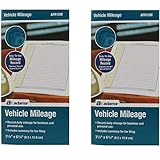
- Sold As 2 Journals
- Adams Vehicle Mileage 3 1/4 x 6 1/4
- Record daily mileage for business and personal use
- Includes summary for tax filing
Also preserve the calculation that links each expense to the GST credit claimed, including any reduction for private or other non-creditable use. An estimate or an income-tax calculation method does not automatically substantiate a GST credit based on actual expenses; the evidence needs to support the GST claim being made.
How to document mixed business and private use
If a vehicle has private use, keep records that show the relevant business or enterprise use in relation to total use, and retain the working that derives the claimed share. The credit is limited to the extent of creditable purpose. An income-tax business-kilometre figure may not always match that share: travel unrelated to creditable enterprise activity can require a reduction.
Do these 3 things before closing this tab:
1Repair Windows errors before they cause bigger problems2Scan for outdated or missing drivers - takes under a minute3Clear out junk files and repair common Windows errorsRank #3

- Comprehensive Package for Long Term Use: this package comes with 6 auto mileage and expense notebooks; Each mileage log book for car contains 32 pages; This sufficient quantity enables you to keep track of your expenses for a longer period
- Ideally Sized for Convenience: with dimensions of 6.3 x 3.3 inches, the vehicle mileage log book is the ideal size to carry around; Its compact nature ensures you can easily tuck it into your glove compartment or bag, ready to jot down important information whenever the need arises
- Quality Material for Ease of Use: the vehicle book is made from quality paper, providing a smooth writing surface for all your record keeping needs; This ensures clear documentation of all your auto mileage and expenses for easy reference
- Organized Layout for Detailed Record Keeping: each car mileage log book boasts an organized layout with appropriate categories; You can track different types of expenses like mileage, oil changes, parking charges, and even cleaning and repair costs; The 2 page layout allows you to track expenses by day over a 12 months period, with monthly and annual summary pages on the back for easy accurate recording; This gives you a clear and broad view of your vehicle's running costs
- Ideal for Divers: the mileage tracking book constitutes the ideal tool for divers with features specifically designed for auto mileage and expense logging; They provide a systematic way of recording mileage, gas usage, oil changes, and other vehicle related expenses incurred
The ATO describes vehicle cost records and usage evidence in its record-keeping guidance for motor vehicle expenses. Its public ruling, GSTR 2006/4, discusses working out the extent of creditable purpose and records to support it. Choose records that fit the method used and let someone follow how you reached the percentage and credit amount.
Paper logbook, electronic logbook or other records?
A logbook is one way to support a business-use calculation, but it is not the only format. The ATO’s vehicle record-keeping material recognizes electronic logbook records and other records that adequately support the claim. No particular logbook product is required.
Rank #4

- Sold as 1 EA.
- Mandatory records for all who use their automobile for business purposes. Records mileage, parking fees and tolls.
- Features a detachable year-end summary for tax advisor.
- Undated-start any time.
- Good for one full year.
| Record method | What to check |
|---|---|
| Paper logbook | It should capture the trip and distance information needed for the calculation, and be retained with supporting records. |
| Electronic logbook | Make sure the records are complete, retrievable and suitable for the method used; keep access to the underlying trip information. |
| Other suitable records | Use records that adequately show relevant business or enterprise use against total use and support the calculation. The ATO’s guidance does not make a single format compulsory. |
For any method, keep the source information and workings together. A percentage without records explaining how it was derived is harder to substantiate.
Independent reader supportYour contribution helps us test, update, and keep practical guides available for everyone.How long to keep the records
Australian Government business guidance says most business records should be kept for five years, although some records must be retained longer. The period is not a guarantee that every vehicle-related record can be destroyed after five years; circumstances and applicable rules can affect retention. See business.gov.au’s record-keeping guidance and check which period applies to your circumstances.
Before lodging the claim
- Match each claimed acquisition or running-cost credit to its invoice or receipt.
- Keep vehicle-use evidence that supports the creditable-purpose share, where apportionment is needed.
- Retain the calculation showing how the GST amount claimed was worked out.
- Store the records so they remain legible and retrievable for the applicable retention period.
For unusual ownership, lease or mixed-use arrangements, check current ATO guidance or consult a qualified Australian tax professional. Do not apply another country’s GST record rules to an Australian claim.
Quick Recap
Product prices and availability are accurate as of the date/time indicated and are subject to change. Any price and availability information displayed on Amazon at the time of purchase will apply.

