
Do these 3 things before closing this tab:
1Repair Windows errors before they cause bigger problems2Fix the driver behind crashes, sound loss and screen glitches3Clear out junk files and repair common Windows errorsGigabit, 2.5GbE, and 10GbE describe nominal Ethernet link rates: 1 gigabit per second (Gbps), 2.5Gbps, and 10Gbps. A switch port can connect at a given rate only when the switch, the connected device, and the cabling all support it. The label is a link-rate ceiling, not a guarantee that an app will transfer data at that speed.
What do Gigabit, 2.5GbE, and 10GbE mean?
“GbE” means Gigabit Ethernet. The number before it identifies the nominal rate of the Ethernet link:
- Gigabit Ethernet: 1Gbps.
- 2.5GbE: 2.5Gbps.
- 10GbE: 10Gbps.
These figures describe the connection between two network interfaces, such as a switch port and a computer. They do not promise that a file transfer or internet connection will sustain that rate: the endpoints, network path, service, and workload can all limit real data transfer. NETGEAR’s Multi-Gigabit Ethernet explanation and Cisco’s C9350 Series overview describe these rates as Ethernet port capabilities.
How does a switch choose the connection speed?
The link rate depends on what both connected ports support, plus a suitable cable and installation. A 2.5GbE switch port connected to a 1Gbps-only device will not make that device operate at 2.5Gbps. A multigigabit port can negotiate among the rates it supports, so compatible equipment may connect above 1Gbps without requiring every link in the network to be upgraded at once.
#1 Best Overall

- GIGABIT ETHERNET PORTS: Features 5 x 1.0Gbps Ethernet ports for high-speed connectivity. Auto-negotiating ports detect the optimal speed for connected devices and work with existing Cat5e or Cat6 Ethernet cables.
- PLUG-AND-PLAY UNMANAGED NETWORK SWITCH: Simple plug-and-play setup with no software to install or configuration required.
- FLEXIBLE MOUNTING OPTIONS: Compact metal design supports desktop or wall-mount placement for versatile installation.
- SILENT & ENERGY-EFFICIENT OPERATION: Fanless design ensures silent performance, while IEEE 802.3az Energy Efficient Ethernet reduces power consumption without compromising high-speed network performance.
- REGIONAL COMPATIBILITY: Made for use in U.S. & CA only
NETGEAR Support says its Multi-Gig and 2.5G Multi-Gig ports are backward compatible with standard 100Mbps and Gigabit devices and support higher-speed connections over Cat 5e and Cat 6 cables. This is vendor guidance for its equipment, not a guarantee that every switch supports the same rates or cabling conditions. See NETGEAR’s support explanation.
Why a 10GbE port may not connect at 2.5Gbps
Do not assume that a port labeled “10GbE” also supports every lower multigigabit rate. A 10Gbps-capable device connected to a 10GbE port can use 10Gbps if the rest of the link supports it, but some ports do not offer 2.5Gbps as an intermediate rate. NETGEAR notes that a 2.5Gbps device may fall back to 1Gbps on a 10Gbps port that lacks 2.5Gbps support. Check the exact switch and endpoint specifications for their supported rates; the maximum rate alone is not enough. Details are in NETGEAR’s Multi-Gigabit use cases and guidance.
Rank #2

- 𝗢𝗻𝗲 𝗦𝘄𝗶𝘁𝗰𝗵 𝗠𝗮𝗱𝗲 𝘁𝗼 𝗘𝘅𝗽𝗮𝗻𝗱 𝗡𝗲𝘁𝘄𝗼𝗿𝗸: 5× 10/100/1000Mbps RJ45 Ports supporting Auto Negotiation and Auto MDI/MDIX.
- 𝗚𝗶𝗴𝗮𝗯𝗶𝘁 𝘁𝗵𝗮𝘁 𝗦𝗮𝘃𝗲𝘀 𝗘𝗻𝗲𝗿𝗴𝘆: Latest innovative energy-efficient technology greatly expands your network capacity with much less power consumption and helps save money.
- 𝗥𝗲𝗹𝗶𝗮𝗯𝗹𝗲 𝗮𝗻𝗱 𝗤𝘂𝗶𝗲𝘁: IEEE 802.3X flow control provides reliable data transfer and Fanless design ensures quiet operation.
- 𝗣𝗹𝘂𝗴 𝗮𝗻𝗱 𝗣𝗹𝗮𝘆: Easy setup with no software installation or configuration needed.
- 𝗔𝗱𝘃𝗮𝗻𝗰𝗲𝗱 𝗦𝗼𝗳𝘁𝘄𝗮𝗿𝗲 𝗙𝗲𝗮𝘁𝘂𝗿𝗲𝘀: Prioritize your traffic and guarantee high quality of video or voice data transmission with Port-based 802.1p/DSCP QoS and IGMP Snooping.
What cable do you need?
Cable category, distance, and installation quality affect which copper Ethernet rates are practical. For its 10GBASE-T guidance, Cisco specifies Cat 6 for distances up to 55 meters and Cat 6A for up to 100 meters. Those figures are guidance for the stated cable and Ethernet application, not a blanket guarantee for every installed channel; cable condition and termination matter. Cisco’s C9350 Series overview gives the distances, while NETGEAR recommends Cat 6 or better for multigigabit use in its network cable guidance.
For 2.5GbE specifically, NETGEAR describes support for higher-speed connections over Cat 5e and Cat 6 on its multigigabit equipment. Do not generalize that statement to every cable run, switch, or installation; check the equipment documentation and the installed cable’s capability.
Recommended Free Tools
Rank #3

- GIGABIT ETHERNET PORTS: Features 8 x 1.0Gbps Ethernet ports for high-speed connectivity. Auto-negotiating ports detect the optimal speed for connected devices and work with existing Cat5e or Cat6 Ethernet cables.
- PLUG-AND-PLAY UNMANAGED NETWORK SWITCH: Simple plug-and-play setup with no software to install or configuration required.
- FLEXIBLE MOUNTING OPTIONS: Compact metal design supports desktop or wall-mount placement for versatile installation.
- SILENT & ENERGY-EFFICIENT OPERATION: Fanless design ensures silent performance, while IEEE 802.3az Energy Efficient Ethernet reduces power consumption without compromising high-speed network performance.
- REGIONAL COMPATIBILITY: Made for use in U.S. & CA only
What should you check before choosing a switch?
Compare the complete connection rather than choosing by the largest number on the box. The following details determine whether a switch fits your devices and network:
- Supported rates per port: Confirm whether the ports support 1Gbps, 2.5Gbps, 5Gbps, 10Gbps, or a specified combination. Rates can differ from port to port.
- Port types and counts: Check how many ports are RJ45 copper and how many are SFP or SFP+ uplinks. These interfaces use different media and have their own supported speeds; the advertised maximum may apply only to certain ports. Cisco’s Catalyst 9300 interface guide explains interface characteristics.
- Endpoint capability: Verify the network adapter in each computer, server, NAS, or access point. A faster switch port helps only when the connected device supports the faster rate and the workload can use the extra bandwidth. NETGEAR lists these devices as examples in its multigigabit use-case guidance.
- Cabling and reach: Match the cable and distance to the rate you want, particularly for 10GBASE-T.
- Power and management features: Check separately for PoE if the switch must power access points or other equipment, and for managed features such as VLANs or QoS if your network needs them. A port-rate label does not establish that these features are included; consult the exact model’s specifications.
When is each speed useful?
Gigabit Ethernet
A 1Gbps connection is appropriate when the connected devices and workload do not need more bandwidth, or when the rest of the network path is limited to Gigabit. A faster switch port cannot overcome a 1Gbps endpoint or another slower link in the path.
Rank #4

- 8 GIGABIT PORTS: Features 8 RJ45 ports supporting 10/100/1000 Mbps speeds, providing high-speed wired network connectivity for computers, printers, gaming consoles, and other Ethernet-enabled devices
- PLUG AND PLAY SETUP: No configuration required; simply connect the switch to your network devices and it is ready to use immediately, making network expansion quick and hassle-free
- FANLESS QUIET DESIGN: The fanless design ensures silent operation, making this switch suitable for noise-sensitive environments such as home offices, bedrooms, or conference rooms
- STURDY METAL CONSTRUCTION: Built with a durable metal housing and shielded ports that provide reliable performance, better heat dissipation, and protection against electromagnetic interference
- TRAFFIC OPTIMIZATION: Supports IEEE 802.3x flow control and advanced traffic optimization technology to reduce data bottlenecks and ensure smooth, efficient data transfer across your network
2.5GbE
2.5GbE is an intermediate option when a device supports that rate but does not require a full 10Gbps connection. It can be useful for compatible access points, PCs, servers, and NAS devices, subject to the devices’ network interfaces, workload, and cabling. Its practical benefit is that compatible multigigabit equipment can use more than 1Gbps without automatically requiring a complete move to 10GbE.
10GbE
10GbE is relevant when both ends of a link support 10Gbps and the cabling or chosen interface supports the connection over the required distance. It may suit high-bandwidth connections between network equipment or to capable servers and storage, but the label by itself does not establish intermediate-rate support, PoE, port count, or management features.
Quick Recap
Best Value
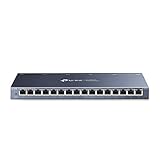
- One Switch Made to Expand Network-16× 10/100/1000Mbps RJ45 Ports supporting Auto Negotiation and Auto MDI/MDIX
- Gigabit that Saves Energy-Latest innovative energy-efficient technology greatly expands your network capacity with much less power consumption and helps save money
- Reliable and Quiet-IEEE 802.3X flow control provides reliable data transfer and Fanless design ensures quiet operation
- Plug and Play-Easy setup with no software installation or configuration needed
- Advanced Software Features-Prioritize your traffic and guarantee high quality of video or voice data transmission with Port-based 802.1p/DSCP QoS and IGMP Snooping
How to verify a switch’s actual capabilities
- Identify the port you plan to use. Find the exact switch model’s data sheet or documentation and note the interface type and supported rates for that port, not only the product’s headline maximum.
- Check the connected device. Look up the network adapter or port’s supported rates. The link cannot exceed what both ends support.
- Confirm the cable and distance. Match the cable category and run length to the switch and endpoint requirements; for copper 10GBASE-T, Cisco’s cited guidance is Cat 6 up to 55m and Cat 6A up to 100m.
- Check non-speed requirements. Confirm port count, PoE, uplink media, and managed features separately if they matter to your setup.
Product prices and availability are accurate as of the date/time indicated and are subject to change. Any price and availability information displayed on Amazon at the time of purchase will apply.

