
Recommended Free Tools
Data sovereignty is the legal and governance framework that determines which authorities may govern enterprise data and who controls its storage, processing, access, transfer, and recovery. It is broader than data residency: choosing a cloud region may help meet a location requirement, but it does not by itself settle where data is processed, who can access it, how backups and operational records are handled, or which laws may apply.
Data sovereignty, residency, and localization are different
- Data residency describes where data is stored, particularly at rest. Google Cloud uses the term in this narrower sense and advises organizations to understand data types, location, applicable risks and laws, and controls over where data is stored or sent (Google Cloud guidance).
- Data sovereignty concerns the broader legal and governance context for data: the relevant authorities, control over handling, and where data is stored and processed. Microsoft describes sovereignty as involving authority over storage and processing, and notes that it adds control rules for cloud-held data (Microsoft data controls; Microsoft public-sector cloud overview).
- Data localization is a law or policy requiring specified data to remain within a defined territory. A region selection can support localization, but it is not a complete sovereignty guarantee: access, operations, processing, and legal jurisdiction may still matter.
These terms are related, but requirements vary by jurisdiction, contract, service, and data type. A local storage location is one control to assess, not a substitute for determining the full legal and operational boundary.
Which cloud data and operations need to be mapped?
Start with the primary customer content, then trace the data and operational artifacts that make the service work. Depending on the service and workload, relevant items can include:
- Primary content, databases, and application data, including where computation processes them.
- Backups, replicas, snapshots, and disaster-recovery copies, including their destinations and replication defaults.
- Telemetry, diagnostic and audit logs, support records, and other service-generated data.
- Encryption keys and key-management records, plus forensic evidence created during an incident.
- Administrator and provider-support access, including the people, locations, approval procedures, and subprocessors involved.
Service configurations can send copies to paired regions or other recovery locations, so the organization should confirm each service’s actual behavior rather than infer it from the region chosen for its primary resource. Microsoft’s operational guidance discusses sovereignty in relation to operating standards and recovery (Microsoft operational standards).
#1 Best Overall

- Hardware encrypted drive
- Simple to use pin access. RPM-5400
- Administrator password feature
- Bus powered
- Utilizes Military Grade FIPS PUB 197 Validated Encryption Algorithm
Does a local cloud region make data sovereign?
No—not on its own. A region setting may establish where a particular service stores some customer data, but it does not necessarily establish where processing occurs, where backups or telemetry go, who can access information for support, or which legal obligations apply to the provider and customer. The answer depends on the specific service, its configuration, the contractual commitments, and the laws relevant to the organization and data.
Cloud providers describe controls that can help address parts of this problem, but their descriptions are not blanket legal conclusions for every workload. For example, Microsoft describes Sovereign Public Cloud as adding residency, operational oversight, customer-controlled encryption, and policy-as-code guardrails to hyperscale cloud regions; its implementation guidance also raises backups, telemetry, support approval, key management, confidential computing, and governance (Microsoft Sovereign Public Cloud overview; Microsoft implementation considerations).
Rank #2
- Utilizes Military Grade FIPS PUB 197 Validated Encryption Algorithm
- Super fast USB 3.0 Connection - Data transfer speeds up to 10X faster than USB 2.0
- Software Free Design - With no admin rights needed
- Sealed from Physical Attacks by Tough Epoxy Coating
- Brute Force Self Destruct Feature
How to assess sovereignty for an enterprise workload
- Classify the workload and its data. Rate sensitivity, regulatory exposure, and business criticality. Define what level of location, access, and governance control each classification requires.
- Map the data flows and jurisdictions. Document storage and processing locations for customer content, backups, replicas, logs, telemetry, support and administration data, and recovery copies. Include subprocessors and support access in the map.
- Set location guardrails service by service. Specify approved regions and check the location behavior, replication defaults, and backup destinations of every service in scope. Enforce location rules with available policy controls and retain evidence of configuration and data flows.
- Define access and key custody. Identify who can administer workloads or access data, how support requests are approved, and which access records are available. Compare platform-managed keys, customer-managed keys, and external or hardware security module (HSM) arrangements. Assign responsibility for key availability and recovery as well as custody.
- Protect data throughout its lifecycle. Use encryption at rest and in transit, and consider confidential computing or other protections for data in use when the workload risk warrants them. These protections reduce exposure; they do not replace legal review or data-flow governance.
- Design and test recovery boundaries. Decide which regions may receive failover workloads and backups. Set out whether an emergency permits movement across a sovereignty boundary, who can authorize it, and what records are required. Exercise and audit the recovery plan.
- Maintain current evidence. Keep the applicable legal and contractual requirements, service scope, policies, support and access procedures, configuration evidence, and approved exceptions together. Reassess when laws, services, or workload flows change.
How to compare cloud and deployment options
Standard hyperscale cloud controls, enhanced sovereign-cloud capabilities, partner-operated controls, and hybrid or on-premises deployments can address different requirements. Compare actual service scope and operating arrangements rather than relying on a provider label or certification alone.
| Assessment area | Questions to answer |
|---|---|
| Data scope and location | Which customer content, operational data, backups, replicas, and service artifacts are covered, and in which geographies? |
| Processing and recovery | Where does computation occur, and which locations are permitted for backups, failover, and recovery? |
| Provider and operator access | Who can access data, where are support personnel located, what approvals are required, and what audit visibility is available? |
| Keys and protection in use | Who holds or manages keys, where do they reside, who ensures availability, and are relevant protections for data in use available? |
| Governance and proof | Can policies enforce the intended boundary? Do contracts define its scope? Is there auditable evidence that deployed services match it? |
| Resilience and portability | What recovery choices exist, how dependent is the design on a provider or partner, and can workloads move without losing required controls? |
The providers’ documentation illustrates why the details matter. AWS describes regional choices, controls, and encryption, including protection of EC2 processing through Nitro, while its shared-responsibility guidance distinguishes infrastructure security from customer workload configuration (AWS Digital Sovereignty; AWS shared security responsibility). Google Cloud describes resource-location policies and storage and processing controls, as well as hybrid and on-premises paths; its partner-controls guidance describes optional EU-focused access and approval controls and assigns customers responsibility for configuring selected controls (Google Cloud regulatory, compliance, and privacy guidance; Google Cloud partner shared responsibility). These are providers’ descriptions of their own capabilities, not independent comparative audits.
Quick wins for a faster PC:
Clear out junk files and repair common Windows errorsFree Scan →Scan for outdated or missing drivers - takes under a minuteDriver Scan →Repair Windows errors before they cause bigger problemsFix Now →Rank #3
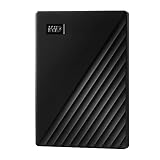
- Slim durable design to help take your important files with you
- Vast capacities up to 6TB[1] to store your photos, videos, music, important documents and more
- Back up smarter with included device management software[2] with defense against ransomware
- Help secure your important files with password protection and hardware encryption
- 3-year limited warranty
Why sovereignty and resilience can conflict
Replication across regions can improve availability and recovery, but it may cross a jurisdictional or contractual boundary. A strict localization rule may therefore constrain the recovery design, while an unrestricted failover plan may not satisfy the organization’s intended boundary.
Resolve the trade-off before an outage: approve specific recovery destinations, decide how emergency exceptions are authorized and documented, and test the plan against both availability needs and location rules. Treat backups and replicas as part of the workload’s sovereignty design, not as an afterthought.
Quick Recap
Rank #4

- Easily store and access 2TB to content on the go with the Seagate Portable Drive, a USB external hard drive
- Designed to work with Windows or Mac computers, this external hard drive makes backup a snap just drag and drop
- To get set up, connect the portable hard drive to a computer for automatic recognition no software required
- This USB drive provides plug and play simplicity with the included 18 inch USB 3.0 cable
- The available storage capacity may vary.
Product prices and availability are accurate as of the date/time indicated and are subject to change. Any price and availability information displayed on Amazon at the time of purchase will apply.

