
X-ray telescopes detect high-energy light from space using mirrors that reflect X-rays at shallow, grazing angles. NASA’s Swift mission shows how that specialized optics can catch a fleeting cosmic explosion: a wide-field detector finds and locates a gamma-ray burst, then Swift turns its X-ray telescope toward the event to track its fading afterglow.
Why X-ray telescopes need unusual mirrors
X-rays do not behave like visible light when they hit a mirror head-on. At ordinary angles, they tend to pass through or be absorbed rather than reflect. X-ray telescopes therefore use grazing-incidence optics: the incoming rays strike reflective surfaces at very shallow angles and are redirected toward detectors.
| # | Preview | Product | Price | |
|---|---|---|---|---|
| 1 |
|
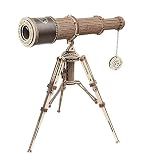
Rokr Wooden Model Astronomical Telescope | $41.79 | Buy on Amazon |
| 2 |

|
Red and Black Telescopes - 12 per unit, Model: , Toys & Play | $2.38 | Buy on Amazon |
This lets a space telescope collect and focus X-rays from distant sources. It is a different approach from the familiar optical telescope mirror, and it is necessary because Earth’s atmosphere absorbs most incoming cosmic X-rays before they reach the ground.
How Swift catches a short-lived explosion
Swift is a NASA space observatory designed to find gamma-ray bursts (GRBs) and rapidly study what happens afterward. Its instruments have different jobs: a wide-field detector searches for the initial flash, while narrower-field telescopes turn to observe the fading source.
#1 Best Overall
- Rokr Wooden Model Astronomical Bezel
1. BAT detects and locates the burst
Swift’s Burst Alert Telescope (BAT) watches a broad area of sky for hard X-rays and gamma rays. It uses a coded mask: the mask casts a pattern of shadows on its detectors, and the pattern lets BAT calculate where the signal came from. NASA describes BAT as localizing bursts to within a tenth of a degree (3 arcminutes or less) and relaying the position to the ground within 20 seconds (NASA’s Swift spacecraft description).
2. Swift sends an alert and turns
The position alert lets ground-based astronomers and other observatories begin follow-up. Swift also autonomously repoints its narrower-field instruments. NASA’s spacecraft description gives a repointing range of 20–100 seconds; its mission overview describes the turn as taking less than approximately 90 seconds. Those are descriptions from different NASA pages, so they should not be treated as one exact response-time guarantee (spacecraft description; mission overview).
3. XRT follows the X-ray afterglow
Once aimed, Swift’s X-Ray Telescope (XRT) observes the burst’s X-ray counterpart. NASA says the XRT can study a typical GRB counterpart within 70 seconds of discovery and continue observing it for days to weeks. NASA also reports that it can determine a typical burst position to about 3 arcseconds within 10 seconds. These are Swift-specific performance descriptions, not benchmarks for every X-ray observatory (NASA’s Swift spacecraft description).
4. UVOT adds ultraviolet and visible context
Swift’s Ultraviolet/Optical Telescope (UVOT) observes the same event in ultraviolet and visible light. Combined with BAT’s initial high-energy detection and XRT’s X-ray follow-up, those observations help astronomers trace how the event changes across different parts of the electromagnetic spectrum (NASA’s Swift mission overview).
What’s actually slowing this PC down?
Pick the symptom - the matching free tool is one click away.
What X-ray observations tell astronomers
Light curves show how the source changes
An X-ray light curve plots a source’s brightness over time. For a GRB afterglow, repeated measurements show whether the X-ray emission is fading, changing slope, or varying in some other way. The timing matters because the source evolves after the initial flash.
Spectra show the energies detected
An X-ray spectrum records how many photons are detected at different energies. That energy distribution adds information that a brightness measurement alone cannot provide. NASA lists Swift XRT’s range as 0.2–10 keV on its spacecraft page; its About page gives a nominal 0.3–10 keV band. The quoted range depends on which NASA page is being used (spacecraft description; Swift About page).
Multiwavelength observations put the event in context
X-rays are one part of a broader picture. Swift’s gamma-ray, X-ray, ultraviolet, and visible-light observations can be combined with data from other facilities and wavelengths to study a transient’s evolution and surroundings. Swift’s role also extends to time-domain and multimessenger astronomy, where observations across different signals and instruments help characterize changing events (NASA Swift Science).
Rank #2
- Set your sights on pirate treasures with these plastic telescopes! Must-have party favors for any pirate gathering
- Spyglasses come in swashbuckling red and black.
- Approx. 5" long extended
- These are not functioning telescopes, just party favors.
Examples of what Swift has revealed
GRB 221009A and rings made by dust-scattered X-rays
For the exceptionally bright GRB 221009A, often called the “BOAT,” X-rays from the initial flash remained detectable for weeks after Milky Way dust scattered some of the light back toward Earth. Swift XRT images showed expanding rings. In this case, the X-ray observations revealed not only the transient’s lingering signal but also intervening dust along the line of sight (NASA’s Swift spacecraft description).
Do these 3 things before closing this tab:
1Repair Windows errors before they cause bigger problems2Fix the driver behind crashes, sound loss and screen glitches3Clear out junk files and repair common Windows errorsGRB 050509B and the first short-burst afterglow
NASA’s Swift Science page reports that Swift detected 11 X-ray photons when it observed short burst GRB 050509B in May 2005. It was the first short gamma-ray burst with a detected afterglow, illustrating why rapid X-ray follow-up can matter when a source fades quickly (NASA Swift Science).
GW170817 and observations across messengers
Swift observations contributed to the multi-messenger record of the neutron-star merger GW170817. NASA’s account notes that X-ray emission was detected later than the ultraviolet, optical, and near-infrared kilonova glow. Swift’s XRT was one part of the observing effort; it did not establish the merger by itself (NASA Swift Science).
Swift figures are examples, not universal telescope specifications
NASA’s Swift About page says BAT detects about 100 gamma-ray bursts per year. That is an approximate rate reported for Swift, not a fixed rate for all missions or all years (NASA Swift About).
At Swift’s 20th anniversary in orbit, NASA reported that the mission had observed 1,800 GRBs and 1,400 supernovae, and that its data had been used in more than 6,600 scientific publications. These are anniversary-milestone figures, not current running totals (NASA’s Swift spacecraft description).
Swift is a particularly clear example of a rapid-response X-ray observatory, but its field of view, energy band, localization ability, response time, and monitoring duration should not be generalized to every X-ray telescope. X-ray astronomy depends on space-based instruments and specialized optics, not a standard backyard optical telescope.
Quick Recap
Product prices and availability are accurate as of the date/time indicated and are subject to change. Any price and availability information displayed on Amazon at the time of purchase will apply.

