
Quick wins for a faster PC:
Repair Windows errors before they cause bigger problemsFix Now →Scan for outdated or missing drivers - takes under a minuteDriver Scan →A one-time UPI payment authorizes one transfer. UPI AutoPay authorizes a recurring e-mandate for a merchant under the terms you accept, so it can enable later eligible debits without asking you to approve each one anew. The key difference is the permission you grant—and the ongoing mandate controls and authentication rules that apply.
What permission do you approve?
One-time UPI payment
You approve a single transfer to a recipient for a stated amount. That confirmation does not, by itself, grant the recipient permission to debit you again later.
UPI AutoPay
You set up a recurring e-mandate for a merchant and its stated terms. NPCI lists uses including mobile and electricity bills, EMIs, entertainment subscriptions, insurance, and mutual funds. The mandate may allow eligible future debits according to its terms; it is not a blanket authorization for arbitrary amounts or unrelated payments. NPCI’s BHIM UPI overview
How do the permissions and risks compare?
| Question | One-time UPI payment | UPI AutoPay |
|---|---|---|
| What you authorize | One transfer after confirming its details. | Recurring merchant debits within the mandate’s terms. |
| What to check first | Recipient and amount. | Merchant, schedule, amount or applicable cap, terms, and how to pause or revoke. |
| Ongoing control | No recurring permission is created. | Manage the active mandate in a UPI app or bank interface; NPCI requires lifecycle controls. |
| Main practical risk | NPCI says an initiated payment cannot be stopped. | A mandate you no longer want may continue to produce eligible debits until you pause or revoke it. |
The last AutoPay risk follows from recurring permission; it does not mean every mandate will debit regardless of its terms. Review active mandates and end one that is no longer wanted.
Recommended Free Tools
#1 Best Overall

- Use the, easy-to-use, and customizable POS to get started.
- Accept contactless payments, chip cards, Apple Pay, and Google Pay from anywhere, with improved connectivity, extended battery life, and enhanced security. Pay one low rate for every tap or dip.
- No long-term commitments or contracts, no monthly fees- and with offline payments, keep taking payments for up to 24 hours.
- Safely and securely accepts payments anywhere. Plus, get data security, 24/7 fraud prevention, and payment-dispute management at no extra cost.
- Use the, easy-to-use, and customizable POS to get started.
What are the UPI limits?
There is no single figure that describes every UPI AutoPay debit. A one-time transaction ceiling and the threshold for recurring debits that can proceed without an additional authentication factor are different rules. Banks may also apply internal limits.
| Rule | Amount and scope | What it means |
|---|---|---|
| Ordinary UPI transaction ceiling | Up to ₹1 lakh per transaction, according to NPCI’s UPI FAQ; the FAQ page does not state a year. | A general one-time UPI transaction ceiling, not an AutoPay-specific threshold. |
| Selected UPI categories | Up to ₹2 lakh for capital markets, collections, insurance, and foreign inward remittances; up to ₹5 lakh for IPO and Retail Direct Scheme transactions, according to NPCI’s FAQ. | Category-specific transaction ceilings; eligibility and applicable bank limits still matter. |
| Subsequent recurring transactions generally | ₹15,000 without an additional factor of authentication, under RBI’s June 2022 change. | An e-mandate authentication threshold, not a universal maximum debit amount. |
| Specified recurring categories | ₹1 lakh without an additional factor of authentication for mutual-fund subscriptions, insurance premiums, and credit-card bill payments, under RBI’s December 2023 change. | The higher threshold applies to these specified categories, not all AutoPay mandates. |
NPCI also notes that member banks may set internal limits within the prescribed ceiling, and that the person-to-person limit remains under existing guidance. Check with your bank for your applicable limit. NPCI’s circular on UPI transaction limits The relevant RBI changes are described in its June 2022 e-mandate notification and December 2023 e-mandate notification.
Rank #2

- Pay one transparent rate per swipe for Visa, Mastercard, Discover and American Express.
- Works in conjunction with most downloadable Square point-of-sale apps on your device. Customers can pay, tip and sign directly on your device. Track payments in cash, gift cards and more. Also lets you send receipts via e-mail or text message, makes it easy to apply discounts, keeps a data and sales history log and more.
- Accepts magstripe credit card payments, including those from Visa, Mastercard, Discover and American Express (fees apply).
- App sends deposits to your bank account within 1 to 2 business days, or enjoy instant deposits (fees apply).
Does UPI AutoPay need a PIN?
UPI AutoPay is not a rule-free way to pay. NPCI’s October 7, 2025 circular states: “All payer-initiated UPI Autopay operations, as per existing guidelines, shall require UPI PIN.” This applies to payer-initiated mandate operations; it does not mean a user must enter a PIN separately for every eligible recurring debit. RBI’s separate e-mandate thresholds determine when subsequent recurring transactions can proceed without an additional factor of authentication.
NPCI requires UPI apps and payer PSPs to support mandate lifecycle management, including viewing, revoking, pausing, and modifying mandates. The precise labels and layout vary by app and bank, so locate the mandate-management controls in your own interface. The circular also says mandate portability between apps must be user-driven and can happen only once in a rolling 90-day period. NPCI circular NPCI/UPI/OC-223/2025-26, October 7, 2025
Free tools Windows power users keep installed
One-click scans. No signup required.
Rank #3

- Accept all major credit and debit cards and pay one low rate
- No hidden fees and no long-term contracts
- Mobile card reader that accepts payments anywhere & anytime
- Use the free SumUp App on your smartphone or tablet to start accepting transactions
- Simply pay 2.6% +10 per in-person transaction
When should you receive notice before an AutoPay debit?
Under RBI’s e-mandate framework, the issuer must send a pre-debit notification at least 24 hours before a recurring charge or debit. RBI’s August 22, 2024 circular exempts auto-replenishment payments for FASTag and NCMC that do not have fixed periodicity from this notice requirement; the other e-mandate instructions continue to apply. RBI circular RBI/2024-25/64
Independent reader supportYour contribution helps us test, update, and keep practical guides available for everyone.Can you cancel AutoPay or stop a UPI payment?
To stop a mandate
- Open your UPI app or bank interface and find the mandate or AutoPay section. The exact menu name and placement depend on the provider.
- Select the relevant mandate and review its details before choosing pause or revoke, as appropriate.
- Follow the app’s confirmation steps. NPCI’s October 2025 circular says payer-initiated AutoPay operations require a UPI PIN.
Pausing or revoking affects the recurring permission; it is different from stopping a transfer that has already been initiated. If you cannot find the control, contact your bank or app provider.
Rank #4
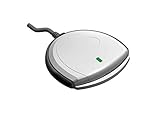
- Fully Compliant - Complies With All Major Industry Standards, Including Iso/Iec 7816, Usb Ccid, Pc/Sc, And Microsoft Whql. As Well As, Emv 2011 Ver 4.3 Level 1 And Gsa Fips 201.
- Seamless Integration - With Identiv-Specific Smartos You’Ll Get Easy, Complete Support Of All Major Contact Smart Card Ics And Technologies In One Simple Reader.
- Universal Compatibility - Works With Virtually All Contact Chip Cards And Pc Operating Systems, Including Windows, Macos, Linux And Android.
- Fast And Convenient- Shorten Your Transaction Time With A Reader That’S Optimized For Speed. It’S Ultra-Compact And Robust Design Is Streamlined For Mobile Operation, Making This Reader The Best Choice For Convenience, Security And Reliability.
- Ergonomic and cost efficient design
To stop a one-time payment
Check the payee and amount before confirming. NPCI’s UPI FAQ answers the question directly: “No, once the payment is initiated, it cannot be stopped.” The same FAQ advises users not to share their UPI PIN. NPCI’s UPI Frequently Asked Questions
Quick Recap
Best Value

- An intuitive interface to easily accept payments and manage your sales.
- Strong, reliable Wi-Fi connection. Free SIM card and mobile data so you can process payments anywhere.
- Great battery capability with an additional charging station.
- A truly portable device. Stay in control of your business, wherever you go.
- Support when you need it. Get in touch with our US-based support through phone, email and chat.
Product prices and availability are accurate as of the date/time indicated and are subject to change. Any price and availability information displayed on Amazon at the time of purchase will apply.

