
Neither uncrewed ground vehicles nor military drones are universally more capable. A ground robot operates on terrain and can carry equipment or perform robotic tasks there; an uncrewed aircraft system operates in airspace and can provide an elevated view or support missions such as reconnaissance, target acquisition, strike, and electronic warfare. Which is more useful depends on the task, conditions, platform, and defenses.
What counts as a ground robot or a military drone?
An uncrewed ground vehicle (UGV) is a robotic vehicle that moves across a surface. Depending on its configuration, it may carry sensors or cargo, or use a manipulator to interact with objects. A military uncrewed aircraft system (UAS)—often called a drone—operates in airspace. The term UAS refers to an aircraft system, not a ground robot.
These are broad categories, not two standardized kinds of equipment. NATO’s 2025 overview considers uncrewed systems across air, land, and maritime domains and describes their changing integration with crewed forces. A cargo-carrying UGV and a strike aircraft, for example, do different jobs; comparing them as if they were interchangeable obscures the useful differences.
What can each do?
Ground robots: work on the surface
A UGV can bring mobility and robotic task performance to the ground environment. The Army Research Laboratory’s 2025 report surveys limbed robots and potential military missions, but does not establish a single standard task set for all UGVs. What a ground robot can do depends on its design, payload, and the task it is configured to perform. Army Research Laboratory, 2025 report on limbed robot capabilities and challenges.
What’s actually slowing this PC down?
Pick the symptom - the matching free tool is one click away.
#1 Best Overall

- Military-Inspired Look & Display-Ready: A model plane that looks awesome on the shelf and flies when you’re ready. Its authentic design and smooth performance make every flight feel like the real deal
- Multiple Stunt Flight Modes: Want that “Did you SEE that?!” moment? This remote control airplane delivers attention-grabbing stunt moves like 360° spins, circular routes, and jump flight—turning every session feel like an air show—perfect for kids, teens, and grown-up hobby lovers
- High/Low Speed for Training & Thrills: Start slow to build confidence, then switch to high speed when you’re ready to push it. Two speed settings make this RC plane beginner-friendly without feeling boring—perfect for leveling up your skills. Great for indoor practice or calm, no-wind outdoor flying
- Beginner-Friendly Control You’ll Enjoy: One-key takeoff and landing takes the stress out of learning. With 4-channel RC plane control, you get more natural steering and smoother handling—less “crash and quit,” more “again, again!”
- A Gift That Feels Big: Birthdays, Thanksgiving, Christmas or “you earned it” surprises—this RC airplane for kids, teens & adults is the kind of gift that gets unboxed with wide eyes. Plus, it’s a Certified Climate-Friendly Toy, so you can feel good about what you’re giving
Military drones: work from the air
Army small UAS cover a broad mission set. The Congressional Research Service lists intelligence, surveillance, and reconnaissance (ISR); target acquisition and strike; electronic warfare; and other missions. These roles vary by aircraft and mission, so they should not be assumed of every drone. Congressional Research Service, Army small UAS overview.
How do their operating constraints differ?
UGVs depend on terrain, mobility, and control
A ground robot must move through the terrain where its task takes place. Mobility and safe teleoperation are therefore important evaluation questions. The U.S. Army Test and Evaluation Command’s 4 September 2024 procedure describes methods for determining mobility characteristics of remotely and teleoperationally controlled UGVs. Its scope is specific: “This TOP does not address the operation of autonomously controlled vehicles.” Army Test and Evaluation Command, UGV test procedure.
Rank #2
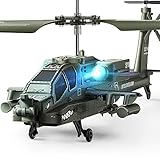
- Authentic Fighter Design: Inspired by real military helicopters, this RC combat chopper features intricate detailing and high-quality craftsmanship—perfect for kids and adults who appreciate military nostalgia. It’s powered by dual hollow cup motors for strong propulsion and responsive maneuvering
- Beginner-Friendly Flight: Worried about complicated controls? Don’t be. This helicopter features one-touch takeoff and landing, allowing new pilots to get airborne effortlessly. Once in the air, it hovers steadily at about 5 feet, making it perfect for indoor or backyard flying. Great for kids 8+ and adults who are new to RC flying
- Dual Protection System: Your investment is protected. If the blades get stuck or blocked during flight, the built-in motor cut-off kicks in to prevent damage. When the battery runs low, the helicopter’s lights flash as a visual reminder to land. A worry-free experience for both kids and parents
- Multiplayer Ready: Fly solo or battle in the air! The 2.4GHz anti-jamming remote offers up to 80 feet (25 meters) of responsive range and allows multiple helicopters to fly simultaneously without interference. Ideal for weekend family competitions, birthday parties, or after-school fun with friends
- Educational Toy: In addition to being used as a toy, our rc army helicopter can also be used as an ornament to decorate your desktop. More importantly, playing together helps spark curiosity about military aircraft and encourages quality parent-child bonding
Mobility is only part of the challenge. The Army Research Laboratory report identifies technical, operational, and logistical challenges to achieving desired capabilities in limbed robots. A robot’s usefulness consequently depends not just on what its mechanism can do, but on whether it can be operated, integrated, and sustained in its intended setting.
UAS depend on airspace and face aerial defenses
An aircraft’s mission depends on conditions in its operating environment, including defenses intended to counter UAS. The Royal United Services Institute’s October 2024 paper addresses layered force protection against UAS, while the U.S. Department of Defense’s 5 December 2024 strategy announcement described unmanned systems as an urgent and enduring threat and aerial systems as the most significant threat at that time. These sources establish that countermeasures matter; they do not show that every drone has the same vulnerability or that one defense works in every setting.
Recommended Free Tools
Rank #3
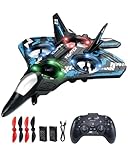
- 360° Flip & Aerial Stunts:Comes with gravity sensing, aerobatic rolls, 360-degree circling, fast take-off, headless mode, one-key takeoff/landing, altitude hold and three adjustable speed levels. You can perform stunning gravity-defying spins in gymnasiums or hover smoothly over sandy beaches. Every flight allows children to practice piloting skills and develop creativity.
- LED Light for Night Flight:Built with bright LED lights, this RC airplane stands out prominently against dark night skies. After sunset, the aircraft creates gorgeous glowing light trails while doing aerial tricks. It becomes a fantastic highlight during family camping and brings magical nighttime fun.
- Easy to Use, Simple Operation:No complicated assembly is required. You can take off or land safely with just one button press on the remote controller. User-friendly controls let kids and adults of all ages easily learn various flight moves.
- Safe, Tough & Playable EPP Structure:Four propellers are covered with exclusive protective casings to keep users safe from spinning blades. Constructed with flexible solid EPP foam, this aircraft can rebound after bumps and falls. It resists damage well for repeated indoor and outdoor play.
- Perfect Gift for Flight Lovers:This remote-controlled plane is an excellent gift for birthdays, holidays and daily surprises. It suits kids and adults with a passion for flying, bringing constant joy and wonderful shared memories. Recipients who love aviation will be delighted to receive this flying toy.
The Department of Defense’s wording was specific to its context: “Unmanned systems pose both an urgent and enduring threat to U.S. personnel, facilities, and assets overseas.” U.S. Department of Defense, 5 December 2024. For the force-protection discussion, see RUSI, October 2024 paper on layered force protection against UAS.
Independent reader supportYour contribution helps us test, update, and keep practical guides available for everyone.Which is more useful in combat?
There is no established universal winner. The available institutional sources do not provide a controlled head-to-head comparison of representative UGVs and drones under matched conditions, and no directly comparable statistic establishes a general advantage in cost, range, accuracy, casualties, or effectiveness. The practical answer is to compare systems against the same defined task and setting.
Rank #4

- TM8170 Daron - Predator Drone w/ Light & Sound
- Manufactured by Daron
- Pullback action with lights and sounds, opening cockpick, spinning propellers, and foldable wings
- White
| Comparison question | Why it matters |
|---|---|
| What is the task? | A sensor, cargo, or manipulation task on the ground is not the same job as aerial ISR, target acquisition, strike, or electronic warfare. |
| Where must it operate? | UGV performance depends on surface terrain and mobility; UAS performance depends on airspace and mission conditions. |
| What payload or task capability is needed? | Compare the actual sensor, cargo, or manipulation requirement with the aircraft’s intended mission—not the category label. |
| How is it controlled and supported? | Teleoperation, communications, safe operation, technical integration, and sustainment can shape whether the system is useful. |
| What countermeasures apply? | Aerial defenses can affect UAS missions, but their effect depends on the system and setting; avoid treating all drones as equally vulnerable. |
| What personnel and logistics are required? | Operational and logistical demands help determine whether a platform can be used and sustained for the intended purpose. |
This framework follows NATO’s cross-domain view of uncrewed systems and the Army sources’ focus on mobility, operation, and sustainment. It also avoids mismatched comparisons: an ISR quadcopter is not interchangeable with a larger aircraft system, just as a UGV designed for cargo is not a direct counterpart to a strike aircraft.
What the evidence does—and does not—establish
Institutional sources describe distinct missions, evaluation concerns, and counter-UAS challenges; they do not establish that one category is categorically more effective. In particular, a test procedure focused on teleoperated vehicles is not evidence about autonomous UGV operation, and a list of Army small-UAS missions is not a capability claim about every aircraft. Specific performance depends on the named system and conditions in which it is used.
The Tool Desk
Outbyte PC Repair FREEClear out junk files and repair common Windows errorsFree Scan →Outbyte Driver Updater FREEFix the driver behind crashes, sound loss and screen glitchesFind Drivers →Quick Recap
Product prices and availability are accurate as of the date/time indicated and are subject to change. Any price and availability information displayed on Amazon at the time of purchase will apply.

