
On April 29, 1994, Commodore International announced that it was going out of business and beginning voluntary liquidation. The announcement marked the end of the company’s operations—not the instant disappearance of its computers, assets, or Amiga activity. Looking back from the 25th anniversary in 2019, it is more accurate to distinguish Commodore’s shutdown from the later history of the Amiga brand and community.
What happened to Commodore?
Commodore International was a major personal-computer company. The Computer History Museum traces its path from typewriters and calculators into computers, including the PET in 1977, VIC-20 in 1981, and Commodore 64 in 1982. Commodore acquired Amiga Inc. in 1984. The Computer History Museum’s company history places the 1994 shutdown at the end of a business that had produced several defining home computers.

On April 29, 1994, Commodore announced it was going out of business. The company said assets would be transferred to trustees for creditors and described the move as the initial phase of voluntary liquidation. Commodore Electronics, its major subsidiary, was also placed into voluntary liquidation, according to the Associated Press account published at the time. Commodore’s statement, as quoted by the AP, said: “This is the initial phase of an orderly voluntary liquidation of both companies.” The Associated Press report documents the announcement and its immediate context.
That announcement and the subsequent legal and asset process were related but distinct milestones. The company ceased operations and entered liquidation; that did not mean every Commodore-related asset or product vanished on April 29.
#1 Best Overall

- High definition output at 720p via HDMI
- Pixel Perfect display, with US/Europe display modes and crt filter options
- Save game function. Supports software updates via USB flash drive
- 2 USB ports: plug in a USB keyboard and use as a fully functional home computer, or add a second joystick for 2-player games
- Included: The C64 Mini computer, Classic USB joystick, HDMI cable, USB cable for power, 64 preinstalled games, instruction manual. *AC USB adaptor not included
Why did Commodore go out of business?
The AP report described a company under financial pressure and struggling to get products to market. It said financial limits had thwarted Commodore’s ability to supply products, weakening sales. The report also said the Amiga CD32 had sold poorly in Europe, where Commodore did most of its business. These are contemporaneous details about the company’s predicament, not a complete explanation of every cause of its collapse.
The report compared results for the quarter ending December 31: Commodore recorded a loss of $8.2 million on sales of $70.1 million for that quarter in 1994, versus a loss of $77.2 million on sales of $237.7 million in the comparable quarter a year earlier, in 1993. These figures are the AP’s reported quarterly results; they should not be mistaken for full-year totals.
Rank #2
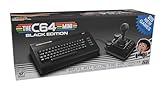
- A glorious half-size recreation of the iconic C64 in a striking black finish
- 25 of the highest rated new games, including; Sam’s Journey, A Pig Quest, Steel Ranger and Knight ‘n’ Grail
- High Definition output at 720p 50 or 60Hz
- Play in original 4:3 or pixel perfect aspect ratios, with or without CRT filters
- Save your progress in one of four save-game slots per game, and return at any time
What happened to the Commodore and Amiga assets?
Commodore’s liquidation did not settle the future of all its assets in one moment. Retrospective timelines describe Escom, a German computer maker, as acquiring Commodore and Amiga assets in 1995. Those accounts differ on some transaction details, so the safest summary is that Escom acquired Commodore/Amiga assets in 1995 rather than treating one specific date or transaction description as definitive.
Escom sought to revive Amiga activity after Commodore’s shutdown. A contemporary Washington Post report on Escom’s Amiga effort also records that the Amiga community remained engaged after Commodore’s bankruptcy. A retrospective Commodore chronology and a Swedish Commodore Club chronology describe continuing Amiga activity, including production of some models for a time.
Rank #3

- Vintage Computer design. Commodore - C64 - Uppercase Letter & Commodore - Lettering Blue/Red
- Commodore C64 Uppercase Letter & Commodore Blue / Red
- Lightweight, Classic fit, Double-needle sleeve and bottom hem
| Question | Commodore after April 1994 | Amiga after April 1994 |
|---|---|---|
| Who controlled the relevant business or assets? | Commodore entered voluntary liquidation, with assets to be transferred to trustees for creditors, according to the AP’s account of the announcement. | Escom acquired Commodore/Amiga assets in 1995; the precise transaction details are not consistent across the retrospective accounts. |
| Was the original company still operating? | No. The April 29, 1994 announcement said Commodore was going out of business. | The Amiga line and its related activity continued under successor-era ownership; this was not the same as Commodore International continuing to operate. |
| Did related activity continue? | The company’s shutdown ended its operations, not the existence of its legacy computers or user communities. | Escom attempted an Amiga revival, and some Amiga models continued in production for a time, according to the retrospective timelines. |
What does “the end of Commodore” mean?
For the 25th anniversary in 2019, “the end” is best understood as the end of Commodore International’s operations and the beginning of its liquidation in 1994. It was not a single-day end to every product, trademark, or community associated with Commodore. The PET, VIC-20, Commodore 64, and Amiga remain central to the company’s computer history, while later Amiga activity took place under successor-era ownership.
Quick Recap
Best Value

- Inspired by the classics. Compatible with Windows 10(1903) or above, and Android 9.0 or above.
- Programmable keys, Dual Super Buttons, and Super Stick, with independent control panel.
- 87 keys. Top mount style with Kailh Box White Switches.
- Double-Shot ABS keycaps with SA profile. (C64 Edition only)
- Hot-swappable PCB. Support n-key rollover.
Product prices and availability are accurate as of the date/time indicated and are subject to change. Any price and availability information displayed on Amazon at the time of purchase will apply.

